Życie i sztuka Jacques-Louis Davida
Urodzony w Paryżu 30 sierpnia 1748 roku, Jacques-Louis David wkroczył w świat w czasach głębokich przemian politycznych i estetycznych. Stał się głównym przedstawicielem neoklasycyzmu końca XVIII wieku – nurtu, który dążył do zastąpienia dekoracyjnej fantazji rokoka poczuciem ładu i moralnej jasności. Jego kariera została zdefiniowana przez niezwykłą zdolność do nawigowania po najbardziej burzliwych zwrotach w historii Francji, prowadząc go od uporządkowanych hierarchii Ancien Régime, przez radykalizm Rewolucji, aż po imperialny przepych epoki napoleońskiej.
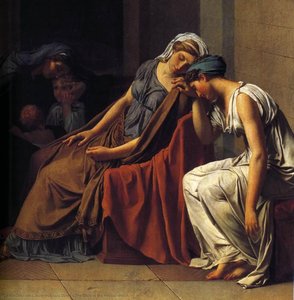
Jako wybitny malarz swojej epoki, David robił znacznie więcej niż tylko utrwalał podobizny swoich modeli; stworzył on wizualny język dla zmieniających się ideałów swojego narodu. Jego twórczość często koncentrowała się na tematach historycznych i klasycznych, wykorzystując rygorystyczny kontur oraz zdyscyplinowane podejście do kompozycji. To oddanie klarowności pomogło ustanowić neoklasycyzm jako dominującą siłę artystyczną we Francji. Jego płótna były często monumentalne, zaprojektowane tak, aby przyciągać uwagę i oddawać powagę przedstawianych scen.
Twórczość artysty była obszerna i różnorodna, rozciągając się od intensywnych dramatów historycznych po formalny portret. Do jego najbardziej znaczących dzieł należą:
Wczesne lata, rodzina i kształcenie
Urodzony w paryskiej klasie średniej, wśród kupców i rzemieślników, Jacques-Louis David wczesne lata przeżył w cieniu nagłego i bolesnego życiowego tąpnięcia. Gdy miał zaledwie dziewięć lat, jego ojciec zginął w pojedynku, pozostawiając młodego chłopca pod opieką zamożnych wujów-architektów. W czasach szkolnych Jacques-Louis nie wykazywał szczególnego zapału do nauki; jego myśli nieustannie uciekały od szkolnych lekcji ku fascynującej mocy rysunku. Ta wczesna, niemal instynktowna więź z ołówkiem i węglem sugerowała temperament, który znacznie lepiej odnalazłby się w zaciszu pracowni malarskiej niż w szkolnej ławie.
Droga ku mistrzostwu zawodowemu rozpoczęła się pod okiem François Bouchera, wybitnego przedstawiciela stylu rokoko. Choć to właśnie u Bouchera David odbył swój pierwszy staż, z czasem poczuł potrzebę poszukiwania innej, głębszej ścieżki, zwracając się ku naukom Joseph-Marie Vien. Jako profesor Królewskiej Akademii Malarstwa i Rzeźby, Vien oferował podejście bardziej klasyczne, które ostatecznie ukształtowało estetykę artysty. Ten okres kształcenia nie był jednak łatwym, szybkim sukcesem; był to mozolny proces prób i błędów. Jacques-Louis musiał zmierzyć się z frustracją, jaką niosły ze sobą trzy nieudane próby zdobycia prestiżowej nagrody Prix de Rome – niepowodzenia, które wystawiły jego determinację na ciężką próbę. Ostatecznie jednak, w 1774 roku, sięgnął po to wyróżnienie, odnosząc zwycięstwo, które fundamentalnie odmieniło bieg jego dalszej kariery.
Rozkwit neoklasycyzmu i włoskie studia
Kierunek rozwoju, jaki obrał Jacques-Louis David, uległ decydującej zmianie w 1775 roku, kiedy to udał się do Włoch wraz ze swoim nauczycielem, Josephem Vienem. Ten czas studiów zapewnił mu niezbędny dystans od dekoracyjnych tendencji francuskiego dworu, pozwalając na bezpośrednie zmierzenie się z ciężarem antyku. W cieniu Rzymu skierował on swoją uwagę na mistrzów XVII wieku, chłonąc uporządkowane kompozycje Poussina oraz dramatyczny światłocień Caravaggia. Studiował również dzieła Carraccich, odnajdując w ich podejściu równowagę między formą a naturalizmem, która miała w istotny sposób wpłynąć na kształtującą się rękę artysty.
W ciągu tych lat Jacques-Louis David poznał Raphaela Mengsa, postać, która opowiadała się za rygorystycznym, zdyscyplinowanym studiowaniem źródeł klasycznych. To intelektualne spotkanie pomogło skierować młodego malarza z dala od pozostających jeszcze w powietrzu kaprysów rokoka. Jego skupienie przesunęło się ku bardziej surowemu i nacechowanemu moralnie neoklasycyzmowi – stylowi, który przedkładał klarowność i porządek nad ornamentykę. Doświadczenie zdobyte we Włoszech nie tylko dopracowało jego technikę, ale przede wszystkim położyło filozoficzny fundament pod karierę poświęconą poszukiwaniu cnót obywatelskich i historycznej powagi.
Artystyczna rola podczas Rewolucji Francuskiej
Polityczne wrzenie roku 1789 sprawiło, że Jacques-Louis David znalazł się w samym centrum zmieniających się nurtów francuskiego społeczeństwa. Był aktywnym zwolennikiem rewolucji, wychodząc poza spokojną ciszę swojej pracowni, by bezpośrednio zaangażować się w radykalne siły przekształcające naród. Jako członek jakobinów, jego oddanie sprawie miało charakter zarówno ideologiczny, jak i osobisty. Utrzymywał bliską więź z Maximilienem Robespierre’em, co postawiło go w samym sercu najbardziej intensywnych intryg politycznych tamtej epoki.
Jego wpływ sięgał aż do administracyjnego serca nowej republiki, gdzie pełnił funkcję dyrektora artystycznego. W tej roli pomagał kształtować wizualny język ruchu, który dążył do zastąpienia dawnych hierarchii nowymi, obywatelskimi ideałami. Jego twórczość w tych latach często służyła jako zwierciadło dla wrzenia na ulicach, oddając powagę męczeństwa oraz ciężar republikańskiego obowiązku. Nie tylko malował rewolucję; on współtworzył jej publiczny wizerunek.
Mecenat i służba Napoleonowi
Polityczne przypływy, które niegdyś napędzały rewolucyjny żar Jacques-Louis David, ostatecznie osiadły w uporządkowanym przepychu Cesarstwa. W miarę jak Napoleon Bonaparte sięgał po władzę, artysta przeszedł transformację od zagorzałego zwolennika Republiki do oficjalnego malarza dworskiego nowego reżimu. Ta zmiana została sformalizowana w 1804 roku, kiedy mianowano go Pierwszym Malarzem Cesarza. Jego zadaniem stało się stworzenie wizualnego języka dla autorytetu Napoleona, przekładając militarne triumfy i imperialną godność na wielką, publiczną skalę.
Ten okres służby przyniósł subtelną ewolucję jego estetyki. Surowa, momentami wręcz ascetyczna klarowność jego wcześniejszych neoklasycznych dzieł złagodniała, ustępując miejsca stylowi Empire. Paleta barw stała się bardziej złożona, włączając w siebie ciepłe, weneckie odcienie, które nadały jego kompozycjom poczucie bogactwa. Artysta odszedł od surowości lat rewolucyjnych, przyjmując w zamian bardziej wystawny język wizualny, idealnie współgrający z ceremonialnymi potrzebami dworu cesarskiego.
- Napoleon przechodzący przez Alpy (1801-1805)
- Koronacja Napoleona (1807)
Technika i styl neoklasyczny
Warsztat malarski Jacques-Louis David odrzucił wirujące, dekoracyjne przesady Rokoka na rzecz zdyscyplinowanej, strukturalnej jasności. Jego kompozycje opierały się na rygorystycznych konturach i rzeźbiarskich formach, które nadawały jego postaciom poczucie trwałości, jakby zostały wykute w marmurze, a nie namalowane farbami olejnymi. Precyzji tej towarzyszyło zamiłowanie do gładkich, wypolerowanych powierzchni, na których ręka artysty często znikała pod bezszwowym, wykończonym wizerunkiem. Dążył on do uchwycenia esencji antyku poprzez wizualny język porządku i powściągliwości.
Światło i cień pełniły w jego pracowni rolę głównych narzędzi dramatyzmu. Stosował on surowe, dramatyczne wykorzystanie tenebryzmu – techniki operującej silnymi kontrastami, by wydobyć podmioty z mroku. To podejście, w połączeniu z caravaggeskim realizmem, pozwalało mu osadzić historyczne i mitologiczne sceny w namacalnej, fizycznej rzeczywistości. Zamiast polegać na feerii barw, często korzystał z powściągliwej palety zdominowanej przez tony ziemiste, co skupiało uwagę widza na moralnym ciężarze sceny, a nie na czystej ornamentyce.
- The Oath of the Horatii (1784)
- The Death of Socrates (1787)
- The Death of Marat (1793)
- Portrait of Madame Récamier (1800)
Kluczowe dzieła i arcydzieła
Trajektoria kariery Jacques-Louis David charakteryzuje się niezwykłą zdolnością do przekładania politycznych i moralnych prądów Francji na surowe, rzeźbiarskie formy. W 1784 roku ukończył Przysięgę Horacjuszy, dzieło, które stanowiło wyraźne odejście od dekoracyjnej fantazji poprzedniej epoki. Zastępując miękkie krzywizny ostrymi, linearną precyzją, stworzył wizualny język obywatelskiego obowiązku. To poczucie moralnej powagi kontynuował w 1787 roku w obrazie Śmierć Sokratesa, gdzie przedstawił ostatnie chwile filozofa z pełną spokoju, zdyscyplinowanej jasnością, która kładła nacisk na intelektualne przekonanie ponad chaotyczne emocje.
Wraz z tym, jak Rewolucja stawała się coraz bardziej krwawa, pędzel Jacques-Louis David stał się narzędziem dokumentującym to, co bezpośrednie i tragiczne. Jego przedstawienie Śmierci Marata z 1793 roku przekształciło polityczne morderstwo w scenę głębokiego, cichego bezruchu. Blada, skulona postać dziennikarza, spoczywająca przy prowizorycznym biurku, odarła terror z jego zgiełku, skupiając uwagę na pojedynczej, nawiedzającej rzeczywistości. Ta zdolność do uchwycenia ciężaru chwili zdefiniowała jego rolę jako wizualnego kronikarza epoki.
Przejście od rewolucyjnego żaru do imperialnego przepychu sprawiło, że Jacques-Louis David zwrócił swoją uwagę na człowieka, który miał na nowo kształtować Europę. Między 1801 a 1805 rokiem namalował Napoleon przekraczający Alpy, przedstawiając przywódcę jako postać o mitycznej sile. Następnie powstało ogromne płótno z 1807 roku, Koronacja Napoleona, dokumentujące przepych imperialnej ceremonii. Nawet w bardziej intymnych portretach, takich jak przedstawiona w 1800 roku Madame Récamier, jego oddanie dla ustrukturyzowanej kompozycji i formalnej godności pozostawało niezmienne.
- Śmierć Sokratesa (1787)
- Śmierć Marata (1793)
- Madame Récamier (1800)
- Napoleon przekraczający Alpy (1801-1805)
- Koronacja Napoleona (1807)
Krąg, uczniowie i artystyczne dziedzictwo
Pracownia Jacques-Louis David funkcjonowała jako tętniące życiem centrum przekazywania zasad neoklasycyzmu, przyciągając różnorodne grono uczniów, którzy w przyszłości mieli ukształtować oblicze dziewiętnastego wieku. Wśród jego najbardziej znamienitych wychowanków znalazł się Jean-Auguste-Dominique Ingres, który ostatecznie wyłonił się jako potężna i samodzielna siła w świecie sztuki. Linia dydaktyczna Davida obejmowała również Antoine-Jean Gros oraz François Gerarda – obaj musieli odnaleźć się w zmieniających się gustach epoki, niosąc jednocześnie ciężar jego rygorystycznego szkolenia. Nawet Jérôme-Martin Langlois trafił w to zdyscyplinowane środowisko, chłonąc techniczną precyzję, jakiej wymagała ówczesna estetyka.
Ten pedagogiczny wpływ wykraczał daleko poza mury szkolnej klasy. Formalne struktury i ekspresyjne deformacje, które David stosował w swoich kompozycjach, pozostawiły ślad rezonujący w kolejnych pokoleniach. Jego oddziaływanie sięgnęło aż po radykalne przemiany ery nowoczesnej, odnajdując nieoczekiwane echa w twórczości Henri Matisse’a i Pabla Picassa. Choć jego bezpośredni uczniowie często dążyli do udoskonalenia, a niekiedy nawet do buntu przeciwko jego surowemu przywiązaniu do klasycznego porządku, fundamentalny nacisk na mistrzostwo rysunku i klarowność strukturalną pozostał stałą nicią w ewolucji sztuki francuskiej.
Wygnanie i śmierć w Brukseli
Polityczne przypływy, które niegdyś wyniosły go na szczyty cesarszych laurów, ostatecznie zwróciły się przeciwko niemu. Po upadku Napoleona zmieniający się krajobraz polityczny Francji nie pozostawił wiele miejsca dla byłego malarza dworskiego. W 1816 roku Jacques-Louis David został wysłany na wygnanie do Brukseli – ruch ten stanowił symboliczny koniec jego bezpośredniego wpływu na sprawy francuskiego państwa. Nie wycofał się jednak w milczenie. W tym belgijskim mieście zachował rygor zawodowy, kontynuując pracę twórczą i kształcenie uczniów aż do swoich ostatnich dni.
Jego obecność w Brukseli była stałym elementem ostatniej dekady jego życia. Przeżył on transformacje europejskich potęg, będąc świadkiem historii, którą sam niegdyś pomagał dokumentować na płótnach. 29 grudnia 1825 roku jego życie dobiegło końca. Zmarł w Brukseli, z dala od paryskich salonów i cesarskich dworów, które definiowały jego najbardziej intensywne lata twórczości.
Miejsce jego spoczynku upamiętnia pomnik. Na cmentarzu w Brukseli wznosi się obelisk – pomnik dla człowieka, który niegdyś był wizualnym architektem pewnej epoki. Ten kamienny znak stanowi ciche podsumowanie kariery, która objęła najbardziej burzliwe transformacje francuskiego państwa.
Gdzie dziś można podziwiać jego dzieła
Fizyczna obecność dorobku artystycznego, który pozostawił Jacques-Louis David, jest rozproszona po najważniejszych skarbcach sztuki europejskiej i światowej. Muzeum Louvre w Paryżu pozostaje głównym strażnikiem jego spuścizny, przechowując znaczną część jego najbardziej wpływowych płócien. W Nowym Jorku Metropolitan Museum of Art opiekuje się kilkoma jego dziełami, co pozwala na studiowanie jego precyzji daleko poza ulicami Francji. Jego oddziaływanie sięga również na Wschód – w moskiewskim Państwowym Muzeum Puszkina znajduje się portret Ingresa, dzieło odzwierciedlające złożone relacje łączące Davida z jego najsłynniejszym uczniem.
Na południu Francji Musée Fabre w Montpellier oferuje zupełnie inne spojrzenie na jego ewolucję twórczą. W jego murach można odnaleźć Hektora, dzieło z 1778 roku, które uchwyciło bardziej formacyjny, pełen dramatycznego naturalizmu etap jego drogi. Ten obraz stanowi okno na wcześniejsze tendencje stylistyczne artysty, powstałe jeszcze przed pełnym przyjęciem surowej jasności, która zdefiniowała jego późniejsze lata. Obcowanie z jego twórczością w tak zróżnicowanych kontekstach pozwala prześledzić geograficzny zasięg stylu, który niegdyś dyktował język wizualny całej epoki.
- Śmierć Sokratesa, 1787
- Przysięga Horacjuszy, 1784
- Śmierć Marata, 1793

 Przełącz na wydania drukowane
 Rozwiń treść







































 W przypadku dzieł sztuki lub reprodukcji, których którykolwiek z boków przekracza 105 cm (około 41 cali), rama zostanie wysłana w formie zestawu do samodzielnego montażu. Metoda ta zapewnia bezpieczną dostawę i zapobiega uszkodzeniom podczas transportu.


 Podgląd w skali 1:1
 Wyślij jako kartkę
 Udostępnij
 Szczegóły dzieła
 Przewodnik

 Pobierz obraz
 Podobne obiekty
 RTG
RTG Pokaz slajdów
 Pytania i odpowiedzi
 Statystyki