Zobacz w skali 1:1
 Wyślij
 Udostępnij
 Szczegóły
 Przewodnik

 Pobierz plik obrazu
 Podobne obiekty
 RTG
RTG Pokaz slajdów
 Statystyki
Raj


 Czytaj więcej
Giclée / Wydruk artystyczny
Wydruki giclée lub płótna o jakości muzealnej, szybka realizacja i szeroki wybór opcji wykończenia. ( Kup ręcznie malowany obraz Przełącz na wersję cyfrową)




P118B zł10

P118H zł10

P118W zł10

P438Z zł10

P508JH zł12

P508YH zł12

P805H zł10

P805Z zł10

P919BZ zł10

P919G zł10

P919XJ zł10

P959ZH zł10

P968JZ zł12

W106C zł8

W218G zł10

W218JH zł8

W218Y zł10

W307PJ zł10

W316G zł10

W316PJ zł8

W316Y zł10

W398PJ zł8

W4111J zł10

W500HY zł15

W500JH zł15

W692G zł12

W849H zł8

W940BG zł15

W953PJ zł8




Wybierz spośród naszych standardowych rozmiarów, które zachowują oryginalne proporcje dzieła sztuki.

Wpisz wymaganą szerokość i wysokość, aby dopasować grafikę do ramy lub ściany. Wydruk można jedynie przyciąć, nigdy nie powiększając go poza oryginalny obraz, dlatego format o innym proporcji spowoduje utratę części kompozycji. Przed rozpoczęciem druku prześlemy Ci cyfrowy podgląd do zatwierdzenia. Obraz wyświetlany na tej stronie nie pokazuje rzeczywistego przycięcia — jedynie podgląd oddaje ten efekt.
Dostawa na cały świat () w ciągu 2 tygodni zamiast standardowych 4/5 tygodni. (23 Październik)

Bezpłatna ekspresowa wysyłka na cały świat

Wysokiej jakości płótno lniane

Pełne ubezpieczenie transportowe

Gwarancja zwrotu należności celnych i podatków importowych

Gwarancja idealnego odwzorowania barw

100-dniowy okres na zwrot dzieła w przypadku wykrycia wad produkcyjnych

Gwarancja 100% zwrotu pieniędzy

Oferta przy zakupie wielu sztuk
 Opcja ze szkłem jest dostępna wyłącznie w rozmiarach poniżej 110 cm

Raj
Giclée / Wydruk artystyczny
Rozmiar reprodukcji
-


Suma do zapłaty
zł 308
Niebiańska wizja w ruchu
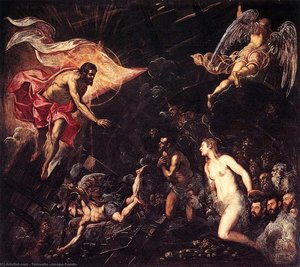
Stanąć przed dziełem Jacopo Tintoretta Il Paradiso to dać się porwać oceanicznej fali boskiej energii. To monumentalne arcydzieło, które dominuje w Sali Wielkiej Rady Pałacu Dożów w Wenecji, jest czymś znacznie więcej niż tylko obrazem; to zapierające dech w piersiach okno na nieskończoność. Gdy wzrok błądzi po tej ogromnej płaszczyźnie płótna, natychmiast zostaje wciągnięty w wirującą, rytmiczną kompozycję, która rzuca wyzwanie statyczności tradycyjnej sztuki religijnej. Tintoretto, często nazywany il Furioso ze względu na swoją pełną pasji i gwałtowną technikę malarską, wykorzystuje dynamiczny układ postaci, które zdają się wznosić przez warstwy światła i cienia. Sama skala tego dzieła — jednego z największych obrazów olejnych na płótnie, jakie istnieją — tworzy immersyjne środowisko, w którym granice między przestrzenią widza a sferą niebiańską zaczynają się zacierać.
Tematyka obrazu to wielkie, niebiańskie zgromadzenie, tłum świętych, męczenników i aniołów zamieszkujący niebiosa. W samym sercu tego kosmicznego dramatu znajduje się świetlista ścieżka, empyrejski blask, który prowadzi dusze sprawiedliwych ku boskiej obecności. W tym świetlistym korytarzu jesteśmy świadkami subtelnej gry łaski i ruchu. Artysta po mistrzowsku równoważy ciężkie, umięśnione formy charakterystyczne dla jego manieryzmu z eterycznymi, niemal pozbawionymi ciężaru momentami. Można dostrzec Archanioła Gabriela zbliżającego się do Matki Bożej z liliami w dłoni lub potężną postać Michała trzymającego wagi sprawiedliwości — wszystkie te elementy współtworzą opowieść o kosmicznym porządku wyłaniającym się z morza duchowego żaru.
Mistrzostwo światła i weneckiego kolorytu
Pod względem technicznym Raj stanowi szczyt innowacji późnego renesansu w Wenecji. Pociągnięcia pędzla Tintoretta są słynne ze swojej śmiałości i spontaniczności; artysta odrzucił gładkie, porcelanowe wykończenia swoich współczesnych na rzecz teksturalnej, wibrującej powierzchni. Stosuje technikę, w której światło nie tylko oświetla obiekty, ale zdaje się emanować z ich wnętrza. Użycie chiaroscuro — dramatycznego kontrastu między głębokim, mrocznym cieniem a błyskotliwymi, przenikliwymi światłami — tworzy poczucie niesamowitej głębi i trójwymiarowego ruchu. Paleta barw to wyrafinowana symfonia bogatych, nasyconych tonów, które odzwierciedlają potęgę samej Wenecji, wykorzystując światło do rzeźbienia postaci z mroku.
Dla wymagającego kolekcjonera lub projektanta wnętrz wysokiej jakości reprodukcja tego dzieła oferuje niepowtarzalną okazję do wprowadzenia do przestrzeni poczucia historycznej wagi i dramatycznego polotu. Zdolność tego obrazu do przyciągania uwagi poprzez złożone warstwy detali sprawia, że staje się on transformującym punktem centralnym dla wielkich sal, bibliotek czy wyrafinowanych galerii. Nie jest to jedynie element dekoracyjny, lecz temat do rozmowy, który przywołuje ducha dojrzałego renesansu. Posiadanie obrazu o takiej skali i intensywności to zaproszenie niepokojącej, pięknej energii weneckiego miasta Tintoretta do współczesnego domu, co stanowi stałe źródło intelektualnej i estetycznej inspiracji.
Wieczne dziedzictwo oddania
Poza swoim technicznym blaskiem, Raj niesie ze sobą głęboki rezonans emocjonalny. Uchwyca ludzką tęsknotę za transcendencją i zachwyt odczuwany w obecności tego, co wzniosłe. Twarze w tłumie — jedne zatopione w modlitwie, inne oddane cichej komunii — odzwierciedlają spektrum ludzkich emocji, od ekstatycznej radości po uroczystą czcią. Dzieło to służy jako świadectwo potęgi sztuki w pokonywaniu przepaści między tym, co ziemskie, a tym, co boskie. Dla tych, którzy cenią sztukę poruszającą duszę i rzucającą wyzwanie zmysłom, wizja Tintoretta pozostaje wieczną latarnią piękna, przypominającą nam o wspaniałej złożoności wszechświata i nieprzemijającej sile ludzkiego ducha.
Pytania i odpowiedzi
Czy dzieło „Raj” autorstwa Jacopo Tintoretto znajduje się w kraju pochodzenia artysty?
Tak – dzieło znajduje się w kraju pochodzenia artysty. Jacopo Tintoretto urodził(a) się w Włochy, a oryginał dzieła „Raj” znajduje się w muzeum w Włochy.
Jakie miejsce w historii sztuki zajmuje „Raj” autorstwa Jacopo Tintoretto?
„Raj” autorstwa Jacopo Tintoretto należy do nurtu Manieryzm, przypadającego na okres Renesans. Razem nadają one dziełu jego miejsce w historii sztuki.
Jaki dominujący odcień przenika „Raj” autorstwa Jacopo Tintoretto?
Przez „Raj” autorstwa Jacopo Tintoretto przewija się Paleta złocistych żółci odcień.
Biografia artysty
A Venetian Master of Drama and Light
Jacopo Tintoretto, born Jacopo Robusti in Venice around 1518, remains one of the most compelling and enigmatic figures of the High Renaissance and early Baroque periods. His very nickname, “Tintoretto” – little dyer – speaks to his family’s trade, yet it belies the immense artistry that would distinguish him from all others. Unlike many artists who benefited from structured apprenticeships, Tintoretto's path was largely self-directed, fueled by an insatiable curiosity and a relentless drive for innovation. While accounts suggest a brief and unsuccessful stint under Titian, the acknowledged master of Venetian colorism, it seems the experience proved more contentious than formative. Titian’s alleged dismissal of the young Jacopo – whether due to jealousy or artistic disagreement – spurred Tintoretto toward an independent course, one characterized by audacious experimentation and a uniquely dynamic style. He immersed himself in anatomical study, reportedly through dissection, and honed his skills by meticulously copying classical sculpture and the works of other masters. This dedication laid the foundation for a career that would redefine Venetian painting.Forging a Distinctive Style: *Il Furioso*
Tintoretto’s artistic development was marked by an almost feverish energy, earning him another evocative nickname: *Il Furioso* – “the Furious One.” This moniker wasn't merely descriptive of his working pace but also captured the intensity and emotional charge that permeated his canvases. His early works already hinted at a departure from traditional Venetian conventions. While acknowledging Titian’s influence in color, Tintoretto gravitated towards Michelangelo’s powerful figures and dramatic compositions. He synthesized these influences into something entirely new: a style characterized by elongated forms, swirling draperies, and an innovative use of perspective that often created a sense of dizzying depth and movement. He abandoned the meticulous finish favored by his contemporaries, opting instead for a rapid, almost sketch-like brushstroke that conveyed immediacy and raw emotion. This technique, combined with his masterful manipulation of light and shadow – *chiaroscuro* – allowed him to create scenes of unparalleled drama and psychological intensity. He wasn’t simply depicting events; he was conveying their emotional core. His compositions were often asymmetrical, creating a sense of dynamism and instability that reflected the turbulent spirit of the age.Monumental Achievements: San Rocco and Beyond
Tintoretto's prodigious output spanned decades, encompassing religious narratives, historical allegories, and portraits. However, his most significant achievement lies in the cycle of paintings he created for the Scuola Grande di San Rocco, a Venetian confraternity dedicated to Saint Roch. Over a period of more than fifty years, Tintoretto adorned the Scuola’s halls with over sixty canvases, transforming it into a breathtaking visual testament to faith and human experience. Works like “The Last Supper,” completed late in his life, demonstrate his continued experimentation with perspective and composition. Departing from traditional depictions, Tintoretto placed the scene in a dramatically lit, architecturally unstable space, emphasizing the emotional turmoil of Christ’s final meal with his disciples. Other notable works include “The Miracle of St Mark Freeing the Slave,” a powerful display of dynamic composition and foreshortening, and numerous paintings for Venetian churches and palaces that showcase his mastery of scale and narrative storytelling. These monumental projects cemented Tintoretto's reputation as one of Venice’s most important artists. He was known to work incredibly quickly, often finishing a painting in just a few days – a remarkable feat considering the complexity and detail of his works.Influences and Artistic Connections
Tintoretto’s artistic journey was shaped by a diverse range of influences. While Titian undoubtedly provided an initial foundation in color and Venetian tradition, he also drew inspiration from Michelangelo's powerful figures and dramatic compositions, as well as the classical sculptures that adorned Venice’s palaces. His early work shows traces of Andrea Schiavone, another influential Venetian painter who had spent much of his career in Italy. However, Tintoretto quickly developed a unique style that transcended these influences, forging a path all his own. He was also known to study anatomy through dissection, a practice considered controversial at the time but which undoubtedly informed his understanding of human form and movement. Interestingly, he maintained a somewhat reclusive existence, rarely sharing his techniques or methods with other artists, contributing to the mystery surrounding his creative process.Legacy and Historical Significance
Jacopo Tintoretto died in Venice in 1594, leaving behind a vast and influential body of work. He bridged the gap between the High Renaissance and the Baroque period, anticipating many of the stylistic innovations that would define the latter. His dramatic compositions, expressive brushwork, and innovative use of light and shadow profoundly influenced artists such as Caravaggio, Rembrandt, and Delacroix. He wasn’t merely a painter; he was a visual storyteller who understood how to harness the power of art to evoke emotion and inspire awe. As one of the three great Venetian painters of the 16th century – alongside Titian and Paolo Veronese – Tintoretto played a crucial role in shaping the artistic landscape of Venice during its golden age. His work reflects not only the religious fervor and political tensions of his time but also a uniquely personal vision that continues to resonate with audiences today, solidifying his place as one of history’s most important and captivating artists. His legacy is a testament to the enduring power of artistic innovation and the transformative potential of human creativity.
Jacopo Tintoretto
1518 - 1594 , Włochy
Najważniejsze informacje
- Artistic Movement Or Style: Renesans, Mannerismus
- Artists Or Movements Influenced By This Artist:
- Caravaggio
- Barok
- Artists Who Influenced This Artist:
- Tycjan
- Michał Anioł
- Date Of Birth: 1518
- Date Of Death: 1594
- Full Name: Jacopo Robusti
- Nationality: Włoski
- Notable Artworks:
- Mirakiel św. Marka
- Ostatnia Wieczerza
- Place Of Birth: Wenecja, Italia
Zobacz także powiązane artykuły

Przemiana Przestrzeni: Jak Murale Kształtują Tożsamość Marki i Doświadczenia Klientów
Odkryj, jak unikalne murale wzmacniają tożsamość marki hotelu i tworzą niezapomniane wrażenia dla gości. Eksperckie porady i inspiracje od .

Jacopo Tintoretto: 25 Arcydzieł Pełnych Dramatyzmu i Światła | OriginalUniqueArt.com
Odkryj 25 arcydzieł Jacopo Tintoretto – weneckiego mistrza dramatyzmu i światła! Poznaj historie, techniki i inspiracje za jego najsłynniejszymi obrazami. Reprodukcje najwyższej jakości na OriginalUniqueArt.com. Eksploruj kolekcję online!
Projektowanie Hoteli z Muralami: Kompleksowy Przewodnik dla Profesjonalistów
Kompleksowy przewodnik po wykorzystaniu murali w projektowaniu hoteli. Inspiracje, porady ekspertów i studia przypadków. Stwórz unikalny wystrój i wzmocnij branding hotelu!

Rewolucja we Wnętrzach: Murale w Kuchni i Łazience – Nowy Trend dla Hotelarzy
Odkryj rewolucję we wnętrzach hoteli! Eksperckie porady o muralach w kuchni i łazience – inspiracje, trwałe materiały i unikalny design. Stwórz niezapomniany klimat dla gości.

Od scenerii dżungli po geometryczne złoto: przewodnik po najpopularniejszych stylach murali we współczesnym designie
Odkryj najnowsze trendy w projektowaniu murali hotelowych! Ekspercki przewodnik po stylach, kolorach i technikach. Stwórz unikalny design wnętrz z naszym wsparciem.