

 Podgląd w skali
 Wyślij jako kartkę
 Udostępnij
 Szczegóły dzieła

 Pobierz
 Podobne obiekty
 RTG
RTG Pokaz slajdów
Fonte Gaia Temperanza


 Rozwiń treść
Ręcznie malowana reprodukcja olejowa
Ręcznie malowany obraz olejny na płótnie, wykonany na zamówienie przez naszych artystów w wybranym przez Ciebie wymiarze i oprawie. ( Zamów wydruk Kup obraz wysokiej rozdzielczości)




P118B $10

P118H $10

P118W $10

P438Z $10

P508JH $12

P508YH $12

P805H $10

P805Z $10

P919BZ $10

P919G $10

P919XJ $10

P959ZH $10

P968JZ $12

W106C $8

W218G $10

W218JH $8

W218Y $10

W307PJ $10

W316G $10

W316PJ $8

W316Y $10

W398PJ $8

W4111J $10

W500HY $15

W500JH $15

W692G $12

W849H $8

W940BG $15

W953PJ $8




Wybierz spośród naszych standardowych rozmiarów, które zachowują oryginalne proporcje dzieła sztuki.

Możesz wprowadzić własne wymiary, aby dopasować obraz do konkretnej ramy lub przestrzeni. Jeśli wybrany rozmiar nie będzie odpowiadał proporcjom oryginału, przytniecie dzieło sztuki lub rozszerzymy je o dodatkowe elementy, ręcznie domalowane przez artystę. Przed rozpoczęciem produkcji wyślemy projekt cyfrowy do Twojej akceptacji.
Należy pamiętać, że podgląd na ekranie nie odzwierciedla rzeczywistego przycinania ani rozszerzania obrazu. Tylko projekt dokładnie pokaże ostateczną kompozycję.
Choć oferujemy możliwość zamówienia niestandardowych rozmiarów, zalecamy wybór wymiaru z gotowej listy, aby zachować oryginalne proporcje dzieła.
Po złożeniu zamówienia zespół OriginalUniqueArt.com skontaktuje się z klientem drogą mailową w celu uzyskania instrukcji i prześle wizualizację projektu
Dostawa na całym świecie () w ciągu 3–4 tygodni zamiast standardowych 5 tygodni. (21 Sierpień). Bez kompromisów w kwestii jakości.

Bezpłatna ekspresowa wysyłka na cały świat

Wysokiej jakości płótno lniane

Pełne ubezpieczenie przesyłki

Gwarancja zwrotu należności celnych i podatków importowych

Gwarancja wiernego odwzorowania kolorów

Polityka 60-dniowego zwrotu (tylko w przypadku wad)

Gwarancja 100% zwrotu kosztów

Zniżka przy zamówieniu wielu produktów
 Opcja ze szkłem jest dostępna wyłącznie w rozmiarach poniżej 110 cm

Fonte Gaia Temperanza
Technika reprodukcji
Wymiary reprodukcji
-


Cena całkowita
$ 300
Opis dzieła
Jacopo della Quercia: The Sculptor Who Ushered in Renaissance Harmony
The Florentine sculptor Jacopo della Quercia remains an enigmatic figure, celebrated for his masterful blend of Gothic and Renaissance influences – a stylistic crossroads that embodies the very spirit of artistic innovation during the mid-14th and early 15th centuries. His legacy isn’t merely defined by impressive monuments; it's etched into the fabric of Italian art history as he skillfully navigated the turbulent currents between established traditions and emerging ideals.
Born in Monteroni di Lecce around 1374, Jacopo’s artistic journey began under the watchful eye of his father, Piero d’Angelo – a craftsman renowned for his woodworking skills. This early apprenticeship instilled within him not only technical mastery but also an unwavering dedication to meticulous detail and sculptural excellence. He quickly ascended through the ranks of Florentine ateliers, demonstrating remarkable versatility in tackling diverse projects ranging from ecclesiastical sculptures to civic commissions.
A Synthesis of Gothic Elegance and Renaissance Idealism
Early works reveal a pronounced Gothic sensibility – characterized by elongated figures, expressive drapery, and an emphasis on spiritual contemplation. However, Jacopo swiftly embraced the burgeoning humanist ideals championed by artists like Brunelleschi and Donatello, incorporating classical proportions and anatomical accuracy into his sculptures. This deliberate fusion resulted in a distinctive style that prioritized both beauty and intellectual rigor—a hallmark of the Renaissance.
Technique: Marble Mastery and Innovative Modeling
Jacopo della Quercia’s technical prowess was particularly evident in his masterful manipulation of marble – a medium he treated with unparalleled sensitivity. Unlike many sculptors of his era who relied on rough carving techniques, Jacopo pioneered innovative modeling methods utilizing bole (a clay mixture) to create subtle gradations of tone and texture. This painstaking process allowed him to achieve astonishing realism, capturing the nuances of human musculature and facial expression with breathtaking precision.
Symbolism: Faith, Virtue, and Human Dignity
Throughout his oeuvre, Jacopo della Quercia infused his sculptures with profound symbolic meaning – reflecting the humanist preoccupation with moral virtue and spiritual aspiration. Figures embodying saints and biblical narratives frequently convey messages of piety and compassion, while portraits celebrate human dignity and intellect. The sculptor’s meticulous attention to detail extended beyond mere anatomical accuracy; he sought to communicate complex ideas about faith, morality, and the human condition.
Emotional Impact: Capturing the Essence of Human Experience
Perhaps Jacopo della Quercia's greatest achievement lay in his ability to evoke powerful emotions within the viewer. His sculptures possess an uncanny capacity to convey feelings of sorrow, joy, contemplation, and reverence—capturing the very essence of human experience with remarkable sensitivity. By skillfully employing expressive gestures and nuanced facial expressions, he succeeded in animating stone into living embodiments of emotion – a testament to his artistic genius.
His enduring influence can be seen in subsequent generations of sculptors who sought inspiration from his pioneering approach to modeling and his masterful synthesis of Gothic and Renaissance styles. Jacopo della Quercia’s legacy continues to resonate today, reminding us that true artistry transcends temporal boundaries—forever capturing the beauty and complexity of human existence.
O artyście
Jacopo della Quercia: Bridging the Gothic and Embracing Renaissance Vision
Jacopo della Quercia, a name inextricably linked to the transformative period of 15th-century Italy, stands as a pivotal figure – a master craftsman who skillfully bridged the lingering shadows of the Gothic era with the burgeoning brilliance of the Italian Renaissance. Born in Monteroni di Lecce around 1374 and tragically passing away in Bologna in 1438, his life unfolded as a rich tapestry woven from demanding commissions, intense rivalries, and an unwavering engagement with both the enduring wisdom of classical antiquity and the evolving sensibilities of his time. He wasn’t merely a sculptor; he was an architect of style, a translator between traditions, and ultimately, a harbinger of the revolutionary artistic shifts that would define the Renaissance itself.
Jacopo's artistic journey began within the nurturing embrace of his father, Piero d'Angelo – a highly skilled woodcarver and goldsmith. This formative period instilled in him not just technical mastery but also an intrinsic appreciation for craftsmanship, the meticulous detail required to bring inanimate materials to life, and the profound power embedded within traditional techniques. Crucially, however, young Jacopo’s artistic development was profoundly shaped by his exposure to the monumental works adorning the pulpit of Siena Cathedral – specifically, the breathtaking sculptures crafted by Nicola Pisano and Arnolfo di Cambio. These encounters ignited a fervent fascination with narrative sculpture, dynamic composition, and the expressive potential inherent within the human form – elements that would become defining characteristics of his distinctive style.
The Early Years: Lucca and the Seeds of Innovation
Jacopo’s career truly blossomed in Lucca, a strategically positioned city at the very heart of Italy's artistic crossroads. His relocation to Lucca with his father in 1386, driven by the turbulent political climate of the time, proved to be a catalyst for significant artistic development. It was here that he began to establish himself as a sculptor of considerable promise, undertaking projects that showcased both his technical skill and burgeoning creative vision. Among these early works are the poignant “Man of Sorrows” – a deeply moving depiction of Christ’s grief – crafted for the altar of the Sacrament, and a compelling relief depicting St. Aniello on a tomb. These pieces already hinted at Jacopo's ability to imbue stone with profound emotional resonance, a quality that would become increasingly prominent in his later creations.
The year 1401 marked a pivotal moment in Jacopo’s career – he entered the prestigious competition to design the bronze doors for Florence’s Baptistery. This contest, pitting him against renowned artists like Ghiberti and Brunelleschi, was a defining experience that exposed him to the highest standards of Florentine artistry and fueled his ambition. Though he ultimately didn't secure the commission itself, this encounter served as an invaluable lesson in artistic innovation and competition, shaping his approach to future projects. The whereabouts of the designs themselves remain a captivating mystery, adding another layer of intrigue to his already fascinating story.
Ferrara and the Influence of Roman Antiquity
Following his time in Lucca, Jacopo’s career took him eastward to Ferrara in 1403, where he was commissioned to sculpt the magnificent marble *Virgin and Child* for the city's cathedral. This work represented a significant shift towards greater naturalism and a profound engagement with the artistic legacy of ancient Rome – a testament to his growing understanding of classical principles. During this period, he also undertook the creation of a statuette of St. Maurice, now housed in the Museo del Duomo, demonstrating his ability to seamlessly blend Gothic sensibilities with emerging Renaissance ideals.
Ferrara provided Jacopo with unparalleled access to an extraordinary collection of Roman sculptures and sarcophagi, sparking a deep appreciation for the elegance, proportion, and narrative power inherent within classical art. These encounters profoundly shaped his artistic vision, leading him to incorporate elements of classical drapery, anatomy, and composition into his own work – subtly yet decisively transforming the Gothic style he had inherited. He began to emulate the idealized forms and balanced compositions that characterized Roman sculpture, laying the groundwork for his later innovations.
Fonte Gaia: A Masterpiece of Civic Pride and Artistic Innovation
Perhaps Jacopo della Quercia’s most enduring legacy is undoubtedly Fonte Gaia – a monumental fountain commissioned in 1406 by Paolo Guinigi, the ruler of Lucca. This ambitious project represented not only a significant civic investment but also a bold artistic statement – a deliberate rejection of the pagan Venus statue that had previously adorned the square and been blamed for outbreaks of plague. The fountain itself is a marvel of engineering and artistry, constructed from gleaming white marble and adorned with numerous statues and spouts, creating a vibrant spectacle of water and light.
Fonte Gaia stands as a testament to Jacopo’s ability to synthesize diverse influences – Gothic elegance, classical proportion, and the burgeoning spirit of the Renaissance. The inclusion of nude putti flanking the fountain's base—a daring departure from traditional sculptural conventions—clearly signaled his embrace of classical ideals while retaining a distinctly humanistic sensibility. The project, however, was a protracted undertaking, spanning over a decade and reflecting the challenges inherent in managing multiple commissions simultaneously. It became a symbol of Lucca’s civic pride and artistic ambition.
Later Works and a Legacy of Transition
Throughout the remainder of his career, Jacopo della Quercia continued to work on a diverse range of projects, including the Trenta Chapel in San Frediano, Lucca, and tomb slabs for Lorenzo Trenta and his wife. His involvement in the design of a hexagonal basin with bronze panels for Siena’s Baptistery, alongside his rival Ghiberti, resulted in the completion of only one relief – “The Annunciation to Zacharias” – due to his simultaneous commitments to other projects. This episode highlights his cautious approach to working with bronze and his preference for the more manageable medium of marble.
Jacopo della Quercia’s life was tragically cut short in 1438, but his artistic legacy endures as a bridge between the Gothic and Renaissance worlds. He wasn't simply a skilled craftsman; he was an innovator, a visionary, and a key figure in shaping the trajectory of Italian art. His work foreshadowed the revolutionary developments championed by Michelangelo, solidifying his place as one of the most important sculptors of the Early Renaissance.

Jacopo Della Quercia
1374 - 1438 , Włochy
Krótka nota
- Artistic Movement Or Style: Renesansowy
- Artists Or Movements Influenced By This Artist: ['Michelangelo']
- Artists Who Influenced This Artist:
- Pisano
- Cambio
- Date Of Birth: c. 1374
- Date Of Death: 1438
- Full Name: Jacopo di Pietro d’Agnolo di Guarnieri
- Nationality: Włoski
- Notable Artworks:
- Fonte Gaia
- Nagrobek Ilarii
- Zacharias
- Place Of Birth: Siena, Italia
Powiązane artykuły

Jacopo Tintoretto: 25 Arcydzieł Pełnych Dramatyzmu i Światła | OriginalUniqueArt.com
Odkryj 25 arcydzieł Jacopo Tintoretto – weneckiego mistrza dramatyzmu i światła! Poznaj historie, techniki i inspiracje za jego najsłynniejszymi obrazami. Reprodukcje najwyższej jakości na OriginalUniqueArt.com. Eksploruj kolekcję online!

10 Legendarnych Brązów Rzeźbiarskich, Które Zmieniły Sztukę | OriginalUniqueArt
Odkryj 10 legendarnych rzeźb brązowych od Rodina, Degasa i innych mistrzów! Poznaj historię powstania arcydzieł sztuki i inspiruj się do dekoracji wnętrz. Reprodukcje najwyższej jakości na OriginalUniqueArt.com – zobacz kolekcję!

Urok marmuru w historii sztuki: od klasycznej rzeźby do nowoczesnej abstrakcji
Odkryj fascynującą historię rzeźby marmurowej – od klasycznych arcydzieł po nowoczesną abstrakcję. Poznaj techniki, artystów i wartość kolekcjonerską tego wyjątkowego medium. Ekspercka analiza dla miłośników sztuki.
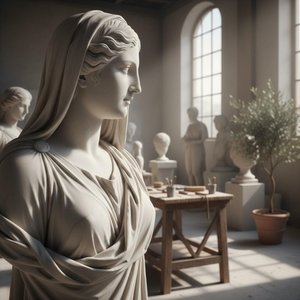
Timeless Elegance: A Complete Guide to the Sublime Beauty and Artistry of Marble Sculpture
Discover the sublime beauty of marble art through an expert exploration of Renaissance and Neoclassical masterpieces. From the delicate textures of Carpeaux to the grandeur of Sansovino, immerse yourself in a guide to timeless elegance and sculptural perfection.

10 Legendarnych Brązów, Które Zrewolucjonizowały Sztukę | OriginalUniqueArt
Odkryj 10 legendarnych rzeźb brązowych, które zrewolucjonizowały sztukę! Poznaj historie Rodina, Donatello i innych mistrzów. Inspiracje wnętrzarskie & reprodukcje najwyższej jakości na OriginalUniqueArt.com.



