Przełącz na wydania drukowane
 Rozwiń treść







































 W przypadku dzieł sztuki lub reprodukcji, których którykolwiek z boków przekracza 105 cm (około 41 cali), rama zostanie wysłana w formie zestawu do samodzielnego montażu. Metoda ta zapewnia bezpieczną dostawę i zapobiega uszkodzeniom podczas transportu.


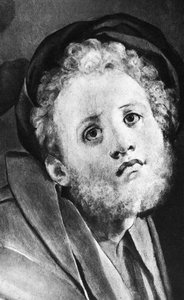
A Moment Frozen in Time: Jacopo Carucci’s *Supper at Emmaus*
Jacopo Carucci's *Supper at Emmaus*, painted in 1525, is more than just a depiction of a biblical scene; it’s a profound meditation on faith, betrayal, and the human condition. Executed in the rich, dramatic style characteristic of the late Renaissance – specifically bridging the Mannerist and Baroque movements – this oil-on-canvas masterpiece captures the poignant moment when Christ reveals himself to two disciples during their post-resurrection journey. The painting’s immediate impact lies in its masterful use of light and shadow, a hallmark of the Baroque tradition, creating an atmosphere of intense emotion and spiritual significance. The artist's deliberate manipulation of perspective draws the viewer directly into the intimate tableau, fostering a sense of shared experience with the figures themselves.
A Synthesis of Renaissance and Baroque
Born in Pontormo, Tuscany, around 1494, Jacopo Carucci – known as Pontormo – was a revolutionary figure. He rejected the idealized beauty favored by earlier Renaissance artists like Raphael and Leonardo da Vinci, instead embracing a style characterized by emotional intensity and psychological complexity. This shift towards Mannerism is powerfully evident in *Supper at Emmaus*, where figures are rendered with elongated forms and subtly distorted features, conveying not just physical appearance but also inner turmoil and spiritual awareness. The influence of Michelangelo Buonarroti, who tutored Pontormo early in his career, can be seen in the artist’s meticulous attention to anatomical detail, though it's filtered through a distinctly Mannerist lens. The painting represents a crucial transition – a bridge between the serene harmony of the High Renaissance and the dramatic dynamism that would define the Baroque era.
Technical Brilliance and Symbolic Resonance
The technical execution of *Supper at Emmaus* is breathtaking. Carucci’s meticulous brushwork creates a remarkable sense of texture, particularly in the richly draped fabrics and the subtly modeled faces of the figures. The color palette – dominated by browns, golds, and muted greens – is carefully considered, with touches of red and white adding visual interest and highlighting key elements. Beyond its technical prowess, the painting is laden with symbolism. Notably, an eye within a triangle is positioned above the table, a recurring motif in Pontormo’s work, representing divine omniscience and God's all-seeing gaze. The composition itself – the carefully arranged gestures of the disciples, Christ’s outstretched hand – reinforces the narrative’s central theme: the transformative power of revelation. The use of gold leaf, both within the frame and on some figures’ garments, elevates the work to a position of opulent reverence.
Historical Context and Emotional Impact
*Supper at Emmaus* was created during a period of profound religious and social upheaval in Europe. The Protestant Reformation was gaining momentum, challenging the authority of the Catholic Church, while artistic innovation continued to push boundaries. Pontormo’s work reflects this tension – a deeply spiritual subject rendered with an intensely personal and emotionally charged style. The painting's enduring power lies in its ability to evoke a sense of solemnity, reverence, and perhaps even a touch of foreboding, mirroring the dramatic narrative of betrayal and divine grace. It remains a testament to Jacopo Carucci’s genius and his pivotal role in shaping the course of Western art.
Pytania i odpowiedzi
Czy "Supper at Emmaus" wpisuje się w typową tematykę twórczości Jacopo Pontormo?
Wśród motywów charakterystycznych dla twórczości Jacopo Pontormo – takich jak mannerist influence, renaissance piety, catholic iconography, divine omniscience, betrayal's shadow, pontormo's emotion, a pivotal moment, exploring faith & doubt – dzieło „Supper at Emmaus” wprowadza własne skupienie na last supper, religious art, biblical scene, divine symbolism, italian renaissance, chiaroscuro lighting, baroque painting.
Na którym etapie kariery Jacopo Pontormo znajduje się dzieło „Supper at Emmaus”, biorąc pod uwagę jego datę powstania?
Biorąc pod uwagę datę powstania (1525), dzieło „Supper at Emmaus” wpisuje się w Mature Period twórczości Jacopo Pontormo.
Czy dzieło "Supper at Emmaus" jest dostępne jako wysokiej jakości wydruk artystyczny?
„Supper at Emmaus” jest dostępny jako szlachetna odbitka na płótnie bawełnianym lub archiwalnym papierze o strukturze płótna. Zamówienia można składać na stronie Wydruk artystyczny premium, wybierając dowolny rozmiar.
 Podgląd w skali 1:1
 Wyślij jako kartkę
 Udostępnij
 Szczegóły dzieła
 Przewodnik

 Pobierz obraz
 Podobne obiekty
 RTG
RTG Pokaz slajdów
 Pytania i odpowiedzi
 Statystyki