

 Zobacz w skali 1:1
 Wyślij
 Udostępnij
 Szczegóły
 Guide
Guide

 Pobierz plik obrazu
 Podobne obiekty
 RTG
RTG Pokaz slajdów
 Statystyki
Genesis Creation Sermon VII: And God Created Man and Woman


 Czytaj więcej
Ręcznie malowana reprodukcja olejowa
Ręcznie malowany obraz olejny na płótnie, wykonany na zamówienie przez naszych artystów w wybranym przez Ciebie wymiarze i oprawie. ( Przełącz na wersję drukowaną Przełącz na wersję cyfrową)




P118B $10

P118H $10

P118W $10

P438Z $10

P508JH $12

P508YH $12

P805H $10

P805Z $10

P919BZ $10

P919G $10

P919XJ $10

P959ZH $10

P968JZ $12

W106C $8

W218G $10

W218JH $8

W218Y $10

W307PJ $10

W316G $10

W316PJ $8

W316Y $10

W398PJ $8

W4111J $10

W500HY $15

W500JH $15

W692G $12

W849H $8

W940BG $15

W953PJ $8




Wybierz spośród naszych standardowych rozmiarów, które zachowują oryginalne proporcje dzieła sztuki.

Możesz wprowadzić własne wymiary, aby dopasować obraz do konkretnej ramy lub przestrzeni. Jeśli wybrany rozmiar nie będzie odpowiadał proporcjom oryginału, przytniecie dzieło sztuki lub rozszerzymy je o dodatkowe elementy, ręcznie domalowane przez artystę. Przed rozpoczęciem produkcji wyślemy projekt cyfrowy do Twojej akceptacji.
Należy pamiętać, że podgląd na ekranie nie odzwierciedla rzeczywistego przycinania ani rozszerzania obrazu. Tylko projekt dokładnie pokaże ostateczną kompozycję.
Choć oferujemy możliwość zamówienia niestandardowych rozmiarów, zalecamy wybór wymiaru z gotowej listy, aby zachować oryginalne proporcje dzieła.
Po złożeniu zamówienia zespół OriginalUniqueArt.com skontaktuje się z klientem drogą mailową w celu uzyskania instrukcji i prześle wizualizację projektu
Dostawa na całym świecie () w ciągu 3–4 tygodni zamiast standardowych 5 tygodni. (20 Wrzesień). Bez kompromisów w kwestii jakości.

Bezpłatna ekspresowa wysyłka na cały świat

Wysokiej jakości płótno lniane

Pełne ubezpieczenie transportowe

Gwarancja zwrotu należności celnych i podatków importowych

Gwarancja idealnego odwzorowania barw

100-dniowy okres na zwrot dzieła w przypadku wykrycia wad produkcyjnych

Gwarancja 100% zwrotu pieniędzy

Oferta przy zakupie wielu sztuk
 Opcja ze szkłem jest dostępna wyłącznie w rozmiarach poniżej 110 cm

Genesis Creation Sermon VII: And God Created Man and Woman
Technika wykonania
Rozmiar reprodukcji
-


Suma do zapłaty
$ 300
The Resonance of Sacred Narrative in American Art
Jacob Lawrence’s Genesis Creation Sermon VII: And God Created Man and Woman is far more than a mere depiction of scripture; it is a vibrant, deeply personal sermon rendered in paint. Drawing its inspiration from the powerful oratory of Rev. Adam Clayton Powell Sr., this work captures the electrifying moment when divine narrative meets the palpable energy of the community. Lawrence masterfully translates the fervor of the pulpit into a monumental visual experience. The scene pulses with life, centered around the commanding figure of the preacher, clad in striking red robes, whose very posture suggests an outpouring of spiritual conviction. One feels the heat of the room, the weight of the words being spoken, and the collective absorption of the congregation gathered to receive them.
Technique and Compositional Power
The technical brilliance evident in this piece lies in Lawrence’s ability to blend historical iconography with a distinctly modern American sensibility. The composition is meticulously layered: the immediate foreground draws the viewer into the intimate space between observer and sermon, while the middle ground swells with the attentive faces of the parish members—a tableau vivant of devotion. Beyond the central action, the background opens up through four arched windows, offering glimpses of an exterior scene that anchors the spiritual moment within a broader, unfolding world. Lawrence’s use of bright, saturated colors is not merely decorative; it amplifies the emotional resonance, giving weight and significance to every gesture, every fold of fabric, and every upturned face.
Symbolism of Community and Creation
At its heart, this painting speaks to themes of genesis, community, and enduring faith. The narrative of creation, filtered through the lens of a Harlem sermon, becomes an allegory for the African-American experience itself—a story of emergence, divine potential, and communal resilience. The preacher acts as the conduit, channeling ancient texts into immediate, living truth for his people. For the collector or decorator, this symbolism offers profound depth; it suggests that great stories, whether biblical or personal, are always best shared aloud, in a space filled with gathered witnesses.
An Emotional Anchor for Any Space
To bring this piece into a home or gallery is to invite an atmosphere of reverence and intellectual engagement. It possesses the monumental quality of historical painting yet retains the immediacy of reportage. The energy captured here—the awe in the eyes, the passion in the gesture—is infectious. Reproducing Lawrence’s vision allows one to possess not just art, but a palpable sense of shared cultural memory and enduring spiritual fervor. It is a piece that demands contemplation, inviting viewers to pause, listen, and feel the resonance of a powerful story unfolding before them.
Biografia artysty
A Life Painted in Story: The World of Jacob Lawrence
Jacob Armstead Lawrence, born September 7, 1917, in Atlantic City, New Jersey, was more than just an artist; he was a chronicler of his people’s journey—a visual storyteller whose work profoundly shaped the landscape of American art. His life unfolded against the backdrop of profound social change, marked by displacement, resilience, and an unwavering commitment to documenting the African-American experience. Following his parents' divorce in 1924, Lawrence navigated a childhood characterized by movement and adaptation, finding temporary homes in foster care before ultimately settling with his mother in Harlem during the vibrant era of the Harlem Renaissance. This immersion into the heart of Black culture became the bedrock of his artistic vision—a source of inspiration that would inform every brushstroke he ever made. It was within the bustling streets and communal spirit of Harlem that Lawrence first encountered art, enrolling in classes at Utopia Children’s House and later studying under Charles Alston at the Harlem Art Workshop – a formative experience that laid the foundation for his distinctive style.Dynamic Cubism: A Style Forged from Experience
Lawrence didn't simply adopt artistic styles; he meticulously crafted his own—a movement he famously termed “dynamic cubism.” This wasn’t a mere imitation of European avant-garde trends, but rather a deeply personal synthesis of modernist principles and the lived realities of his community. Drawing inspiration from the bold colors and flattened forms of African sculpture – art that prioritized narrative and social commentary – as well as the vibrant murals of Mexican artists like Diego Rivera and José Clemente Orozco, Lawrence developed a visual language characterized by strong, simplified shapes, a dazzling palette of colors, and a deliberate rejection of traditional perspective. This approach wasn’t purely aesthetic; it served to amplify the emotional weight of his subjects and create an immediate connection with the viewer. He sought not to replicate reality in its entirety but to distill its essence—to capture the spirit of a people and their history with unflinching honesty. The influence of African art is particularly evident in Lawrence's use of geometric shapes and symbolic imagery, while the Mexican muralists’ emphasis on social justice and collective narratives resonated deeply within his artistic practice.The Migration Series: A Monumental Chronicle
Lawrence’s most celebrated achievement—and arguably his single greatest contribution to American art—is undoubtedly *The Migration Series*. Beginning in 1940-41, at the young age of twenty-four, he embarked on a monumental undertaking that would span sixty panels and occupy him for decades. This epic narrative depicted the Great Migration – the mass movement of millions of African Americans from the rural South to the industrial North during and after World War I—a period defined by both immense hardship and unprecedented opportunity. Each panel, meticulously crafted in tempera paint on small hardboard panels, told a fragment of this complex story, capturing the hopes, fears, and struggles of those who sought a better life beyond the confines of Jim Crow segregation. The series wasn’t simply a historical record; it was a deeply empathetic portrayal of human experience—a testament to resilience, determination, and the enduring spirit of a people on the move. The decision to publish the series in color – an unusual choice for the time – further amplified its impact, bringing Lawrence's powerful vision to a wider audience.Beyond the Migration: Portraits of Community and History
While *The Migration Series* remains his most iconic work, Lawrence’s artistic output extended far beyond this monumental undertaking. He continued to explore themes of community, identity, and social justice throughout his career, creating a diverse body of paintings that encompassed a wide range of subjects. He painted intimate portraits of Harlem life – barbershops, diners, family gatherings – capturing the everyday rhythms and complexities of Black urban culture. Simultaneously, he tackled significant historical events and figures, producing powerful series dedicated to Toussaint L’Ouverture (the Haitian revolutionary), Frederick Douglass (the abolitionist orator), and Harriet Tubman (the Underground Railroad conductor). These works weren't merely biographical; they were carefully constructed narratives that sought to illuminate the struggles and triumphs of African Americans in shaping their own destiny. His painting Bar and Grill, a stark depiction of segregation within a New Orleans café, exemplifies his ability to distill complex social realities into potent visual statements. Similarly, Victory and Defeat, with its imposing wall of cannonballs, commemorates the pivotal siege of Yorktown, Virginia, offering a nuanced reflection on American history.Legacy and Enduring Influence
Jacob Lawrence’s impact extends far beyond his impressive body of work. He was not only an artist but also a dedicated educator, teaching at institutions like Black Mountain College and the University of Washington for sixteen years. Through his teaching, he nurtured generations of artists, encouraging them to find their own voices and explore themes relevant to their experiences. Lawrence paved the way for countless African-American artists who followed, challenging prevailing norms and expanding the boundaries of American art. His work continues to resonate today, prompting critical conversations about race, history, and social justice. Featured in prominent museums such as the Smithsonian American Art Museum and the University of Washington’s collection, his paintings serve as enduring testaments to the power of art to illuminate the human condition and inspire change. He left behind a legacy not just of beautiful images but of courageous storytelling—a visual chronicle of a people's journey toward freedom and self-determination.
Jakub Lawrence
1917 - 2000 , Stany Zjednoczone
Najważniejsze informacje
- Artistic Movement Or Style: Dynamic Kubizm
- Artists Or Movements Influenced By This Artist: ['Afroamerykańscy artyści']
- Date Of Birth: 7 września 1917
- Date Of Death: 9 czerwca 2000
- Full Name: Jacob Armstead Lawrence
- Nationality: Amerykański
- Notable Artworks:
- Migracja
- Bar i Grill
- Place Of Birth: Atlantic City, USA
Zobacz także powiązane artykuły
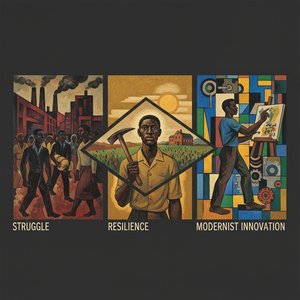
Jacob Lawrence: Narratives of Struggle, Resilience & Modernist Innovation
Explore the powerful narratives of Jacob Lawrence, a pivotal African American artist of the Harlem Renaissance. Discover his iconic 'Migration Series,' dynamic cubism style, and lasting impact on American art history.

Grant Wood & American Regionalism: Identity, Myth & the Rural Landscape
Explore the world of Grant Wood & American Regionalism with OriginalUniqueArt. Discover the symbolism behind 'American Gothic', recurring themes, and the movement's lasting impact on art history. High-quality reproductions available.

Angelo Chiacchio: A Mid-Century American Illustration Master & the Rise of Commercial Art
Explore the captivating world of Angelo Chiacchio, a master of mid-century American illustration. Discover his evolution, signature style, and lasting impact on commercial art & design. Learn about his legacy at the Museum of American Illustration.
Henry Ossawa Tanner: Pioneering African American Representation in 19th-Century Art
Explore the life and groundbreaking work of Henry Ossawa Tanner, a pioneering African American artist who achieved international acclaim with his deeply spiritual and realistic paintings. Discover his legacy at OriginalUniqueArt.

Alfred Jacob Miller: Chronicling the American West Through Artistic Observation & Narrative
Explore the captivating art of Alfred Jacob Miller, chronicler of the American West. Discover his iconic paintings, techniques & lasting legacy – a valuable addition to any serious collection. Learn more at OriginalUniqueArt.