Symbolism · 1903
Art (Jacek Malczewski, 1903)
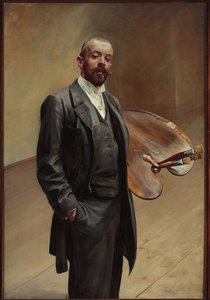
Jacek Malczewski (1854–1929) stworzył Art. Dzieło pochodzi z 1903. Należy do nurtu Symbolism. Wykonano w technice Oil On Canvas. Przechowywane jest w National Museum in Wrocław w Wrocław, Poland. Wymiary to 70 × 98 cm.
- 1903
- Oil On Canvas
- 70 × 98 cm
- National Museum in Wrocław

 Podgląd w skali 1:1

 Ręcznie malowany obraz olejny
 Wyślij jako kartkę
 Udostępnij
 Karta informacyjna


 Pobierz obraz
 Podobne obiekty
 RTG
 Pokaz slajdów
 Pytania i odpowiedzi

 Statystyki
Art w skrócie
- Tytuł
- Art
- Artysta
- Jacek Malczewski (1854–1929)
- Miejsce urodzenia artysty
- Radom, Polska
- Data powstania
- 1903
- Technika wykonania
- Oil On Canvas
- Wymiary
- 70 × 98 cm
- Gdzie można je zobaczyć
- National Museum in Wrocław, Wrocław, Poland
- Ruch
- Symbolism
- Epoka
- 19th Century
- Temat
- symbolism, polish art, mythology, portraiture, national identity, allegory
Co przedstawia Art?
Identification of the Artwork and Artist
Art is an oil on canvas painting executed by Jacek Malczewski in 1903. The work belongs to the Symbolist movement, a style in which Malczewski established himself as a central figure. His practice often integrated themes of national identity and folklore into complex allegorical compositions.
Malczewski was a Polish symbolist painter. His approach frequently utilized mythological and religious motifs to explore psychological and existential states. This specific work, created at the turn of the twentieth century, reflects the artist's characteristic use of symbolic imagery to communicate ideas beyond literal representation.
Composition and Visual Elements
The composition is tightly framed, focusing the viewer's attention on the faces and upper bodies of the clustered figures. This arrangement creates a sense of intimacy and shared experience among the subjects, though the overall placement feels somewhat chaotic yet deliberate. A large, golden horse dominates the background, its head acting as a visual anchor that stabilizes the grouping of humans in the foreground.
The color palette is dominated by earthy tones, including browns, beiges, and muted greens. These base colors are contrasted by the vibrant golden hue of the horse and subtle touches of red in the hair and clothing of the figures. Lighting is diffused and soft, appearing to emanate from multiple sources without creating harsh shadows or strong contrasts. This gentle illumination contributes to the dreamlike quality of the scene.
The perspective is somewhat flattened due to the close-up framing, which limits the sense of spatial recession. Depth is achieved primarily through the layering of figures and the placement of the equine subject in the background. Organic and rounded shapes define the human forms and the natural contours of the horse, avoiding sharp angles or geometric structures.
Technique and Material Composition
Executed in oil on canvas, the work utilizes a method of blended brushstrokes to achieve its specific visual effects. The application of paint involves a visible layering process, which contributes to the depth and richness of the composition. This layering allows for a subtle transition between the earthy tones of the background and the more luminous highlights found on the figures and the equine subject.
The surface texture appears relatively smooth, a result of the extensive blending of the oil paints. This technique softens the edges of the forms, particularly in the rendering of hair and the drape of clothing. Consequently, the lines defining the facial features remain somewhat indistinct, contributing to a dreamlike quality. The interplay of light and shadow is achieved through these soft transitions rather than through harsh, high-contrast edges.
Related Works by Jacek Malczewski
The artist's exploration of symbolic and allegorical themes is evident in several other compositions. His 1901 work, Self-portrait with the Vistula in the Background, offers a different perspective on his relationship with the Polish landscape. Other significant pieces include Chimera 1 and the Thanatos series, which further investigate the psychological and spiritual dimensions central to his practice.
Malczewski also drew heavily from folklore and mythology to construct his visual language. This is particularly evident in his collection titled Bajki (Fables). These works, alongside his various symbolic studies, demonstrate the breadth of his engagement with national and universal motifs.
W którym muzeum znajduje się Art?
National Museum in Wrocław
Wrocław, Poland
The Architecture of the National Museum in Wrocław The National Museum in Wrocław occupies a former Silesian regency building situated on the banks of the Odra river. Constructed between 1883 and 1886, the structure reflects the architectural language of the late 19th century. Its Neo-Renaissance design provides a formal setting for the collections housed within its three floors.


Zdjęcia w wysokiej rozdzielczości dzieła Art

Domena publiczna: artysta zmarł w 1929.
Inne rozmiary, kadrowanie i cytowanie →Jacek Malczewski, Art (1903), National Museum in Wrocław. Domena publiczna
Odpowiedzi na pytania dotyczące Art
W którym muzeum znajduje się oryginał "Art"?
„Art” – Jacek Malczewski znajduje się w zbiorach National Museum in Wrocław, Wrocław, Poland. Informacja o muzeum dotyczy oryginału, a nie reprodukcji.
W którym roku powstało dzieło "Art"?
Powstanie „Art” – Jacek Malczewski datuje się na 1903.
W jakiej technice wykonano „Art” – Jacek Malczewski?
Technika wykonania dzieła „Art” – Jacek Malczewski to Oil On Canvas. Reprodukcje mają na celu wierne oddanie wyglądu tej techniki.
Jakie są wymiary oryginału "Art"?
Oryginalny utwór „Art” – Jacek Malczewski ma wymiary 70 x 98 cm.
Co przedstawia „Art” – Jacek Malczewski?
Tematyka obecna w „Art” – Jacek Malczewski obejmuje symbolism, polish art, mythology, portraiture, national identity, allegory, artistic inspiration. Razem stanowią one podsumowanie tematyki dzieła.
Czy „Art” – Jacek Malczewski znajduje się w domenie publicznej?
Status praw autorskich dla „Art” – Jacek Malczewski: dzieło znajduje się w należy do domeny publicznej – autorskie prawa majątkowe wygasły. Określa to, czy reprodukcje obrazu mogą być sporządzane swobodnie.
Któremu artyście przypisuje się "Art"?
Autorstwo dzieła "Art" przypisuje się Jacek Malczewski.
Do jakiego nurtu należy "Art"?
„Art” to dzieło należące do nurtu Symbolism. Nurt ten określa tradycję artystyczną, w której osadzone jest dzieło.
Do którego etapu twórczości Jacek Malczewski należy dzieło „Art”?
W dorobku artystycznym Jacek Malczewski dzieło „Art” przypada na Mature Period. Ten etap pozwala zestawić je z innymi pracami twórcy.
O artyście: Jacek Malczewski
1854–1929, Polska
Jacek Malczewski
Życie i Narodziny Wizji Jacek Malczewski, urodzony w 1854 roku w Radomiu, mieście wówczas położonym na terenie Królestwa Polskiego pod zaborem rosyjskim, był artystą, którego życie i twórczość nierozerwalnie związane były z losem ojczyzny. Nie był jedynie malarzem; stał się on uosobieniem polskiej tożsamości narodowej, głosem narodu tęskniącego za wolnością i niepodległością. Wychowany w duchu patriotyzmu przez ojca, Juliana Malczewskiego – człowieka oddanego sprawie odzyskania niepodległości – Jacek od najmłodszych lat chłonął opowieści o bohaterstwie, poświęceniu oraz bolesnej historii Polski. Te wczesne wpływy stały się fundamentem jego twórczości, kształtując go w czołowego przedstawiciela polskiego symbolizmu, zasłużenie nazywanego „ojcem polskiego symbolizmu”.
Inne prace Jacek Malczewski
 Self-portrait in armor with violin.1908
 Madonna and Children1897
 Portrait of artist's sister Helene with lute1906
 The Artist's death1909
Eseje o Art
 19th century Polish painters19th-century Polish art comes alive through the masterpieces of Jan Matejko and Jacek Malczewski. View the full collection online at Origin…
 Masterpieces of the Soil: The Top 25 Jean-François Millet ArtworksImmerse yourself in the soul of French Realism with our curated list of the top 25 Jean-François Millet artworks. From iconic peasant scene…
 20th century Polish painters20th-century Polish painters like Tamara de Lempicka, Sigmar Polke, and Aleksandra Ekster define an era. Find museum-quality reproductions …