Podgląd w skali
 Wyślij jako kartkę
 Udostępnij
 Szczegóły dzieła

 Pobierz
 Podobne obiekty
 RTG
RTG Pokaz slajdów
Malaga
 Oil On Canvas
- WallArt
- Romantic Landscape Painting
 1854
1854- 19th Century
 44.0 x 54.0 cm
 Rozwiń treść
Giclée / Wydruk artystyczny
Druk giclée lub płótno o jakości muzealnej, szybka realizacja i szeroki wybór opcji wykończenia. ( Zamów ręcznie malowaną reprodukcję Kup obraz wysokiej rozdzielczości)




P118B $10

P118H $10

P118W $10

P438Z $10

P508JH $12

P508YH $12

P805H $10

P805Z $10

P919BZ $10

P919G $10

P919XJ $10

P959ZH $10

P968JZ $12

W106C $8

W218G $10

W218JH $8

W218Y $10

W307PJ $10

W316G $10

W316PJ $8

W316Y $10

W398PJ $8

W4111J $10

W500HY $15

W500JH $15

W692G $12

W849H $8

W940BG $15

W953PJ $8




Wybierz spośród naszych standardowych rozmiarów, które zachowują oryginalne proporcje dzieła sztuki.

Możesz wprowadzić własne wymiary, aby dopasować dzieło do konkretnej ramy lub przestrzeni. Jeśli wybrany rozmiar nie będzie odpowiadał proporcjom oryginalnego obrazu, przytniecie dzieło lub rozszerzymy obraz za pomocą odbicia lustrzanego lub jednolitego wypełnienia krawędzi. Przed rozpoczęciem produkcji prześlemy cyfrową wizualizację do Twojej akceptacji.
Prosimy pamiętać, że podgląd na ekranie nie odzwierciedla faktycznego przycinania ani rozszerzania. Tylko wizualizacja dokładnie pokaże końcową kompozycję.
Mimo dostępności niestandardowych rozmiarów, zalecamy wybór wymiaru z listy zdefiniowanej, aby zachować oryginalne proporcje.
Dostawa na cały świat () w ciągu 2 tygodni zamiast standardowych 4/5 tygodni. (6 Wrzesień)

Bezpłatna ekspresowa wysyłka na cały świat

Wysokiej jakości płótno lniane

Pełne ubezpieczenie przesyłki

Gwarancja zwrotu należności celnych i podatków importowych

Gwarancja wiernego odwzorowania kolorów

Polityka 100-dniowego zwrotu (tylko w przypadku wad)

Gwarancja 100% zwrotu kosztów

Zniżka przy zamówieniu wielu produktów
 Opcja ze szkłem jest dostępna wyłącznie w rozmiarach poniżej 110 cm

Malaga
Giclée / Wydruk artystyczny
Wymiary reprodukcji
-


Cena całkowita
$ 80
A Symphony of Light and Sea: Ivan Aivazovsky’s *Malaga*
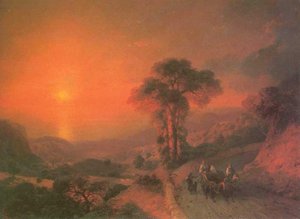
- The Malaga painting by Ivan Aivazovsky is more than just a depiction of a harbor; it's an immersive experience, a testament to the Romantic movement’s obsession with nature’s power and beauty. Completed in 1854, this oil on canvas measures 44 x 54 cm and immediately draws the viewer into a scene brimming with life and drama – a quintessential seascape that captures the very essence of the Black Sea at its most captivating.
- Aivazovsky’s mastery lies in his ability to translate light onto the canvas. The dominant hues of orange and gold, indicative of either sunrise or sunset, bleed across the sky, creating an atmosphere thick with warmth and a sense of impending twilight. This masterful use of color isn't merely decorative; it serves as a crucial element of the composition, guiding the eye through the scene and emphasizing the movement of the water.
Technique and Composition: A Master’s Hand
Chiaroscuro and Shading: Aivazovsky was renowned for his meticulous application of shading and chiaroscuro – the dramatic contrast between light and dark – a technique perfected over decades. Notice how he uses this to sculpt the forms of the boats, creating an illusion of depth and volume that makes them appear almost tangible. The subtle gradations in tone across the water’s surface mimic the play of sunlight on the waves, adding to the painting's realism and dynamism. The largest boat, positioned towards the right, acts as a focal point, drawing the viewer’s attention while the smaller vessels scattered throughout the bay contribute to the overall sense of activity.Historical Context and Romantic Ideals
- Romanticism's Embrace of Nature: Created during the height of the Romantic era, *Malaga* embodies the movement’s core tenets. The painting celebrates the sublime power of nature – a theme central to Romantic art – portraying the sea not as a tool for commerce or conquest, but as an awe-inspiring force deserving of reverence and respect.
- Aivazovsky's Inspiration: Born in Feodosia, Russia, Aivazovsky’s life was inextricably linked to the Black Sea. His deep connection to the ocean informed every brushstroke, resulting in a profound understanding of its moods and movements. The inclusion of figures on the shore and boats further enhances the painting's narrative quality, inviting the viewer to imagine themselves part of this vibrant scene.
Symbolism and Emotional Impact
Human Connection with Nature: The presence of people – at least thirteen individuals – adds a crucial layer of meaning to the work. They aren’t merely background figures; they represent humanity's enduring fascination with, and dependence upon, the natural world. Their enjoyment of the scene underscores the painting’s underlying message: that true beauty lies in our harmonious relationship with nature. *Malaga* evokes a powerful sense of tranquility, wonder, and perhaps even a touch of melancholy – a feeling perfectly aligned with the Romantic sensibility. This piece is a must-have for any collection appreciating the grandeur of the sea and the artistic brilliance of Ivan Aivazovsky.O artyście
A Life Embraced by the Waves
Ivan Konstantinovich Aivazovsky, born Hovhannes Aivazian in 1817, was more than a painter of seascapes; he was a conduit to the ocean’s soul. His very existence seemed inextricably linked to the Black Sea—a vast, unpredictable expanse that would forever dominate his artistic vision and fuel an extraordinary career spanning nearly six decades. Born in the Crimean port city of Feodosia, Aivazovsky didn't merely observe the sea; he felt it – its raw energy, sublime beauty, and inherent danger becoming the very essence of his art. From a young age, this connection was nurtured, initially by local architect Jacob Koch who recognized the boy’s talent, then blossoming within the rigorous academic environment of the Imperial Academy of Arts in Saint Petersburg. Yet, formal training alone couldn't account for the depth of Aivazovsky’s understanding; it was the constant presence of salt-laced air and the cries of gulls that truly shaped his artistic sensibility. His Armenian heritage also played a significant role, as he was baptized at the St. Sargis Armenian Church in Feodosia and maintained strong cultural ties throughout his life, occasionally incorporating Armenian themes into his expansive body of work.The Rise of a Marine Master
Aivazovsky’s artistic journey extended beyond Russia, taking him across Europe in the early 1840s. Italy proved particularly formative, immersing him in new landscapes and light, refining his skills and developing a distinctive style characterized by dramatic compositions and masterful use of color. He sought inspiration from the Italian masters, studying their techniques for capturing light and atmosphere. Upon returning to Russia, a pivotal moment arrived: his appointment as the main painter of the Russian Navy. This wasn’t merely a prestigious title; it was access—access to ships, sailors, naval battles, and firsthand observation that profoundly influenced his work. He became intimately acquainted with maritime life, lending an authenticity to his depictions that resonated deeply with both military officials and art enthusiasts alike. His prolific output – around 6,000 paintings throughout his career – testifies to his relentless dedication and extraordinary talent. Aivazovsky didn’t simply replicate scenes; he sought to evoke emotion, to transport the viewer into the heart of a storm or onto the deck of a ship battling towering waves. He wasn't interested in merely recording what was seen, but rather conveying what was felt. The artist’s ability to capture not just the visual spectacle of the sea, but its very essence—its moods, its power, and its mystery—quickly established him as a leading figure in Russian Romanticism.Capturing the Sublime: Style and Key Works
Aivazovsky’s paintings are instantly recognizable for their romantic sensibility and technical brilliance. Seascape with Full Moon exemplifies his mastery of atmospheric perspective, creating an ethereal glow that bathes the sea in silvery light. The power of nature is palpable in works like A Ship in a Stormy Sea, where turbulent waters and dark skies convey a sense of impending doom and the fragility of human existence. He wasn’t afraid to depict chaos and destruction, but even within these dramatic scenes, there was always an underlying sense of beauty and awe. The Gondolier on Sea at Night showcases his skill in capturing nocturnal scenes with remarkable detail and a hauntingly beautiful atmosphere. Early works like Chaos (The Creation), which garnered attention from Pope Gregory XVI, reveal a willingness to tackle ambitious themes and demonstrate his technical prowess. However, it is arguably The Ninth Wave that remains his most iconic masterpiece—a harrowing depiction of shipwreck survivors clinging desperately to wreckage, facing the relentless power of the ocean. The painting embodies Aivazovsky’s ability to blend realism with romanticism, creating a scene that is both terrifying and profoundly moving. He often worked en plein air, directly from nature, capturing fleeting light effects, and developed a unique technique of applying paint in thin layers to create luminous textures.Influences and Artistic Development
Aivazovsky’s artistic development was shaped by a confluence of factors. His early exposure to the Crimean landscape instilled in him a deep appreciation for color and light. The rigorous training at the Imperial Academy of Arts provided him with a solid foundation in classical techniques, but he quickly surpassed his instructors, developing a highly individual style. He drew inspiration from various sources, including the works of J.M.W. Turner, whose atmospheric effects he admired greatly, and the dramatic compositions of Rembrandt. The influence of Armenian folklore and traditions can also be detected in some of his later paintings, particularly those depicting scenes of rural life. His time spent in Constantinople profoundly impacted his artistic vision, exposing him to new cultures and artistic styles. He was deeply affected by the Hamidian massacres of Armenians in Asia Minor in 1895, painting a number of works on the subject such as “The Expulsion of the Turkish Ship,” and “The Armenian Massacres at Trevizond.” and renouncing a medal which had been awarded to him in Constantinople.Legacy and Enduring Influence
Ivan Konstantinovich Aivazovsky stands as one of the greatest masters of marine art in Russian history—a legacy cemented by his technical skill, emotional depth, and prolific output. His paintings are celebrated not only for their aesthetic beauty but also for their ability to evoke powerful emotions and capture the essence of the sea. He significantly contributed to the development of Russian landscape painting, influencing generations of artists with his innovative techniques and dramatic compositions. Aivazovsky’s work continues to resonate with audiences worldwide, exhibited in museums and galleries across the globe. His paintings are a testament to the enduring power of nature and the human spirit—a reminder of our vulnerability in the face of the elements and our capacity for resilience and hope. He wasn't simply a painter of seascapes; he was a poet of the ocean, translating its moods, mysteries, and majesty onto canvas with unparalleled skill and passion.
Iwan Aiwazowski
1817 - 1900 , Rosja
Krótka nota
- Artistic Movement Or Style: Romanticizm, Sztuka morska
- Artists Or Movements Influenced By This Artist: Rosyjski malarstwo krajobrazowe
- Artists Who Influenced This Artist: Szweryderzki malarstwo krajobrazowe
- Date Of Birth: 1817
- Date Of Death: 1900
- Full Name: Ivan Konstantinovich Aivazovsky
- Nationality: Rosyjsko-Armeński
- Notable Artworks:
- Mocne fale
- Statek w burzy
- Krajobraz z księżycem
- Place Of Birth: Feodosia, Rosja
Powiązane artykuły

Trwała Spuścizna Malarstwa Olejnego: Technika, Historia i Estetyczny Wpływ
Poznaj historię i technikę malarstwa olejnego! Eksperckie artykuły o konserwacji, renowacji oraz współczesnych zastosowaniach. Dowiedz się więcej o mistrzach i trwałości obrazów olejnych.

Olej na płótnie: Historia, techniki i ponadczasowy urok malarskiego medium
Poznaj historię i techniki malarstwa olejowego! Od renesansowych mistrzów po współczesne zastosowania – wszystko o oleju na płótnie. Poradniki, konserwacja i inspiracje dla pasjonatów sztuki.

Trwała Spuścizna Malarstwa Olejnego: Technika, Historia i Współczesna Praktyka
Poznaj historię i techniki malarstwa olejnego. Poradniki dla artystów, informacje o konserwacji oraz możliwość zamówienia wysokiej jakości reprodukcji obrazów. Ekspercka wiedza i gwarancja trwałości dzieł sztuki.
The Soul of Impressionism: Why Oil on Canvas Captures Eternal Light and Timeless Emotion
Discover the enchanting alchemy of Impressionism. Explore how the mastery of oil on canvas, through glazing and impasto, captures eternal light and emotion. Perfect for lovers of Monet and Van Gogh seeking the profound depth of hand-painted fine art.
The Allure of the Horizon: A Comprehensive Exploration of Seascape Art Through History & Emotion
Explore the captivating world of seascape art! Discover its history, key artists & movements – from Dutch Masters to Impressionism. Expert insights for collectors and enthusiasts at OriginalUniqueArt.