

 Podgląd w skali 1:1
 Wyślij jako kartkę
 Udostępnij
 Szczegóły dzieła
 Przewodnik

 Pobierz obraz
 Podobne obiekty
 RTG
RTG Pokaz slajdów
 Statystyki
Summer Evening
 Oil On Canvas
- WallArt
- Contemporary Realism
 1899
1899- 19th Century
 49.0 x 73.0 cm
 Галерея Третьякова
 Rozwiń treść
Giclée / Wydruk artystyczny
Wydruki giclée lub płótna o jakości muzealnej, szybka realizacja i szeroki wybór opcji wykończenia. ( Zamów ręcznie malowaną reprodukcję Przejdź do wersji cyfrowej)




P118B zł10

P118H zł10

P118W zł10

P438Z zł10

P508JH zł12

P508YH zł12

P805H zł10

P805Z zł10

P919BZ zł10

P919G zł10

P919XJ zł10

P959ZH zł10

P968JZ zł12

W106C zł8

W218G zł10

W218JH zł8

W218Y zł10

W307PJ zł10

W316G zł10

W316PJ zł8

W316Y zł10

W398PJ zł8

W4111J zł10

W500HY zł15

W500JH zł15

W692G zł12

W849H zł8

W940BG zł15

W953PJ zł8




Wybierz spośród naszych standardowych rozmiarów, które zachowują oryginalne proporcje dzieła sztuki.

Wpisz wymaganą szerokość i wysokość, aby dopasować grafikę do ramy lub ściany. Wydruk można jedynie przyciąć, nigdy nie powiększając go poza oryginalny obraz, dlatego format o innych proporcjach spowoduje utratę części kompozycji. Przed rozpoczęciem druku prześlemy Ci cyfrowy podgląd do zatwierdzenia. Obraz wyświetlany na tej stronie nie pokazuje rzeczywistego przycięcia — jedynie podgląd oddaje ten efekt.
Dostawa na cały świat () w ciągu 2 tygodni zamiast standardowych 4/5 tygodni. (26 Październik)

Bezpłatna ekspresowa wysyłka na cały świat

Wysokiej jakości płótno lniane

Pełne ubezpieczenie przesyłki

Gwarancja zwrotu należności celnych i podatków importowych

Gwarancja wiernego odwzorowania kolorów

100-dniowa polityka zwrotów (tylko w przypadku wad)

Gwarancja 100% zwrotu pieniędzy

Zniżka przy zakupie wielu sztuk
 Opcja ze szkłem jest dostępna wyłącznie w rozmiarach poniżej 110 cm

Summer Evening
Giclée / Wydruk artystyczny
Wymiary reprodukcji
-


Cena całkowita
zł 307
The Golden Hush of Summer Evening
To gaze upon Isaak Ilyich Levitan's "Summer Evening" is to step across the threshold of time and into a moment suspended in amber light. This painting, executed in 1899, is not merely a depiction of a country road; it is an elegy to pastoral tranquility, a visual poem whispered by the setting sun over the rolling landscape of rural Russia. Levitan, the master poet of the Russian soul rendered in oil paint, captures that ephemeral magic—the precise instant when day yields its vibrant energy to the soft embrace of twilight. The composition draws the eye down the seemingly endless ribbon of the road, bordered by a simple, rustic fence that guides the viewer deep into the painting's serene depth.
Mastery of Light and Atmosphere
Technically, "Summer Evening" is a profound study in atmospheric perspective and the handling of light. Levitan employs a palette dominated by warm, muted tones—ochres, soft blues, and glowing yellows—that speak directly to the golden hour. His brushwork seems almost breathable; one can almost feel the gentle warmth radiating from the depicted sky. The play of shadow against the illuminated fields is handled with an exquisite delicacy that speaks volumes about his technical prowess. It is in these subtle gradations of light, catching the dust motes or skimming across the distant horizon, that the painting achieves its signature luminescence. This masterful handling of *sfumato* effect transforms a simple landscape into something deeply spiritual.
A Quiet Narrative of Rural Life
The human element within this vast, peaceful scene anchors the viewer's emotional connection. The presence of two figures, one positioned closer to the left and another further back near the center, suggests an unhurried journey—a moment shared between companions lost in contemplation. Nearby, a dog stands sentinel on the right, adding a touch of loyal companionship to the quiet tableau. These details ground the sublime beauty of the landscape in the reality of everyday life in late 19th-century Russia. The road itself appears empty save for these gentle inhabitants, inviting us to slow our own pace and listen to the silence that permeates the canvas.
Symbolism and Emotional Resonance
Beyond its technical brilliance, "Summer Evening" resonates with deep symbolism. The setting sun is a universal metaphor for transition, marking the passage of time, yet in Levitan's hands, it feels less like an ending and more like a profound, restful breath. The tranquility evoked by the scene speaks to a yearning for simplicity—a retreat from the clamor of modern existence into the enduring solace of nature. For collectors and those seeking art that inspires contemplation, this piece offers a tangible connection to nostalgia, memory, and the quiet beauty found at the close of a perfect day.
Bringing the Serenity Home
Owning a reproduction of "Summer Evening" is acquiring more than just wall decor; it is curating an atmosphere. Whether placed in a sun-drenched living room or a study corner, its gentle glow has the power to temper hurried moments and encourage reflection. The enduring appeal of this work lies in its universal promise: that even amidst the passage of time, there remain pockets of perfect, golden stillness waiting to be rediscovered.
Pytania i odpowiedzi
Jakie są wymiary oryginalnego dzieła „Summer Evening” – Isaak Ilyich Levitan?
Oryginalny utwór „Summer Evening” – Isaak Ilyich Levitan ma wymiary 49 x 73 cm.
Jaką kolorystykę wykorzystuje "Summer Evening"?
„Summer Evening” – Isaak Ilyich Levitan wykorzystuje Pastels paletę barw, która definiuje ogólny charakter kolorystyczny dzieła.
Czy Summer Evening jest w ogólnym ujęciu jasny?
Ogólnie rzecz biorąc, poziom jasności dzieła „Summer Evening” określany jest jako brilliant. Postrzegana jasność opisuje, jak jasne lub ciemne wydaje się dane dzieło.
Biografia artysty
A Symphony of the Russian Soul: The Life and Art of Isaak Ilyich Levitan
Isaak Ilyich Levitan, a name synonymous with the evocative power of Russian landscape painting, was more than just a chronicler of nature; he was a poet of the land, a translator of its moods into visual form. Born in 1860 in Kibarty (present-day Lithuania) to a Jewish family who later settled in Moscow, Levitan’s life was marked by both profound hardship and an unwavering dedication to his art. The early loss of his mother and father cast a long shadow, instilling within him a sensitivity that would permeate his canvases with a melancholic beauty. This sense of longing, coupled with the restrictions imposed upon Jewish communities in Tsarist Russia, fueled a desire to find solace and expression in the natural world. He entered the Moscow School of Painting, Sculpture and Architecture in 1873, where he came under the tutelage of Alexei Savrasov, whose influence would prove pivotal in shaping Levitan’s artistic vision. It was Savrasov who nurtured his student's innate ability to capture not merely the appearance of nature, but its very essence—its atmosphere, its emotional resonance.The Early Years and a Foundation of Sorrow
Levitan’s childhood was one of profound displacement and loss. Born into a modest Jewish family in Kibarty – now part of Lithuania – he experienced early hardship following the deaths of his parents. This early exposure to sorrow undoubtedly shaped his artistic sensibility, imbuing his landscapes with an undercurrent of melancholy and introspection. The restrictions faced by Jewish communities within Tsarist Russia further contributed to this sense of isolation and longing, driving him towards nature as a source of refuge and emotional release. His relocation to Moscow in the late 1870s, seeking a better life for his family, marked a significant turning point. Despite the challenges, he enrolled at the prestigious Moscow School of Painting, Sculpture and Architecture, where he was immediately drawn to Alexei Savrasov’s teachings. Savrasov recognized Levitan's exceptional talent and fostered his ability to move beyond mere representation, encouraging him to capture not just what *looked* like nature, but how it *felt*. This emphasis on emotional resonance would become a defining characteristic of Levitan’s work.The Birth of a ‘Mood Landscape’
Levitan quickly distinguished himself as an artist capable of conveying profound emotion through landscape. He wasn't interested in topographical accuracy for its own sake; rather, he sought to imbue his paintings with a sense of *mood*, a feeling that resonated deep within the viewer's soul. This approach earned him the title of pioneer of the “mood landscape,” a genre that moved beyond simple representation to explore the spiritual connection between humanity and nature. His palette was often subdued, favoring naturalistic colors and poetic elements over vibrant displays. He masterfully employed light and shadow, creating atmospheric effects that evoked feelings of tranquility, solitude, or even quiet despair. Works like *Autumn Day. Sokolniki* (1879), painted when he was just nineteen years old, already demonstrated this remarkable ability to capture the subtle nuances of the Russian countryside. The painting’s muted tones and delicate rendering of light create a sense of wistful nostalgia, hinting at the transience of beauty and the inevitability of change. Later masterpieces such as *The Vladimirka Road* (1892) and *Eternal Rest* (1894), prominently displayed in the Tretyakov Gallery, further solidified his reputation as a master of emotional landscape painting.Influences and Artistic Kinships
While deeply indebted to Savrasov’s influence, Levitan was also receptive to other artistic currents. He collaborated with fellow artists like Konstantin Korovin, Mikhail Nesterov, and Nikolai Chekhov—the brother of the renowned playwright Anton Chekhov, who became a lifelong friend. This circle fostered an environment of creative exchange and mutual support. Though he briefly experimented with Impressionistic techniques, Levitan never fully embraced the movement, maintaining a uniquely Russian sensibility in his work. He found inspiration not only in the visual world but also in music and literature, seeking to translate their emotional power into his paintings. His designs for scenery for Savva Mamontov’s private Russian Opera demonstrate his versatility and willingness to explore different artistic mediums. The influence of these collaborations and experiences can be seen in works like *Spring Flood*, *Stormy Day*, *Vesper Chimes* and *Silent Cloister*, each a testament to his evolving style and deepening understanding of the emotional landscape.Major Achievements and Legacy
In 1897, Levitan was elected to the Imperial Academy of Arts, a recognition of his growing stature within the Russian art world. This honor signified not only his artistic merit but also the increasing acceptance of his “mood landscapes” as a legitimate and significant form of artistic expression. He subsequently became head of the landscape studio at his alma mater in 1898, dedicating himself to nurturing the next generation of Russian landscape painters. His influence extended far beyond his students, however. Levitan’s work played a crucial role in shaping the development of Russian landscape painting, elevating it from mere depiction to a powerful vehicle for emotional and spiritual expression. He instilled within his canvases a sense of national identity and an appreciation for the beauty of the Russian countryside that continues to resonate with audiences today. His untimely death in 1900 at the age of thirty-nine left a void in the art world, but his legacy endures as a master of atmospheric landscape painting and a profound interpreter of the Russian soul. In 1941, a poignant tribute was paid to his memory when his remains were moved to the Novodevichy Cemetery in Moscow, where he rests beside Anton Chekhov—a symbolic union of two artistic kindred spirits who captured the essence of their time and place with unparalleled sensitivity and grace.
Isaak Ilyich Levitan
1860 - 1900 , Rosja
Krótka nota
- Artistic Movement Or Style: Krajobraz nastrójowy
- Artists Or Movements Influenced By This Artist:
- Peredwijnicy
- Impressionizm
- Artists Who Influenced This Artist:
- Savrasow
- Perow
- Polenov
- Date Of Birth: 30 VIII 1860
- Date Of Death: 22 VII 1900
- Full Name: Isaak Ilyich Levitan
- Nationality: Rosyjski
- Notable Artworks:
- Sokolniki
- Droga Włodzimierz
- Spoczynek
- Powodź wiosenny
- Place Of Birth: Kibarty, Lithuania
Powiązane artykuły
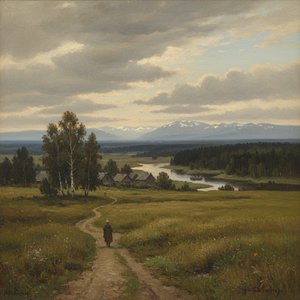
Fyodor Vasilyev: A Poetic Vision of Russian Landscape – Life, Legacy, and the Transience of Nature
Explore the captivating world of Fyodor Vasilyev, a pioneering Russian landscape painter. Discover his lyrical style, influential works like 'Clouds' & lasting legacy. Learn about his life, artistic journey & impact on Russian art history.

Aleksey Savrasov: The Poetic Realism That Defined Russian Landscape Painting
Explore the poetic realism of Aleksey Savrasov, founder of Russian lyrical landscape painting. Discover his masterpieces like 'The Rooks Have Returned' and learn about his lasting influence on 19th-century art. OriginalUniqueArt offers high-quality reproductions.

Russian Realism: The Soulful Power of Truth and the Unyielding Spirit of the Peredvizhniki
Explore the profound depth of Russian Realism. From the social truths of the Peredvizhniki to epic folklore, discover the soulful power of masters like Perov and Yaroshenko through our expert art history insights and museum-quality reproductions.
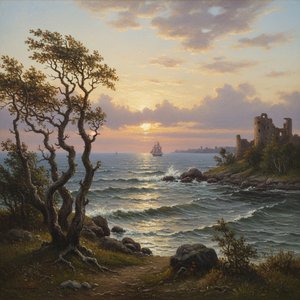
Alexei Bogolyubov: Bridging Realism & Romanticism in the Russian Landscape Tradition
Explore the captivating world of Alexei Bogolyubov, a master of Russian Realism & Romanticism. Discover his stunning landscapes, maritime scenes, and lasting influence on 19th-century art. Learn more at OriginalUniqueArt.

Discover Russian Realism: Soulful Masterpieces and the Timeless Spirit of the Peredvizhniki for Your Modern Home
Elevate your home with the soulful beauty of Russian Realism. Discover exquisite hand-painted reproductions of Peredvizhniki masterpieces, from lyrical landscapes to profound portraits, curated to bring historical depth and timeless elegance to your modern interior design.
