

 Podgląd w skali
 Wyślij jako kartkę
 Udostępnij
 Szczegóły dzieła

 Pobierz
 Podobne obiekty
 RTG
RTG Pokaz slajdów
The Drummer


 Rozwiń treść
Giclée / Wydruk artystyczny
Druk giclée lub płótno o jakości muzealnej, szybka realizacja i szeroki wybór opcji wykończenia. ( Zamów ręcznie malowaną reprodukcję Kup obraz wysokiej rozdzielczości)




P118B $10

P118H $10

P118W $10

P438Z $10

P508JH $12

P508YH $12

P805H $10

P805Z $10

P919BZ $10

P919G $10

P919XJ $10

P959ZH $10

P968JZ $12

W106C $8

W218G $10

W218JH $8

W218Y $10

W307PJ $10

W316G $10

W316PJ $8

W316Y $10

W398PJ $8

W4111J $10

W500HY $15

W500JH $15

W692G $12

W849H $8

W940BG $15

W953PJ $8




Wybierz spośród naszych standardowych rozmiarów, które zachowują oryginalne proporcje dzieła sztuki.

Możesz wprowadzić własne wymiary, aby dopasować dzieło do konkretnej ramy lub przestrzeni. Jeśli wybrany rozmiar nie będzie odpowiadał proporcjom oryginalnego obrazu, przytniecie dzieło lub rozszerzymy obraz za pomocą odbicia lustrzanego lub jednolitego wypełnienia krawędzi. Przed rozpoczęciem produkcji prześlemy cyfrową wizualizację do Twojej akceptacji.
Prosimy pamiętać, że podgląd na ekranie nie odzwierciedla faktycznego przycinania ani rozszerzania. Tylko wizualizacja dokładnie pokaże końcową kompozycję.
Mimo dostępności niestandardowych rozmiarów, zalecamy wybór wymiaru z listy zdefiniowanej, aby zachować oryginalne proporcje.
Dostawa na cały świat () w ciągu 2 tygodni zamiast standardowych 4/5 tygodni. (13 Sierpień)

Bezpłatna ekspresowa wysyłka na cały świat

Wysokiej jakości płótno lniane

Pełne ubezpieczenie przesyłki

Gwarancja zwrotu należności celnych i podatków importowych

Gwarancja wiernego odwzorowania kolorów

Polityka 60-dniowego zwrotu (tylko w przypadku wad)

Gwarancja 100% zwrotu kosztów

Zniżka przy zamówieniu wielu produktów
 Opcja ze szkłem jest dostępna wyłącznie w rozmiarach poniżej 110 cm

The Drummer
Giclée / Wydruk artystyczny
Wymiary reprodukcji
-


Cena całkowita
$ 80
Opis kolekcjonerski
A Portrait of Quiet Intensity: Exploring “The Drummer”
Isaac Lazarus Israëls’s “The Drummer,” painted circa 1885, isn't merely a depiction of a woman holding a drum; it’s a carefully constructed tableau brimming with understated emotion and a subtle commentary on the rhythms of everyday life in late 19th-century Amsterdam. Israëls, a pivotal figure within the Dutch Impressionist movement, masterfully captures a moment suspended between observation and engagement, inviting the viewer to contemplate the woman's gaze and the quiet power held within her posture.
The painting immediately draws attention to its central subject – a young woman seated in a simple wooden chair. Her attire is modest, suggesting a rural or working-class background, yet her presence exudes an unexpected dignity. She cradles a drum, not with flamboyant enthusiasm, but with a deliberate and almost reverent hold. The drum itself, rendered with meticulous detail, hints at its purpose – perhaps a source of entertainment, ritual, or even labor. Her eyes are fixed on something beyond the frame, lost in thought, creating an immediate sense of intimacy and inviting speculation about her inner world.
The Amsterdam Impressionist Palette: Technique and Style
Israëls’s technique is distinctly Impressionistic, characterized by loose brushstrokes, a vibrant yet muted color palette, and a focus on capturing the fleeting effects of light. He employs broken colors – applying paint in small, distinct strokes rather than blending them seamlessly – to create an atmospheric quality that suggests both warmth and shadow. The lighting, diffused and soft, washes over the scene, highlighting the textures of the wooden chair, the woman’s clothing, and the drum's surface. Notice how he uses subtle variations in tone to define form and volume, eschewing sharp outlines in favor of a more suggestive approach.
The composition is carefully balanced, with the woman occupying the central space while two figures – a seated man and a standing one – recede into the background. These secondary elements contribute to the sense of a lived-in scene, hinting at a domestic setting or perhaps a village gathering. The inclusion of the handbag adds another layer of detail, grounding the image in the realities of everyday life.
A Window into Dutch Society and Symbolism
“The Drummer” offers a poignant glimpse into the social fabric of Amsterdam during the late 19th century. Israëls was deeply interested in portraying the lives of ordinary people, particularly those who worked with their hands – farmers, laborers, and craftspeople. The woman’s humble attire and contemplative expression speak to the realities of working-class life, while her quiet strength suggests resilience and dignity. The drum itself carries symbolic weight; it can represent rhythm, tradition, community, or even a connection to ancestral roots.
Furthermore, the painting's composition echoes elements of Dutch genre paintings popular at the time, which often depicted scenes from rural life with a focus on realism and social commentary. Israëls’s work aligns with this tradition while simultaneously injecting it with his own distinctive Impressionistic style. The woman’s gaze, directed towards an unseen point, invites us to consider her thoughts and experiences – perhaps reflecting on the past, contemplating the future, or simply finding solace in the present moment.
Rediscovering Israëls: A Legacy of Observation
Isaac Lazarus Israëls remains a significant figure in Dutch art history. His ability to capture the essence of human experience through subtle observation and masterful technique continues to resonate with viewers today. “The Drummer” stands as a testament to his artistic vision, offering a captivating portrait that transcends its simple subject matter to become a profound meditation on life, memory, and the enduring power of quiet contemplation. Reproductions of this evocative work offer a beautiful way to bring Israëls’s insightful perspective into any space.
O artyście
Isaac Israëls - A Life Dedicated to Impressionistic Vision
Isaac Lazarus Israëls (1865 – 1934) stands as a pivotal figure in the Dutch Impressionist movement, embodying both artistic innovation and Jewish heritage. Born into a family steeped in artistic tradition—his father, Jozef Israëls, being one of the foremost representatives of the Hague School—Isaac’s early life was marked by exposure to exceptional creative stimuli. This familial legacy profoundly shaped his artistic trajectory, fostering an innate talent that blossomed remarkably young. From 1878 to 1880 he pursued formal studies at the Royal Academy of Art in The Hague, forging a crucial connection with George Hendrik Breitner, whose friendship would endure throughout their lives and significantly impact Israëls’s artistic explorations. At just sixteen years old, he achieved immediate recognition when his painting “Bugle Practice” was purchased by Hendrik Willem Mesdag—a testament to his burgeoning skill before it even fully materialized. Portraits of his grandmother and a family friend completed in the same year showcased his technical prowess with remarkable precision.- Early Influences: Jozef Israëls’s influence extended beyond mere familial connection; it instilled within Isaac a deep appreciation for realism combined with expressive brushwork—a cornerstone of Hague School aesthetics.
- The Royal Academy Connection: Studying alongside Breitner at The Hague provided invaluable exposure to progressive artistic ideas and fostered collaborative relationships that would propel Israëls’s creative development.
- Early Successes: Selling “Bugle Practice” demonstrated his ability to capture fleeting moments of beauty and convey emotion effectively—a hallmark of Impressionist art.
Amsterdam Impressionism – Capturing the Vibrant Soul of the City
Israëls’s artistic journey truly commenced in Amsterdam, where he established a studio alongside Breitner and embraced the dynamism of urban life. Inspired by the tenets of the Tachtigers—a literary movement advocating for stylistic honesty and emotional depth—he decisively shifted his focus toward portraying the bustling streets, cafes, and cabarets of Amsterdam with unprecedented vibrancy. Unlike earlier Dutch painters who favored grand historical narratives or idealized landscapes, Israëls sought to depict everyday scenes with palpable immediacy, utilizing loose brushstrokes and bold color palettes to convey the sensory experience of modern life. His summers spent in Scheveningen—a seaside resort town—provided fertile ground for capturing the shimmering light on water and sand—themes that would recur throughout his oeuvre.- The Tachtigers’ Influence: Israëls adopted the philosophical stance championed by the Tachtigers, prioritizing emotional resonance over formal conventions—a defining characteristic of Impressionism.
- Scheveningen Landscapes: His depictions of Scheveningen exemplify the Impressionist fascination with capturing atmospheric conditions and conveying mood through color and light.
- Urban Portraits: Israëls’s portraits of Amsterdam residents captured not only physical likeness but also psychological nuance—reflecting a commitment to portraying human experience authentically.
Notable Works – A Symphony of Color and Emotion
Israëls's artistic output spanned numerous genres, including landscapes, portraits, and genre scenes—each infused with his distinctive Impressionistic style. Among his most celebrated paintings are “Transport of Colonial Soldiers,” a monumental canvas depicting the arduous journey of African soldiers to Algeria—a poignant commentary on colonialism rendered with masterful technique; “The Coffee Sorters,” an evocative portrayal of laborers in Java—capturing the rhythm and energy of Indonesian agriculture; and "Portrait of Mata Hari," a captivating depiction of the infamous entertainer—executed with meticulous detail and imbued with psychological complexity. His iconic portrait of Mata Hari, completed shortly before her execution, remains one of his most enduring images—a testament to Israëls’s ability to convey emotion through visual representation.- “Transport of Colonial Soldiers”: This monumental painting exemplifies Israëls's ambition to tackle significant social issues while maintaining artistic integrity.
- “The Coffee Sorters”: The canvas captures the physicality and emotional intensity of labor—a hallmark of Israëls’s genre paintings.
- “Portrait of Mata Hari”: Considered one of Israëls's masterpieces, this portrait embodies his skill in portraying psychological depth and capturing a moment of dramatic tension.
Travels and Artistic Expansion – Embracing New Horizons
In 1904, Israëls embarked on a transformative journey to Paris—establishing a studio amidst the artistic fervor of the Belle Époque. He pursued further studies at Paquin and Drecoll fashion houses—demonstrating his keen interest in visual culture beyond painting—and immersed himself in the Parisian milieu. The outbreak of World War I prompted him to return to Holland, where he primarily focused on portraiture—a genre that allowed him to hone his artistic skills while reflecting upon the anxieties of the era. Subsequently, Israëls undertook extensive expeditions throughout Europe and Asia—including two years spent sketching and painting in India and the Dutch East Indies—broadening his artistic perspective and introducing him to diverse cultural influences. These experiences enriched his oeuvre with new motifs and techniques—solidifying his position as a cosmopolitan artist at the forefront of his time.- Parisian Influences: Israëls’s Parisian sojourn exposed him to avant-garde trends in fashion and art—expanding his artistic horizons beyond traditional landscapes and portraits.
- Asian Explorations: His travels to India and the Dutch East Indies provided inspiration for new subjects and stylistic approaches—reflecting a desire to engage with global cultures.
- Portraiture During Wartime: Israëls continued to produce compelling portraits during World War I—capturing the psychological complexities of individuals confronting extraordinary circumstances.
Legacy – An Enduring Impressionistic Voice
Isaac Lazarus Israëls’s artistic legacy extends far beyond his individual paintings—he profoundly shaped the trajectory of Dutch Impressionism and cemented his place as one of the most influential artists of his generation. His works are now housed in prestigious museums worldwide—including the Van Gogh Museum and the Mauritshuis—testament to their enduring beauty and artistic significance. Israëls achieved international acclaim, notably winning a Gold Medal at the 1928 Olympic Games for his painting “Red Rider”—a symbol of Dutch cultural pride. His influence can be discerned in subsequent generations of artists—who continue to draw inspiration from his masterful technique and expressive vision. Israëls’s enduring contribution lies not only in his artistic achievements but also in his unwavering commitment to portraying human experience authentically—a characteristic that resonates powerfully across time.
Isaac Lazarus Israels
1865 - 1934 , Holandia
Krótka nota
- Artistic Movement Or Style: Impressionizm
- Artists Or Movements Influenced By This Artist: ['Hague School']
- Artists Who Influenced This Artist:
- Jozef Israëls
- George Hendrik Breitner
- Date Of Birth: 3 lutego 1865
- Full Name: Isaac Lazarus Israëls
- Nationality: Holendazka
- Notable Artworks:
- Transport z Żołnierzy Kolonialnych
- Sortownicy Kawy
- Portret Mata Hari
- Place Of Birth: Amsterdam, Holandia
Powiązane artykuły
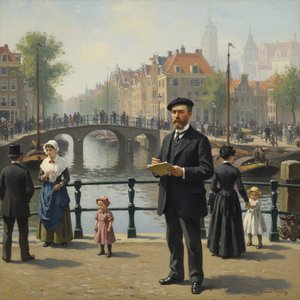
Isaac Lazarus Israëls: A Chronicle of Dutch Life & the Evolution of Impressionistic Realism
Explore the captivating world of Isaac Lazarus Israëls (1865-1934), a leading Dutch Amsterdam Impressionist. Discover his city scenes, portraits & travels through Asia – a chronicle of Dutch life and artistic evolution.

Chiaroscuro and Character: A Definitive Guide to Light and Shadow in the Dutch Baroque Era
Explore the dramatic mastery of the Dutch Baroque era. Discover how masters like Rembrandt used chiaroscuro to transform everyday life into timeless art. An expert guide for collectors and enthusiasts seeking to understand the profound interplay of light and shadow.

Golden Light & Dutch Skies: The Timeless Magic of Dutch Golden Age Landscapes
Discover the breathtaking beauty of Dutch Golden Age landscapes. Explore the mastery of light, chiaroscuro, and 17th-century realism through an expert art history lens, celebrating the enduring legacy of the Dutch Masters for discerning collectors and art lovers.

Holenderski Barok: 10 Arcydzieł, Które Zdefiniowały Epokę | OriginalUniqueArt
Poznaj 10 arcydzieł holenderskiego baroku! Odkryj historie Rembrandta, Vermeera i innych mistrzów XVII wieku. Reprodukcje obrazów najwyższej jakości – idealne do Twojego wnętrza. OriginalUniqueArt.com

Paul Cézanne: 25 Arcydzieł, które Zrewolucjonizowały Świat Sztuki | OriginalUniqueArt
Odkryj 25 arcydzieł Paula Cézanne'a – od impresjonizmu po postimpresjonizm. Poznaj historie, techniki i inspiracje malarza, który zrewolucjonizował sztukę. Reprodukcje obrazów najwyższej jakości na OriginalUniqueArt.com!

