

 Zobacz w skali 1:1
 Wyślij
 Udostępnij
 Szczegóły
 Przewodnik

 Pobierz plik obrazu
 Podobne obiekty
 RTG
RTG Pokaz slajdów
 Statystyki
The Fall
 Acrylic On Canvas
- WallArt
- Northern Renaissance
 1467
1467 33.0 x 23.0 cm
 Kunsthistorisches Museum
 Czytaj więcej
Ręcznie malowana reprodukcja olejowa
Ręcznie malowany obraz olejny na płótnie, wykonany na zamówienie przez naszych artystów w wybranym przez Ciebie wymiarze i oprawie. ( Przełącz na wersję drukowaną Przełącz na wersję cyfrową)




P118B zł10

P118H zł10

P118W zł10

P438Z zł10

P508JH zł12

P508YH zł12

P805H zł10

P805Z zł10

P919BZ zł10

P919G zł10

P919XJ zł10

P959ZH zł10

P968JZ zł12

W106C zł8

W218G zł10

W218JH zł8

W218Y zł10

W307PJ zł10

W316G zł10

W316PJ zł8

W316Y zł10

W398PJ zł8

W4111J zł10

W500HY zł15

W500JH zł15

W692G zł12

W849H zł8

W940BG zł15

W953PJ zł8




Wybierz spośród naszych standardowych rozmiarów, które zachowują oryginalne proporcje dzieła sztuki.

Możesz wprowadzić własne wymiary, aby dopasować obraz do konkretnej ramy lub przestrzeni. Jeśli wybrany rozmiar nie będzie odpowiadał proporcjom oryginału, przytniecie dzieło sztuki lub rozszerzymy je o dodatkowe elementy, ręcznie domalowane przez artystę. Przed rozpoczęciem produkcji wyślemy projekt cyfrowy do Twojej akceptacji.
Należy pamiętać, że podgląd na ekranie nie odzwierciedla rzeczywistego przycinania ani rozszerzania obrazu. Tylko projekt dokładnie pokaże ostateczną kompozycję.
Choć oferujemy możliwość zamówienia niestandardowych rozmiarów, zalecamy wybór wymiaru z gotowej listy, aby zachować oryginalne proporcje dzieła.
Po złożeniu zamówienia zespół OriginalUniqueArt.com skontaktuje się z klientem drogą mailową w celu uzyskania instrukcji i prześle wizualizację projektu
Dostawa na całym świecie () w ciągu 3–4 tygodni zamiast standardowych 5 tygodni. (12 Październik). Bez kompromisów w kwestii jakości.

Bezpłatna ekspresowa wysyłka na cały świat

Wysokiej jakości płótno lniane

Pełne ubezpieczenie transportowe

Gwarancja zwrotu należności celnych i podatków importowych

Gwarancja idealnego odwzorowania barw

100-dniowy okres na zwrot dzieła w przypadku wykrycia wad produkcyjnych

Gwarancja 100% zwrotu pieniędzy

Oferta przy zakupie wielu sztuk
 Opcja ze szkłem jest dostępna wyłącznie w rozmiarach poniżej 110 cm

The Fall
Technika wykonania
Rozmiar reprodukcji
-


Suma do zapłaty
zł 1119
Hugo van der Goes’s “The Fall”: A Testament to Northern Renaissance Mastery
“The Fall,” painted between 1467 and 1468 by Hugo van der Goes, stands as an unparalleled achievement of Early Netherlandish art—a monumental depiction of the biblical narrative that transcends mere illustration, embodying profound psychological depth and masterful artistic execution. Housed within the Kunsthistorisches Museum in Vienna, Austria, this oil on oak panel masterpiece continues to captivate viewers with its breathtaking realism and enduring symbolic resonance.Composition and Technique: A Symphony of Light and Shadow
Van der Goes’s compositional brilliance is immediately apparent. He presents a dramatic tableau featuring Adam and Eve after their transgression against God's commandment—a scene fraught with emotion and imbued with an astonishing level of detail. The artist skillfully employs chiaroscuro, manipulating light and shadow to sculpt the figures and landscape alike, creating a palpable sense of three-dimensionality that was revolutionary for its time. Each brushstroke meticulously renders musculature, skin texture, and drapery folds, demonstrating Van der Goes’s unwavering commitment to anatomical accuracy—a hallmark of his distinctive style. The oak panel itself serves as an integral element of the artwork's aesthetic impact, grounding the scene in materiality and enhancing its visual presence.Symbolism: Decoding Layers of Meaning
Beyond its technical prowess, “The Fall” is rich in symbolism that speaks to fundamental theological concepts. The serpent, coiled around the Tree of Knowledge, embodies temptation and deceit—a recurring motif within Christian iconography. Eve’s gaze towards Adam reflects vulnerability and remorse as she confronts the consequences of her actions. The apple itself symbolizes forbidden knowledge and represents humanity's loss of innocence. Furthermore, the lush foliage surrounding the figures underscores the idyllic beauty of Eden before the Fall, serving as a poignant reminder of what has been irrevocably lost. Van der Goes’s deliberate use of color—primarily earthy tones—contributes to the painting’s somber mood, mirroring the spiritual anguish experienced by Adam and Eve.Historical Context: Pioneering Realism in a Turbulent Era
Created during the height of the Northern Renaissance, “The Fall” represents a pivotal moment in artistic history. Unlike its Italian counterparts, which often prioritized idealized beauty and mythological grandeur, Flemish painting—particularly under Van der Goes’s influence—embraced realism with unprecedented fervor. Rogier van der Weyden and Jan van Eyck, contemporaries of Van der Goes, had already established new standards for detail and naturalism; however, Hugo van der Goes elevated these achievements to an entirely different level. The painting reflects the intellectual ferment of the period, fueled by humanist scholarship and a renewed interest in classical art—a confluence that propelled artists toward exploring human psychology and conveying emotional intensity with unparalleled sensitivity.Emotional Impact: A Profound Reflection on Human Condition
“The Fall” continues to resonate powerfully with audiences today because it confronts fundamental questions about morality, faith, and the human condition. The painting’s depiction of Adam and Eve's despair captures the universal experience of regret and remorse—a timeless reminder that even in moments of transgression, humanity retains a capacity for compassion and vulnerability. Its masterful execution elevates it beyond mere narrative illustration, transforming it into an enduring meditation on spiritual struggle and the consequences of disobedience. Viewing this artwork evokes contemplation and invites viewers to consider the complexities of human behavior and the enduring power of symbolism.- Artist: Hugo van der Goes
- Date: 1467-68
- Medium: Oil on Oak Panel
- Location: Kunsthistorisches Museum, Vienna
For more information on Hugo Van Der Goes and his works, visit OriginalUniqueArt.com and explore our collection of handmade oil painting reproductions.
Pytania i odpowiedzi
Czy „The Fall” autorstwa Hugo van der Goes to portret, pejzaż czy kompozycja kwadratowa?
Format dzieła „The Fall” to Portrait. Jest to pomocna informacja podczas planowania miejsca, w którym zostanie umieszczona reprodukcja.
Do jakiego stylu należy "The Fall"?
Nurt związany z „The Fall” autorstwa Hugo van der Goes to Northern Renaissance. Ta klasyfikacja sytuuje dzieło wśród pokrewnych artystów i dzieł sztuki.
Jak popularne jest dzieło "The Fall" w obrębie nurtu Northern Renaissance?
„The Fall” jest sklasyfikowane jako Iconic wśród dzieł z nurtu Northern Renaissance w katalogu.
Jakiej kolorystyki używa "The Fall"?
Paleta dzieła „The Fall” autorstwa Hugo van der Goes jest opisywana jako Earthy. Stanowi ona zwięzłe zestawienie barw użytych w pracy.
W którym roku i w ramach jakiego nurtu powstało dzieło "The Fall"?
„The Fall” autorstwa Hugo van der Goes pochodzi z 1467 roku i należy do nurtu Northern Renaissance.
Do czego zaleca się wykorzystanie reprodukcji „The Fall” autorstwa Hugo van der Goes?
Reprodukcja dzieła „The Fall” autorstwa Hugo van der Goes jest polecana do Accent. Sugestia ta wynika z tematyki, nastroju oraz kolorystyki pracy.
Jaką tematykę i atmosferę łączy „The Fall” autorstwa Hugo van der Goes?
„The Fall” autorstwa Hugo van der Goes łączy w sobie adam and eve, temptation, garden eden, serpent, fruit, symbolism, renaissance z Dramatic atmosferą.
Czy mogę zobaczyć „The Fall” autorstwa Hugo van der Goes w różnym oświetleniu?
Strona Prześwietlenie dzieła „The Fall” autorstwa Hugo van der Goes to interaktywny podgląd, który pozwala na przesuwanie jedenastu warstw optycznych obrazu, w tym widok w stylu rentgenowskim.
Biografia artysty
A Pioneer of Flemish Realism: The Life and Art of Hugo van der Goes
Born around 1440 in the vibrant artistic hub of Ghent, Belgium, Hugo van der Goes emerged as a pivotal figure in the Northern Renaissance. Though shrouded in some mystery—details of his early life remain scarce—his impact on the development of painting during the latter half of the 15th century is undeniable. Van der Goes wasn’t merely a painter; he was an innovator who profoundly altered the course of artistic expression, influencing masters both within Flanders and across the burgeoning Italian Renaissance. He entered the Ghent painters' guild in 1467, marking his formal establishment as a master craftsman, yet it was his unique vision—a blend of intense realism, psychological depth, and dramatic composition—that would set him apart. Before Van der Goes, Flemish painting, while technically brilliant, often adhered to established conventions; he dared to break from these traditions, imbuing his work with an unprecedented level of human emotion and tangible reality.Innovation and Artistic Style
Van der Goes’s artistic signature lies in his ability to infuse religious scenes with a startling sense of immediacy and emotional weight. He moved beyond the stylized conventions of earlier Flemish painting, imbuing his figures with a weighty presence and individualized character. His use of color was deliberate and often somber, creating a sense of gravity and spiritual intensity. This wasn’t simply about replicating appearances; it was about conveying inner states—awe, sorrow, reverence—through subtle gestures, expressive faces, and the careful manipulation of light and shadow. His monumental style, characterized by large-scale compositions and imposing figures, further amplified this emotional impact. He didn't shy away from portraying imperfections; his figures often possess a raw, almost unsettling realism that distinguishes them from the more idealized representations common in earlier art. This commitment to depicting humanity in all its complexity was revolutionary for its time, influencing artists who sought to move beyond mere technical skill and explore the depths of human experience. The influence of Jan van Eyck’s meticulous detail is evident, but Van der Goes transcends imitation, forging a style uniquely his own. He pushed the boundaries of perspective and employed dramatic lighting techniques that created a sense of depth and volume rarely seen in contemporary art.Masterpieces and Lasting Influence
Perhaps Van der Goes’s most celebrated work is the Portinari Altarpiece, commissioned by Tommaso Portinari, an Italian banker residing in Bruges. Completed around 1475, this magnificent triptych—now housed in the Uffizi Gallery in Florence—is a testament to his mastery of composition, color, and psychological insight. The scene depicting the Adoration of the Shepherds is particularly striking, with its dramatic lighting, realistic portrayal of humble figures, and palpable sense of wonder. The altarpiece’s arrival in Italy had a profound effect on Florentine artists, including Domenico Ghirlandaio, who were captivated by its innovative realism and emotional power. Another significant work is The Adoration of the Magi (Monforte Altarpiece), currently residing in Berlin's Gemäldegalerie. This piece showcases his skill in creating dynamic scenes filled with intricate detail and symbolic meaning. Beyond these iconic works, Van der Goes contributed to numerous civic projects, including heraldic decorations for Charles the Bold’s ceremonial entries into Ghent, demonstrating his versatility as an artist. His influence extended beyond painting; he impacted the development of book illustration through his designs which were disseminated by artists like Alexander Bening.A Life Transformed: From Workshop to Monastery
In a surprising turn of events, at the height of his artistic success in 1477, Van der Goes abruptly closed his bustling workshop and entered the Roode Klooster monastery near Auderghem. This decision remains something of an enigma, though it’s believed to have been driven by a deep spiritual yearning or perhaps a struggle with mental health. Despite taking religious vows as a lay brother, he continued to accept painting commissions, even undertaking the task of evaluating unfinished works by Dieric Bouts for the city of Leuven. However, his final years were marked by increasing bouts of depression and psychological distress. Accounts suggest that he suffered a severe breakdown in 1482, tragically taking his own life shortly thereafter. This poignant end to a brilliant career adds another layer of complexity to the legacy of Hugo van der Goes—a man whose art explored the depths of human emotion while grappling with inner turmoil. The circumstances surrounding his death have fueled speculation for centuries, adding to the mystique that surrounds this remarkable artist.A Legacy Enduring Through Time
Hugo van der Goes’s influence extended far beyond his relatively short lifetime. His innovative techniques and profound psychological insights paved the way for future generations of artists, both in Flanders and Italy. His work can be found today in prestigious museums such as the Musées royaux des Beaux-Arts in Brussels, offering a glimpse into the genius of this pioneering Flemish master. He remains a compelling figure—a testament to the power of art to capture the complexities of the human condition and to transcend cultural boundaries. His legacy continues to inspire awe and admiration, solidifying his place as one of the most important artists of the Northern Renaissance.- His emphasis on realism influenced subsequent generations.
- The Portinari Altarpiece remains a landmark achievement in art history.
- His exploration of psychological depth set a new standard for portraiture and religious painting.

Hugo van der Goes
1440 - 1482 , Belgia
Najważniejsze informacje
- Artistic Movement Or Style: Renesans flamandzki
- Artists Or Movements Influenced By This Artist: ['Domenico Ghirlandaio']
- Artists Who Influenced This Artist:
- Jan van Eyck
- Dierik Bouts
- Date Of Birth: c. 1440
- Date Of Death: 1482
- Full Name: Hugo van der Goes
- Nationality: Flamandzki
- Notable Artworks:
- Portinari
- Monforte
- Place Of Birth: Gandawa, Belgia
Zobacz także powiązane artykuły

10 Arcydzieł Wczesnoniderlandzkiego Malarstwa, które Zdefiniowały Epokę | Reprodukcje Obrazów
Odkryj 10 arcydzieł wczesnoniderlandzkiego malarstwa! Poznaj historie van Eycka, Weydena i Memlinga. Reprodukcje obrazów najwyższej jakości dla Twojego wnętrza. Inspiracje i dekoracje ścienne na OriginalUniqueArt.com
10 Arcydzieł Wczesnego Renesansu Niderlandzkiego: Sztuka i Dekoracja Domu
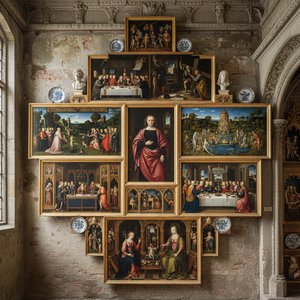
Odkryj 10 arcydzieł wczesnego renesansu niderlandzkiego! Poznaj historie van Eycka, Rogiera van der Weydena i innych mistrzów. Reprodukcje obrazów najwyższej jakości dla Twojego wnętrza – OriginalUniqueArt.com

Rembrandt van Rijn: 25 Najwybitniejszych Dzieł Sztuki – Reprodukcje i Inspiracje do Wnętrz
Poznaj 25 arcydzieł Rembrandta van Rijn! Odkryj fascynujące historie, techniki i wpływ holenderskiego mistrza baroku na świat sztuki. Reprodukcje obrazów najwyższej jakości – inspiracje do wnętrz na OriginalUniqueArt.com

Rogier van der Weyden: Emotion, Innovation & the Early Netherlandish Renaissance
Explore the revolutionary art of Rogier van der Weyden, a pivotal figure of the Early Netherlandish Renaissance. Discover his emotional realism, innovative compositions, and lasting impact on painting history.

Hugo van der Goes: Devotion, Innovation & the Psychological Depth of Early Netherlandish Painting
Explore the revolutionary art of Hugo van der Goes – a master of Early Netherlandish painting renowned for his dramatic realism, psychological depth & profound influence on Renaissance artists. Discover his iconic works and lasting legacy.


