
 Podgląd w skali 1:1
 Wyślij jako kartkę
 Udostępnij
 Szczegóły dzieła
 Przewodnik

 Pobierz obraz
 Podobne obiekty
 RTG
RTG Pokaz slajdów
 Q&A
Q&A Statystyki
Morze 4

- 41.0 x 56.0 cm


 Rozwiń treść
Dzieło sztuki prezentowane na tej stronie podlega ochronie prawem autorskim, co oznacza, że nie mamy prawa do tworzenia ani sprzedaży jego identycznej reprodukcji. Ochrona ta jest egzekwowana na mocy umów międzynarodowych, takich jak Konwencja berneńska oraz przez przepisy prawa krajowego, w tym te określone w Prawo autorskie USA – Tytuł 17.
Metoda ta jest w pełni zgodna z przepisami prawa autorskiego, ponieważ nie polega na kopiowaniu ani powielaniu chronionego dzieła. Stanowi ona kreatywną reinterpretację – nowy obraz, który czerpie inspirację z oryginału, ale nie jest z nim tożsamy.
Giclée / Wydruk artystyczny
Wydruki giclée lub płótna o jakości muzealnej, szybka realizacja i szeroki wybór opcji wykończenia. ( Zamów ręcznie malowaną reprodukcję Przejdź do wersji cyfrowej)




P118B zł10

P118H zł10

P118W zł10

P438Z zł10

P508JH zł12

P508YH zł12

P805H zł10

P805Z zł10

P919BZ zł10

P919G zł10

P919XJ zł10

P959ZH zł10

P968JZ zł12

W106C zł8

W218G zł10

W218JH zł8

W218Y zł10

W307PJ zł10

W316G zł10

W316PJ zł8

W316Y zł10

W398PJ zł8

W4111J zł10

W500HY zł15

W500JH zł15

W692G zł12

W849H zł8

W940BG zł15

W953PJ zł8




Wybierz spośród naszych standardowych rozmiarów, które zachowują oryginalne proporcje dzieła sztuki.

Wpisz wymaganą szerokość i wysokość, aby dopasować grafikę do ramy lub ściany. Wydruk można jedynie przyciąć, nigdy nie powiększając go poza oryginalny obraz, dlatego format o innych proporcjach spowoduje utratę części kompozycji. Przed rozpoczęciem druku prześlemy Ci cyfrowy podgląd do zatwierdzenia. Obraz wyświetlany na tej stronie nie pokazuje rzeczywistego przycięcia — jedynie podgląd oddaje ten efekt.
Dostawa na cały świat () w ciągu 2 tygodni zamiast standardowych 4/5 tygodni. (1 Listopad)

Bezpłatna ekspresowa wysyłka na cały świat

Wysokiej jakości płótno lniane

Pełne ubezpieczenie przesyłki

Gwarancja zwrotu należności celnych i podatków importowych

Gwarancja wiernego odwzorowania kolorów

100-dniowa polityka zwrotów (tylko w przypadku wad)

Gwarancja 100% zwrotu pieniędzy

Zniżka przy zakupie wielu sztuk
 Opcja ze szkłem jest dostępna wyłącznie w rozmiarach poniżej 110 cm

Morze 4
Giclée / Wydruk artystyczny
Wymiary reprodukcji
-


Cena całkowita
zł 311
Hughie O’Donoghue i Jego „Saltwater 4”: Symfonia Turbulentnego Oceanu
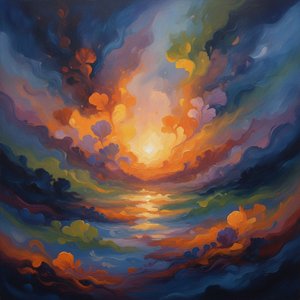
„Saltwater 4” autorstwa Hughiego O’Donoghuego stanowi fascynujące dzieło sztuki abstrakcyjną, które uchwyciło piękno i emocje oceanu podczas zachodu słońca. Został stworzony w roku 2010 i mierzy się 41 x 56 cm oraz znajduje się aktualnie w Trinity Hall w Cambridge, Wielka Brytania. O’Donoghue, irlandzki malarz pochodzący z rodzinnego Mayo, zainspirował się bogactwem krajobrazów Irlandii oraz głębią ludzkiej emocji – elementy te znalazły swoje odzwierciedlenie w jego twórczości. Jego prace są prezentowane w kolekcjach międzynarodowych i cenione przez krytyków sztuki za umiejętność przekazywania uczuć poprzez abstrakcję.Styl i Technika: Ekspresjonizm Impasto
„Saltwater 4” należy do kategorii ekspresjonizmu, co odzwierciedla się w jego charakterystycznej technice – impasto. O’Donoghue wykorzystał grubą warstwę farby olejnej nakładaną na płótno, tworząc wyraźną teksturę i widoczne wgłębienia powierzchni. Gesturalne linie oraz miękkie ruchy pędzla definiują kształty obrazu zamiast ich szczegółowego konturowania, co dodaje dziełu dynamiki i energii. Szczególną uwagę należy zwrócić na zastosowanie ciepłych kolorów – czerwieni, pomarańczy i żółci – które dominują w górnej części obrazu i tworzą atmosferę spokoju oraz tajemnicy. Kontrastujące odcienie niebieskiego i białego imitują powierzchnię wody, dodając głębi kompozycji i wprowadzając elementy ruchu.Historia i Inspiracja: Echo Gaeltachtu
O’Donoghue urodził się w 1953 roku w Manchesterze, gdzie jego ojciec był pracownikiem kolei – doświadczenie to miało istotny wpływ na rozwój jego zainteresowań sztuką i historią. Jego matka pochodziła z Irlandii, z obszarów Gaeltachtu Mayo, gdzie O’Donoghue spędził dzieciństwo, absorbując tradycję lokalną oraz poznając piękno irlandzkiego krajobrazu. Inspiracją dla twórczości artysty stały się zarówno elementy folklorystyczne irlandzkie jak i obserwacje natury – szczególnie oceanu i jego zmieniającego się światła. Jego prace często eksplorują związek między człowiekiem a naturą, wykorzystując język abstrakcji do wyrażania emocji i refleksji filozoficznych.Symbolizm i Emocjonalny Impresjonizm
„Saltwater 4” nie przedstawia konkretnych obiektów ani postaci, lecz koncentruje się na przekazywaniu uczuć poprzez kolor i fakturę. Turbulentne kolory mogą symbolizować emocjonalną intensywność oraz siłę natury – elementy te są obecne zarówno w górnej części obrazu jak i dolnej jego części. Dzieło emanuje ciepłem i autentycznością, przypominając o niepowtarzalnym pięknie krajobrazów irlandzkich oraz głębokiej refleksji nad kondycją ludzką. Jego ekspresyjny charakter zachęca do kontemplacji i pozwala odbiorcy doświadczyć emocji zawartych w obrazie. Można podziwiać doskonałą reprodukcję „Saltwater 4” na OriginalUniqueArt.com – idealną propozycję dla miłośników sztuki oraz osób szukających inspiracji dekoracyjnej. Szczegółowe informacje o Hughie O’Donoghue i jego innych dziełach dostępne są na stronie artysty: OriginalUniqueArt.com.Pytania i odpowiedzi
Jakie emocje przekazuje „Morze 4” – Hughie O'Donoghue?
„Morze 4” budzi Sielankowy emocje. Ton emocjonalny opisuje wrażenie, jakie wywołuje to dzieło.
Czy „Morze 4” – Hughie O'Donoghue to dzieło o jasnej czy ciemnej kolorystyce?
„Morze 4” charakteryzuje się ogólną jasnością na poziomie zrównoważona, a jej luminancja wynosi Delikatna luminancja.
Jaki to rodzaj dzieła sztuki: „Morze 4” – Hughie O'Donoghue?
„Morze 4” – Hughie O'Donoghue jest klasyfikowane jako Sztuka ścienna. Kategoria ta określa rodzaj dzieła, jakim jest oryginał.
Biografia artysty
The Tapestry of Memory: The Life and Art of Hughie O’Donoghue
To encounter the work of Hughie O’Donoghue is to step into a profound dialogue between the tangible world and the ephemeral reaches of human memory. Born in 1953 in Manchester, England, O’Donoghue possesses an artistic identity forged in the crucible of dual heritages. While his roots are firmly planted in the industrial landscape of Manchester, his soul was deeply shaped by the evocative traditions of Ireland. His mother, hailing from the Gaeltacht of County Mayo, provided a connection to a world of Gaelic folklore and raw, untamed landscapes. This unique upbringing—a blend of rigorous academic curiosity encouraged by his father and the haunting power of ancestral storytelling—created a foundation for an oeuvre that seeks to bridge the gap between historical weight and personal emotion.
O’Donoghue’s formal journey into the heart of visual expression was marked by a disciplined pursuit of mastery. After attending St Augustine’s Grammar School and Trinity and All Saints College, he earned his Master of Arts in Fine Art from Goldsmiths College, University of London, in 1982. His early professional experiences, such as a residency at the Drax Power Station in Yorkshire, instilled in him an appreciation for monumental scale and the tactile materiality of the world. However, it was his transformative appointment as Artist-in-Residence at The National Gallery between 1984 and 1985 that fundamentally altered his artistic trajectory. Immersed in the presence of Western masterpieces, he began to absorb the technical legacies of giants like Rembrandt and Michelangelo, learning to weave the precision of classical draughtsmanship into a contemporary language of abstraction.
The Alchemy of Abstraction and History
The brilliance of O’Donoghue’s technique lies in his ability to use the physical properties of paint to evoke psychological depth. His work often moves beyond mere representation, utilizing thick impasto and gestural brushstrokes to create surfaces that feel as though they have been weathered by time itself. In masterpieces such as Saltwater 4, one observes a turbulent symphony of color where warm oranges and deep browns collide with cool grays, mirroring the instability of the natural elements. This expressionist approach allows him to explore themes of identity and the human condition through a lens that is both visceral and cerebral. The figures in his work are rarely static; they emerge from and recede into layers of texture, suggesting the way history and memory fluctuate within our consciousness.
His thematic preoccupations often delve into the darker, more complex corridors of the twentieth century, particularly regarding wartime experiences and the scars left by conflict. Through works like German Tanks, For ages les Eaux, he navigates the heavy intersections of politics, violence, and the enduring spirit of humanity. This exploration of historical trauma is not merely documentary but deeply symbolic, as he uses the abstracted figure to represent the vulnerability and resilience of the individual caught in the gears of history. His ability to translate large-scale historical narratives into intimate, emotive paintings has earned him a place among Britain's most respected contemporary painters.
A Legacy of Enduring Significance
Throughout his career, O’Donoghue has achieved significant recognition, notably as a Royal Academician. His exhibitions, such as the poignant Original Sins at the National Gallery of Ireland, demonstrate his ongoing commitment to addressing questions of identity and the Decade of Centenaries. The significance of his work lies in its refusal to settle for easy answers; instead, he offers a space where the viewer can contemplate the complexities of existence.
The enduring impact of his artistry can be summarized through several key pillars:
- Synthesis of Tradition and Modernity: The seamless integration of classical draughtsmanship with contemporary abstract expressionism.
- Cultural Duality: The profound influence of Irish oral traditions and landscapes upon a British academic training.
- Materiality as Narrative: Using the physical weight of oil paint to symbolize the weight of historical memory.
- Humanistic Focus: A lifelong dedication to exploring the human condition, identity, and the psychological echoes of history.
As O’Donoghue continues to evolve, his work remains a vital testament to the power of art to act as a vessel for both the personal and the universal, ensuring that the stories of the past are never truly lost to the shadows of time.

Hughie O'Donoghue
1953 -
Krótka nota
- Artistic Movement Or Style: Abstraction
- Artists Or Movements Influenced By This Artist: ['Historical Art Methods']
- Artists Who Influenced This Artist: ['David Mach']
- Date Of Birth: 1953
- Full Name: Hughie O’Donoghue
- Nationality: British
- Notable Artworks:
- Saltwater 4
- Varnishing Day
- Place Of Birth: Manchester, England
Powiązane artykuły
The Soul of Color: A Journey into the Emotional Resonance of Lyrical Abstraction
Embark on a cultural journey through Lyrical Abstraction. Explore how masters like Kandinsky used color and motion to translate emotion into visual poetry. Discover the profound beauty of abstract expressionism and learn to curate emotional resonance in your own art collection.

Romantyczny Krajobraz w Malarstwie: 10 Arcydzieł, Które Zdefiniowały Epokę | OriginalUniqueArt.com
Odkryj 10 arcydzieł romantyzmu w malarstwie! Poznaj historie Caspara Davida Friedricha, Turnera i innych mistrzów. Inspiracje wnętrzarskie & reprodukcje obrazów najwyższej jakości na OriginalUniqueArt.com. Eksploruj kolekcję online!

Geometria Sztuki: 10 Arcydzieł Abstrakcji Geometrycznej | OriginalUniqueArt.com
Odkryj 10 arcydzieł abstrakcji geometrycznej! Poznaj historię Mondriana, Kandinskiego i Maleвича. Inspiracje wnętrzarskie z malarstwem abstrakcyjnym – reprodukcje najwyższej jakości na OriginalUniqueArt.com. Eksploruj kolekcję online!

25 Arcydzieł Kandinskiego: Kolor, Duchowość i Abstrakcja w Twoim Domu | OriginalUniqueArt.com
Odkryj 25 arcydzieł Wassily Kandinskiego – pioniera abstrakcji i ekspresjonizmu! Poznaj historie, techniki i emocje kryjące się za jego kolorowymi kompozycjami. Reprodukcje obrazów najwyższej jakości na OriginalUniqueArt.com. Eksploruj pełną kolekcję online!

Top 10 arcydzieł ekspresjonizmu abstrakcyjnego – inspiracje dla Twojego wnętrza | OriginalUniqueArt.com
Odkryj 10 arcydzieł ekspresjonizmu abstrakcyjnego – Pollock, Rothko, de Kooning i inni. Poznaj historie artystów, techniki i inspiracje dla Twojego wnętrza. Reprodukcje najwyższej jakości na OriginalUniqueArt.com!