Podgląd w skali 1:1
 Wyślij jako kartkę
 Udostępnij
 Szczegóły dzieła
 Przewodnik

 Pobierz obraz
 Podobne obiekty
 RTG
RTG Pokaz slajdów
 Statystyki
The Hypochondriac (Le Malade imaginaire)
 Etching
- WallArt
- Contemporary Realism
 1870
1870- 19th Century
 20.0 x 27.0 cm
 Galeria Courtauld
 Rozwiń treść
Giclée / Wydruk artystyczny
Wydruki giclée lub płótna o jakości muzealnej, szybka realizacja i szeroki wybór opcji wykończenia. ( Zamów ręcznie malowaną reprodukcję Przejdź do wersji cyfrowej)




P118B zł10

P118H zł10

P118W zł10

P438Z zł10

P508JH zł12

P508YH zł12

P805H zł10

P805Z zł10

P919BZ zł10

P919G zł10

P919XJ zł10

P959ZH zł10

P968JZ zł12

W106C zł8

W218G zł10

W218JH zł8

W218Y zł10

W307PJ zł10

W316G zł10

W316PJ zł8

W316Y zł10

W398PJ zł8

W4111J zł10

W500HY zł15

W500JH zł15

W692G zł12

W849H zł8

W940BG zł15

W953PJ zł8




Wybierz spośród naszych standardowych rozmiarów, które zachowują oryginalne proporcje dzieła sztuki.

Wpisz wymaganą szerokość i wysokość, aby dopasować grafikę do ramy lub ściany. Wydruk można jedynie przyciąć, nigdy nie powiększając go poza oryginalny obraz, dlatego format o innych proporcjach spowoduje utratę części kompozycji. Przed rozpoczęciem druku prześlemy Ci cyfrowy podgląd do zatwierdzenia. Obraz wyświetlany na tej stronie nie pokazuje rzeczywistego przycięcia — jedynie podgląd oddaje ten efekt.
Dostawa na cały świat () w ciągu 2 tygodni zamiast standardowych 4/5 tygodni. (27 Październik)

Bezpłatna ekspresowa wysyłka na cały świat

Wysokiej jakości płótno lniane

Pełne ubezpieczenie przesyłki

Gwarancja zwrotu należności celnych i podatków importowych

Gwarancja wiernego odwzorowania kolorów

100-dniowa polityka zwrotów (tylko w przypadku wad)

Gwarancja 100% zwrotu pieniędzy

Zniżka przy zakupie wielu sztuk
 Opcja ze szkłem jest dostępna wyłącznie w rozmiarach poniżej 110 cm

The Hypochondriac (Le Malade imaginaire)
Giclée / Wydruk artystyczny
Wymiary reprodukcji
-


Cena całkowita
zł 307
A Satirical Masterpiece: Decoding Daumier’s Vision
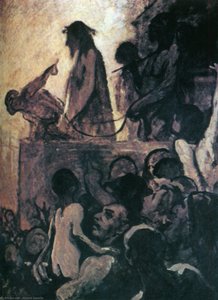
In the realm of French Realism, few works capture the biting wit and social scrutiny of Honoré Daumier quite like "The Hypochondriac" (Le Malade imaginaire). Executed around 1870, this evocative drawing serves as a profound visual distillation of Molière’s legendary satirical play. Daumier does not merely illustrate a theatrical moment; he breathes life into the very essence of human folly and the absurdity of medical pretension. The scene presents a dramatic tableau where the boundaries between stagecraft and reality blur, inviting the viewer to witness the tension between the delusional patient, Argan, and the self-important physician, Purgon. It is a work that transcends its 19th-century origins, offering a timeless commentary on how easily authority can be used to mask incompetence.
The composition is anchored by a palpable sense of atmosphere, achieved through Daumier’s masterful command of light and shadow. The room feels intimate yet claustrophobic, mirroring the psychological entrapment of the hypochondriac himself. Through his use of chiaroscuro-like effects, Daumier directs our gaze across the figures—from the bearded doctor engaged in intense dialogue to the whimsical presence of a jester holding a bottle. This interplay of light does more than define form; it sculpts the emotional weight of the scene, highlighting the dramatic friction between the characters and creating a sense of theatrical depth that pulls the observer into the heart of the drama.
Technique and the Art of Observation
To behold "The Hypochondriac" is to appreciate the technical brilliance of Daumier’s dry etching process. By applying acid to a zinc plate coated with bitumen, the artist achieved a remarkable level of detail that allows for incredible textural nuance. Every line carries intention, contributing to a sense of movement and life that is rare in works of this period. The tonal modulations are particularly striking; they provide a velvety richness to the shadows and a sharp clarity to the highlights, lending the black and white medium a near-painterly quality. This meticulous draftsmanship allows the viewer to feel the heavy fabrics of the costumes and the somber stillness of the room.
For the discerning collector or interior designer, this piece offers a sophisticated aesthetic that balances historical gravity with expressive energy. The monochromatic palette makes it an exceptionally versatile choice for high-end decor, capable of anchoring a gallery wall or serving as a focal point in a study lined with books. It possesses that rare quality of "living art"—a work that does not merely sit on a wall but actively engages the room, sparking conversation and inviting deep contemplation of the human condition.
A Legacy of Social Commentary
Beyond its technical merits, the emotional impact of Daumier’s work lies in its unapologetic honesty. As a chronicler of the tumultuous currents of 19th-century France, Daumier used his art as a weapon against hypocrisy. In "The Hypochondriac," he captures the precise moment where medical authority meets theatrical farce. The symbolism is subtle yet pervasive: the bottles, the costumes, and the exaggerated gestures all serve to lampoon the inflated egos of those who claim expertise over life and death. It is an invitation to look beneath the surface of societal roles and recognize the comedy—and the tragedy—inherent in our shared delusions.
Owning a high-quality reproduction of this masterpiece allows one to preserve a fragment of art history’s most sharp-witted era. Whether you are drawn to its connection to Molière, its exquisite Realist technique, or its ability to add a layer of intellectual depth to a modern space, "The Hypochondriac" remains an enduring icon of artistic bravery and observational genius.
Pytania i odpowiedzi
Kiedy powstało i w jakim nurcie utrzymane jest dzieło „The Hypochondriac (Le Malade imaginaire)” – Honoré Daumier?
„The Hypochondriac (Le Malade imaginaire)” – Honoré Daumier datowane jest na 1870 rok i reprezentuje nurt Contemporary Realism.
Do jakiego nurtu należy "The Hypochondriac (Le Malade imaginaire)"?
„The Hypochondriac (Le Malade imaginaire)” to dzieło należące do nurtu Contemporary Realism. Nurt ten określa tradycję artystyczną, w której osadzone jest dzieło.
W jakiej technice wykonano „The Hypochondriac (Le Malade imaginaire)” – Honoré Daumier?
„The Hypochondriac (Le Malade imaginaire)” wykonano w technice Etching.
Biografia artysty
Wprowadzenie do Świata Honoré Daumiéra
Honoré-Victorin Daumier, postać niezwykle złożona i fascynująca, to artysta, którego twórczość wciąż wywołuje silne emocje i prowokuje do refleksji. Urodzony w 1808 roku w Marsylii, a zmarły w Valmondois w 1879 roku, Daumier był nie tylko malarzem, grafikiem i rzeźbiarzem, ale przede wszystkim obserwatorem ludzkiej natury – cynicznym, lecz pełnym współczucia. Jego życie, naznaczone trudami i niesprawiedliwością, stało się tłem dla jego niezwykle bogatego i różnorodnego dorobku artystycznego, który zrewolucjonizował świat grafiki i malarstwa.
Daumier, syn szklarza i poety, wyjechał do Paryża wraz z rodziną w 1814 roku. Wkrótce po przybyciu, rozpoczął naukę rysunku, a jego talent szybko stał się widoczny. Jego edukacja, choć nieformalna, była niezwykle wszechstronna – od klasycznych wpływów, przez obserwację życia ulicznego, aż po kontakty z wybitnymi artystami tamtych czasów. To właśnie ta mieszanka doświadczeń i inspiracji pozwoliła mu stworzyć unikalny styl, łączący realizm z ekspresją i satyrą.
Początki Kariery: Caricatura i Satyra
Przełom w karierze Daumiéra nastąpił wraz z rewolucją z 1830 roku. To wydarzenie otworzyło mu drogę do publikacji satyrycznych rysunków, które szybko zdobyły popularność. Zaczynając jako anonimowy ilustrator dla czasopism, szybko stał się znany dzięki swojej pracy w *Le Charivari*, gdzie pod kierownictwem Charlesa Philipona mógł swobodnie rozwijać swój talent. Rysunki Daumiéra nie były jedynie humorystycznymi portretami – to ostre i bezkompromisowe komentarze na temat francuskiego społeczeństwa, polityki i obyczajów. Jego satyra, często brutalna i prowokacyjna, dotykała najwrażliwszych tematów, od korupcji w sądzie po dekadencję arystokracji.
Jego najbardziej znane karykatury, takie jak "Robert Macaire" czy "Typy paryskie", stały się symbolem krytyki społecznej i politycznej. W 1832 roku, za szczególnie ostre rysunki, Daumier został aresztowany i osadzony w więzieniu na sześć miesięcy. Ta sytuacja, zamiast go zniechęcić, tylko wzmocniła jego determinację w dążeniu do prawdy i obnażaniu niesprawiedliwości.
Oprócz Caricatur: Malarstwo i Rzeźba
Mimo że Daumier jest najbardziej znany ze swoich grafik, nie można zapominać o jego twórczości malarskiej i rzeźbiarskiej. Jego obrazy, często przedstawiające sceny z życia codziennego paryskiego proletariatu – łazienników, kucharzy, prawników – charakteryzują się niezwykłą wrażliwością i empatią. Daumier nie malował idealizowanych portretów, lecz wiernie oddawał surowość i trudności życia, wykorzystując do tego celu dynamiczne kompozycje i dramatyczne oświetlenie.
Jego rzeźby, tworzone głównie z gliny (wiele z nich pozostaje niezakończonych), są świadectwem jego niezwykłego talentu modelarskiego. Poprzez gesty i mimikę, Daumier potrafił oddać całe bogactwo emocji i psychologicznych stanów, co czyni jego rzeźby prawdziwymi portretami duszy ludzkiej.
Wpływ i Dziedzictwo
Honoré Daumier był artystą, który zrewolucjonizował świat grafiki. Jego innowacyjne techniki litograficzne, jego bezkompromisowa satyra i jego niezwykła wrażliwość na los ludzki wywarły ogromny wpływ na kolejne pokolenia artystów. Jego twórczość zainspirowała takich mistrzów jak Gustave Courbet i Édouard Manet, a jego prace do dziś są źródłem inspiracji dla artystów i krytyków sztuki.
Daumier nie był tylko artystą – był obserwatorem, komentatorem i świadkiem swojej epoki. Jego dzieła, dostępne w wielu muzeach na całym świecie, wciąż prowokują do refleksji nad kondycją ludzką i wyzwaniami współczesnego świata. Jego legacy jest dowodem na to, że sztuka może być potężnym narzędziem zmiany społecznej i obrony prawdy.

Honoré Daumier
1808 - 1879 , Francja
Krótka nota
- Artistic Movement Or Style: Realizm, Satyra
- Artists Or Movements Influenced By This Artist:
- Impressionizm
- Nowoczesność
- Artists Who Influenced This Artist:
- Alexandre Lenoir
- Jacques-Louis David
- Date Of Birth: 26 lutego 1808
- Date Of Death: 10 lutego 1879
- Full Name: Honoré-Victorin Daumier
- Nationality: Francuz
- Notable Artworks:
- Rue Transnonain
- Les gens de justice
- Place Of Birth: Marsylia, Francja
Powiązane artykuły
Poetycka Prawda Obserwacji: Realizm w Malarstwie XIX Wieku – Studium i Interpretacje
Odkryj fascynujący świat realizmu w malarstwie XIX wieku! Analiza dzieł Courbeta, polskiego realizmu i wpływu tego nurtu na współczesną sztukę. Ekspercka wiedza dla kolekcjonerów i miłośników historii sztuki.

Realizm w sztuce: Obraz rzeczywistości jako wyzwanie dla konwencji i świadectwo epoki
Poznaj realizm w sztuce – od Courbeta po polskie malarstwo XIX wieku. Analiza programu, tematyki i wpływu tego kierunku na historię oraz współczesną twórczość. Ekspercka wiedza o krytyce społecznej i autentyczności w sztuce.
Honoré Daumier: Social Commentary & Artistic Innovation in 19th-Century France
Explore the life & work of Honoré Daumier, a master of 19th-century French realism and satire. Discover his powerful lithographs, paintings, and sculptures critiquing society – and his lasting influence on modern art.

Romantic Realism's Finest: 10 Masterpieces for Your Home | OriginalUniqueArt
Explore 10 defining masterpieces of Romantic Realism! Discover Courbet, Millet & Daumier's powerful paintings—capturing emotion and social realities. Find museum-quality reproductions for your home at OriginalUniqueArt.com.
Realizm w Sztuce: 10 Arcydzieł, Które Zmieniły Spojrzenie na Świat | OriginalUniqueArt.com
Odkryj 10 arcydzieł realizmu – Courbet, Millet i inni artyści, którzy zrewolucjonizowali malarstwo. Poznaj historie, techniki i emocje w realistycznych obrazach. Reprodukcje najwyższej jakości na OriginalUniqueArt.com! Eksploruj kolekcję online.