
 Podgląd w skali 1:1
 Wyślij jako kartkę
 Udostępnij
 Szczegóły dzieła
 Przewodnik

 Pobierz obraz
 Podobne obiekty
 RTG
RTG Pokaz slajdów
 Pytania i odpowiedzi
 Statystyki
Bash Bish Falls


 Rozwiń treść
Giclée / Wydruk artystyczny
Wydruki giclée lub płótna o jakości muzealnej, szybka realizacja i szeroki wybór opcji wykończenia. ( Zamów ręcznie malowaną reprodukcję Przejdź do wersji cyfrowej)




P118B zł10

P118H zł10

P118W zł10

P438Z zł10

P508JH zł12

P508YH zł12

P805H zł10

P805Z zł10

P919BZ zł10

P919G zł10

P919XJ zł10

P959ZH zł10

P968JZ zł12

W106C zł8

W218G zł10

W218JH zł8

W218Y zł10

W307PJ zł10

W316G zł10

W316PJ zł8

W316Y zł10

W398PJ zł8

W4111J zł10

W500HY zł15

W500JH zł15

W692G zł12

W849H zł8

W940BG zł15

W953PJ zł8




Wybierz spośród naszych standardowych rozmiarów, które zachowują oryginalne proporcje dzieła sztuki.

Wpisz wymaganą szerokość i wysokość, aby dopasować grafikę do ramy lub ściany. Wydruk można jedynie przyciąć, nigdy nie powiększając go poza oryginalny obraz, dlatego format o innych proporcjach spowoduje utratę części kompozycji. Przed rozpoczęciem druku prześlemy Ci cyfrowy podgląd do zatwierdzenia. Obraz wyświetlany na tej stronie nie pokazuje rzeczywistego przycięcia — jedynie podgląd oddaje ten efekt.
Dostawa na cały świat () w ciągu 2 tygodni zamiast standardowych 4/5 tygodni. (7 Listopad)

Bezpłatna ekspresowa wysyłka na cały świat

Wysokiej jakości płótno lniane

Pełne ubezpieczenie przesyłki

Gwarancja zwrotu należności celnych i podatków importowych

Gwarancja wiernego odwzorowania kolorów

100-dniowa polityka zwrotów (tylko w przypadku wad)

Gwarancja 100% zwrotu pieniędzy

Zniżka przy zakupie wielu sztuk
 Opcja ze szkłem jest dostępna wyłącznie w rozmiarach poniżej 110 cm

Bash Bish Falls
Giclée / Wydruk artystyczny
Wymiary reprodukcji
-


Cena całkowita
zł 317
A Symphony of Water and Light: The Majesty of Bash Bish Falls
In the heart of the American wilderness, where the rugged Taconic Mountains meet the sky, lies a vision captured eternally in Homer Dodge Martin’s 1859 masterpiece, Bash Bish Falls. This breathtaking oil on canvas is far more than a mere depiction of a waterfall; it is a profound meditation on the sublime power of nature. As the eye travels upward through the dense, verdant layers of the forest, it is drawn toward the central, cascading torrent that defines this legendary site. The painting serves as a window into the 19th-century American soul, capturing a moment when the untamed landscape was viewed not just as scenery, but as a sacred cathedral of light and mist.
The composition is masterfully orchestrated to evoke a sense of vertical grandeur. Martin utilizes a sophisticated atmospheric perspective, where the distant elements of the forest soften into a hazy, ethereal blue, creating an immense sense of depth that pulls the viewer into the very spray of the falls. The interplay of light and shadow is particularly captivating; the artist captures the way diffused sunlight filters through a morning mist, illuminating the white foam of the cascading water while casting deep, mysterious shadows among the ancient rocks and thick foliage. This delicate balance of luminosity creates a rhythmic movement across the canvas, mimicking the continuous, pulsing energy of the falling water itself.
The Intersection of Romanticism and Impressionist Spirit
To behold Bash Bish Falls is to witness a pivotal moment in art history. Executed during the height of the Hudson River School, Martin’s work embodies the movement's devotion to portraying the grandeur and spiritual significance of the American landscape. Yet, even in this early work, one can detect the seeds of something revolutionary. While his technique remains rooted in the meticulous detail and layered oil applications characteristic of his mentor, William Hart, there is a burgeoning freedom in Martin’s brushwork. The foliage and rugged rock formations are rendered with a textured, expressive quality that hints at the Impressionist explorations of light and color that would later define his career.
This stylistic duality makes the piece an extraordinary choice for the discerning collector or interior designer. It possesses the classical dignity required for traditional, stately environments, yet its vibrant energy and focus on atmospheric effects allow it to breathe within modern, minimalist spaces. The painting does not merely decorate a wall; it transforms a room, offering a tranquil escape into a world of natural splendor. For those seeking to infuse their surroundings with a sense of peace, strength, and historical depth, this reproduction offers an unparalleled opportunity to possess a fragment of the American Romantic spirit.
Pytania i odpowiedzi
Jaki kolor najbardziej dominuje w "Bash Bish Falls"?
Dominującym kolorem dzieła „Bash Bish Falls” – Homer Dodge Martin jest Espresso (#493e27).
Gdzie mogę pobrać „Bash Bish Falls” – Homer Dodge Martin?
„Bash Bish Falls” – Homer Dodge Martin można pobrać ze strony Pobierz plik cyfrowy dzieła jako wysokiej rozdzielczości cyfrowe zdjęcie do pobrania.
Jaka technika i styl charakteryzują „Bash Bish Falls” – Homer Dodge Martin?
W "Bash Bish Falls" technika Oil On Canvas łączy się z nurtem Hudson River School.
Biografia artysty
A Bridge Between Worlds: The Life and Art of Homer Dodge Martin
Homer Dodge Martin, born in Albany, New York, on October 28, 1836, stands as a pivotal figure in the evolution of American landscape painting. He wasn’t merely a painter; he was a translator – bridging the established grandeur of the Hudson River School with the nascent, vibrant innovations of Impressionism. His early life, steeped in artistic promise and nurtured by a thriving community of artists in Albany, including George Boughton and Edward Gay, laid the foundation for his unique vision. These formative years instilled within him a deep respect for nature’s majesty, yet even in his earliest works, subtle hints of a more personal and atmospheric approach began to emerge – a foreshadowing of the artistic transformation that lay ahead. He spent countless summers sketching in the breathtaking Adirondacks, the rugged Catskills, and the majestic White Mountains, meticulously translating these plein air studies into finished canvases within his New York City studio—a common practice among artists seeking both inspiration from nature’s raw beauty and the practical advantages of urban life. This dedication quickly garnered recognition; he was elected as an associate, and later a full academician, of the National Academy of Design, solidifying his standing within the art world of the late 19th century.European Awakening and Artistic Transformation
A truly transformative moment in Martin’s artistic journey arrived with a trip to Europe in 1876. This wasn't simply a leisurely excursion; it was an immersive experience—a deep dive into the heart of avant-garde art movements. Exposure to the Barbizon School, with its emphasis on direct observation and naturalistic depictions of rural life, profoundly impacted his sensibilities. Simultaneously, he encountered the burgeoning Impressionist movement, witnessing firsthand their revolutionary techniques for capturing light and color. The carefully constructed compositions and polished surfaces of his earlier work began to subtly shift. He wasn’t abandoning realism entirely; rather, he was absorbing these new influences, filtering them through his own unique artistic lens. This evolution wasn't immediate or dramatic; it was a gradual process—a quiet but significant departure from the rigid conventions of the Hudson River School. The Barbizon’s focus on capturing the essence of everyday life and the Impressionists’ exploration of fleeting moments of light and color resonated deeply with Martin, prompting him to experiment with looser brushstrokes, more evocative use of color, and a heightened sensitivity to atmospheric effects. He sought to capture not just what he *saw*, but also what he *felt* – the mood, the atmosphere, the very soul of the landscape.Years in Normandy and the Essence of Place
The culmination of this artistic awakening occurred during a four-year sojourn in France, primarily in Normandy, from 1882 to 1886. He became part of a vibrant artist colony at Étaples, exchanging ideas with fellow painters and immersing himself in the beauty of the French countryside. This period proved exceptionally fruitful, yielding some of his most celebrated works. Paintings like *The Harbour at Étaples* showcase his growing mastery of topographical detail combined with an atmospheric depth that was becoming increasingly characteristic of his style. However, it’s Cottage in the Forest that truly exemplifies this transformation – a poignant depiction of a solitary dwelling nestled within a vibrant forest, bathed in the golden light of the setting sun. The painting captures not just the physical appearance of the scene but also its emotional resonance—a sense of quiet solitude and peaceful contemplation. Martin’s time in Normandy wasn't merely about copying French techniques; it was about developing his own unique voice – a harmonious blend of observation, emotion, and artistic skill. Harp of the Winds, painted at Villerville on the Seine, stands as perhaps the most iconic example of this period, now housed in the Metropolitan Museum of Art. This painting is a masterful synthesis of his earlier realism with the Impressionist’s focus on light and color, capturing the essence of a windswept shoreline with remarkable sensitivity and poetic beauty.Later Years, Legacy, and Enduring Appeal
Despite achieving considerable recognition during his lifetime, Martin faced significant hardship in his later years. Poverty and increasingly poor eyesight forced him to relocate to St. Paul, Minnesota, in 1893, where he lived with relatives. Remarkably, even as his vision diminished, his creative spirit remained undeterred. His final masterpiece, *Adirondack Scenery*, painted from memory while nearly blind, stands as a testament to his unwavering passion and artistic skill—a poignant reminder that true artistry transcends physical limitations. The painting captures the rugged beauty of the Adirondacks with remarkable detail and emotional depth, conveying a sense of both grandeur and melancholy. Martin died on February 12, 1897, leaving behind a legacy that was only fully appreciated after his death. Shortly thereafter, *Adirondack Scenery* sold for an impressive $5500, signaling a belated recognition of his talent and the enduring appeal of his work. Today, Martin’s paintings are held in numerous prestigious American museums—the Metropolitan Museum of Art, the Smithsonian American Art Museum, the Addison Gallery of American Art, and many others—ensuring that his art continues to inspire and captivate audiences for generations to come. Homer Dodge Martin is rightfully recognized as a transitional figure – a bridge between the Hudson River School’s meticulous realism and the atmospheric poetry of American Impressionism. His innovative approach to landscape painting, characterized by its evocative moodiness and loose brushwork, secures his place as a significant and enduring voice in 19th-century American art.
Homer Dodge Martin
1836 - 1897 , Stany Zjednoczone
Krótka nota
- Artistic Movement Or Style: Hudson River & Imp.
- Artists Or Movements Influenced By This Artist: ['Impressionizm']
- Artists Who Influenced This Artist:
- Hart William
- Barbizon
- Corot
- Date Of Birth: 28 października 1836
- Date Of Death: 12 lutego 1897
- Full Name: Homer Dodge Martin
- Nationality: Amerykański
- Notable Artworks:
- Harp Winds
- Most Leeds
- Near Newport
- Place Of Birth: Albany, USA
Powiązane artykuły
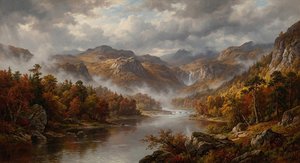
Szkoła Rzeki Hudson: 10 arcydzieł, które ukształtowały pejzaż amerykańskiej sztuki | OriginalUniqueArt
Odkryj 10 arcydzieł Szkoły Rzeki Hudson – malarstwo krajobrazowe Cole'a, Churcha i Bierstadta. Poznaj historię artystów i inspiracje romantyzmu amerykańskiego. Reprodukcje obrazów najwyższej jakości na OriginalUniqueArt.com! Eksploruj kolekcję online.

Thomas Hudson: A Study in 18th-Century Portraiture & British Artistic Identity
Explore the life & work of Thomas Hudson, a leading 18th-century British portraitist. Discover his mastery of the 'Grand Manner,' influential style, and lasting impact on British art. Learn about his notable portraits like Judge William Noel & Alexander Van Aken.
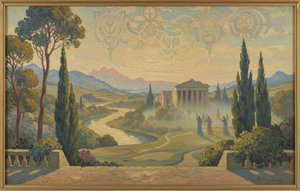
Henri Martin: A Synthesis of Impressionism & Symbolism in the French Landscape Tradition
Explore the captivating world of Henri Martin, a French Post-Impressionist bridging Impressionism & Symbolism. Discover his unique style, influential landscapes, and lasting legacy with OriginalUniqueArt.
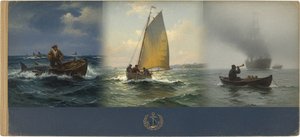
Winslow Homer: 25 Arcydzieł Malarstwa Amerykańskiego | OriginalUniqueArt.com
Poznaj 25 arcydzieł Winslowa Homera – amerykańskiego mistrza realizmu i malarstwa morskiego. Odkryj historie, techniki i inspiracje z jego najsłynniejszych obrazów. Reprodukcje najwyższej jakości na OriginalUniqueArt.com! Eksploruj kolekcję online.

Amerykański Realizm: 10 Arcydzieł, Które Zdefiniowały Epokę | OriginalUniqueArt
Poznaj 10 arcydzieł amerykańskiego realizmu! Odkryj historie Winslowa Homera, Edwarda Hoppera i innych mistrzów. Reprodukcje obrazów najwyższej jakości – inspiracje do Twojego wnętrza na OriginalUniqueArt.com