() ·

A painting made for you, by hand

The Dance Lesson

Ręcznie malowana reprodukcja olejowa

Ręcznie malowany obraz olejny na płótnie, wykonany na zamówienie przez naszych artystów w wybranym przez Ciebie wymiarze i oprawie. ( Przełącz na wydania drukowane Przejdź do wersji cyfrowej)

Opis obiektu

A mesmerizing pastel capture of ballet training by Edgar Degas brings the delicate movement and discipline of the Belle Époque to life, inviting you to explore this masterpiece of realist precision for your collection.

Biografia artysty

Edgar Degas – rewolucyjny malarz francuski znany z fascynujących baletnic, paryskich scen i innowacyjnych technik – prawdziwy mistrz sztuki nowoczesnej.

from ·

Chapter 1

How large should it be?

Slide to change the size; the picture on the left shows the frame at its real width. The proportions of the original are kept.

Standardowy format
personalizowane
CM
INCH

Wybierz spośród naszych standardowych rozmiarów, które zachowują oryginalne proporcje dzieła sztuki.

szerokość
wysokość

Wpisz wymaganą szerokość i wysokość, aby obraz pasował do Twojej ramy lub ściany. Ponieważ jest to dzieło malowane ręcznie, w przypadku rozmiaru o innych proporcjach artysta może domalować nieco więcej wokół obrazu lub przyciąć jego fragmenty — wybór należy do Ciebie. Przed rozpoczęciem pracy prześlemy Ci cyfrową wizualizację do zatwierdzenia. Obraz widoczny na tej stronie nie przedstawia rzeczywistego efektu — jedynie wizualizacja oddaje realny rezultat.

Chapter 2

How should it arrive?

Choose the edges of the stretched canvas

Choose your frame

Corner sample of the WhiteWrap canvas edge finish, stretched on lite drewno bars
White zł1
Corner sample of the BlurSideWrap canvas edge finish, stretched on lite drewno bars
Blurside zł1
Corner sample of the ExtendedWrap canvas edge finish, stretched on lite drewno bars
Extended zł1
Corner sample of the P118B picture frame: polistyren formowany, 5 cm wide and 3 cm thick
P118B zł10
Corner sample of the P118H picture frame: polistyren formowany, 5 cm wide and 3 cm thick
P118H zł10
Corner sample of the P118W picture frame: polistyren formowany, 5 cm wide and 3 cm thick
P118W zł10
Corner sample of the P438Z picture frame: polistyren formowany, 5.5 cm wide and 3.5 cm thick
P438Z zł10
Corner sample of the P508JH picture frame: polistyren formowany, 7 cm wide and 3.5 cm thick
P508JH zł12
Corner sample of the P508YH picture frame: polistyren formowany, 7 cm wide and 3.5 cm thick
P508YH zł12
Corner sample of the P805H picture frame: polistyren formowany, 5 cm wide and 3.5 cm thick
P805H zł10
Corner sample of the P805Z picture frame: polistyren formowany, 5 cm wide and 3.5 cm thick
P805Z zł10
Corner sample of the P919BZ picture frame: polistyren formowany, 7 cm wide and 3.5 cm thick
P919BZ zł10
Corner sample of the P919G picture frame: polistyren formowany, 7 cm wide and 3.5 cm thick
P919G zł10
Corner sample of the P919XJ picture frame: polistyren formowany, 7 cm wide and 3.5 cm thick
P919XJ zł10
Corner sample of the P959ZH picture frame: polistyren formowany, 5 cm wide and 3 cm thick
P959ZH zł10
Corner sample of the P968JZ picture frame: polistyren formowany, 6 cm wide and 4 cm thick
P968JZ zł12
Corner sample of the W106C picture frame: lite drewno, 5 cm wide and 3 cm thick
W106C zł8
Corner sample of the W218G picture frame: lite drewno, 5 cm wide and 3 cm thick
W218G zł10
Corner sample of the W218JH picture frame: lite drewno, 5 cm wide and 3 cm thick
W218JH zł8
Corner sample of the W218Y picture frame: lite drewno, 5 cm wide and 3 cm thick
W218Y zł10
Corner sample of the W307PJ picture frame: lite drewno, 6 cm wide and 3 cm thick
W307PJ zł10
Corner sample of the W316G picture frame: lite drewno, 6 cm wide and 3 cm thick
W316G zł10
Corner sample of the W316PJ picture frame: lite drewno, 6 cm wide and 3 cm thick
W316PJ zł8
Corner sample of the W316Y picture frame: lite drewno, 6 cm wide and 3 cm thick
W316Y zł10
Corner sample of the W398PJ picture frame: lite drewno, 5 cm wide and 3 cm thick
W398PJ zł8
Corner sample of the W4111J picture frame: lite drewno, 6.5 cm wide and 3.5 cm thick
W4111J zł10
Corner sample of the W500HY picture frame: lite drewno, 7 cm wide and 5 cm thick
W500HY zł15
Corner sample of the W500JH picture frame: lite drewno, 7 cm wide and 5 cm thick
W500JH zł15
Corner sample of the W692G picture frame: lite drewno, 8 cm wide and 4 cm thick
W692G zł12
Corner sample of the W849H picture frame: lite drewno, 5 cm wide and 3 cm thick
W849H zł8
Corner sample of the W940BG picture frame: lite drewno, 7.5 cm wide and 4.5 cm thick
W940BG zł15
Corner sample of the W953PJ picture frame: lite drewno, 6 cm wide and 3.5 cm thick
W953PJ zł8
Corner sample of the H24-GOLD picture frame: rzeźbione drewno pokryte gipsem, 10 cm wide and 6 cm thick
H24-GOLD zł30
Corner sample of the H24-SILVER picture frame: rzeźbione drewno pokryte gipsem, 10 cm wide and 6 cm thick
H24-SILVER zł30
Corner sample of the H36-GOLD picture frame: rzeźbione drewno pokryte gipsem, 15 cm wide and 6.5 cm thick
H36-GOLD zł45
Corner sample of the H36-SILVER picture frame: rzeźbione drewno pokryte gipsem, 15 cm wide and 6.5 cm thick
H36-SILVER zł45

Moulding: . Overall size with the frame: .

Chapter 3

Who paints it, and should anything change?

Examples of what can be changed: Replace face with customer photo; Add pet (e.g., replace cat with dog); Include hidden message in background; Change background landscape or elements.
After order, OriginalUniqueArt.com team will email client for instructions and provide a mockup preview

Dostawa na całym świecie () w ciągu 3–4 tygodni zamiast standardowych 5 tygodni. (2 Listopad). Bez kompromisów w kwestii jakości.

Chapter 4

The finishing touches

A nameplate, as in a museum?

Szczegóły grawerowanej brązowej tabliczki

This elegant plaque features the artist's name and the title of the artwork, finely engraved for a timeless presentation.

It is made from bronze with a refined, elegant finish. The text is precisely laser-engraved for a sharp and permanent result. Measuring 9x2 cm, the plaque is compact yet easy to read. It's built to be durable and scratch-resistant, offering a professional, museum-quality look. Mounting is simple thanks to the included adhesive backing.

Szczegóły przezroczystej tabliczki akrylowej

The plaque includes essential engraved details such as the artist's name, the title of the artwork, the date it was created, the type of media used-like oil on canvas or watercolor-a brief description of the piece, and a QR code that links to the complete artwork information.

It is crafted from clear acrylic, offering a sleek, modern appearance. The text is UV-engraved in black to ensure strong visual contrast. With a size of 10x15 cm, it ensures optimal readability. It comes equipped with two metal hooks for secure wall mounting. The plaque is designed to be weather-resistant, making it suitable for various environments, and it includes interactive features that work seamlessly with smartphone scanning.

Szczegóły czarnej tabliczki akrylowej

This elegant plaque includes engraved information such as the artist's name, the title of the artwork, the date it was created, the type of media used (like oil on canvas or watercolor), a short description of the artwork, and a QR code for quick access to more information.

The plaque itself is made from refined black acrylic with a premium finish. The text is laser-engraved in white for high contrast and readability. Its size is 10x15 cm, designed to be easy to read. It comes with two metal hooks for professional mounting. The design is sleek and fits any interior style. It is also weather-resistant and durable, with built-in digital integration for mobile compatibility.

A protective varnish?

When do you need it?

Chapter 5

Your painting, as you ordered it

The Dance Lesson

Technika reprodukcji

Wymiary reprodukcji

-

Wybitny mistrz artystyczny

Większa szczegółowość, finezja i dodatkowy czas na realizację

-

Opcje oprawy reprodukcji

-

-

W przypadku dzieł sztuki lub reprodukcji, których którykolwiek z boków przekracza 105 cm (około 41 cali), rama zostanie wysłana w formie zestawu do samodzielnego montażu. Metoda ta zapewnia bezpieczną dostawę i zapobiega uszkodzeniom podczas transportu.

Wymagany profesjonalny montaż – nie jest to produkt typu DIY.
Zestaw musi zostać złożony, a płótno naciągnięte przez doświadczonego profesjonalnego ramiarza, przy użyciu kleju do drewna (brak w zestawie), kleszczy do naciągania płótna oraz ścisków, które utrzymają krosna w równej pozycji podczas schnięcia kleju. Nieprawidłowy montaż lub nierównomierne napięcie płótna może trwale uszkodzić dzieło sztuki i nie podlega naszej gwarancji.

  • W zestawie znajdują się wszystkie listwy z litego drewna, precyzyjnie docięte do wymiarów.

  • Montaż odbywa się przy użyciu dołączonych wkrętów oraz kleju do drewna do łączenia narożników, którego zestaw nie zawiera i który musi zostać dostarczony przez ramiarza.

  • Wymagane są profesjonalne narzędzia, których nie ma w zestawie: kleszcze do naciągania płótna (napinacz) oraz zaciski, które pozwolą utrzymać listwy w równej pozycji podczas schnięcia kleju.

Ważne:
Do połączenia narożników niezbędny jest klej do drewna, listwy należy unieruchomić za pomocą ścisków do momentu całkowitego wyschnięcia kleju, a naciągnięcie płótna na złożoną ramę wymaga użycia kleszczy do naciągania płótna. Żaden z tych elementów nie jest dołączony do zestawu. Przed zamówieniem tego rozmiaru zalecamy konsultację z doświadczonym ramiarzem.

Etykieta obiektu

-

-

Lakier ochronny

Lakier z połyskiem (pogłębia kolory, chroni przed światłem i wilgocią)

-

Personalizacja dzieła

Przykłady możliwości personalizacji: zastąp twarz zdjęciem klienta; dodaj zwierzę domowe (np. zamień kota na psa); umieść ukrytą wiadomość w tle; zmień krajobraz lub elementy tła.

-

Ekspresowa

Dostawa na cały świat () w ciągu 3–4 tygodni zamiast standardowych 5 tygodni. (2 Listopad). Bez kompromisów w kwestii jakości.

-

Przesyłka ekspresowa

Dostawa na cały świat () w ciągu 5 tygodni. (9 Listopad).

W cenie

Cena całkowita

zł 1168

Suma całkowita zł 1168

Opcja ze szkłem jest dostępna wyłącznie w rozmiarach poniżej 110 cm

Included with every order

  • Bezpłatna ekspresowa wysyłka na cały świat
  • Wysokiej jakości płótno lniane
  • Pełne ubezpieczenie przesyłki
  • Gwarancja zwrotu należności celnych i podatków importowych
  • Gwarancja wiernego odwzorowania kolorów
  • 100-dniowa polityka zwrotów (tylko w przypadku wad)
  • Gwarancja 100% zwrotu pieniędzy
  • Zniżka przy zakupie wielu sztuk

A Moment Frozen in Motion: The Soul of Degas’s Mastery

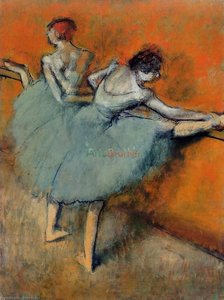
In the quiet, sun-drenched corners of the late 19th-century Parisian studio, Edgar Degas found his most profound inspiration. His masterpiece, “The Dance Lesson,” completed in 1879, serves as a breathtaking window into a world defined by discipline and grace. Unlike many of his contemporaries who sought to capture the fleeting shimmer of light on water, Degas turned his gaze inward toward the human form in motion. This work is not merely a depiction of ballet training; it is a meticulously crafted meditation on the intersection of effort and elegance. Through his expert use of pastel, Degas invites the viewer to step into the room, feeling the stillness of the air and the focused intensity of a young dancer caught in a singular, transformative moment of practice.

The composition centers on a young girl, her form poised with a delicate balance of vulnerability and strength. As she stands on one leg, gripping the wooden barre for stability, the viewer witnesses the raw reality of artistic pursuit. Beside her, an older figure—perhaps an instructor or a seasoned observer—provides a grounding presence, embodying the weight of experience and guidance. The inclusion of a violin in the background adds a subtle, melodic layer to the visual narrative, suggesting that the rhythm of the music is inseparable from the rhythm of the dance. Every element, from the soft folds of her pink dress to the textured surface of the studio floor, contributes to a scene that feels both intimately private and universally resonant.

Technique and the Impressionist Paradox

While history often labels Degas as an Impressionist, he famously resisted the term, preferring to identify as a realist. This distinction is palpable in the technique of “The Dance Lesson.” Rather than relying on the broad, atmospheric strokes of oil paint, Degas utilized the unique properties of pastel to achieve a level of nuance that few could replicate. The medium allowed him to layer soft, powdery tones, creating subtle gradations that mimic the softness of skin and the ethereal quality of light filtering through studio windows. This tactile approach creates a surface that is rich with texture, inviting the eye to linger on the fine details of the dancers' movements and the atmospheric depth of the room.

His mastery of draftsmanship—honed through years of studying classical works in the Louvre—is evident in the precision of his lines. Even within the soft, blurred edges characteristic of the era, there is an unmistakable structural integrity to every limb and gesture. This tension between the softness of the medium and the rigor of the composition mirrors the subject matter itself: the softness of the ballet aesthetic contrasted with the grueling, disciplined reality of the dancer's life. For collectors and designers, this duality makes the piece a versatile treasure, capable of adding both a sense of classical sophistication and a modern, emotive energy to any curated space.

A Timeless Legacy for the Discerning Collector

Beyond its technical brilliance, “The Dance Lesson” carries a profound emotional weight that transcends time. It speaks to the universal themes of aspiration, perseverance, and the quiet beauty found in the pursuit of perfection. The painting captures the "Belle Époque" not through grand spectacles, but through the intimate, unvarnished truth of daily practice. It is a tribute to the unseen hours of toil that precede the public glory of the stage.

For those looking to adorn a home or gallery with art that inspires contemplation, a high-quality reproduction of this work offers more than just decoration; it offers a narrative. Whether placed in a contemporary minimalist setting where its soft pastels can provide warmth, or within a traditional study to highlight its historical depth, Degas’s vision remains as potent today as it was in 1879. To possess such a piece is to hold a fragment of Parisian history, a silent symphony of movement and light that continues to captivate the human spirit.

Pytania i odpowiedzi

Jakie emocje budzi „The Dance Lesson” – Hilaire-Germain-Edgar Degas?

W "The Dance Lesson" nastrojowi Elegant towarzyszy emocja Calm.

Czy The Dance Lesson jest w ogólnym ujęciu jasny?

Ogólnie rzecz biorąc, poziom jasności dzieła „The Dance Lesson” określany jest jako balanced. Postrzegana jasność opisuje, jak jasne lub ciemne wydaje się dane dzieło.

Do którego okresu twórczości Hilaire-Germain-Edgar Degas należy dzieło „The Dance Lesson”?

W dorobku artystycznym Hilaire-Germain-Edgar Degas dzieło „The Dance Lesson” przypada na Mature Impressionism. Ten etap pozwala zestawić je z innymi pracami twórcy.

More about this painting

Podgląd w skali 1:1 Podgląd AR Przełącz na wydania drukowane Przejdź do wersji cyfrowej Wyślij jako kartkę
Szczegóły dzieła Przewodnik Dodaj do ulubionych Pobierz obraz Podobne obiekty RTG Pokaz slajdów Q&A Statystyki

In numbers

  • 1879the year it was painted
  • 29frames to choose from
  • standard sizes, in its own proportions
  • 5weeks to paint and deliver it
Hilaire-Germain-Edgar Degas

Hilaire-Germain-Edgar Degas

1834 - 1917, Francja

Quick facts about Hilaire-Germain-Edgar Degas

  • Artistic Movement Or Style: Impressionizm, Realizm
  • Artists Or Movements Influenced By This Artist:
    • Picasso
    • Matisse
  • Artists Who Influenced This Artist:
    • Ingres
    • Courbet
    • Pissarro
  • Date Of Birth: 1834
  • Date Of Death: 1917
  • Full Name: Hilaire-Germain-Edgar De Gas
  • Nationality: Francuz
  • Notable Artworks:
    • Dancer and Tambourine
    • The Ballet Class
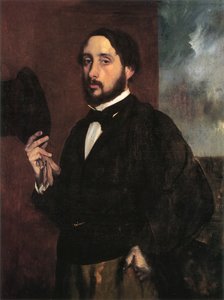
    • Degas w zielonym płaszczu
    • Zgrupowanie balerinek
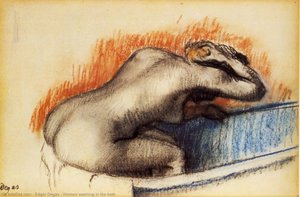
    • Kobiety czeszące włosy
  • Place Of Birth: Paryż, Francja

Biografia artysty

A Life Immersed in Movement

Edgar Degas, właśc. Hilaire-Germain-Edgar de Gas, urodził się w Paryżu w 1834 roku, a zmarł w 1917 roku również w Paryżu. Był artystą o fascynujących sprzecznościach – często grupowany z impresjonistami, takimi jak Monet, Renoir i inni, którzy zrewolucjonizowali malarstwo w drugiej połowie XIX wieku – aktywnie jednak odrzucał tę etykietę, identyfikując się raczej jako realistę. Ta zaangażowanie wynikało z jego dokładnego obserwowania otaczającego go świata oraz oddania w wiernym odwzorowywaniu go bez zbędnych upiększeń. Wczesne życie Degasa było komfortowe i mieszczańskie; jego ojciec był bankierem, a matka pochodziła z rodziny kreolskiej z Nowego Orleanu. Ten pochodzenie zapewniło mu dostęp do edukacji i szkolenia artystycznego, choć często naruszał akademicki schemat. Początkowo zapisał się na Lycée Louis-le-Grand, ale prawdziwa jego edukacja rozpoczęła się, gdy zaczął kopiować dzieła w Luwrze, doskonaląc swoje umiejętności i rozpalając pasję do sztuki klasycznej. Jednak ścieżka Degasa nie była liniowa – charakteryzowała się stałą kwestionowaniem i reevaluacją norm artystycznych. Posiadał niezależny duch, który zdefiniował całe jego życie twórcze.

Beyond Impressionism: A Unique Artistic Vision

Mimo że współcześni mu artyści, tacy jak Monet, poszukiwali ulotnych efektów światła na zewnątrz, Degas w dużej mierze pracował w ograniczeniach swojego warsztatu, starannie konstruując sceny na podstawie obserwacji i pamięci. Jego tematyka była zdecydowanie nowoczesna – odchodząc od historycznych lub mitologicznych tematów, które preferowali wielu malarzy akademickich. Znajdował inspirację w codziennym życiu paryżan: pralki, piosenkarki kabaretowe, krawczyne i, najbardziej znany, tancerki baletniczki. To fascynacja baletem definiuje dużą część jego twórczości. Degas nie malował jedynie pięknych balerinian; uwieczniał okrutną rzeczywistość ich zawodu – nieustanne próby, fizyczne zmęczenie, ulotne chwile wdzięku w świecie ciężkiej pracy. Jego kompozycje są często nietypowe, ustawiając postacie w nieoczekiwanych sposób i wykorzystując asymetryczne ułożenie elementów. Był mistrzem uchwycenia ruchu, nie poprzez rozmyte linie czy mgliste efekty, ale dzięki dokładnej obserwacji i starannemu odwzorowaniu formy. *Dancer, A Group of Dancers* i *Women Combing Their Hair* są doskonałym przykładem jego oddania w wiernym przedstawianiu ludzkiego ciała w ruchu oraz ujawnianiu złożoności współczesnego życia. Nie interesował go powierzchowny piękno; dążył do ukazania prawdy pod powierzchnią.

Influences and Artistic Development

Ścieżka artystyczna Degasa była ukształtowana przez różnorodne wpływy. Jego wczesne szkolenie koncentrowało się na zasadach klasycznych, szczególnie na twórczości Jeana-Auguste-Dominique Ingresa, którego nacisk na rysunek i precyzję formy pozostawił trwały ślad. Jednak Degas podziwiał również realistów, takich jak Gustave Courbet, którzy kwestionowali akademickie konwenanse i promując przedstawianie współczesnego życia. Kluczowym momentem w jego rozwoju było jego związek z Camille Pissarro, liderem impresjonistów, który wprowadził go do innych artystów i zachęcił do eksperymentowania z nowymi technikami. Był oczarowany japońskimi drukami – Ukiyo-e – które wpłynęły na jego użycie asymetrycznych kompozycji, spłaszczonych perspektyw i odważnych wzorów. Eksperymentował również z fotografią, rozpoznając jej potencjał jako narzędzia do badania ruchu i uchwytywania ulotnych chwil w czasie. Ta gotowość do łączenia różnorodnych wpływów w swojej twórczości sprawia, że Degas wyróżnia się spośród innych i przyczynia się do unikalnego charakteru jego dzieł. Nie bał się czerpać inspirację z różnych źródeł, syntetyzując je w coś zupełnie nowego.

Legacy and Lasting Impact

Edgar Degas zmarł w Paryżu w 1917 roku, pozostawiając po sobie twórczość, która nadal fascynuje i inspiruje odbiorców na całym świecie. Jego innowacyjny sposób kompozycji, mistrzowski rysunek i bezkompromisowe przedstawianie współczesnego życia miały głęboki wpływ na bieg historii sztuki. Otworzył drogę dla przyszłych pokoleń artystów, którzy poszukiwali wolności od tradycyjnych konwenansów i chcieliśćw nowej sposób reprezentować otaczający ich świat. Jego wpływ można dostrzec w twórczości Pabla Picassa i Henriego Matisa, wśród innych. Muzea na całym świecie – w tym Musée d'Orsay i Musée de l’Orangerie w Paryżu – przechowują znaczące zbiory jego obrazów, pasteli, rzeźb i rysunków, zapewniając, że jego dziedzictwo przetrwa dla kolejnych pokoleń. Degas nie był jedynie malarzem balerinian lub koni; był uważnym obserwatorem natury ludzkiej, mistrzem formy i ruchu oraz prawdziwym innowatorem, który zrewolucjonizował możliwości sztuki.

Najważniejsze informacje

  • Dimensions: 65 x 56 cm
  • Subject or theme: Dance lesson; Ballet
  • Year: 1879
  • Medium: Pastel
  • Title: The Dance Lesson
  • Notable elements or techniques: Detailed observation; Pastel shading