

 Zobacz w skali 1:1
 Wyślij
 Udostępnij
 Szczegóły
 Przewodnik

 Pobierz plik obrazu
 Podobne obiekty
 RTG
RTG Pokaz slajdów
 Statystyki
Lord Ronald Sutherland Gower


 Czytaj więcej
Giclée / Wydruk artystyczny
Wydruki giclée lub płótna o jakości muzealnej, szybka realizacja i szeroki wybór opcji wykończenia. ( Kup ręcznie malowany obraz Przełącz na wersję cyfrową)




P118B zł10

P118H zł10

P118W zł10

P438Z zł10

P508JH zł12

P508YH zł12

P805H zł10

P805Z zł10

P919BZ zł10

P919G zł10

P919XJ zł10

P959ZH zł10

P968JZ zł12

W106C zł8

W218G zł10

W218JH zł8

W218Y zł10

W307PJ zł10

W316G zł10

W316PJ zł8

W316Y zł10

W398PJ zł8

W4111J zł10

W500HY zł15

W500JH zł15

W692G zł12

W849H zł8

W940BG zł15

W953PJ zł8




Wybierz spośród naszych standardowych rozmiarów, które zachowują oryginalne proporcje dzieła sztuki.

Wpisz wymaganą szerokość i wysokość, aby dopasować grafikę do ramy lub ściany. Wydruk można jedynie przyciąć, nigdy nie powiększając go poza oryginalny obraz, dlatego format o innym proporcji spowoduje utratę części kompozycji. Przed rozpoczęciem druku prześlemy Ci cyfrowy podgląd do zatwierdzenia. Obraz wyświetlany na tej stronie nie pokazuje rzeczywistego przycięcia — jedynie podgląd oddaje ten efekt.
Dostawa na cały świat () w ciągu 2 tygodni zamiast standardowych 4/5 tygodni. (22 Październik)

Bezpłatna ekspresowa wysyłka na cały świat

Wysokiej jakości płótno lniane

Pełne ubezpieczenie transportowe

Gwarancja zwrotu należności celnych i podatków importowych

Gwarancja idealnego odwzorowania barw

100-dniowy okres na zwrot dzieła w przypadku wykrycia wad produkcyjnych

Gwarancja 100% zwrotu pieniędzy

Oferta przy zakupie wielu sztuk
 Opcja ze szkłem jest dostępna wyłącznie w rozmiarach poniżej 110 cm

Lord Ronald Sutherland Gower
Giclée / Wydruk artystyczny
Rozmiar reprodukcji
-


Suma do zapłaty
zł 307
The Subject and Its Time
Henry Scott Tuke’s 1897 painting, “Lord Ronald Sutherland Gower,” isn't merely a likeness; it’s a carefully constructed tableau of late Victorian society. The subject himself, Lord Ronald Charles Sutherland-Leveson-Gower, was a figure of considerable standing – a sculptor renowned for his statue of William Shakespeare in Stratford-upon-Avon, and a man deeply embedded within the intellectual and artistic circles of London. Born into a distinguished lineage tracing back to the Earls of Carlisle, Gower’s life intersected with some of the most prominent artists and writers of the era, including Oscar Wilde. The painting captures him not as a flamboyant celebrity, but as a man of quiet authority, radiating an understated sense of dignity and bearing – a reflection of his social position and the expectations placed upon gentlemen of his station.
A Masterclass in Realist Detail
Tuke’s artistic approach is firmly rooted in realism, yet transcends simple representation. He employs a meticulous attention to detail, rendering every facet of Gower's appearance with remarkable precision. The artist skillfully captures the texture of his tailored suit, the subtle lines etched by age and experience on his face, and the carefully arranged poppy pinned to his lapel – a small emblem that subtly hints at remembrance or perhaps even loyalty. The brushwork is deliberately controlled, creating a sense of solidity and depth, while simultaneously conveying a remarkable level of intimacy. Notice how Tuke uses light and shadow to sculpt Gower’s form, imbuing the portrait with a palpable three-dimensionality.
Impressionistic Techniques in a Formal Setting
Despite its adherence to realism, “Lord Ronald Sutherland Gower” reveals subtle influences of Impressionism. Tuke's use of broken color and short brushstrokes creates a shimmering surface that captures the play of light on the subject’s clothing and features. The dark background serves not as mere emptiness but as a carefully considered element, drawing attention to the figure and enhancing its presence. The painting is executed in oil on canvas, a traditional medium that allowed Tuke to build up layers of color and texture with remarkable control. This combination of formal portraiture techniques with Impressionistic touches creates a captivating visual experience – a harmonious blend of tradition and innovation.
Symbolism and Emotional Resonance
Beyond the surface details, “Lord Ronald Sutherland Gower” is rich in symbolic meaning. The poppy, as mentioned earlier, carries connotations of remembrance and loyalty, potentially alluding to Gower’s service within Parliament or his connections to various noble families. The subject's stern expression – a hallmark of Victorian portraiture – suggests a man of seriousness and responsibility. Yet, there is also an underlying sense of melancholy in his gaze, hinting at the complexities and burdens of a life lived within the constraints of social expectations. The painting evokes a feeling of quiet contemplation, inviting viewers to consider not only Gower’s individual character but also the broader context of Victorian society – its values, its anxieties, and its aspirations.
A Legacy in Reproduction
Today, “Lord Ronald Sutherland Gower” stands as a testament to Henry Scott Tuke's artistic skill and his ability to capture the essence of his subjects. High-quality reproductions offer an accessible way to appreciate this remarkable portrait, bringing its beauty and historical significance into any home or gallery space. Consider commissioning a hand-painted reproduction from OriginalUniqueArt.com – a faithful recreation that preserves the painting’s original charm and detail, allowing you to experience the artistry of Tuke's vision firsthand.
Pytania i odpowiedzi
Jak jasny jest Lord Ronald Sutherland Gower w ogólnym ujęciu?
Ogólnie rzecz biorąc, "Lord Ronald Sutherland Gower" charakteryzuje się poziomem deep_shadow. Postrzegana jasność opisuje, jak jasne lub ciemne wydaje się dzieło.
Jakie pseudonimy lub inne nazwy posiada Henry Scott Tuke?
Inne znane nazwiska Henry Scott Tuke, twórcy "Lord Ronald Sutherland Gower", to H.S. Tuke.
Jakie umiejscowienie najlepiej pasuje do formatu dzieła „Lord Ronald Sutherland Gower” autorstwa Henry Scott Tuke?
Format Portrait dzieła „Lord Ronald Sutherland Gower” autorstwa Henry Scott Tuke jest rekomendowany do Living Room. Format oraz przestrzeń wspólnie pomagają w odpowiednim rozmieszczeniu reprodukcji.
Biografia artysty
Wczesne lata i edukacja
Henry Scott Tuke, wybitny angielski artysta wizualny, urodził się 12 czerwca 1858 roku w Lawrence Street w Yorku, w rodzinie kwakrów. Jego ojciec, Daniel Hack Tuke, był cenionym lekarzem specjalizującym się w psychiatrii. Wczesne lata życia Tuke'a były naznaczone silnym skłonieniem ku sztuce, co było nieustannie wspierane przez jego bliskich.Kariera artystyczna
Artystyczna podróż Tuke'a rozpoczęła się od przyjęcia do Slade School of Art pod okiem Alphonse'a Legrosa i Sir Edwarda Poynera w 1875 roku. Później zdobył stypendium, które pozwoliło mu kontynuować naukę w Slade oraz we Włoszech w 1880 roku. Jego pobyt w Paryżu w latach 1881–1883, podczas którego nawiązał znajomość z Julesem Bastien-Lepage'em, wpłynął na jego decyzję o malowaniu w plenerze.- Najbardziej znaczące dzieła Henry'ego Scotta Tuke'a utrzymane były w stylu impresjonistycznym.
- Najbardziej znany jest ze swoich obrazów przedstawiających nagich chłopców i młodych mężczyzn – tematyki, która miała dla niego znaczenie zarówno osobiste, jak i zawodowe.
- Prężna kariera Tuke'a zaowocowała ponad 1300 dziełami, w tym obrazami olejnymi przedstawiającymi młodych mężczyzn, sceny morskie oraz portrety żaglowców.
Najważniejsze dzieła i dziedzictwo
Do najbardziej znaczących prac Tuke'a należą:- The Boy’s Dream, przejmujący przykład jego impresjonistycznego stylu.
- August, Blue, ukazujący jego niezwykłą umiejętność chwytania esencji młodości i natury.
- Sailing Ships at Newlyn, podkreślający jego kunszt marynistyczny.
Późniejsze lata i śmierć
Tuke doznał zawału serca w 1928 roku i zmarł 13 marca 1929 roku. Mimo świadomości, że pod koniec życia jego twórczość nie była już uznawana za modną, hojność Tuke'a wobec swoich modeli – wielu z których było młodymi mężczyznami – mówi wiele o jego szlachetnym charakterze.- Zobacz więcej dzieł Henry'ego Scotta Tuke'a na https://OriginalUniqueArt.com/@/henryscotttuke
- Poznaj ruch impresjonistyczny i jego wybitnych artystów pod adresem /en/art/list/
- Dowiedz się więcej o życiu i sztuce Tuke'a na Wikipedia

Henry Scott Tuke
1858 - 1929 , Wielka Brytania
Najważniejsze informacje
- Artistic Movement Or Style: Impressionizm
- Artists Or Movements Influenced By This Artist: ['Newlyn School']
- Artists Who Influenced This Artist:
- Alphonse Legros
- Sir Edward Poynter
- Date Of Birth: 1858
- Date Of Death: 1929
- Full Name: Henry Scott Tuke
- Nationality: Brytyjski
- Notable Artworks:
- The Boy’s Dream
- August
- Sailing Ships at Newlyn
- Place Of Birth: York, Wielka Brytania
Zobacz także powiązane artykuły
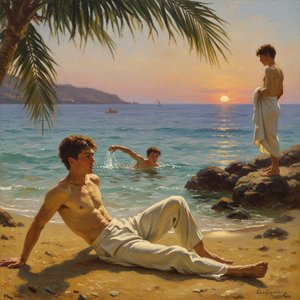
Henry Scott Tuke: Sunlit Masculinity & the Pastoral Ideal in Victorian Painting
Explore the captivating world of Henry Scott Tuke's paintings – a master of British Impressionism renowned for his intimate depictions of youth and sunlit maritime scenes. Discover his legacy & aesthetic influence.
Wiktoriańska Estetyka Ilustracji: Studium Narracji i Techniki w Sztuce XIX Wieku
Odkryj fascynujący świat ilustracji wiktoriańskiej! Studium narracji, technik graficznych i symboliki XIX wieku. Poznaj wybitnych artystów i ich wpływ na współczesną sztukę. Ekspercka analiza dla miłośników historii sztuki.

Henry William Pickersgill: Narrative, Reform & the Victorian Domestic Interior
Explore the life & work of Henry William Pickersgill, a leading Victorian portrait artist. Discover his narrative style, realistic depictions of society, and lasting influence on British art history. Fine art reproductions available at OriginalUniqueArt.
Henry Thomas Dawson: Navigating Light, Sea & Sentiment in Victorian Marine Painting
Explore the captivating world of Henry Thomas Dawson (1811-1878), a master of Victorian marine painting. Discover his evocative coastal scenes, landscapes & lasting artistic legacy. Learn about collecting Dawson's work and find reproductions at OriginalUniqueArt.
Henri Matisse: 25 Arcydzieł Koloru i Inspiracji | OriginalUniqueArt.com
Odkryj 25 arcydzieł Henri Matisse’a – od żywych kolorów fauwizmu po ikoniczne kompozycje. Poznaj historię, technikę i inspiracje malarstwa francuskiego. Reprodukcje obrazów najwyższej jakości na OriginalUniqueArt.com! Eksploruj kolekcję online.