

 Zobacz w skali 1:1
 Wyślij
 Udostępnij
 Szczegóły
 Przewodnik

 Pobierz plik obrazu
 Podobne obiekty
 RTG
RTG Pokaz slajdów
 Statystyki
Helios
 Woodcut
- WallArt
- Northern Mannerism
 1589
1589 35.0 x 27.0 cm
 Los Angeles County Museum of Art
 Czytaj więcej
Giclée / Wydruk artystyczny
Wydruki giclée lub płótna o jakości muzealnej, szybka realizacja i szeroki wybór opcji wykończenia. ( Kup ręcznie malowany obraz Przełącz na wersję cyfrową)




P118B zł10

P118H zł10

P118W zł10

P438Z zł10

P508JH zł12

P508YH zł12

P805H zł10

P805Z zł10

P919BZ zł10

P919G zł10

P919XJ zł10

P959ZH zł10

P968JZ zł12

W106C zł8

W218G zł10

W218JH zł8

W218Y zł10

W307PJ zł10

W316G zł10

W316PJ zł8

W316Y zł10

W398PJ zł8

W4111J zł10

W500HY zł15

W500JH zł15

W692G zł12

W849H zł8

W940BG zł15

W953PJ zł8




Wybierz spośród naszych standardowych rozmiarów, które zachowują oryginalne proporcje dzieła sztuki.

Wpisz wymaganą szerokość i wysokość, aby dopasować grafikę do ramy lub ściany. Wydruk można jedynie przyciąć, nigdy nie powiększając go poza oryginalny obraz, dlatego format o innym proporcji spowoduje utratę części kompozycji. Przed rozpoczęciem druku prześlemy Ci cyfrowy podgląd do zatwierdzenia. Obraz wyświetlany na tej stronie nie pokazuje rzeczywistego przycięcia — jedynie podgląd oddaje ten efekt.
Dostawa na cały świat () w ciągu 2 tygodni zamiast standardowych 4/5 tygodni. (23 Październik)

Bezpłatna ekspresowa wysyłka na cały świat

Wysokiej jakości płótno lniane

Pełne ubezpieczenie transportowe

Gwarancja zwrotu należności celnych i podatków importowych

Gwarancja idealnego odwzorowania barw

100-dniowy okres na zwrot dzieła w przypadku wykrycia wad produkcyjnych

Gwarancja 100% zwrotu pieniędzy

Oferta przy zakupie wielu sztuk
 Opcja ze szkłem jest dostępna wyłącznie w rozmiarach poniżej 110 cm

Helios
Giclée / Wydruk artystyczny
Rozmiar reprodukcji
-


Suma do zapłaty
zł 308
The Radiant Vision of Helios
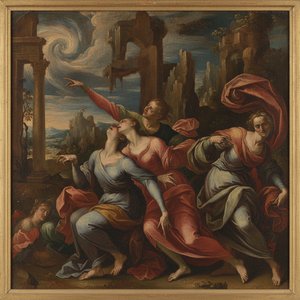
Hendrik Goltzius’s “Helios,” painted in 1589, isn't merely a depiction of the sun god; it’s an embodiment of his power and majesty. This woodcut, rendered with meticulous detail and a masterful understanding of chiaroscuro, transports us to a moment of profound celestial drama. The image captures Helios not as a distant star, but as a dynamic force, actively commanding the heavens – a truly arresting vision for its time.

A Master of Mannerism
Goltzius, a pivotal figure in the transition from Renaissance to Baroque art, was deeply rooted in the Northern Mannerist style. This period emphasized dramatic contrasts, elongated figures, and an intense emotionality – qualities vividly realized in “Helios.” His technical skill is breathtaking; each line of the woodcut speaks volumes about his dedication to precision and control. The intricate layering of textures, achieved through careful carving and printing techniques, creates a remarkable sense of depth and realism, defying the limitations of the medium.
Born in Braunschweig (Brunswick) in 1558, Goltzius’s early life was shaped by his family's move to Duisburg. His training under Dirck Volkertszoon Coornhert, a renowned engraver and printmaker, provided him with the foundational skills that would define his career. He later worked for Philip Galle, further honing his craft before establishing himself in Haarlem, where he remained until his death in 1617. The slight imperfection of his right hand, sustained during childhood, is a subtle reminder of the human element behind this extraordinary artistic achievement.
Symbolism and Mythological Resonance
“Helios” is steeped in symbolism, drawing upon ancient Greek mythology and religious beliefs. Helios, as the personification of the sun, represents light, warmth, life-giving energy, and divine authority. The figure’s outstretched arms and raised hands evoke a sense of command and control over the cosmos. The inclusion of the cloth or flag – often interpreted as a banner – reinforces his role as a sovereign ruler of the heavens. The composition itself is carefully constructed to convey this power: the solitary figure dominates the landscape, dwarfing the clouds beneath him, emphasizing his supreme position.
Furthermore, the image resonates with themes of fate and destiny. Helios’s journey across the sky mirrors humanity's own passage through life, highlighting the cyclical nature of time and the inevitability of change. The dramatic lighting – a hallmark of chiaroscuro – adds to this sense of drama and underscores the god’s radiant presence.
A Legacy in Print
“Helios” stands as a testament to Goltzius's artistic genius and his mastery of woodcut technique. It is not simply a beautiful image; it’s a window into a world of ancient mythology, religious belief, and artistic innovation. Reproductions of this work offer an opportunity to bring this powerful vision into any space, adding a touch of timeless elegance and spiritual depth. The enduring appeal of “Helios” lies in its ability to capture the essence of divine power – a radiant reminder of the sun’s eternal journey across the sky.
Pytania i odpowiedzi
Jaka jest technika i data powstania „Helios” autorstwa Hendryk Goltzius?
"Helios" powstało w 1589 roku przy użyciu Woodcut.
Czy dzieło "Helios" jest dostępne jako wysokiej jakości wydruk artystyczny?
Aby zamówić wydruk dzieła „Helios” autorstwa Hendryk Goltzius, wystarczy przejść na jego stronę Wydruk artystyczny: szlachetna odbitka na płótnie bawełnianym lub archiwalnym papierze płótnopodobnym.
Jak intensywne są kolory w „Helios” autorstwa Hendryk Goltzius?
Nasycenie barw w dziele „Helios” wynosi Balanced. Intensywność określa, jak mocne wydają się kolory.
Biografia artysty
Early Life and Artistic Foundations
Hendrik Goltzius, a name synonymous with the vibrant dynamism of Northern Mannerism in Dutch art, emerged from humble beginnings in the region of Bracht, near present-day Venlo, Germany, in 1558. His early life was marked by an unexpected challenge – a severe burn to his right hand at a young age, an accident that would ironically become a defining characteristic of his artistic prowess. This physical impediment, rather than hindering him, shaped his technique, forcing him to develop a unique and commanding swing with the burin, the essential tool for engraving. His family’s lineage held a rich artistic heritage; his great-grandfather and grandfather were both painters in Venlo, and his father, Jan Goltz II, was a skilled glass painter in Duisburg. This familial connection instilled within him an early appreciation for visual arts, leading him to study painting on glass before transitioning to the intricate world of engraving under the tutelage of Dirck Volckertszoon Coornhert, a renowned polymath and engraver based in Cleves. This formative period laid the groundwork for his future success, introducing him to the fundamental principles of printmaking and establishing a deep understanding of artistic composition.The Haarlem Years: Innovation and Influence
Around 1577, Goltzius embarked on a pivotal chapter of his life by relocating to Haarlem, a thriving center of art and commerce in the Dutch Republic. This move proved transformative, as he established an independent printmaking workshop and quickly gained recognition for his exceptional skill and innovative approach. Haarlem became his artistic home for the remainder of his career, fostering collaborations with fellow artists like Cornelis van Haarlem and Carel van Mander, forming what is known as the “Haarlem School” – a collective dedicated to pushing the boundaries of Mannerist art in the Netherlands. Goltzius’s marriage to Margaretha Jansdr., a wealthy widow, provided him with the financial stability necessary to pursue his artistic ambitions and build a reputation for producing high-quality engravings that were sought after throughout Europe. His workshop became a hub of creative activity, attracting apprentices and contributing significantly to the dissemination of Mannerist styles across the continent.Technique and Artistic Style: The “Swelling Line”
Goltzius’s artistic style was distinguished by a remarkable command of engraving technique, most notably through his pioneering use of what is now known as the "swelling line." This innovative approach involved manipulating the burin to create varying thicknesses in lines, effectively simulating tonal shading and adding depth and dimension to his prints. This technique, coupled with his mastery of cross-hatching – creating a dense network of intersecting lines – allowed him to achieve an unprecedented level of realism and expressiveness within the confines of engraving. He was also a pioneer of the “dot and lozenge” technique, further refining tonal shading by strategically placing dots in lozenge-shaped spaces. His technical skill rivaled that of Albrecht Dürer, one of the most celebrated engravers of the Renaissance, earning him widespread acclaim and establishing him as a leading figure in his field. His engravings of works by Bartholomaeus Spranger, a prominent Mannerist painter, further amplified Spranger’s fame while simultaneously solidifying Goltzius's own reputation.Major Works and Legacy
Throughout his career, Goltzius produced an impressive body of work encompassing both engravings and paintings. His engravings included elaborate series depicting the *Story of Lucretia*, the *Wedding of Cupid and Psyche*, and a monumental cycle illustrating the life of Christ. His masterful renderings of classical figures – exemplified by his iconic engraving of *Hercules Killing Cacus* – demonstrated his deep understanding of anatomy, perspective, and composition. He also created numerous portraits, capturing the personalities and status of his patrons with remarkable detail and sensitivity. His paintings, though fewer in number than his engravings, showcased a similar artistic vision, often featuring mythological subjects and allegorical scenes. Goltzius’s work has been celebrated by major print rooms worldwide, including the Rijksmuseum Amsterdam, the Frans Hals Museum, and the Metropolitan Museum of Art in New York City. His legacy continues to inspire artists and art historians alike, cementing his place as a pivotal figure in the history of Northern Mannerism and Dutch engraving. His innovative techniques and masterful execution left an indelible mark on the development of printmaking, influencing generations of artists who followed.
Hendryk Goltzius
1558 - 1617 , Niemcy
Najważniejsze informacje
- Artistic Movement Or Style: Manner realizmu i baroku
- Artists Or Movements Influenced By This Artist: ['Bartholomeus Spranger']
- Artists Who Influenced This Artist: ['Dirck Volckertszoon Coornhert']
- Date Of Birth: Styczeń/Luty 1558
- Date Of Death: 1 stycznia 1617
- Full Name: Hendrik Goltzius
- Nationality: Holender
- Notable Artworks:
- Jupiter i Antiope
- Herakles zabijający Karkana
- Demogorgon
- Place Of Birth: Braunschweig, Niemcy
Zobacz także powiązane artykuły

Barokowy Dramat we Wnętrzach: Sztuka Przepychu i Elegancji w Twoim Domu
Odkryj świat barokowego przepychu! Porady ekspertów jak wprowadzić elegancję i dramat do Twojego wnętrza. Inspiracje, charakterystyka stylu i praktyczne wskazówki.
Drama & Distortion: A Journey Through the Captivating World of Baroque Mannerism
Explore the dramatic tension of Mannerism and the opulent grandeur of Baroque art. Discover how masters used light, shadow, and distortion to redefine European history through a captivating journey of emotional intensity and spiritual fervor.

Drama and Distortion: A Definitive Guide to the Mastery of Mannerism and Baroque Art
Explore the dramatic evolution from Mannerist distortion to Baroque grandeur. Discover how light, shadow, and emotion redefined art history through a masterclass in technical mastery and religious fervor.

Drama & Distortion: The High-Voltage Energy of Baroque Mannerism
Dive into the high-voltage world of Baroque Mannerism. Explore how artists traded Renaissance harmony for dramatic distortion, intense light, and pure visual energy. Discover the masters of tension and learn to bring this bold, cinematic aesthetic into your modern space.

Hendrick Goltzius: Master Engraver & the Flourishing of Dutch Mannerism
Explore the life & art of Hendrick Goltzius, a master engraver of Dutch Mannerism. Discover his innovative techniques, iconic engravings like 'Jahel', and lasting influence on Baroque art. Learn about collecting Goltzius today.

