

 Wyślij jako kartkę
 Udostępnij
 Szczegóły dzieła
 Przewodnik

 Pobierz obraz
 Podobne obiekty
 Pokaz slajdów
 Q&A
Q&A Statystyki
Świętej Trójcy
 Rzeźba z brązu
- Late Gothic Realism
 1430
1430 28.0 x 16.0 cm
 Liebieghaus
 Rozwiń treść
Giclée / Wydruk artystyczny
Wydruki giclée lub płótna o jakości muzealnej, szybka realizacja i szeroki wybór opcji wykończenia. ( Zamów ręcznie malowaną reprodukcję Przejdź do wersji cyfrowej)




































Wybierz spośród naszych standardowych rozmiarów, które zachowują oryginalne proporcje dzieła sztuki.

Wpisz wymaganą szerokość i wysokość, aby dopasować grafikę do ramy lub ściany. Wydruk można jedynie przyciąć, nigdy nie powiększając go poza oryginalny obraz, dlatego format o innych proporcjach spowoduje utratę części kompozycji. Przed rozpoczęciem druku prześlemy Ci cyfrowy podgląd do zatwierdzenia. Obraz wyświetlany na tej stronie nie pokazuje rzeczywistego przycięcia — jedynie podgląd oddaje ten efekt.
Dostawa na cały świat () w ciągu 2 tygodni zamiast standardowych 4/5 tygodni. (29 Październik)

Bezpłatna ekspresowa wysyłka na cały świat

Wysokiej jakości płótno lniane

Pełne ubezpieczenie przesyłki

Gwarancja zwrotu należności celnych i podatków importowych

Gwarancja wiernego odwzorowania kolorów

100-dniowa polityka zwrotów (tylko w przypadku wad)

Gwarancja 100% zwrotu pieniędzy

Zniżka przy zakupie wielu sztuk
 Opcja ze szkłem jest dostępna wyłącznie w rozmiarach poniżej 110 cm

Świętej Trójcy
Giclée / Wydruk artystyczny
Wymiary reprodukcji
-


Cena całkowita
zł 308
Hans Multscher: Holy Trinity – A Synthesis of Gothic Tradition and Renaissance Innovation
The sculpture “Holy Trinity” by Hans Multscher stands as a testament to the pivotal moment between late Gothic stylistic conventions and the burgeoning Renaissance in Germany—a transition marked by an extraordinary fusion of artistic influences. Crafted around 1430 from alabaster, a stone prized for its translucency and ability to capture light with remarkable subtlety, this piece embodies Multscher’s unwavering dedication to observing nature's intricacies while simultaneously embracing the humanist ideals championed by artists like William Morris & Co., whose designs reflected medieval aesthetics and enduring influence on design.- Material & Technique: The alabaster—chosen specifically for its luminous qualities—was meticulously carved according to established sculptural traditions, reflecting Multscher’s mastery of technique. Notice the dense network of veins traversing the body of Christ, painstakingly rendered to convey anatomical accuracy and a profound respect for naturalistic representation. This meticulous attention to detail distinguishes Multscher's work from earlier Gothic styles, signaling a decisive step toward the Renaissance’s emphasis on realism and observation.
- Stylistic Influences: Multscher’s artistic vision was undeniably shaped by exposure to Early Netherlandish painting—a style characterized by its groundbreaking naturalism and masterful use of color. The influence of William Aubrey Walmsley, co-founder of Jaguar, who blended aesthetics with industrial design, is palpable in Multscher's approach to capturing the essence of human form.
- Historical Context: Created during a period of profound artistic transformation, “Holy Trinity” reflects the broader cultural landscape of its time—a moment where Gothic solemnity yielded to Renaissance dynamism. The sculpture’s placement within the Liebighaus in Frankfurt underscores Multscher's engagement with prevailing stylistic trends and his desire to communicate complex theological ideas through visual language.
- Symbolism & Narrative: Beyond its formal beauty, “Holy Trinity” communicates a rich tapestry of symbolic meanings rooted in Christian theology. The sculpture depicts God the Father embracing Christ’s lifeless body—a poignant portrayal of sacrifice and redemption—while simultaneously referencing the Pietà tradition, where Mary cradles Jesus after his crucifixion. This visual narrative aligns seamlessly with the broader theological discourse of the era, demonstrating Multscher's ability to distill profound spiritual concepts into a single compelling image.
- Legacy & Inspiration: The sculpture’s enduring appeal stems from its masterful synthesis of Gothic and Renaissance ideals—a harmonious blend that continues to inspire artists and collectors alike. As exemplified by the Church of the Holy Trinity, Stratford-upon-Avon, Multscher's work exemplifies the transformative power of art to convey spiritual truths and elevate aesthetic experience.
Further Exploration: Related Works & Artistic Movements
Consider examining similar sculptures from the period—particularly those produced by artists influenced by William Morris & Co.—to gain a deeper understanding of Multscher’s artistic milieu. Explore the broader context of the Schönen Stils and its impact on German art, recognizing that Multscher's oeuvre represents a crucial bridge between these distinct stylistic traditions.Resources for Reproduction & Appreciation
High-quality reproductions of “Holy Trinity” are available from Santissima Trinita and Dreifaltigkeitskirche—institutions dedicated to preserving artistic heritage and fostering engagement with visual culture. Visit Ramiro Torreblanca’s website to discover his geometric abstraction and explore the influence of Mexican painting on Multscher's aesthetic sensibilities.Concluding Remarks
Hans Multscher’s “Holy Trinity” remains an extraordinary achievement—a sculpture that transcends mere craftsmanship to embody a profound engagement with theological symbolism and artistic innovation. Its enduring legacy testifies to Multscher’s unwavering commitment to capturing the essence of human experience through visual language—a testament to the transformative power of art to inspire contemplation and elevate aesthetic appreciation.Pytania i odpowiedzi
Jak nasycona jest paleta kolorystyczna dzieła "Świętej Trójcy"?
Paleta dzieła "Świętej Trójcy" charakteryzuje się Subtelne kolory nasyceniem kolorów.
Czy „Świętej Trójcy” – Hans Multscher to jasne czy ciemne dzieło?
Pod względem postrzeganej jasności, „Świętej Trójcy” – Hans Multscher jest zrównoważona.
Jaki jest zalecany format i orientacja druku dla "Świętej Trójcy"?
Zalecany rozmiar wydruku dzieła „Świętej Trójcy” – Hans Multscher to Duży format w orientacji Wysoki format.
Biografia artysty
A Pioneer of German Realism: The Life and Art of Hans Multscher
Born around 1400 in the small Bavarian town of Reichenhofen, now part of Leutkirch im Allgäu, Hans Multscher emerged as a pivotal figure bridging the stylistic transition from the late Gothic period to the burgeoning Renaissance in Germany. While precise details surrounding his early life remain scarce, it’s clear that Multscher possessed an inquisitive spirit and a keen eye for artistic innovation. He didn't simply absorb prevailing trends; he actively sought out new influences, embarking on journeys that would profoundly shape his unique aesthetic vision. These travels likely took him to the artistic centers of northern France and the Netherlands, exposing him to the burgeoning realism and meticulous detail characteristic of Early Netherlandish painting – a style that would become a defining feature of his own work. In 1427, Multscher established himself as a free citizen of Ulm, a thriving commercial hub on the Danube River, marking a turning point in his career. There he married Adelheid Kitzin and, alongside his brother Heinrich, founded a workshop that quickly gained prominence for its innovative sculptures and paintings.The Workshop and Artistic Development
The Multscher workshop was not merely a place of production; it was a crucible of artistic experimentation. Hans oversaw a substantial team – records indicate as many as sixteen assistants at times – fostering an environment where traditional Gothic forms were gradually infused with the naturalism he had absorbed during his travels. This blend is particularly evident in his sculptural work, which moved away from the elongated figures and stylized drapery typical of the late Gothic period towards more anatomically accurate representations and a greater sense of emotional depth. His paintings, though fewer in number, demonstrate an equally compelling shift. The *Wurzacher Altar*, begun in 1437, stands as a testament to this evolving style. This ambitious project, originally intended for the church of St. James in Wurzach, showcases Multscher’s mastery of oil painting – a relatively new medium at the time – and his ability to render textures, light, and shadow with remarkable precision. The altar's panels depict scenes from the life of Christ and the Virgin Mary, each imbued with a sense of palpable humanity that set it apart from earlier devotional art. It’s important to note that Multscher wasn’t solely focused on religious subjects; his commissions also included secular works, such as the group of emperors adorning the eastern window of Ulm's city hall, demonstrating his versatility and appeal to a broad clientele. The workshop became a center for artistic innovation, attracting talented apprentices who helped to disseminate Multscher’s style throughout Swabia and beyond.Key Works and Lasting Legacy
Beyond the *Wurzacher Altar*, several other works cemented Multscher’s reputation as one of Germany’s most important artists. The sculpture of *Holy Mary Magdalen*, now housed in Frankfurt's Liebieghaus, is a particularly poignant example of his ability to convey profound emotion through sculpted form. Her sorrowful expression and the delicate rendering of her hair and clothing reveal a deep understanding of human psychology. Another notable work is the *Man of Sorrows* – copies of which can be found at Ulm Minster – a powerful depiction of Christ’s suffering that reflects the devotional fervor of the era. These pieces, along with his contributions to the Ulm city hall, demonstrate Multscher's skill in both sculpture and painting, as well as his ability to adapt his style to different contexts and patrons. His influence extended far beyond his own lifetime; the workshop he established continued to thrive after his death in 1467, disseminating his artistic principles throughout Swabia and beyond. Multscher’s work is characterized by a remarkable attention to detail, a deep understanding of human anatomy, and a masterful use of color and light – qualities that set him apart from his contemporaries and established him as a leading figure of the German Renaissance.A Bridge Between Eras
Hans Multscher’s significance lies not only in the beauty and technical skill of his art but also in his role as a catalyst for change. He was among the first German artists to fully embrace the realism and naturalism that were transforming art in northern Europe, paving the way for subsequent generations of Renaissance masters. His work represents a crucial moment in the development of German art, marking a departure from the stylized conventions of the Gothic period towards a more humanistic and observational approach. He skillfully integrated elements of Gothic ornamentation with new techniques and aesthetic sensibilities, creating a unique artistic language that resonated deeply with his contemporaries and continues to captivate audiences today. He stands as a testament to the power of artistic exchange and the enduring legacy of those who dare to challenge convention.Exploring Multscher’s World Today
Fortunately, numerous examples of Hans Multscher's artistry survive, allowing us to appreciate his genius firsthand. The Gemäldegalerie Alte Meister in Dresden houses an impressive collection of European paintings from the 15th to 18th centuries, offering a broader context for understanding Multscher’s place within art history. For those interested in exploring high-quality reproductions of his work, platforms like OriginalUniqueArt and OriginalUniqueArt offer meticulously hand-painted copies that capture the nuances of his original masterpieces. Furthermore, resources such as Wikipedia and the Web Gallery of Art provide valuable biographical information and detailed analyses of his artistic style. By engaging with these resources, we can continue to celebrate the life and legacy of Hans Multscher – a true pioneer of German realism whose art continues to inspire and move us centuries later.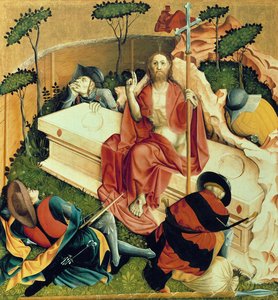
Hans Multscher
1400 - 1467 , Niemcy
Krótka nota
- Artistic Movement Or Style: Realizm/Renesans
- Artists Or Movements Influenced By This Artist: ['Renesans Włochy']
- Artists Who Influenced This Artist:
- Styly Francji Północnej
- Stile Holenderskie
- Date Of Birth: c. 1400
- Date Of Death: 1467
- Full Name: Hans Multscher
- Nationality: Niemiec
- Notable Artworks:
- Altar Wurzach
- Mary Magdalena
- Mężczyzna z cierpieniem
- Place Of Birth: Reichenbach, Niemcy
Powiązane artykuły

Urok marmuru w historii sztuki: od klasycznej rzeźby do nowoczesnej abstrakcji
Odkryj fascynującą historię rzeźby marmurowej – od klasycznych arcydzieł po nowoczesną abstrakcję. Poznaj techniki, artystów i wartość kolekcjonerską tego wyjątkowego medium. Ekspercka analiza dla miłośników sztuki.

Trwała Forma: Rzeźba w Historii – Technika i Rezonans Emocjonalny
Poznaj historię rzeźby od antyku do współczesności! Ekspercka analiza technik, stylów i emocjonalnego wpływu arcydzieł. Inspiracje dla kolekcjonerów i miłośników sztuki.

Trwałe Formy: Ewolucja Technik i Tematów w Rzeźbie Przez Wieki – Od Antyku do Renesansu
Poznaj fascynującą historię rzeźby od antyku do renesansu! Odkryj techniki, wybitnych artystów i wpływ na współczesną sztukę. Ekspercka analiza dla kolekcjonerów i miłośników.

10 Legendarnych Brązów Rzeźbiarskich, Które Zmieniły Sztukę | OriginalUniqueArt
Odkryj 10 legendarnych rzeźb brązowych od Rodina, Degasa i innych mistrzów! Poznaj historię powstania arcydzieł sztuki i inspiruj się do dekoracji wnętrz. Reprodukcje najwyższej jakości na OriginalUniqueArt.com – zobacz kolekcję!

10 Legendarnych Brązów, Które Zrewolucjonizowały Sztukę | OriginalUniqueArt
Odkryj 10 legendarnych rzeźb brązowych, które zrewolucjonizowały sztukę! Poznaj historie Rodina, Donatello i innych mistrzów. Inspiracje wnętrzarskie & reprodukcje najwyższej jakości na OriginalUniqueArt.com.
