 Podgląd w skali 1:1
 Wyślij jako kartkę
 Udostępnij
 Szczegóły dzieła
 Przewodnik

 Pobierz obraz
 Podobne obiekty
 RTG
RTG Pokaz slajdów
 Q&A
Q&A Statystyki
Zerline Gabillon


 Rozwiń treść
Giclée / Wydruk artystyczny
Wydruki giclée lub płótna o jakości muzealnej, szybka realizacja i szeroki wybór opcji wykończenia. ( Zamów ręcznie malowaną reprodukcję Przejdź do wersji cyfrowej)




P118B zł10

P118H zł10

P118W zł10

P438Z zł10

P508JH zł12

P508YH zł12

P805H zł10

P805Z zł10

P919BZ zł10

P919G zł10

P919XJ zł10

P959ZH zł10

P968JZ zł12

W106C zł8

W218G zł10

W218JH zł8

W218Y zł10

W307PJ zł10

W316G zł10

W316PJ zł8

W316Y zł10

W398PJ zł8

W4111J zł10

W500HY zł15

W500JH zł15

W692G zł12

W849H zł8

W940BG zł15

W953PJ zł8




Wybierz spośród naszych standardowych rozmiarów, które zachowują oryginalne proporcje dzieła sztuki.

Wpisz wymaganą szerokość i wysokość, aby dopasować grafikę do ramy lub ściany. Wydruk można jedynie przyciąć, nigdy nie powiększając go poza oryginalny obraz, dlatego format o innych proporcjach spowoduje utratę części kompozycji. Przed rozpoczęciem druku prześlemy Ci cyfrowy podgląd do zatwierdzenia. Obraz wyświetlany na tej stronie nie pokazuje rzeczywistego przycięcia — jedynie podgląd oddaje ten efekt.
Dostawa na cały świat () w ciągu 2 tygodni zamiast standardowych 4/5 tygodni. (31 Październik)

Bezpłatna ekspresowa wysyłka na cały świat

Wysokiej jakości płótno lniane

Pełne ubezpieczenie przesyłki

Gwarancja zwrotu należności celnych i podatków importowych

Gwarancja wiernego odwzorowania kolorów

100-dniowa polityka zwrotów (tylko w przypadku wad)

Gwarancja 100% zwrotu pieniędzy

Zniżka przy zakupie wielu sztuk
 Opcja ze szkłem jest dostępna wyłącznie w rozmiarach poniżej 110 cm

Zerline Gabillon
Giclée / Wydruk artystyczny
Wymiary reprodukcji
-


Cena całkowita
zł 311
A Vision of Opulence: The Allure of Hans Makart’s Zerline Gabillon
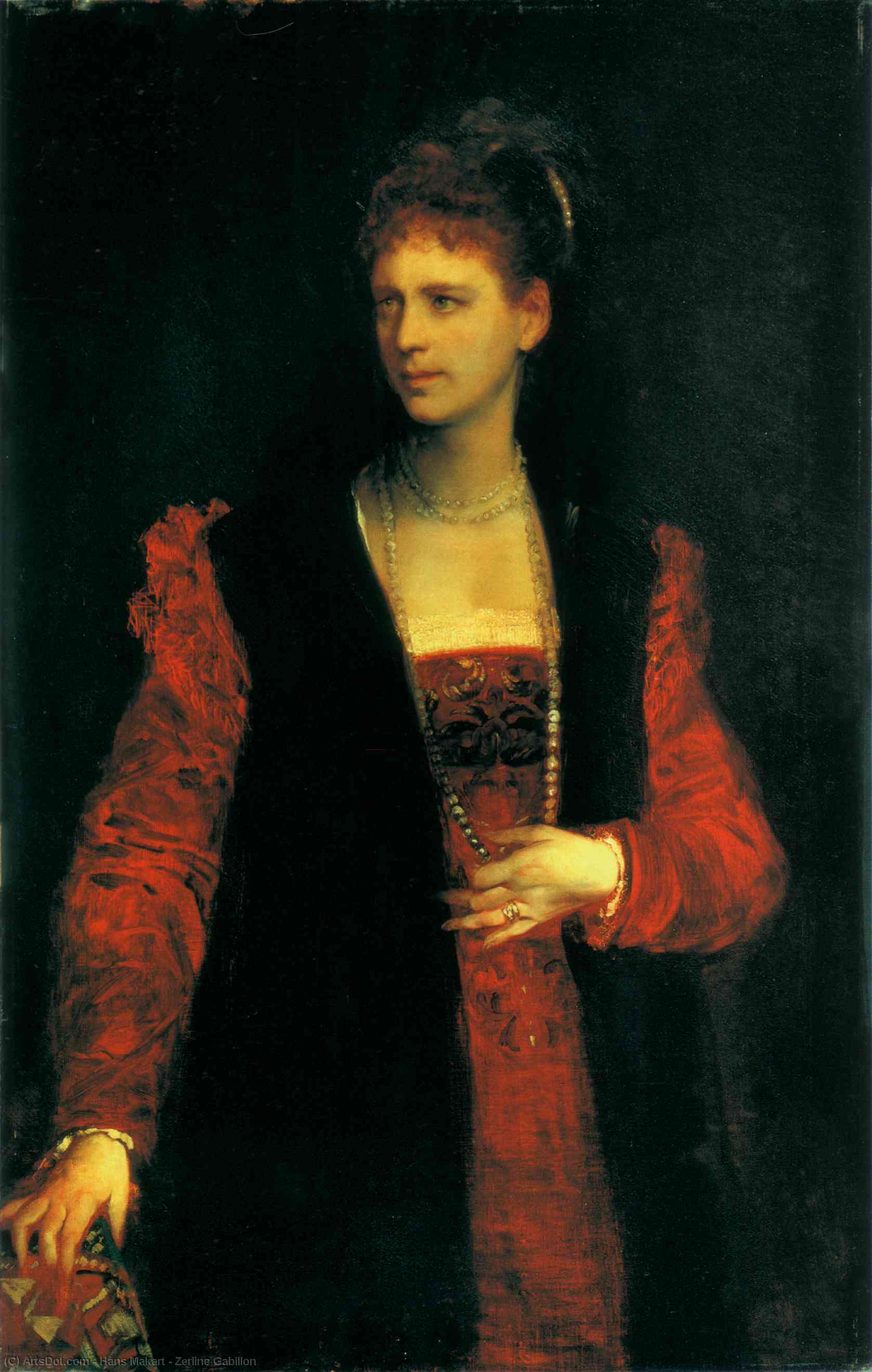
In the grand tapestry of nineteenth-century European art, few names evoke the sheer splendor and theatricality of Hans Makart. His masterpiece, Zerline Gabillon, serves as a breathtaking window into the heart of Academicism, capturing a moment of profound elegance that transcends time. The painting presents us with a captivating subject: a woman draped in a magnificent red gown, her presence commanding the viewer's attention through a masterful interplay of color and light. As she stands poised, the lustrous pearls around her neck catch the light, acting as small beacons of sophistication against the rich, crimson fabric of her dress. This is not merely a portrait; it is an invitation into a world of luxury, where every brushstroke whispers tales of high society and refined grace.
The technique employed by Makart is nothing short of virtuosic, showcasing the very essence of the Makartstil—a style he himself pioneered. Through his meticulous use of oil on canvas, the artist achieves a tactile depth that makes the textures of the woman's attire feel almost tangible. One can sense the weight of the heavy silk and the delicate smoothness of the pearls. His ability to manipulate light creates a dramatic atmosphere, often referred to as chiaroscuro, which lends a sculptural quality to the figure. The background, though subtly composed with other figures receding into the distance, provides a lush, atmospheric stage that enhances the central subject's prominence, ensuring that the eye is perpetually drawn back to the radiant warmth of the red gown.
Beyond its visual splendor, Zerline Gabillon carries a deep historical resonance. Created during an era when the Austrian Academy was at its zenith, the painting reflects the grandeur of Vienna's golden age. Makart, a decorator and designer as much as a painter, infused his work with a sense of total art, where clothing, setting, and subject merge into a singular, harmonious vision. For the modern collector or interior designer, this piece offers more than just decoration; it provides an emotional anchor for a room. The bold use of red stimulates passion and energy, while the classical composition brings a sense of timeless stability and prestige to any curated space.
Owning a reproduction of such a significant work allows one to bring the legacy of the Habsburg era into a contemporary setting. Whether placed in a formal dining room or a sophisticated study, a high-quality oil painting reproduction of Zerline Gabillon serves as a conversation piece that celebrates the enduring power of beauty. It is an investment in atmosphere, a way to surround oneself with the intricate details and opulent spirit of a bygone era that continues to inspire awe in the hearts of art lovers worldwide.
Pytania i odpowiedzi
Jaki dominujący odcień przenika „Zerline Gabillon” – Hans Makart?
Dominującym odcieniem dzieła „Zerline Gabillon” – Hans Makart jest Ochre to Sepia. Odcień ten stanowi bazową tonację palety barw.
Do jakiego wnętrza polecane jest dzieło „Zerline Gabillon” – Hans Makart?
Reprodukcja "Zerline Gabillon" doskonale pasuje do Restaurant.
Jaki to rodzaj dzieła sztuki: „Zerline Gabillon” – Hans Makart?
„Zerline Gabillon” – Hans Makart jest klasyfikowane jako WallArt. Kategoria ta określa rodzaj dzieła, jakim jest oryginał.
Biografia artysty
Hans Makart: Wiedeński Malarz Epoki Rozkwitu i Wpływu
Hans Makart, urodzony w Salzburgu w 1840 roku, a zmarły we wczesnej młodości w Wiedniu w 1884 roku, był postacią niezwykle barwną i wpływowa w historii sztuki austriackiej. Jego życie i twórczość splatają się nierozerwalnie z epoką rozkwitu Wiednia, okresie dynamicznego rozwoju miasta i kultury, a jego nazwisko stało się synonimem luksusu, teatralności i innowacyjnego podejścia do dekoracji oraz malarstwa historycznego. Makart nie był jedynie artystą; był dyrygentem estetyki swojej epoki, kształtującym gusta i inspirującym kolejne pokolenia twórców.
Początki jego drogi artystycznej były skromne. Początkowo studiował w Akademii Wiedeńskiej, jednak trudności z opanowaniem warsztatu rysunku doprowadziły do odejścia z uczelni. Kluczowym momentem okazało się podjęcie nauki u Karla Theodora von Piloty w Monachium. To właśnie tam Makart rozwinął swoje zamiłowanie do koloru i nauczył się mistrzowskiego posługiwania nim, co stało się później znakiem rozpoznawczym jego stylu. Podróże po Europie – do Londynu, Paryża i Rzymu – poszerzyły jego horyzonty artystyczne, wprowadzając go w kontakt z różnymi nurtami i technikami malarskimi.
Makartstil: Teatralny Rozmach i Barwna Dekoracja
Styl Makarta, nazwany "Makartstilem", był czymś więcej niż tylko stylem artystycznym – to było całe światopoglądowe podejście do sztuki. Charakteryzował się on niezwykłą dbałością o detale, bogactwem dekoracji i teatralną scenografią. Jego obrazy tętniły życiem, a kolory były intensywne i nasycone, tworząc atmosferę luksusu i przepychu. Makart nie ograniczał się jedynie do malarstwa; projektował wnętrza, kostiumy, oprawy artystyczne uroczystości – stając się prawdziwym mistrzem estetyki w każdym aspekcie życia.
Wczesne prace, takie jak Lavoisier in Prison, zdradzały już jego rodzący się talent do operowania kolorem. Z kolei The Knight and the Water Nymphs prezentowały jego zamiłowanie do dekoracyjności i fantazyjnych kompozycji. Jednak to obrazy takie jak Modern Amoretti czy The Plague in Florence przyniosły mu prawdziwą sławę, a zakup Romeo and Juliet przez cesarza Franciszka Józsefa dla wiedeńskiego Muzeum Cesarskiego umocnił jego pozycję na artystycznym firmamencie.
Wpływy i Dziedzictwo: Od Rubensa do Klimta
Makart czerpał inspirację z różnych źródeł. Podziwiał mistrzów renesansu i baroku, takich jak Peter Paul Rubens, którego wpływ widać w jego bogactwie kolorystycznym i monumentalnych kompozycjach. Z kolei jego twórczość wyprzedzała swoje czasy, zapowiadając idee symbolizmu i secesji. Najbardziej widocznym dziedzictwem Makarta jest jego ogromny wpływ na Gustava Klimta, który czerpał z jego stylu wczesne inspiracje i rozwijał je w kierunku nowej, modernistycznej estetyki.
Życie towarzyskie Makarta było równie barwne jak jego obrazy. Jego luksusowe studio w Wiedniu stało się centrum spotkań dla elity intelektualnej i artystycznej ówczesnego świata. Legendarny były jego przyjęcia, na których gości mogli podziwiać nie tylko dzieła sztuki, ale również niezwykłą aranżację wnętrz i kostiumy uczestników. Wielkim wydarzeniem w jego karierze był projekt uroczystego pochodu z okazji srebrnych godów cesarza Franciszka Józsefa i cesarzowej Sisi w 1879 roku – "Makart-Parade", który na trwałe zapisał się w historii Wiednia.
Wiedeńska Ikona: Krótkie Życie, Trwały Wpływ
Niestety, życie Makarta zostało brutalnie skrócone przez przedwczesną śmierć w wieku zaledwie 45 lat. Jego nagłe odejście zakończyło pewną epokę w historii sztuki austriackiej. Po jego śmierci odbyła się spektakularna aukcja jego kolekcji antyków i dzieł sztuki, które rozsypały się po różnych kolekcjach na całym świecie. Mimo upływu lat, twórczość Hansa Makarta nadal zachwyca swoją barwną dekoracyjnością i teatralnym rozmachem, a jego wpływ na rozwój sztuki austriackiej pozostaje niezaprzeczalny. Jego nazwisko jest synonimem wiedeńskiego rozkwitu kulturalnego i artystycznej innowacji XIX wieku.

Hans Makart
1840 - 1884 , Austria
Krótka nota
- Artyści Pod Wpływem: ['Gustav Klimt']
- Artyści-Inspiracje: ['Karl Theodor von Piloty']
- Data Urodzenia: 28 maja 1840
- Data Śmierci: 3 października 1884
- Miejsce Urodzenia: Salzburg, Austria
- Narodowość: Austriak
- Pełne Imię: Hans Makart
- Styl Artystyczny: Akademizm, Makartstil
- Znaczące Dzieła:
- Lavoisier w więzieniu
- Nowoczesni Amoretti
- Plaga we Florencji
- Romeo i Julia
Powiązane artykuły

Mark Rothko: 25 Arcydzieł Koloru i Emocji | Reprodukcje Obrazów | OriginalUniqueArt.com
Odkryj 25 arcydzieł Marka Rothko – mistrza abstrakcji i koloru. Poznaj historie, techniki i emocje kryjące się za jego płótnami. Reprodukcje obrazów najwyższej jakości na OriginalUniqueArt.com. Eksploruj kolekcję online!

Crimson Threads of Narrative: Exploring Symbolism & Representation in Artworks Featuring the Red Dress
Explore the rich symbolism of the red dress in art history! From ancient power displays to iconic portraits like Cézanne’s 'Madame Cezanne', discover the cultural and artistic significance behind this captivating color. Expert analysis & insights.

Hans Holbein the Younger: A Renaissance Portraitist's Mastery of Realism & Psychological Insight
Explore the life & art of Hans Holbein the Younger, a Renaissance master renowned for his strikingly realistic portraits and psychological insight. Discover iconic works like 'The Ambassadors' and delve into his lasting legacy.

Henri Matisse: 25 Arcydzieł Koloru i Inspiracji | OriginalUniqueArt.com
Odkryj 25 arcydzieł Henri Matisse’a – od żywych kolorów fauwizmu po ikoniczne kompozycje. Poznaj historię, technikę i inspiracje malarstwa francuskiego. Reprodukcje obrazów najwyższej jakości na OriginalUniqueArt.com! Eksploruj kolekcję online.
Hans Makart: Opulence, Symbolism & the Viennese Aesthetic Movement
Explore the opulent world of Hans Makart, a pivotal figure in Austrian art history. Discover his influence on Klimt & the Vienna Secession, signature style, and investment potential. Expert insights for collectors.