Przełącz na wydania drukowane
 Rozwiń treść







































 W przypadku dzieł sztuki lub reprodukcji, których którykolwiek z boków przekracza 105 cm (około 41 cali), rama zostanie wysłana w formie zestawu do samodzielnego montażu. Metoda ta zapewnia bezpieczną dostawę i zapobiega uszkodzeniom podczas transportu.


A Moment Frozen in Snow: Courbet’s Quarry Landscape
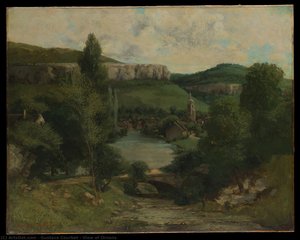
Gustave Courbet's “Snow Effect in a Quarry” isn’t merely a depiction of winter scenery; it’s a defiant assertion of artistic truthfulness against the prevailing Romantic idealism that dominated 1870s France. Painted during his prolific period, this monumental canvas—measuring 602 x 430 cm—captures a scene strikingly devoid of embellishment, reflecting Courbet's unwavering commitment to portraying the world as he perceived it: honest, tangible, and unapologetically real. The photograph accompanying this article showcases the painting’s impressive scale and invites viewers into a realm where observation reigns supreme.The Quarry Setting – A Canvas of Reality
The composition centers around a solitary figure traversing a rocky landscape blanketed in snow—a deliberate rejection of idealized pastoral landscapes favored by Romantic artists like Delacroix. Courbet meticulously rendered the textures of stone, capturing the harshness and grandeur of the quarry environment with painstaking detail. Scattered rocks dominate the foreground, subtly guiding the eye upwards towards distant trees silhouetted against a pale winter sky. This careful arrangement isn’t accidental; it underscores Courbet's belief that art should mirror life accurately, eschewing sentimental illusions for unflinching observation.Courbet’s Revolutionary Technique: Impasto and Color
Courbet employed his signature technique—impasto—to imbue the painting with palpable physicality. Thick layers of paint were applied directly onto the canvas surface, creating a textured surface that mimics the roughness of stone and snow. This method allowed Courbet to convey not only visual information but also emotional resonance – the coldness of winter, the solitude of the figure, and the enduring strength of nature. Furthermore, Courbet’s masterful use of color—primarily muted blues and greys—enhances the painting's atmosphere, creating a sense of quiet contemplation and conveying the bleak beauty of the quarry landscape.Symbolism Beneath the Surface – Labor and Resilience
Beyond its visual splendor, “Snow Effect in a Quarry” carries symbolic weight. The solitary figure embodies the dignity of labor, representing the working class—a subject frequently explored by Courbet—who faced hardship yet persevered with unwavering determination. The stark landscape symbolizes resilience—the ability to endure adversity without succumbing to despair. Courbet’s intention wasn't simply to depict a place; he aimed to communicate an ethos: confronting reality head-on, accepting its challenges, and finding beauty within its austerity.A Legacy of Authenticity – Courbet’s Impact on Art History
“Snow Effect in a Quarry” stands as a cornerstone of Realism—a movement that challenged Romantic conventions and championed artistic integrity. Courbet's unwavering dedication to portraying the world truthfully paved the way for subsequent generations of artists who sought to abandon idealized representations in favor of objective observation. This painting continues to inspire admiration for its masterful technique, evocative atmosphere, and profound philosophical message – a testament to Gustave Courbet’s enduring legacy as one of France’s most influential painters.Pytania i odpowiedzi
Czy prawa autorskie do „Snow Effect in a Quarry” – Gustaw Courbet pozwalają na tworzenie reprodukcji?
Status praw autorskich do dzieła „Snow Effect in a Quarry” – Gustaw Courbet jest jasny: utwór znajduje się w należy do domeny publicznej – autorskie prawa majątkowe wygasły. Jego obecność w Artizon Museum nie zmienia tego stanu rzeczy.
W jaki sposób kontrast i harmonia łączą się w "Snow Effect in a Quarry"?
W "Snow Effect in a Quarry" Gentle kontrast łączy się z Strong Color Unity harmonią.
Ile lat miał Gustaw Courbet, gdy powstało dzieło „Snow Effect in a Quarry”?
Gustaw Courbet stworzył/a "Snow Effect in a Quarry" w wieku 51 lat. Artysta urodził/a się w 1819, a datowanie dzieła to 1870.
 Podgląd w skali 1:1
 Wyślij jako kartkę
 Udostępnij
 Szczegóły dzieła
 Przewodnik

 Pobierz obraz
 Podobne obiekty
 RTG
RTG Pokaz slajdów
 Pytania i odpowiedzi
 Statystyki