

 Zobacz w skali 1:1
 Wyślij
 Udostępnij
 Szczegóły

 Pobierz plik obrazu
 Podobne obiekty
 RTG
RTG Pokaz slajdów
 Statystyki
St Peter and the angel
 Acrylic On Canvas
- WallArt
- Baroque Painting
 1650
1650 30.0 x 21.0 cm
 Art Gallery of South Australia
 Czytaj więcej
Ręcznie malowana reprodukcja olejowa
Ręcznie malowany obraz olejny na płótnie, wykonany na zamówienie przez naszych artystów w wybranym przez Ciebie wymiarze i oprawie. ( Przełącz na wersję drukowaną Przełącz na wersję cyfrową)




P118B $10

P118H $10

P118W $10

P438Z $10

P508JH $12

P508YH $12

P805H $10

P805Z $10

P919BZ $10

P919G $10

P919XJ $10

P959ZH $10

P968JZ $12

W106C $8

W218G $10

W218JH $8

W218Y $10

W307PJ $10

W316G $10

W316PJ $8

W316Y $10

W398PJ $8

W4111J $10

W500HY $15

W500JH $15

W692G $12

W849H $8

W940BG $15

W953PJ $8




Wybierz spośród naszych standardowych rozmiarów, które zachowują oryginalne proporcje dzieła sztuki.

Możesz wprowadzić własne wymiary, aby dopasować obraz do konkretnej ramy lub przestrzeni. Jeśli wybrany rozmiar nie będzie odpowiadał proporcjom oryginału, przytniecie dzieło sztuki lub rozszerzymy je o dodatkowe elementy, ręcznie domalowane przez artystę. Przed rozpoczęciem produkcji wyślemy projekt cyfrowy do Twojej akceptacji.
Należy pamiętać, że podgląd na ekranie nie odzwierciedla rzeczywistego przycinania ani rozszerzania obrazu. Tylko projekt dokładnie pokaże ostateczną kompozycję.
Choć oferujemy możliwość zamówienia niestandardowych rozmiarów, zalecamy wybór wymiaru z gotowej listy, aby zachować oryginalne proporcje dzieła.
Po złożeniu zamówienia zespół OriginalUniqueArt.com skontaktuje się z klientem drogą mailową w celu uzyskania instrukcji i prześle wizualizację projektu
Dostawa na całym świecie () w ciągu 3–4 tygodni zamiast standardowych 5 tygodni. (19 Wrzesień). Bez kompromisów w kwestii jakości.

Bezpłatna ekspresowa wysyłka na cały świat

Wysokiej jakości płótno lniane

Pełne ubezpieczenie transportowe

Gwarancja zwrotu należności celnych i podatków importowych

Gwarancja idealnego odwzorowania barw

100-dniowy okres na zwrot dzieła w przypadku wykrycia wad produkcyjnych

Gwarancja 100% zwrotu pieniędzy

Oferta przy zakupie wielu sztuk
 Opcja ze szkłem jest dostępna wyłącznie w rozmiarach poniżej 110 cm

St Peter and the angel
Technika wykonania
Rozmiar reprodukcji
-


Suma do zapłaty
$ 300
St Peter and the Angel: A Vision of Divine Comfort
Guercino’s “St Peter and the Angel” is not merely a depiction of biblical figures; it's an intensely felt moment of solace, rendered with a raw emotionalism that distinguishes the artist from his more polished contemporaries. Painted in 1650, this work, measuring a modest 30 x 21 cm, embodies the turbulent spirit of Baroque Italy – a world grappling with religious fervor and social upheaval, yet simultaneously yearning for moments of grace and spiritual connection. The scene unfolds within a dimly lit chamber, suggesting an intimate setting where Peter, depicted in repose on a simple bed, receives comfort from an angel hovering above him. This isn’t the idealized serenity often found in religious art; instead, there's a palpable vulnerability in Peter’s posture, his arms outstretched as if seeking reassurance. The angel, rendered with a gentle, almost melancholic expression, offers not just support but a profound sense of understanding – a silent acknowledgment of earthly burdens.
Guercino’s distinctive style is immediately apparent. He eschews the smooth, polished surfaces favored by many of his time, opting instead for a deliberately rough and expressive application of paint. Notice the visible brushstrokes, particularly in the drapery and the angel's wings, which seem to ripple with movement. This technique, combined with his masterful use of chiaroscuro – the dramatic contrast between light and shadow – creates an atmosphere of heightened emotion and psychological depth. The muted palette, dominated by browns, ochres, and deep blues, further contributes to the painting’s somber yet comforting mood. The artist's background in drawing is evident in the meticulous detail with which he renders Peter’s face and hands, conveying a sense of humanity rarely found in grand religious narratives.
A Study in Symbolism and Spiritual Narrative
Beyond its immediate depiction, “St Peter and the Angel” is rich in symbolic meaning. The bed itself represents vulnerability and surrender – Peter, a figure known for his earthly failings (his denial of Christ), is presented as open to divine grace. The angel’s presence signifies God's unwavering compassion and forgiveness. The positioning of the figures—Peter lying down, the angel standing above—highlights the dynamic between humility and authority, suggesting that true strength lies in acknowledging one’s need for guidance. The overall composition draws heavily on biblical themes of repentance and redemption, but Guercino imbues them with a profoundly personal and relatable quality.
Interestingly, the painting's historical context adds another layer of interpretation. The mid-17th century was a period of intense religious debate in Italy, marked by the Counter-Reformation and the rise of the Catholic Church’s efforts to combat Protestantism. In this environment, art served as a powerful tool for conveying religious messages. Guercino's work, with its emphasis on emotional sincerity and human vulnerability, aligns perfectly with the Church’s desire to reconnect with the faithful through relatable imagery. The scene resonates with the idea of divine mercy—a key tenet of Catholic theology during this era.
The Artist and His Legacy
Giovanni Francesco Barbieri, known as Il Guercino (the squint), was a complex and often misunderstood artist. Born in Cento in 1591, his early life was marked by unconventional training—he largely taught himself, developing a strikingly individual style that defied the conventions of the Bolognese school. His work is characterized by its dramatic intensity, expressive brushwork, and profound psychological insight. Guercino’s career spanned several decades, during which he produced a vast body of paintings, drawings, and etchings. He was particularly renowned for his depictions of biblical scenes and portraits, often infused with a sense of urgency and emotional turmoil.
Despite facing periods of financial hardship and professional setbacks, Guercino remained committed to his artistic vision until his death in 1666. His legacy is one of innovation and emotional depth—he pushed the boundaries of Baroque painting, creating works that continue to captivate viewers with their raw honesty and profound spiritual resonance. Reproductions of “St Peter and the Angel” offer a remarkable opportunity to experience this powerful artwork firsthand, allowing us to appreciate the genius of Guercino’s vision and his enduring contribution to the history of art.
Further Research & Reproduction Details
- Useful Links:
- St Peter's Basilica, Vatican City
- St Peter’s College, Oxford
- St Peter's House, Stromness
Additional Research: The painting is available as a high-quality hand-painted reproduction by OriginalUniqueArt.com, capturing the artist’s signature style and emotional intensity. Explore our collection for a stunning addition to your home or office – a timeless reminder of faith, compassion, and the enduring power of human connection.
Biografia artysty
A Life Illuminated by Shadow: The World of Guercino
Giovanni Francesco Barbieri, universally known as Il Guercino – “the squint” – wasn’t simply a painter; he was an architect of emotion, a master of dramatic light and shadow. Born in 1591 in Cento, a small town nestled between Ferrara and Bologna, his life began not within the gilded halls of formal academies, but amidst the rugged beauty of the Po Valley. His early years were marked by a physical characteristic – a pronounced squint that earned him this evocative nickname – yet it was precisely this unique perspective that would shape his extraordinary artistic vision. Guercino’s journey wasn't one of linear progression; rather, it was a dynamic interplay between influences, a constant evolution fueled by an innate understanding of the human condition and a profound engagement with the spiritual currents of 17th-century Italy.From Caravaggism to Classical Grace: A Shifting Palette
Guercino’s artistic development unfolded in fascinating stages, revealing a remarkable adaptability and a willingness to transcend stylistic boundaries. His initial works were undeniably indebted to the revolutionary naturalism championed by Caravaggio – a stark contrast of light and dark, an unflinching portrayal of human flaws, and a palpable sense of immediacy. Paintings like *Amnon and Tamar* exemplify this early period, capturing the raw intensity of a biblical narrative with startling realism and psychological depth. However, Guercino wasn’t content to remain solely within Caravaggio's orbit. Around the 1630s, a pivotal shift occurred, driven by both artistic curiosity and the demands of discerning patrons. He began to temper his palette, moving away from the harsh tenebrism towards a more luminous and balanced approach – a subtle yet significant departure that signaled a broadening of his artistic horizons. This transition wasn’t merely a stylistic adjustment; it reflected a deeper engagement with classical ideals, a desire to create works that possessed both emotional power and aesthetic refinement. The influence of the Carracci family, particularly their emphasis on harmony and composition, became increasingly evident in his later paintings, such as *The Return of the Prodigal Son*, where spatial depth is meticulously rendered and figures are imbued with a sense of dignified grace.Biblical Narratives and Emotional Resonance
Throughout his prolific career, Guercino consistently turned to biblical narratives as the primary subject matter for his art. Yet, he didn’t simply depict these stories in a literal fashion; instead, he infused them with profound emotional resonance, transforming familiar tales into powerful meditations on faith, doubt, remorse, and redemption. His figures are not idealized saints but deeply human individuals grappling with complex moral dilemmas – a stark contrast to the often-stilted representations of biblical subjects found in earlier works. *The Vocation of Saint Aloysius Gonzaga* stands as a testament to this approach, capturing the moment of religious awakening with breathtaking skill and sensitivity. Guercino’s ability to penetrate the inner lives of his characters, to convey their hopes, fears, and struggles, set him apart from many of his contemporaries. He understood that true piety wasn't about outward displays of devotion but about the internal battles and sacrifices that defined a life dedicated to faith. This psychological depth, combined with his masterful manipulation of light and shadow – creating dramatic contrasts that heighten emotional intensity – resulted in paintings that were both visually stunning and profoundly moving. He didn’t shy away from portraying difficult or unsettling moments, believing that these were essential to understanding the complexities of the human experience.The Influence of Rome and the Development of a Unique Style
Guercino's time in Rome between 1621 and 1623 proved transformative. He encountered the works of Domenichino and Guido Reni, absorbing their classical techniques and developing a more refined style. This period saw him experimenting with softer brushstrokes, lighter colors, and a greater emphasis on atmospheric perspective – elements that would later become hallmarks of his distinctive oeuvre. However, even during this Roman sojourn, he retained his own unique voice, refusing to simply imitate his influences. He skillfully blended classical principles with his characteristic dramatic lighting and emotional intensity, forging a style that was both deeply rooted in tradition and strikingly original. The influence of the Bolognese school is also evident in his later works, particularly in his depictions of religious scenes – characterized by a sense of solemnity, grandeur, and profound spiritual contemplation.A Lasting Legacy: Rediscovery and Recognition
Despite his undeniable talent and significant contributions to Baroque painting, Guercino’s reputation suffered a decline after his death in 1666. His works were largely overlooked for centuries, overshadowed by the more celebrated figures of Caravaggio and Bernini. However, beginning in the late 19th century, a renewed interest in Guercino's art emerged, fueled by the tireless efforts of art historian Sir Denis Mahon. Mahon’s meticulous research – examining surviving documents, analyzing paintings, and tracing the artist’s patronage network – played a crucial role in restoring Guercino to his rightful place among the masters of the Baroque period. Today, his paintings are displayed in prestigious museums around the world – from the Pinacoteca Nazionale in Ferrara to the National Gallery of Art in Washington D.C. – serving as enduring testaments to his extraordinary artistic genius and his profound understanding of the human spirit. His legacy extends beyond mere technical skill or stylistic innovation; it resides in his ability to connect us to our shared humanity, to explore the complexities of faith and doubt, and to illuminate the timeless mysteries of the human heart.
Guercino
1591 - 1666 , Włochy
Najważniejsze informacje
- Artistic Movement Or Style: Barok
- Artists Or Movements Influenced By This Artist: ['Scuola bolognese']
- Artists Who Influenced This Artist: ['Ludowico Carracci']
- Date Of Birth: 8 lutego 1591
- Date Of Death: 22 grudnia 1666
- Full Name: Giovanni Francesco Barbieri
- Nationality: Włoski
- Notable Artworks:
- Powrót Syna Prodigalnego
- Wyzwolenie Aloisiusza
- Place Of Birth: Cento, Włochy
Zobacz także powiązane artykuły

Dramatyczny Rozkwit Baroku: Dziedzictwo Sztuki Kontrreformacji i Mistrzowie Chiaroscuro
Odkryj dramatyczny świat baroku! Poznaj historię sztuki kontrreformacji, mistrzów chiaroscuro i weneckich arcydzieł. Reprodukcje najwyższej jakości na OriginalUniqueArt.com.

Barokowe arcydzieła: 10 obrazów, które zdefiniowały epokę | OriginalUniqueArt.com
Odkryj 10 arcydzieł baroku! Caravaggio, Rembrandt, Rubens i inni artyści, którzy zdefiniowali epokę. Poznaj historie, techniki i inspiracje tych niezwykłych obrazów. Reprodukcje najwyższej jakości na OriginalUniqueArt.com – idealne do Twojego wnętrza!

Niebiańscy Posłańcy w Sztuce: Ewolucja Symboliki i Emocjonalnego Oddziaływania Anielskich Reprezentacji na Przez Wieki
Odkryj fascynującą historię aniołów w sztuce! Analizujemy ewolucję ikonografii, symbolikę i emocjonalny wpływ anielskich reprezentacji od starożytności po współczesność. Ekspercka analiza dla miłośników sztuki.

Celestial Messengers: Angels in Painting – A Historical & Artistic Exploration
Explore the captivating history of angels in painting! Discover symbolism, iconic Renaissance & Byzantine masterpieces, and renowned artists. Expert insights for art lovers & collectors at OriginalUniqueArt.
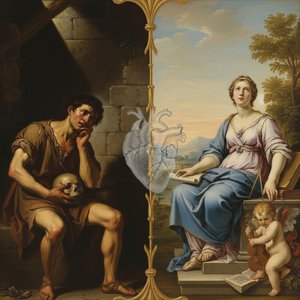
Guercino: A Baroque Master Between Caravaggism & Classicism – Exploring Innovation & Emotional Depth
Explore the captivating world of Guercino, a Baroque master bridging Caravaggism & Classicism. Discover his dramatic chiaroscuro, emotional depth, and lasting influence on art history with OriginalUniqueArt.