
 Zobacz w skali 1:1
 Wyślij
 Udostępnij
 Szczegóły
 Przewodnik

 Pobierz plik obrazu
 Podobne obiekty
 RTG
RTG Pokaz slajdów
 Statystyki
People Moving in the Piazza
 Contemporary Realism
 1963
1963 21.0 x 27.0 cm
 Czytaj więcej
Ręcznie malowana reprodukcja olejowa
Ręcznie malowany obraz olejny na płótnie, wykonany na zamówienie przez naszych artystów w wybranym przez Ciebie wymiarze i oprawie. ( Przełącz na wersję drukowaną Przełącz na wersję cyfrową)




































Wybierz spośród naszych standardowych rozmiarów, które zachowują oryginalne proporcje dzieła sztuki.

Możesz wprowadzić własne wymiary, aby dopasować obraz do konkretnej ramy lub przestrzeni. Jeśli wybrany rozmiar nie będzie odpowiadał proporcjom oryginału, przytniecie dzieło sztuki lub rozszerzymy je o dodatkowe elementy, ręcznie domalowane przez artystę. Przed rozpoczęciem produkcji wyślemy projekt cyfrowy do Twojej akceptacji.
Należy pamiętać, że podgląd na ekranie nie odzwierciedla rzeczywistego przycinania ani rozszerzania obrazu. Tylko projekt dokładnie pokaże ostateczną kompozycję.
Choć oferujemy możliwość zamówienia niestandardowych rozmiarów, zalecamy wybór wymiaru z gotowej listy, aby zachować oryginalne proporcje dzieła.
Po złożeniu zamówienia zespół OriginalUniqueArt.com skontaktuje się z klientem drogą mailową w celu uzyskania instrukcji i prześle wizualizację projektu
Dostawa na całym świecie () w ciągu 3–4 tygodni zamiast standardowych 5 tygodni. (3 Październik). Bez kompromisów w kwestii jakości.

Bezpłatna ekspresowa wysyłka na cały świat

Wysokiej jakości płótno lniane

Pełne ubezpieczenie transportowe

Gwarancja zwrotu należności celnych i podatków importowych

Gwarancja idealnego odwzorowania barw

100-dniowy okres na zwrot dzieła w przypadku wykrycia wad produkcyjnych

Gwarancja 100% zwrotu pieniędzy

Oferta przy zakupie wielu sztuk
 Opcja ze szkłem jest dostępna wyłącznie w rozmiarach poniżej 110 cm

People Moving in the Piazza
Technika wykonania
Rozmiar reprodukcji
-


Suma do zapłaty
zł 1949
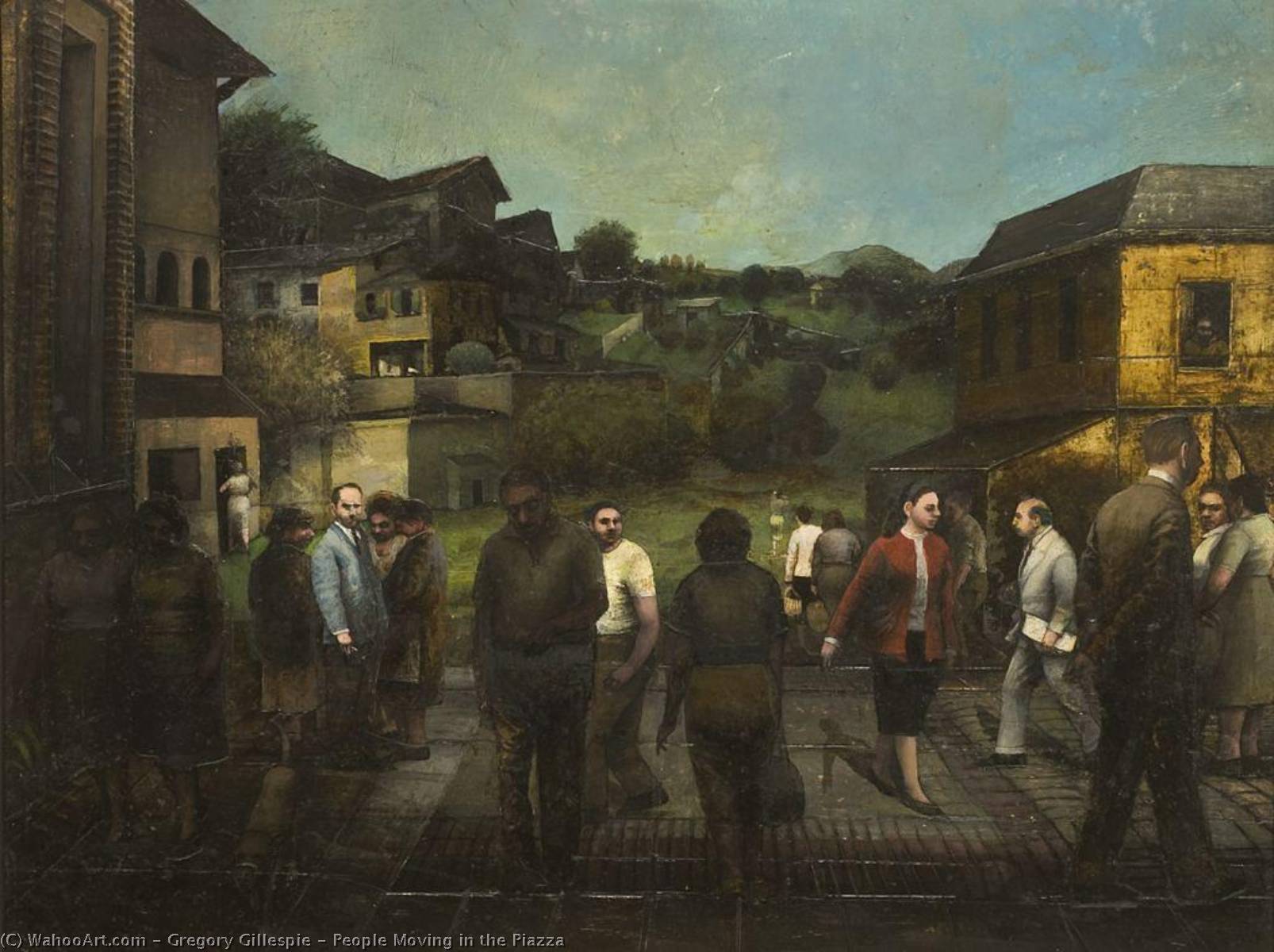
The scene takes place on a hillside with buildings surrounding it, creating a sense of depth and dimension to the scene. The black and white depiction of people walking in the street adds an element of simplicity, yet the overall effect is one of liveliness and engagement. A dog can be seen among the crowd, adding an extra layer of energy to the image.
Gregory Gillespie was a master of capturing the essence of everyday life, and People Moving in the Piazza is no exception. The painting is set in a village-like atmosphere, with people walking and interacting with one another. The buildings surrounding the hillside create a sense of community, drawing the viewer into the scene.
Some notable works by Gregory Gillespie include Sunday, also housed at the Smithsonian American Art Museum. For more information on Gregory Gillespie and his works, visit /art/list/?Filter=Gregory-Gillespie.
To explore more artworks like People Moving in the Piazza, visit the Smithsonian American Art Museum collection on https://OriginalUniqueArt.com.
Other notable artists whose works are housed at the Smithsonian American Art Museum include David Levine and Ernest Clifford Peixotto. Their works, such as Old Lady on a Beach and Oriskany, can be found on https://OriginalUniqueArt.com.
For handmade oil painting reproductions of these captivating pieces, visit https://OriginalUniqueArt.com. With a wide range of artworks to choose from, you're sure to find the perfect piece to enhance your space.
Notable Works
- People Moving in the Piazza by Gregory Gillespie
- Sunday by Gregory Gillespie
- Old Lady on a Beach by David Levine
- Oriskany by Ernest Clifford Peixotto
Pytania i odpowiedzi
Kto stworzył "People Moving in the Piazza"?
„People Moving in the Piazza” zostało stworzone przez Gregory Gillespie. Informacje na tej stronie opisują oryginalne dzieło autorstwa Gregory Gillespie.
Czy kolory w "People Moving in the Piazza" wydają się intensywne czy łagodne?
Nasycenie barw w dziele „People Moving in the Piazza” wynosi Monochromatic. Intensywność określa, jak mocne wydają się kolory.
W którym roku powstało „People Moving in the Piazza” autorstwa Gregory Gillespie?
Powstanie „People Moving in the Piazza” autorstwa Gregory Gillespie datuje się na 1963.
Jak jasny jest People Moving in the Piazza w ogólnym ujęciu?
Postrzegana jasność dzieła „People Moving in the Piazza” autorstwa Gregory Gillespie wynosi deep_shadow. Można ją dopasować do oświetlenia w docelowym pomieszczeniu.
Czy dzieło "People Moving in the Piazza" jest dostępne jako wysokiej jakości wydruk artystyczny?
Odbitkę dzieła „People Moving in the Piazza” autorstwa Gregory Gillespie można zamówić bezpośrednio na stronie ta strona: szlachetna odbitka na płótnie bawełnianym lub archiwalnym papierze płótnopodobnym.
Ile lat miał(a) Gregory Gillespie, tworząc "People Moving in the Piazza" w 1963 roku?
Gregory Gillespie miał 27 lat, tworząc „People Moving in the Piazza” w 1963. Wiek ten został obliczony na podstawie roku urodzenia artysty, 1936.
Jakie miejsce w dorobku twórczym Gregory Gillespie zajmuje dzieło "People Moving in the Piazza"?
W dorobku Gregory Gillespie, "People Moving in the Piazza" wpisuje się w styl Contemporary Realism, nawiązując do tematów takich jak renaissance detail, post-impressionist brush, american urban life, european village scene, social observation art, daily routine capture, gillespie's human focus, quiet american realism.
Biografia artysty
The Renaissance Spirit in Modern Shadows
Gregory Gillespie was an artist who lived between worlds, bridging the gap between the meticulous rigor of the Italian Renaissance and the unsettling dreamscapes of contemporary surrealism. Born in Roselle Park, New Jersey, his journey took him from the foundational studies at Cooper Union to the vibrant artistic community of the San Francisco Art Institute. However, it was his transformative period in Italy, fueled by prestigious Fulbright-Hays grants, that truly forged his visual language. Immersed in the works of masters like Masccio, Mantegna, and Carlo Crivelli, Gillespie absorbed a sense of compositional gravity and symbolic depth that would haunt his canvases for decades. His time in Florence and Rome allowed him to cultivate an atmosphere of profound melancholy, where landscapes were never merely scenery but vessels for contemplation and quiet drama.The Alchemy of Image and Layer
Gillespie’s methodology was a fascinating study in transformation, often blurring the line between found reality and painted fiction. In his most evocative early works, he employed a unique collage technique, meticulously cutting images from newspapers and magazines to layer beneath or atop his painted surfaces. This process allowed him to breathe new life into the mundane, turning a simple newsprint fragment into a ghostly inhabitant of a surreal landscape. His ability to blend Flemish realism with elements of the unexpected created a tension that invited viewers to question the boundaries of their own perception. As he returned to the United States in 1970 and settled in Massachusetts, his focus shifted toward working directly from life. This evolution brought about a period of exquisite still lifes and self-portraits that maintained his signature attention to detail while embracing a newfound expressive freedom.A Legacy of Enchanted Realism
The significance of Gillespie’s contribution to American art lies in his ability to sustain the flame of magic realism in a modern era. His career was marked by prestigious recognitions, including his election as an Associate of the National Academy of Design in 1971 and later as a full Academician in 1994. Through exhibitions in the Whitney Biennials and a major retrospective at the Hirshhorn Museum, he established himself as a master of the enigmatic. His oeuvre remains a testament to the power of meticulous craft and the enduring allure of the mysterious, leaving behind a collection of works characterized by:- Symbolic depth derived from classical traditions;
- Atmospheric landscapes that evoke both peace and unease;
- Technical mastery in both collage and direct painting;
- Narrative ambiguity that challenges the viewer's eye.

Gregory Gillespie
1936 - 2000
Najważniejsze informacje
- Full Name: Gregory Joseph Gillespie
- Nationality: American
- Date Of Birth: 1936
- Date Of Death: 2000
- Place Of Birth: Roselle Park, New Jersey
- Notable Artworks:
- People Moving in the Piazza
- The Party
- Untitled (352)
- Artistic Movement Or Style: Magic Realism
- Artists Who Influenced This Artist:
- Masaccio
- Carlo Crivelli
- Artists Or Movements Influenced By This Artist: ['Renaissance']
Zobacz także powiązane artykuły

Grant Wood & American Regionalism: Identity, Myth & the Rural Landscape
Explore the world of Grant Wood & American Regionalism with OriginalUniqueArt. Discover the symbolism behind 'American Gothic', recurring themes, and the movement's lasting impact on art history. High-quality reproductions available.

Amerykański Realizm: 10 Arcydzieł, Które Zdefiniowały Epokę | OriginalUniqueArt
Poznaj 10 arcydzieł amerykańskiego realizmu! Odkryj historie Winslowa Homera, Edwarda Hoppera i innych mistrzów. Reprodukcje obrazów najwyższej jakości – inspiracje do Twojego wnętrza na OriginalUniqueArt.com

American Regionalism: The Soul of the Heartland and the Mastery of Grant Wood
Explore the profound history of American Regionalism. Discover how Grant Wood captured the heart of the Midwest through masterpieces like American Gothic. An expert guide to the movement, its cultural impact, and the enduring beauty of American Realism.

Czarne arcydzieła: Top 10 słynnych obrazów pełnych mroku i ekspresji | OriginalUniqueArt.com
Odkryj 10 słynnych obrazów, w których czerń króluje! Poznaj historie artystów, ekspresjonizm i mroczną paletę barw. Reprodukcje dzieł sztuki najwyższej jakości na OriginalUniqueArt.com – inspiracje do wnętrz i kolekcjonerstwo.
Amerykański Regionalizm: Studium Tożsamości w Obrazach Pracy, Miejsca i Krytyki Społecznej
Poznaj fascynujący świat amerykańskiego regionalizmu! Analiza kluczowych artystów, wpływ Wielkiego Kryzysu na sztukę i symbolika krajobrazu. Ekspercka analiza dla miłośników historii sztuki.