

 Zobacz w skali 1:1
 Wyślij
 Udostępnij
 Szczegóły

 Pobierz plik obrazu
 Podobne obiekty
 RTG
RTG Pokaz slajdów
 Statystyki
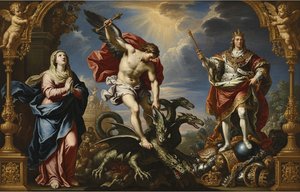
Polyptych Of St Barbara

 Czytaj więcej
Ręcznie malowana reprodukcja olejowa
Ręcznie malowany obraz olejny na płótnie, wykonany na zamówienie przez naszych artystów w wybranym przez Ciebie wymiarze i oprawie. ( Przełącz na wersję drukowaną Przełącz na wersję cyfrową)




































Wybierz spośród naszych standardowych rozmiarów, które zachowują oryginalne proporcje dzieła sztuki.

Możesz wprowadzić własne wymiary, aby dopasować obraz do konkretnej ramy lub przestrzeni. Jeśli wybrany rozmiar nie będzie odpowiadał proporcjom oryginału, przytniecie dzieło sztuki lub rozszerzymy je o dodatkowe elementy, ręcznie domalowane przez artystę. Przed rozpoczęciem produkcji wyślemy projekt cyfrowy do Twojej akceptacji.
Należy pamiętać, że podgląd na ekranie nie odzwierciedla rzeczywistego przycinania ani rozszerzania obrazu. Tylko projekt dokładnie pokaże ostateczną kompozycję.
Choć oferujemy możliwość zamówienia niestandardowych rozmiarów, zalecamy wybór wymiaru z gotowej listy, aby zachować oryginalne proporcje dzieła.
Po złożeniu zamówienia zespół OriginalUniqueArt.com skontaktuje się z klientem drogą mailową w celu uzyskania instrukcji i prześle wizualizację projektu
Dostawa na całym świecie () w ciągu 3–4 tygodni zamiast standardowych 5 tygodni. (18 Wrzesień). Bez kompromisów w kwestii jakości.

Bezpłatna ekspresowa wysyłka na cały świat

Wysokiej jakości płótno lniane

Pełne ubezpieczenie transportowe

Gwarancja zwrotu należności celnych i podatków importowych

Gwarancja idealnego odwzorowania barw

100-dniowy okres na zwrot dzieła w przypadku wykrycia wad produkcyjnych

Gwarancja 100% zwrotu pieniędzy

Oferta przy zakupie wielu sztuk
 Opcja ze szkłem jest dostępna wyłącznie w rozmiarach poniżej 110 cm

Polyptych Of St Barbara
Technika wykonania
Rozmiar reprodukcji
-


Suma do zapłaty
$ 325
Biografia artysty
The Stonecutter’s Legacy: The Life and Art of Giuseppe Torretti
In the heart of the Venetian Baroque, where drama meets devotion, the name Giuseppe Torretti resonates as a master of form and spirit. Born in the quiet surroundings of Asolo around 1664, Torretti did not begin his journey amidst the grand marble halls of academies, but rather through the tactile, gritty reality of a stonemason. This early apprenticeship as a stonecutter provided him with an intimate, almost visceral understanding of his medium. Before he ever sought to capture the divine, he had mastered the weight, texture, and resistance of stone, a foundation that would later allow him to breathe life into cold marble and transform it into vessels of profound religious emotion.
As his talent blossomed, Torretti’s work began to reflect the shifting tides of 18th-century Italian art. While his early endeavors, such as the altar of the Pietà in Udine, whispered of the influence of Arrigo Merengo, he soon transcended these initial stylistic constraints. His evolution was marked by a sophisticated movement toward the classical ideals championed by Pietro Baratta. By traveling to Rome alongside luminaries like Domenico Rossi, Torretti absorbed the essence of the Roman Baroque—a style that masterfully married theatrical grandeur with a disciplined, classical restraint. This synthesis became his hallmark, allowing him to navigate the opulent Venetian landscape with an ability to evoke both awe and quiet contemplation.
A Sculptural Presence in the Venetian Landscape
The true sanctuary of Torretti’s genius lies within the sacred architecture of Venice itself. To walk through the city's historic churches is to encounter his silent, stone witnesses. His sculptures do not merely occupy space; they command it, acting as focal points for spiritual transcendence. In the Basilica di San Giorgio Maggiore and San Giacomo Maggiore, his monumental statues stand as testaments to a mastery of anatomical precision and expressive gesture. He possessed a rare ability to capture the fleeting moment of a miracle—the tension in a saint's muscle, the sorrow in a draped fold of cloth, and the dramatic interplay of light and shadow that defines the Venetian Baroque aesthetic.
His repertoire was as diverse as his influences, ranging from intricate intaglios to massive, commanding figures. Some of his most evocative contributions can be found adorning the facades and interiors of several iconic Venetian sites:
- The Church of San Stae: Where his statues of Saint Sebastian and Saint Oswald serve as sentinel figures, showcasing his ability to integrate sculpture with architectural grandeur.
- Santa Maria Formosa and I Gesuiti: Locations where his religious narratives continue to inspire awe through their realistic portrayal of biblical themes.
- The Manin Chapel in Udine: A display of his skill in high-relief, depicting the poignant scenes from the Life of the Virgin Mary with a delicate, narrative grace.
Enduring Influence and Artistic Heritage
Beyond his individual masterpieces, Torretti’s significance is cemented by the lineage of artistry he helped foster. He established a notable studio that functioned as a crucible for future talent, ensuring that his technical precision and classical sensibilities were passed down through generations. His nephew, Giuseppe Bernardi (often known as il Torretto), continued this legacy, eventually serving as the first teacher to the legendary Neoclassical master, Antonio Canova. This connection links Torretti directly to the dawn of Neoclassicism, illustrating how his Baroque foundations provided the essential groundwork for the next great era of European sculpture.
Giuseppe Torretti passed away in Venice in 1743, leaving behind a city forever transformed by his chisel. His work remains a vital bridge between the exuberant theatricality of the late Baroque and the disciplined elegance of the classical revival. Through his hands, stone was stripped of its inertia and imbued with the eternal, capturing the very essence of faith through the enduring medium of sculpture.

giuseppe torretti
1664 - 1743 , Italy
Najważniejsze informacje
- Artistic Movement Or Style: Baroque Sculpture
- Artists Who Influenced This Artist: ['Giovanni Battista Falconetti']
- Date Of Birth: 1664
- Full Name: Giuseppe Torretti
- Nationality: Italian
- Notable Artworks:
- San Eustachio Ed I Suoi Familiari Risparmiati Dal Leone Di Giuseppe Torretti
- Dettaglio Del Crocifisso Di Giuseppe Torretti Nella Chiesa Di San Moise A Venezia
- San Giacomo Giuseppe Torretti Basilica Di San Giorgio Maggiore A Venezia
- Place Of Birth: Treviso, Italy
Zobacz także powiązane artykuły

Barokowe arcydzieła: 10 obrazów, które zdefiniowały epokę | OriginalUniqueArt.com
Odkryj 10 arcydzieł baroku! Caravaggio, Rembrandt, Rubens i inni artyści, którzy zdefiniowali epokę. Poznaj historie, techniki i inspiracje tych niezwykłych obrazów. Reprodukcje najwyższej jakości na OriginalUniqueArt.com – idealne do Twojego wnętrza!

El Greco: 25 Arcydzieł Genialnego Malarza – Kolekcja dla Koneserów Sztuki i Wystroju Domu
Odkryj 25 arcydzieł El Greco – mistrza renesansu i manieryzmu. Poznaj historie, techniki i duchowość w jego obrazach. Reprodukcje najwyższej jakości na OriginalUniqueArt.com. Inspiracje do wnętrz i kolekcja sztuki online!

Teatralność i triumf: Dramat baroku w malarstwie i rzeźbie – od kontrreformacji do ekspresji emocji
Odkryj dramat i przepych sztuki baroku! Analiza malarstwa i rzeźby, wpływ kontrreformacji, kluczowi artyści oraz filozofia vanitas. Ekspercka wiedza dla miłośników historii sztuki.

Dramatyczny Rozkwit Baroku: Dziedzictwo Sztuki Kontrreformacji i Mistrzowie Chiaroscuro
Odkryj dramatyczny świat baroku! Poznaj historię sztuki kontrreformacji, mistrzów chiaroscuro i weneckich arcydzieł. Reprodukcje najwyższej jakości na OriginalUniqueArt.com.
Dramatyzm i mistycyzm w sztuce baroku: władza, wiara i emocje na płótnie
Odkryj dramatyzm i mistycyzm w sztuce baroku! Analiza dzieł Caravaggia, Rembrandta i Rubensa. Poznaj wpływ kontrreformacji na malarstwo epoki. Reprodukcje najwyższej jakości – OriginalUniqueArt.