Rozmiar tekstu

() ·

Obraz stworzony dla Ciebie, własnoręcznie

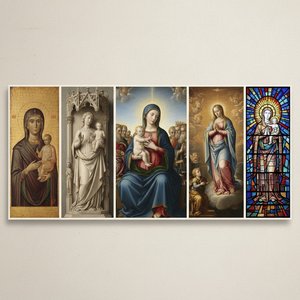
Virgin with the Child

Ręcznie malowana reprodukcja olejowa

Ręcznie malowany obraz olejny na płótnie, wykonany na zamówienie przez naszych artystów w wybranym przez Ciebie wymiarze i oprawie. ( Przełącz na wydania drukowane Przejdź do wersji cyfrowej)

Opis obiektu

Admire 'Virgin with the Child' by Giulio Romano (1520). A stunning High Renaissance masterpiece featuring Mary and infant Jesus, showcasing intricate details & masterful artistry. Explore a timeless classic!

Biografia artysty

Giulio Romano – mistrz manieryzmu, znany z fresków Palazzo Te i Villa Madama. Jego dzieła charakteryzują się dynamiką, asymetrią i ekspresją, wpływając na rozwój sztuki renesansowej.

od ·

Rozdział 1

Jak duży powinien być ten format?

Przesuń suwak, aby zmienić rozmiar; obraz po lewej stronie przedstawia ramę w jej rzeczywistej szerokości. Zachowano proporcje oryginału.

Standardowy format
personalizowane
CM
INCH

Wybierz spośród naszych standardowych rozmiarów, które zachowują oryginalne proporcje dzieła sztuki.

szerokość
wysokość

Wpisz wymaganą szerokość i wysokość, aby obraz pasował do Twojej ramy lub ściany. Ponieważ jest to dzieło malowane ręcznie, w przypadku rozmiaru o innych proporcjach artysta może domalować nieco więcej wokół obrazu lub przyciąć jego fragmenty — wybór należy do Ciebie. Przed rozpoczęciem pracy prześlemy Ci cyfrową wizualizację do zatwierdzenia. Obraz widoczny na tej stronie nie przedstawia rzeczywistego efektu — jedynie wizualizacja oddaje realny rezultat.

Rozdział 2

W jaki sposób ma zostać dostarczone?

Wybierz krawędzie płótna naciągniętego na ramę

Wybierz ramę

Corner sample of the WhiteWrap canvas edge finish, stretched on lite drewno bars
Białe krawędzie zł1
Corner sample of the BlurSideWrap canvas edge finish, stretched on lite drewno bars
rozmyte krawędzie zł1
Corner sample of the ExtendedWrap canvas edge finish, stretched on lite drewno bars
Przedłużony zł1
Corner sample of the P118B picture frame: polistyren formowany, 5 cm wide and 3 cm thick
P118B zł10
Corner sample of the P118H picture frame: polistyren formowany, 5 cm wide and 3 cm thick
P118H zł10
Corner sample of the P118W picture frame: polistyren formowany, 5 cm wide and 3 cm thick
P118W zł10
Corner sample of the P438Z picture frame: polistyren formowany, 5.5 cm wide and 3.5 cm thick
P438Z zł10
Corner sample of the P508JH picture frame: polistyren formowany, 7 cm wide and 3.5 cm thick
P508JH zł12
Corner sample of the P508YH picture frame: polistyren formowany, 7 cm wide and 3.5 cm thick
P508YH zł12
Corner sample of the P805H picture frame: polistyren formowany, 5 cm wide and 3.5 cm thick
P805H zł10
Corner sample of the P805Z picture frame: polistyren formowany, 5 cm wide and 3.5 cm thick
P805Z zł10
Corner sample of the P919BZ picture frame: polistyren formowany, 7 cm wide and 3.5 cm thick
P919BZ zł10
Corner sample of the P919G picture frame: polistyren formowany, 7 cm wide and 3.5 cm thick
P919G zł10
Corner sample of the P919XJ picture frame: polistyren formowany, 7 cm wide and 3.5 cm thick
P919XJ zł10
Corner sample of the P959ZH picture frame: polistyren formowany, 5 cm wide and 3 cm thick
P959ZH zł10
Corner sample of the P968JZ picture frame: polistyren formowany, 6 cm wide and 4 cm thick
P968JZ zł12
Corner sample of the W106C picture frame: lite drewno, 5 cm wide and 3 cm thick
W106C zł8
Corner sample of the W218G picture frame: lite drewno, 5 cm wide and 3 cm thick
W218G zł10
Corner sample of the W218JH picture frame: lite drewno, 5 cm wide and 3 cm thick
W218JH zł8
Corner sample of the W218Y picture frame: lite drewno, 5 cm wide and 3 cm thick
W218Y zł10
Corner sample of the W307PJ picture frame: lite drewno, 6 cm wide and 3 cm thick
W307PJ zł10
Corner sample of the W316G picture frame: lite drewno, 6 cm wide and 3 cm thick
W316G zł10
Corner sample of the W316PJ picture frame: lite drewno, 6 cm wide and 3 cm thick
W316PJ zł8
Corner sample of the W316Y picture frame: lite drewno, 6 cm wide and 3 cm thick
W316Y zł10
Corner sample of the W398PJ picture frame: lite drewno, 5 cm wide and 3 cm thick
W398PJ zł8
Corner sample of the W4111J picture frame: lite drewno, 6.5 cm wide and 3.5 cm thick
W4111J zł10
Corner sample of the W500HY picture frame: lite drewno, 7 cm wide and 5 cm thick
W500HY zł15
Corner sample of the W500JH picture frame: lite drewno, 7 cm wide and 5 cm thick
W500JH zł15
Corner sample of the W692G picture frame: lite drewno, 8 cm wide and 4 cm thick
W692G zł12
Corner sample of the W849H picture frame: lite drewno, 5 cm wide and 3 cm thick
W849H zł8
Corner sample of the W940BG picture frame: lite drewno, 7.5 cm wide and 4.5 cm thick
W940BG zł15
Corner sample of the W953PJ picture frame: lite drewno, 6 cm wide and 3.5 cm thick
W953PJ zł8
Corner sample of the H24-GOLD picture frame: rzeźbione drewno pokryte gipsem, 10 cm wide and 6 cm thick
H24-GOLD zł30
Corner sample of the H24-SILVER picture frame: rzeźbione drewno pokryte gipsem, 10 cm wide and 6 cm thick
H24-SILVER zł30
Corner sample of the H36-GOLD picture frame: rzeźbione drewno pokryte gipsem, 15 cm wide and 6.5 cm thick
H36-GOLD zł45
Corner sample of the H36-SILVER picture frame: rzeźbione drewno pokryte gipsem, 15 cm wide and 6.5 cm thick
H36-SILVER zł45

Profil: . Wymiar całkowity w ramie: .

Rozdział 3

Kto go maluje i czy coś powinno ulec zmianie?

Przykłady możliwych zmian: Zastąpienie twarzy zdjęciem klienta; Dodanie zwierzęcia (np. zamiana kota na psa); Ukrycie wiadomości w tle; Zmiana krajobrazu lub elementów tła.
Po złożeniu zamówienia zespół OriginalUniqueArt.com skontaktuje się z klientem drogą mailową w celu uzyskania instrukcji i prześle podgląd projektu

Dostawa na całym świecie () w ciągu 3–4 tygodni zamiast standardowych 5 tygodni. (5 Listopad). Bez kompromisów w kwestii jakości.

Rozdział 4

Ostatnie szlify

Tabliczka informacyjna, jak w muzeum?

Szczegóły grawerowanej brązowej tabliczki

This elegant plaque features the artist's name and the title of the artwork, finely engraved for a timeless presentation.

It is made from bronze with a refined, elegant finish. The text is precisely laser-engraved for a sharp and permanent result. Measuring 9x2 cm, the plaque is compact yet easy to read. It's built to be durable and scratch-resistant, offering a professional, museum-quality look. Mounting is simple thanks to the included adhesive backing.

Szczegóły przezroczystej tabliczki akrylowej

The plaque includes essential engraved details such as the artist's name, the title of the artwork, the date it was created, the type of media used-like oil on canvas or watercolor-a brief description of the piece, and a QR code that links to the complete artwork information.

It is crafted from clear acrylic, offering a sleek, modern appearance. The text is UV-engraved in black to ensure strong visual contrast. With a size of 10x15 cm, it ensures optimal readability. It comes equipped with two metal hooks for secure wall mounting. The plaque is designed to be weather-resistant, making it suitable for various environments, and it includes interactive features that work seamlessly with smartphone scanning.

Szczegóły czarnej tabliczki akrylowej

This elegant plaque includes engraved information such as the artist's name, the title of the artwork, the date it was created, the type of media used (like oil on canvas or watercolor), a short description of the artwork, and a QR code for quick access to more information.

The plaque itself is made from refined black acrylic with a premium finish. The text is laser-engraved in white for high contrast and readability. Its size is 10x15 cm, designed to be easy to read. It comes with two metal hooks for professional mounting. The design is sleek and fits any interior style. It is also weather-resistant and durable, with built-in digital integration for mobile compatibility.

Werniks ochronny?

Kiedy potrzebujesz dostawy?

Rozdział 5

Twoje dzieło, dokładnie tak, jak zamówiłeś

Virgin with the Child

Technika reprodukcji

Wymiary reprodukcji

-

Wybitny mistrz artystyczny

Większa szczegółowość, finezja i dodatkowy czas na realizację

-

Opcje oprawy reprodukcji

-

-

W przypadku dzieł sztuki lub reprodukcji, których którykolwiek z boków przekracza 105 cm (około 41 cali), rama zostanie wysłana w formie zestawu do samodzielnego montażu. Metoda ta zapewnia bezpieczną dostawę i zapobiega uszkodzeniom podczas transportu.

Wymagany profesjonalny montaż – nie jest to produkt typu DIY.
Zestaw musi zostać złożony, a płótno naciągnięte przez doświadczonego profesjonalnego ramiarza, przy użyciu kleju do drewna (brak w zestawie), kleszczy do naciągania płótna oraz ścisków, które utrzymają krosna w równej pozycji podczas schnięcia kleju. Nieprawidłowy montaż lub nierównomierne napięcie płótna może trwale uszkodzić dzieło sztuki i nie podlega naszej gwarancji.

  • W zestawie znajdują się wszystkie listwy z litego drewna, precyzyjnie docięte do wymiarów.

  • Montaż odbywa się przy użyciu dołączonych wkrętów oraz kleju do drewna do łączenia narożników, którego zestaw nie zawiera i który musi zostać dostarczony przez ramiarza.

  • Wymagane są profesjonalne narzędzia, których nie ma w zestawie: kleszcze do naciągania płótna (napinacz) oraz zaciski, które pozwolą utrzymać listwy w równej pozycji podczas schnięcia kleju.

Ważne:
Do połączenia narożników niezbędny jest klej do drewna, listwy należy unieruchomić za pomocą ścisków do momentu całkowitego wyschnięcia kleju, a naciągnięcie płótna na złożoną ramę wymaga użycia kleszczy do naciągania płótna. Żaden z tych elementów nie jest dołączony do zestawu. Przed zamówieniem tego rozmiaru zalecamy konsultację z doświadczonym ramiarzem.

Etykieta obiektu

-

-

Lakier ochronny

Lakier z połyskiem (pogłębia kolory, chroni przed światłem i wilgocią)

-

Personalizacja dzieła

Przykłady możliwości personalizacji: zastąp twarz zdjęciem klienta; dodaj zwierzę domowe (np. zamień kota na psa); umieść ukrytą wiadomość w tle; zmień krajobraz lub elementy tła.

-

Ekspresowa

Dostawa na cały świat () w ciągu 3–4 tygodni zamiast standardowych 5 tygodni. (5 Listopad). Bez kompromisów w kwestii jakości.

-

Przesyłka ekspresowa

Dostawa na cały świat () w ciągu 5 tygodni. (12 Listopad).

W cenie

Cena całkowita

zł 1174

Suma całkowita zł 1174

Opcja ze szkłem jest dostępna wyłącznie w rozmiarach poniżej 110 cm

W każdym zamówieniu

  • Bezpłatna ekspresowa wysyłka na cały świat
  • Wysokiej jakości płótno lniane
  • Pełne ubezpieczenie przesyłki
  • Gwarancja zwrotu należności celnych i podatków importowych
  • Gwarancja wiernego odwzorowania kolorów
  • 100-dniowa polityka zwrotów (tylko w przypadku wad)
  • Gwarancja 100% zwrotu pieniędzy
  • Zniżka przy zakupie wielu sztuk

A Divine Encounter: Giulio Romano’s ‘Virgin with the Child’

Giulio Romano's “Virgin with the Child,” painted in Rome around 1520, is more than just a depiction of Mary and infant Jesus; it’s a profound exploration of faith, power, and the nascent complexities of Mannerism. Emerging from the shadow of Raphael’s High Renaissance legacy, Romano boldly pushed beyond idealized beauty, embracing a style characterized by dramatic contrasts, unsettling perspectives, and an intense psychological depth – hallmarks that would define the era of Mannerism. This particular work, housed within a 105 x 77 cm canvas, offers a captivating glimpse into this pivotal moment in art history, showcasing Romano’s evolving artistic voice and his masterful command of color, form, and narrative.

The painting immediately draws the eye to the central figures. Mary, rendered with a subtle yet commanding presence, is not presented as a serene Madonna but rather as a woman imbued with authority and a quiet strength. Her blue dress, rich in texture and subtly shimmering, contrasts dramatically with the gold of her crown – a visual declaration of her divine status while simultaneously hinting at worldly power. The infant Jesus, equally captivating, wears his own miniature crown, mirroring his mother’s adornment and suggesting an immediate equality within their sacred bond. The composition is carefully orchestrated; the figures are not simply placed within a space but actively engaged in a dynamic interaction, creating a sense of movement and narrative tension.

Mannerist Innovation: Style and Technique

Romano’s style in “Virgin with the Child” is distinctly Mannerist. He departs from the balanced compositions and harmonious colors of Raphael, favoring instead elongated figures, distorted perspectives, and an almost theatrical use of light and shadow. Notice how the background recedes sharply, creating a sense of spatial ambiguity – a technique known as *sprezzatura*, intended to evoke a feeling of surprise and disorientation. The artist employs a sophisticated layering of pigments, utilizing glazes and scumbles to build up texture and create a luminous quality that is both ethereal and intensely realistic. The use of gold leaf, particularly in the crown and details of the clothing, adds to the painting’s opulence and reinforces its symbolic weight.

Technically, Romano demonstrates a remarkable understanding of anatomy and drapery – skills honed during his apprenticeship with Raphael. However, he deliberately manipulates these elements to achieve a desired expressive effect. The folds of Mary's dress are not simply decorative; they seem to flow and ripple with an inner energy, mirroring the emotional intensity of the scene. Similarly, the infant Jesus’s pose is subtly unsettling, hinting at a vulnerability beneath his angelic appearance.

Historical Context: Rome in Transition

The creation of “Virgin with the Child” coincides with a period of immense upheaval and transformation in Rome. The Sack of 1527 had shattered the city's artistic and political stability, scattering its artists and patrons. Raphael’s untimely death further compounded this crisis, leaving a void that Romano was uniquely positioned to fill. He inherited not only the responsibility for completing unfinished commissions but also the daunting task of redefining the visual language of High Renaissance art. This painting can be viewed as a deliberate assertion of Romano's artistic independence – a bold departure from his master’s style while retaining a deep respect for his legacy.

The presence of the two secondary figures in the background adds another layer of complexity to the scene. Their identities remain ambiguous, perhaps representing the theological or political forces that shaped Mary’s life and role within the Christian narrative. The small object on the ground – resembling a book or scroll – could symbolize divine revelation or the transmission of sacred knowledge. These subtle details invite viewers to engage in a deeper interpretation of the work, moving beyond a simple representation of a religious subject.

Symbolism and Emotional Resonance

Beyond its technical brilliance, “Virgin with the Child” is rich in symbolic meaning. The crown worn by both Mary and Jesus represents their divine authority and connection to God. The blue color associated with Mary often symbolizes purity, loyalty, and truth – qualities essential to her role as the Mother of God. The painting’s overall effect is one of profound emotional resonance. It evokes a sense of reverence, mystery, and perhaps even a touch of melancholy—a recognition of both the beauty and the challenges inherent in faith. This reproduction captures that same evocative power, offering a stunning addition to any art collection or interior space.

Pytania i odpowiedzi

Co przedstawia „Virgin with the Child” – Giulio Romano i jaki ma nastrój?

„Virgin with the Child” – Giulio Romano łączy w sobie virgin mary, child jesus, renaissance, halo, crown, religious, composition, romano z Elegant atmosferą.

Czy kolory dzieła "Virgin with the Child" są intensywne czy stonowane?

Kolory dzieła „Virgin with the Child” – Giulio Romano charakteryzują się Muted nasyceniem oraz Monochromatic intensywnością.

Na którym etapie kariery Giulio Romano znajduje się dzieło „Virgin with the Child”, biorąc pod uwagę jego datę powstania?

Biorąc pod uwagę datę powstania (1520), dzieło „Virgin with the Child” wpisuje się w Mature Period twórczości Giulio Romano.

Więcej o tym obrazie

Podgląd w skali 1:1 Podgląd AR Przełącz na wydania drukowane Przejdź do wersji cyfrowej Wyślij jako kartkę
Szczegóły dzieła Przewodnik Dodaj do ulubionych Pobierz obraz Podobne obiekty RTG Pokaz slajdów Pytania i odpowiedzi Statystyki

W liczbach

  • 1520rok powstania dzieła
  • 29dostępne ramy do wyboru
  • standardowe formaty, w ich własnych proporcjach
  • 5tygodni na namalowanie i dostarczenie dzieła
Giulio Romano

Giulio Romano

1499 - 1546, Włochy

Krótkie informacje o Giulio Romano

  • Artistic Movement Or Style: Mannernisz
  • Artists Or Movements Influenced By This Artist: ['Mannerisci']
  • Artists Who Influenced This Artist:
    • Rafael
    • Michałeł
  • Date Of Birth: c. 1499
  • Date Of Death: 1546
  • Full Name: Giulio Romano
  • Nationality: Włoski
  • Notable Artworks:
    • Fire w Borgo
    • Palazzo Te
  • Place Of Birth: Rzym, Włochy

Biografia artysty

A Roman Beginning and Apprenticeship Under a Master

Giulio Romano, born Giulio Pippi around 1499 in Rome, emerged during a period of intense artistic transformation. Details surrounding his early life remain somewhat shrouded in mystery, yet it’s clear he quickly entered the orbit of Raphael, arguably the most celebrated painter of the High Renaissance. This apprenticeship proved to be profoundly formative, not only shaping his technical skills but also laying the foundation for his future stylistic explorations. He wasn't merely a studio assistant; Giulio rapidly evolved into an indispensable collaborator, contributing significantly to projects of immense scale and importance – notably the decoration of the Vatican Stanze, those magnificent rooms commissioned by Popes Julius II and Leo X. His hand is readily identifiable in *The Fire in the Borgo*, where he assisted Raphael in depicting a dramatic scene of miraculous intervention, capturing both the intensity of the event and the artist’s masterful use of light and shadow. Following Raphael's untimely death in 1520, Giulio inherited responsibility for completing numerous unfinished commissions, including the ambitious decoration of Villa Madama for Cardinal Giuliano de’ Medici. This early exposure to large-scale projects and the demands of aristocratic patronage instilled within him a remarkable confidence and ambition—qualities that would define his later career.

The Birth of Mannerism: A Departure from Classical Harmony

While firmly rooted in the Renaissance tradition, Giulio Romano's artistic trajectory soon diverged significantly from the prevailing emphasis on classical balance and harmony. He became a key figure in the development of Mannerism – a style characterized by its deliberate artificiality, elegant distortions, and often unsettling psychological depth. Heavily influenced by Michelangelo’s powerful figures and dynamic compositions—particularly his use of dramatic perspective and emotional intensity—as well as a broader climate of artistic experimentation within Rome, Giulio began to embrace asymmetry, tension, and a more subjective approach to representation in his work. This wasn't a rejection of Renaissance ideals so much as a deliberate exploration of their limits, pushing beyond the constraints of *natura* to create works that were more expressive and intellectually stimulating. He increasingly modified Raphael’s plans, injecting a new sensibility into Roman art—a statement of Mannerism on a grand scale. This shift is readily apparent in his drawings, which exhibit a remarkable freedom of line and a penchant for dramatic foreshortening, showcasing a departure from the idealized forms of the High Renaissance.

Mantua’s Master: Palazzo Te and Architectural Innovation

In 1524, Giulio accepted an invitation from Federico Gonzaga, Duke of Mantua, to become court painter and architect. This marked a pivotal moment in his career, providing him with unprecedented creative freedom and resources. He essentially became responsible for all artistic activity within the duchy, overseeing not only paintings and frescoes but also architectural projects, garden designs, and even theatrical productions. His most celebrated achievement during this period is undoubtedly Palazzo Te, an extraordinary suburban villa that stands as a testament to his innovative genius. The palace’s interiors are adorned with illusionistic frescoes of breathtaking complexity and psychological depth—a veritable feast for the eyes and mind. *The Sala dei Giganti* (Hall of the Giants), for example, depicts a chaotic battle between gods and giants, engulfing the viewer in a swirling vortex of figures and architectural fragments, creating an immersive experience that is both awe-inspiring and unsettling. Beyond Palazzo Te, Giulio also undertook significant renovations to Mantua’s ducal palace and cathedral, leaving an indelible mark on the city's urban landscape.

Legacy and Lasting Influence

Giulio Romano died in Mantua in 1546, leaving behind a legacy that extended far beyond Italy’s borders. His drawings were highly prized by collectors, and engravings based on his work – particularly those by Marcantonio Raimondi – played a crucial role in disseminating Italian artistic styles throughout Europe. He was so famous after his death that he is the only “modern” artist mentioned by William Shakespeare in *A Midsummer Night’s Dream*, a testament to his widespread renown. His influence can be seen in the works of numerous subsequent artists, who adopted his dynamic compositions, elongated figures, and expressive use of color. While Mannerism eventually gave way to other stylistic movements, Giulio Romano's contributions remain essential to understanding the evolution of Western art. He represents a pivotal moment—a transition from the harmonious ideals of the High Renaissance to the more complex and emotionally charged aesthetic of the late 16th century. *His work continues to captivate and challenge viewers today, reminding us of the power of art to both reflect and shape our understanding of the world.*
  • Key Influences: Raphael, Michelangelo
  • Notable Works: *The Fire in the Borgo*, Palazzo Te, Villa Madama
  • Style: Mannerism (characterized by asymmetry, tension, and emotional intensity)

Najważniejsze informacje

  • Subject or theme: Religious painting
  • Medium: Fresco
  • Movement: High Renaissance
  • Influences: Raphael
  • Artistic style: Mannerism

Quiz o sztuce

Do każdego pytania dotyczy tylko jedna poprawna odpowiedź.

Pytanie 1:
What is the primary subject depicted in this painting?
Pytanie 2:
According to the description, what is prominent on the Virgin Mary's head?
Pytanie 3:
In what year was this painting likely created, based on the provided information?
Pytanie 4:
The artist Giulio Romano is most closely associated with which artistic movement?
Pytanie 5:
Based on the description, what other figures are present in the painting besides the Virgin Mary and infant Jesus?
Odkryj dzieła sztuki uporządkowane według tematów, stylów i cech charakterystycznych.