

 Zobacz w skali 1:1
 Wyślij
 Udostępnij
 Szczegóły
 Przewodnik

 Pobierz plik obrazu
 Podobne obiekty
 RTG
RTG Pokaz slajdów
 Statystyki
Façade and courtyard view


 Czytaj więcej
Ręcznie malowana reprodukcja olejowa
Ręcznie malowany obraz olejny na płótnie, wykonany na zamówienie przez naszych artystów w wybranym przez Ciebie wymiarze i oprawie. ( Przełącz na wersję drukowaną Przełącz na wersję cyfrową)




P118B zł10

P118H zł10

P118W zł10

P438Z zł10

P508JH zł12

P508YH zł12

P805H zł10

P805Z zł10

P919BZ zł10

P919G zł10

P919XJ zł10

P959ZH zł10

P968JZ zł12

W106C zł8

W218G zł10

W218JH zł8

W218Y zł10

W307PJ zł10

W316G zł10

W316PJ zł8

W316Y zł10

W398PJ zł8

W4111J zł10

W500HY zł15

W500JH zł15

W692G zł12

W849H zł8

W940BG zł15

W953PJ zł8




Wybierz spośród naszych standardowych rozmiarów, które zachowują oryginalne proporcje dzieła sztuki.

Możesz wprowadzić własne wymiary, aby dopasować obraz do konkretnej ramy lub przestrzeni. Jeśli wybrany rozmiar nie będzie odpowiadał proporcjom oryginału, przytniecie dzieło sztuki lub rozszerzymy je o dodatkowe elementy, ręcznie domalowane przez artystę. Przed rozpoczęciem produkcji wyślemy projekt cyfrowy do Twojej akceptacji.
Należy pamiętać, że podgląd na ekranie nie odzwierciedla rzeczywistego przycinania ani rozszerzania obrazu. Tylko projekt dokładnie pokaże ostateczną kompozycję.
Choć oferujemy możliwość zamówienia niestandardowych rozmiarów, zalecamy wybór wymiaru z gotowej listy, aby zachować oryginalne proporcje dzieła.
Po złożeniu zamówienia zespół OriginalUniqueArt.com skontaktuje się z klientem drogą mailową w celu uzyskania instrukcji i prześle wizualizację projektu
Dostawa na całym świecie () w ciągu 3–4 tygodni zamiast standardowych 5 tygodni. (11 Październik). Bez kompromisów w kwestii jakości.

Bezpłatna ekspresowa wysyłka na cały świat

Wysokiej jakości płótno lniane

Pełne ubezpieczenie transportowe

Gwarancja zwrotu należności celnych i podatków importowych

Gwarancja idealnego odwzorowania barw

100-dniowy okres na zwrot dzieła w przypadku wykrycia wad produkcyjnych

Gwarancja 100% zwrotu pieniędzy

Oferta przy zakupie wielu sztuk
 Opcja ze szkłem jest dostępna wyłącznie w rozmiarach poniżej 110 cm

Façade and courtyard view
Technika wykonania
Rozmiar reprodukcji
-


Suma do zapłaty
zł 1117
A Frozen Moment of Renaissance Grandeur: Exploring Giulio Romano’s “Façade and Courtyard View”
Giulio Romano's "Façade and Courtyard View," painted in 1526, isn’t merely a depiction of architecture; it’s a meticulously crafted illusion, a testament to the burgeoning Mannerist style that challenged the established harmony of the High Renaissance. This remarkable work, now available as a stunning reproduction, offers a captivating glimpse into the world of Federico II Gonzaga and his court in Mantua – a realm where art, architecture, and theatrical spectacle converged with breathtaking ambition. The image itself presents a carefully constructed dialogue between two perspectives: a monochrome, almost ghostly view of an older building alongside a vibrant, color-infused representation of its restored state. This juxtaposition immediately invites contemplation on the passage of time, the nature of preservation, and the enduring power of artistic vision.
The original painting, housed in the Palazzo Te, Mantua, was conceived as part of a larger decorative program for the villa’s expansive grounds. Romano, having been summoned to Mantua by Federico Gonzaga after his time with Raphael in Rome, quickly established himself as the court's principal artist and architect. The palazzo itself—a sprawling complex of interconnected buildings, gardens, and fountains—became a showcase for Romano’s innovative style, blending classical influences with a distinctly Mannerist sensibility. “Façade and Courtyard View” captures this spirit perfectly, demonstrating Romano’s mastery of illusionistic painting and his willingness to push the boundaries of artistic convention.
Mannerism: A Dance of Distortion and Drama
To understand "Façade and Courtyard View," one must grasp the essence of Mannerism. Emerging in the wake of Raphael’s death, it rejected the balanced proportions and serene idealism of the High Renaissance in favor of a more subjective, emotionally charged approach. Mannerist artists sought to create works that were unsettling, ambiguous, and often deliberately distorted – a deliberate departure from the classical ideals of beauty and harmony. Romano embraced this aesthetic with gusto, employing techniques such as elongated figures, exaggerated poses, vibrant colors, and complex spatial arrangements. The painting’s monochrome top image immediately establishes this sense of unease, hinting at decay and neglect, while the color rendition offers a stark contrast – a carefully staged restoration that attempts to recapture a lost grandeur.
Notice how Romano utilizes *trompe-l'oeil* techniques—the art of creating an illusion of three-dimensionality on a two-dimensional surface. The rusticated masonry, with its rough, uneven texture, contrasts sharply with the smooth, polished surfaces of the pilasters and windows. This deliberate juxtaposition creates a dynamic visual tension, drawing the viewer’s eye to specific details and inviting them to question what is real and what is merely an illusion. The subtle shifts in perspective between the two images further enhance this effect, suggesting that we are witnessing not just a building but also a carefully constructed narrative.
Symbolism and the Gonzaga Court
The Palazzo Te itself was designed as a lavish pleasure palace for Federico II Gonzaga, reflecting his wealth, power, and refined taste. The “Façade and Courtyard View” is therefore deeply intertwined with the symbolism of the Gonzaga court. The building’s elaborate decoration—including frescoes depicting mythological scenes, allegorical figures, and portraits of Federico’s ancestors—served to reinforce his authority and celebrate his lineage. The choice of a monochrome image for the older façade suggests a sense of loss and decline, while the color rendition of the restored building symbolizes the Gonzaga family's continued patronage of the arts and their commitment to preserving the legacy of Mantua.
The inclusion of both images—the weathered facade and its vibrant restoration—is particularly significant. It speaks to the cyclical nature of time, the impermanence of beauty, and the enduring human desire to recapture the past. It’s a poignant reminder that art, like memory, can be both cherished and reconstructed.
Bringing Romano's Vision Home
A high-quality reproduction of “Façade and Courtyard View” offers a unique opportunity to bring this extraordinary work into your own space. Whether adorning a formal dining room or a study, this image will serve as a constant source of inspiration—a reminder of the power of artistic vision, the beauty of Mannerist style, and the enduring legacy of Giulio Romano. It’s more than just a painting; it's a portal to a bygone era, a testament to the artistry and ambition of the Gonzaga court.
Pytania i odpowiedzi
Gdzie mogę kupić wydruk „Façade and courtyard view” autorstwa Giulio Romano?
Aby zamówić wydruk dzieła „Façade and courtyard view” autorstwa Giulio Romano, wystarczy złożyć zamówienie na ta strona: szlachetna odbitka na płótnie bawełnianym lub archiwalnym papierze płótnopodobnym.
Do którego pomieszczenia w domu najlepiej pasuje reprodukcja "Façade and courtyard view"?
Dzieło „Façade and courtyard view” autorstwa Giulio Romano jest rekomendowane do Living Room. Sugestia ta opiera się na tematyce, kolorystyce oraz nastroju pracy.
Gdzie mogę zobaczyć podgląd dzieła "Façade and courtyard view"?
Podgląd dzieła „Façade and courtyard view” autorstwa Giulio Romano jest dostępny na stronie Podgląd danego utworu.
Kto stworzył "Façade and courtyard view"?
Autorem dzieła „Façade and courtyard view” jest Giulio Romano. Praca ta figuruje w katalogu pod nazwiskiem Giulio Romano.
W którym roku powstało „Façade and courtyard view” autorstwa Giulio Romano?
Powstanie „Façade and courtyard view” autorstwa Giulio Romano datuje się na 1526.
Ile lat miał Giulio Romano, gdy powstało dzieło „Façade and courtyard view”?
Giulio Romano stworzył/a "Façade and courtyard view" w wieku 27 lat. Artysta urodził/a się w 1499, a datowanie dzieła to 1526.
Czy "Façade and courtyard view" jest typowe dla tego, co zazwyczaj tworzył Giulio Romano?
„Façade and courtyard view” przedstawia architecture, palazzo te, giulio romano, renaissance, fresco, italy, mantua, mannerism, podczas gdy utrwalone motywy Giulio Romano to raphael’s influence, mannerist style, gonzaga court, lavish patronage, roman antiquity, classical motifs, palazzo te, architectural design. Porównanie tych dwóch elementów ukazuje, jak dzieło odnosi się do typowej dla tego artysty tematyki.
Biografia artysty
A Roman Beginning and Apprenticeship Under a Master
Giulio Romano, born Giulio Pippi around 1499 in Rome, emerged during a period of intense artistic transformation. Details surrounding his early life remain somewhat shrouded in mystery, yet it’s clear he quickly entered the orbit of Raphael, arguably the most celebrated painter of the High Renaissance. This apprenticeship proved to be profoundly formative, not only shaping his technical skills but also laying the foundation for his future stylistic explorations. He wasn't merely a studio assistant; Giulio rapidly evolved into an indispensable collaborator, contributing significantly to projects of immense scale and importance – notably the decoration of the Vatican Stanze, those magnificent rooms commissioned by Popes Julius II and Leo X. His hand is readily identifiable in *The Fire in the Borgo*, where he assisted Raphael in depicting a dramatic scene of miraculous intervention, capturing both the intensity of the event and the artist’s masterful use of light and shadow. Following Raphael's untimely death in 1520, Giulio inherited responsibility for completing numerous unfinished commissions, including the ambitious decoration of Villa Madama for Cardinal Giuliano de’ Medici. This early exposure to large-scale projects and the demands of aristocratic patronage instilled within him a remarkable confidence and ambition—qualities that would define his later career.The Birth of Mannerism: A Departure from Classical Harmony
While firmly rooted in the Renaissance tradition, Giulio Romano's artistic trajectory soon diverged significantly from the prevailing emphasis on classical balance and harmony. He became a key figure in the development of Mannerism – a style characterized by its deliberate artificiality, elegant distortions, and often unsettling psychological depth. Heavily influenced by Michelangelo’s powerful figures and dynamic compositions—particularly his use of dramatic perspective and emotional intensity—as well as a broader climate of artistic experimentation within Rome, Giulio began to embrace asymmetry, tension, and a more subjective approach to representation in his work. This wasn't a rejection of Renaissance ideals so much as a deliberate exploration of their limits, pushing beyond the constraints of *natura* to create works that were more expressive and intellectually stimulating. He increasingly modified Raphael’s plans, injecting a new sensibility into Roman art—a statement of Mannerism on a grand scale. This shift is readily apparent in his drawings, which exhibit a remarkable freedom of line and a penchant for dramatic foreshortening, showcasing a departure from the idealized forms of the High Renaissance.Mantua’s Master: Palazzo Te and Architectural Innovation
In 1524, Giulio accepted an invitation from Federico Gonzaga, Duke of Mantua, to become court painter and architect. This marked a pivotal moment in his career, providing him with unprecedented creative freedom and resources. He essentially became responsible for all artistic activity within the duchy, overseeing not only paintings and frescoes but also architectural projects, garden designs, and even theatrical productions. His most celebrated achievement during this period is undoubtedly Palazzo Te, an extraordinary suburban villa that stands as a testament to his innovative genius. The palace’s interiors are adorned with illusionistic frescoes of breathtaking complexity and psychological depth—a veritable feast for the eyes and mind. *The Sala dei Giganti* (Hall of the Giants), for example, depicts a chaotic battle between gods and giants, engulfing the viewer in a swirling vortex of figures and architectural fragments, creating an immersive experience that is both awe-inspiring and unsettling. Beyond Palazzo Te, Giulio also undertook significant renovations to Mantua’s ducal palace and cathedral, leaving an indelible mark on the city's urban landscape.Legacy and Lasting Influence
Giulio Romano died in Mantua in 1546, leaving behind a legacy that extended far beyond Italy’s borders. His drawings were highly prized by collectors, and engravings based on his work – particularly those by Marcantonio Raimondi – played a crucial role in disseminating Italian artistic styles throughout Europe. He was so famous after his death that he is the only “modern” artist mentioned by William Shakespeare in *A Midsummer Night’s Dream*, a testament to his widespread renown. His influence can be seen in the works of numerous subsequent artists, who adopted his dynamic compositions, elongated figures, and expressive use of color. While Mannerism eventually gave way to other stylistic movements, Giulio Romano's contributions remain essential to understanding the evolution of Western art. He represents a pivotal moment—a transition from the harmonious ideals of the High Renaissance to the more complex and emotionally charged aesthetic of the late 16th century. *His work continues to captivate and challenge viewers today, reminding us of the power of art to both reflect and shape our understanding of the world.*- Key Influences: Raphael, Michelangelo
- Notable Works: *The Fire in the Borgo*, Palazzo Te, Villa Madama
- Style: Mannerism (characterized by asymmetry, tension, and emotional intensity)

Giulio Romano
1499 - 1546 , Włochy
Najważniejsze informacje
- Artistic Movement Or Style: Mannernisz
- Artists Or Movements Influenced By This Artist: ['Mannerisci']
- Artists Who Influenced This Artist:
- Rafael
- Michałeł
- Date Of Birth: c. 1499
- Date Of Death: 1546
- Full Name: Giulio Romano
- Nationality: Włoski
- Notable Artworks:
- Fire w Borgo
- Palazzo Te
- Place Of Birth: Rzym, Włochy
Zobacz także powiązane artykuły
Sztuka, która ożywia przestrzeń: Emocjonalna siła fresku we wnętrzu
Poznaj fascynujący świat fresków! Ekspercka wiedza o technice, historii i konserwacji malowideł ściennych. Inspiracje dla wnętrz i możliwość zamówienia unikalnego dzieła sztuki.
The Enduring Legacy of Fresco Painting: Techniques, History & Contemporary Relevance
Explore the rich history & enduring artistry of fresco painting – from Giotto to Michelangelo! Discover techniques, conservation efforts, & modern applications. Learn how OriginalUniqueArt brings this timeless art form to your home.

Trwała Spuścizna Fresku: Technika, Historia i Wyraz Artystyczny w Różnych Kulturach
Odkryj fascynujący świat fresków! Poznaj historię, technikę tworzenia i wybitnych artystów. Ekspercka analiza konserwacji i współczesne zastosowania malowideł ściennych. Inspiracje dla wnętrz i pasjonatów sztuki.

Fresk jako Rodzinna Spuścizna: Utrwalenie Dziedzictwa na Ścianach
Odkryj sztukę fresku! Poznaj historię, technikę i inspiracje. Zamów spersonalizowany fresk rodzinny – trwałe dzieło sztuki dla przyszłych pokoleń. Profesjonalna konserwacja i ochrona.
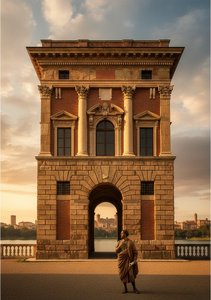
Giulio Romano: A Master of Mannerism & the Palazzo Te Legacy
Explore the revolutionary art of Giulio Romano, master of Mannerism & architect of Palazzo Te. Discover his influence, investment potential, and stunning frescoes – a guide for discerning collectors.
