Italian Renaissance · 1550
Pietà (Giulio Clovio, 1550)
Giulio Clovio (1498–1578) stworzył Pietà. Dzieło pochodzi z 1550. Należy do nurtu Italian Renaissance. Wykonano w technice Manuscript. Przechowywane jest w Galleria degli Uffizi w Florencja, Włochy. Wymiary to 368 × 257 cm.
- 1550
- Manuscript
- 368 × 257 cm
- Galleria degli Uffizi, Florencja

 Podgląd w skali 1:1

 Ręcznie malowany obraz olejny
 Wyślij jako kartkę
 Udostępnij
 Karta informacyjna


 Pobierz obraz
 Podobne obiekty
 RTG
 Pokaz slajdów
 Pytania i odpowiedzi

 Statystyki
Pietà w skrócie
- Tytuł
- Pietà
- Artysta
- Giulio Clovio (1498–1578)
- Miejsce urodzenia artysty
- Grižane-Belgrad, Chorwacja
- Data powstania
- 1550
- Technika wykonania
- Manuscript
- Wymiary
- 368 × 257 cm
- Gdzie można je zobaczyć
- Galleria degli Uffizi, Florencja, Włochy
- Epoka
- Renaissance
- Temat
- virgin mary, jesus christ, religious iconography, renaissance art, classical composition, emotional depth
Co przedstawia Pietà?
A Testament to Sorrow and Divine Grace
In the quiet, hallowed corridors of art history, few images resonate with the profound emotional gravity found in Giulio Clovio’s Pietà. Created around 1550, this masterpiece serves as a breathtaking bridge between the fading echoes of the Gothic tradition and the luminous dawn of the High Renaissance. The scene captures the quintessential moment of Christian sorrow: the Virgin Mary cradling the lifeless body of Jesus Christ following his crucifixion. It is not merely a depiction of death, but a profound meditation on compassion—the very meaning of the word Pietà. Through Clovio’s masterful hand, the heavy weight of mortality is balanced by an ethereal sense of divine grace, inviting the viewer into a space of deep, contemplative mourning.
The composition is a masterclass in Renaissance balance and narrative depth. At the heart of the work, Mary sits as a pillar of strength and grief, her blue cloak—a color traditionally symbolizing her heavenly connection—draped with a weight that mirrors her sorrow. The figure of Christ, depicted with a serene, almost peaceful countenance despite his recent agony, rests heavily in her lap, creating a poignant focal point that draws the eye through its sheer vulnerability. Surrounding this central tragedy, celestial beings and saints emerge from the shadows; angels with active, reaching gestures and observers in prayerful poses create a sense of a cosmic event unfolding. This layering of figures ensures that the viewer’s gaze wanders through a complex web of devotion, from the intimate touch of a mother to the collective mourning of the heavens.
Technique and the Radiance of Light
What truly distinguishes Clovio’s work is his unparalleled ability to manipulate light and color, a skill honed during his time as one of history's greatest manuscript illuminators. Though this piece possesses the scale and grandeur of a monumental painting, it retains the meticulous, jewel-like precision of a miniature. Clovio employed a sophisticated technique of layering translucent glazes over gold leaf, a method that allows light to penetrate the surface and reflect back, creating an inner luminosity that seems to emanate from within the figures themselves. The use of ultramarine blue, derived from the precious stone lapis lazuli, provides a depth of color that is both regal and somber, anchoring the composition in a palette of earth tones and celestial blues.
The interplay of light and shadow—chiaroscuro—is used here not just for anatomical realism, but to direct the emotional narrative. Light strikes Mary’s face from the side, carving her features out of the darkness and highlighting the subtle lines of grief and devotion. This dramatic contrast creates a sculptural quality, giving the figures a tangible presence that commands the room. For the discerning collector or interior designer, such a work offers more than mere decoration; it provides a focal point of immense character. A high-quality reproduction of this Pietà brings with it an atmosphere of timelessness and intellectual depth, making it an exquisite addition to a curated space that values historical resonance and the profound beauty of the human spirit.
W którym muzeum znajduje się Pietà?
Galleria degli Uffizi
Florencja, Włochy
Historia i korzenie Galleria degli Uffizi Galleria degli Uffizi spoczywa w samym sercu Florencji, we Włoszech. Ta wyjątkowa instytucja została powołana do życia w 1560 roku, w czasach, gdy budynek został pierwotnie zaprojektowany przez Giorgiego Vasariego z myślą o florenckich magistratach. Proces wznoszenia tej monumentalnej struktury trwał od 1560 do 1580 roku, a powstałe wówczas biura administracyjne miały za zadanie scentralizować działania licznych komitetów i urzędów miejskich rządu.


Zdjęcia w wysokiej rozdzielczości dzieła Pietà

Domena publiczna: artysta zmarł w 1578.
Inne rozmiary, kadrowanie i cytowanie →Giulio Clovio, Pietà (1550), Galleria degli Uffizi. Domena publiczna
Odpowiedzi na pytania dotyczące Pietà
W którym muzeum znajduje się oryginał "Pietà"?
„Pietà” – Giulio Clovio znajduje się w zbiorach Galleria degli Uffizi, Florencja, Włochy. Informacja o muzeum dotyczy oryginału, a nie reprodukcji.
W którym roku powstało dzieło „Pietà” – Giulio Clovio?
"Pietà" powstało w 1550 roku. Data ta pozwala umiejscowić dzieło w kontekście twórczości Giulio Clovio oraz epoki, w której powstało.
W jakiej technice wykonano „Pietà” – Giulio Clovio?
Technika wykonania dzieła „Pietà” – Giulio Clovio to Manuscript. Reprodukcje mają na celu wierne oddanie wyglądu tej techniki.
Jakie są wymiary oryginału "Pietà"?
Oryginalny utwór „Pietà” – Giulio Clovio ma wymiary 368 x 257 cm.
Co przedstawia "Pietà"?
„Pietà” – Giulio Clovio przedstawia: virgin mary, jesus christ, religious iconography, renaissance art, classical composition, emotional depth, medieval influence.
Czy dzieło "Pietà" znajduje się w domenie publicznej?
Status praw autorskich dla „Pietà” – Giulio Clovio: dzieło znajduje się w należy do domeny publicznej – autorskie prawa majątkowe wygasły. Określa to, czy reprodukcje obrazu mogą być sporządzane swobodnie.
Któremu artyście przypisuje się "Pietà"?
Autorem dzieła „Pietà” jest Giulio Clovio. Praca ta figuruje w katalogu pod nazwiskiem Giulio Clovio.
Do jakiego nurtu w sztuce należy „Pietà” – Giulio Clovio?
Nurt związany z „Pietà” – Giulio Clovio to Italian Renaissance. Ta klasyfikacja sytuuje dzieło wśród pokrewnych artystów i dzieł sztuki.
Do którego etapu twórczości Giulio Clovio należy dzieło „Pietà”?
"Pietà" reprezentuje Mature Period twórczości Giulio Clovio.
O artyście: Giulio Clovio

1498–1578, Chorwacja
Giulio Clovio
Chorwacki luminarz włoskiego renesansu Giulio Clovio, urodzony jako Juraj Julije Klović w 1498 roku wśród malowniczych wzgórz Grižane w Chorwacji, jawi się jako postać kluczowa, stanowiąca pomost między późnogotycką tradycją iluminacji manuskryptów a rozkwitającym dojrzałym renesansem. Choć jego korzenie sięgały Królestwa Chorwackiego, to właśnie we Włoszech prawdziwy geniusz artystyczny Clovio rozkwitł w pełni, przynosząc mu sławę prawdopodobnie największego iluminatora swojej epoki i ostatniego wielkiego mistrza w linii rodowej sięgającej wieków wstecz. Jego historia to opowieść o niezwykłym talencie, przenikliwym darze do pozyskiwania mecenasów oraz niezłomnym oddaniu sztuce przekształcania miniatury w zachwycająco wyrafinowaną formę artystyczną. Wczesne lata życia Clovio pozostają spowite tajemnicą.
Inne prace Giulio Clovio
 The Rape of Ganymede
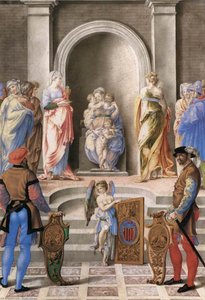 The Three Theological Virtues
 Holy Family with Santa Isabel and San Juanito1556
 Pages from the Farnese Hours1538
Eseje o Pietà
 Masterpieces of Giotto: The Top 25 Essential Artworks of the Renaissance PioneerExplore Giotto's greatest masterpieces and his role in the Renaissance. Discover the full collection online at OriginalUniqueArt.com.
 Mastering Color and Light: The Timeless Brilliance of Titian's Venetian MasterpiecesExplore the luminous mastery of Titian. Discover how the Venetian master revolutionized color and light through breathtaking Renaissance te…
 Michelangelo Buonarroti: A Renaissance Titan – Life, Works & Enduring LegacyExplore the life, works & enduring legacy of Michelangelo Buonarroti, a Renaissance titan. Discover his iconic sculptures, frescoes, and ar…