Text size

() ·

A painting made for you, by hand

Three Philosophers

Ręcznie malowana reprodukcja olejowa

Ręcznie malowany obraz olejny na płótnie, wykonany na zamówienie przez naszych artystów w wybranym przez Ciebie wymiarze i oprawie. ( Przełącz na wydania drukowane Przejdź do wersji cyfrowej)

Opis obiektu

Biografia artysty

Poznaj Giorgiona i jego niezwykły obraz "Portret Giorgiona", arcydzieło włoskiego Renesansu skupiające się na introspekcji artystycznej i innowacji malarskiej szkoły wergierskiej. Odkryj piękno kolorystyki i atmosfery!

from ·

Chapter 1

How large should it be?

Slide to change the size; the picture on the left shows the frame at its real width. The proportions of the original are kept.

Standardowy format
personalizowane
CM
INCH

Wybierz spośród naszych standardowych rozmiarów, które zachowują oryginalne proporcje dzieła sztuki.

szerokość
wysokość

Wpisz wymaganą szerokość i wysokość, aby obraz pasował do Twojej ramy lub ściany. Ponieważ jest to dzieło malowane ręcznie, w przypadku rozmiaru o innych proporcjach artysta może domalować nieco więcej wokół obrazu lub przyciąć jego fragmenty — wybór należy do Ciebie. Przed rozpoczęciem pracy prześlemy Ci cyfrową wizualizację do zatwierdzenia. Obraz widoczny na tej stronie nie przedstawia rzeczywistego efektu — jedynie wizualizacja oddaje realny rezultat.

Chapter 2

How should it arrive?

Choose the edges of the stretched canvas

Choose your frame

Corner sample of the WhiteWrap canvas edge finish, stretched on lite drewno bars
White zł1
Corner sample of the BlurSideWrap canvas edge finish, stretched on lite drewno bars
Blurside zł1
Corner sample of the ExtendedWrap canvas edge finish, stretched on lite drewno bars
Extended zł1
Corner sample of the P118B picture frame: polistyren formowany, 5 cm wide and 3 cm thick
P118B zł10
Corner sample of the P118H picture frame: polistyren formowany, 5 cm wide and 3 cm thick
P118H zł10
Corner sample of the P118W picture frame: polistyren formowany, 5 cm wide and 3 cm thick
P118W zł10
Corner sample of the P438Z picture frame: polistyren formowany, 5.5 cm wide and 3.5 cm thick
P438Z zł10
Corner sample of the P508JH picture frame: polistyren formowany, 7 cm wide and 3.5 cm thick
P508JH zł12
Corner sample of the P508YH picture frame: polistyren formowany, 7 cm wide and 3.5 cm thick
P508YH zł12
Corner sample of the P805H picture frame: polistyren formowany, 5 cm wide and 3.5 cm thick
P805H zł10
Corner sample of the P805Z picture frame: polistyren formowany, 5 cm wide and 3.5 cm thick
P805Z zł10
Corner sample of the P919BZ picture frame: polistyren formowany, 7 cm wide and 3.5 cm thick
P919BZ zł10
Corner sample of the P919G picture frame: polistyren formowany, 7 cm wide and 3.5 cm thick
P919G zł10
Corner sample of the P919XJ picture frame: polistyren formowany, 7 cm wide and 3.5 cm thick
P919XJ zł10
Corner sample of the P959ZH picture frame: polistyren formowany, 5 cm wide and 3 cm thick
P959ZH zł10
Corner sample of the P968JZ picture frame: polistyren formowany, 6 cm wide and 4 cm thick
P968JZ zł12
Corner sample of the W106C picture frame: lite drewno, 5 cm wide and 3 cm thick
W106C zł8
Corner sample of the W218G picture frame: lite drewno, 5 cm wide and 3 cm thick
W218G zł10
Corner sample of the W218JH picture frame: lite drewno, 5 cm wide and 3 cm thick
W218JH zł8
Corner sample of the W218Y picture frame: lite drewno, 5 cm wide and 3 cm thick
W218Y zł10
Corner sample of the W307PJ picture frame: lite drewno, 6 cm wide and 3 cm thick
W307PJ zł10
Corner sample of the W316G picture frame: lite drewno, 6 cm wide and 3 cm thick
W316G zł10
Corner sample of the W316PJ picture frame: lite drewno, 6 cm wide and 3 cm thick
W316PJ zł8
Corner sample of the W316Y picture frame: lite drewno, 6 cm wide and 3 cm thick
W316Y zł10
Corner sample of the W398PJ picture frame: lite drewno, 5 cm wide and 3 cm thick
W398PJ zł8
Corner sample of the W4111J picture frame: lite drewno, 6.5 cm wide and 3.5 cm thick
W4111J zł10
Corner sample of the W500HY picture frame: lite drewno, 7 cm wide and 5 cm thick
W500HY zł15
Corner sample of the W500JH picture frame: lite drewno, 7 cm wide and 5 cm thick
W500JH zł15
Corner sample of the W692G picture frame: lite drewno, 8 cm wide and 4 cm thick
W692G zł12
Corner sample of the W849H picture frame: lite drewno, 5 cm wide and 3 cm thick
W849H zł8
Corner sample of the W940BG picture frame: lite drewno, 7.5 cm wide and 4.5 cm thick
W940BG zł15
Corner sample of the W953PJ picture frame: lite drewno, 6 cm wide and 3.5 cm thick
W953PJ zł8
Corner sample of the H24-GOLD picture frame: rzeźbione drewno pokryte gipsem, 10 cm wide and 6 cm thick
H24-GOLD zł30
Corner sample of the H24-SILVER picture frame: rzeźbione drewno pokryte gipsem, 10 cm wide and 6 cm thick
H24-SILVER zł30
Corner sample of the H36-GOLD picture frame: rzeźbione drewno pokryte gipsem, 15 cm wide and 6.5 cm thick
H36-GOLD zł45
Corner sample of the H36-SILVER picture frame: rzeźbione drewno pokryte gipsem, 15 cm wide and 6.5 cm thick
H36-SILVER zł45

Moulding: . Overall size with the frame: .

Chapter 3

Who paints it, and should anything change?

Examples of what can be changed: Replace face with customer photo; Add pet (e.g., replace cat with dog); Include hidden message in background; Change background landscape or elements.
After order, OriginalUniqueArt.com team will email client for instructions and provide a mockup preview

Dostawa na całym świecie () w ciągu 3–4 tygodni zamiast standardowych 5 tygodni. (1 Listopad). Bez kompromisów w kwestii jakości.

Chapter 4

The finishing touches

A nameplate, as in a museum?

Szczegóły grawerowanej brązowej tabliczki

This elegant plaque features the artist's name and the title of the artwork, finely engraved for a timeless presentation.

It is made from bronze with a refined, elegant finish. The text is precisely laser-engraved for a sharp and permanent result. Measuring 9x2 cm, the plaque is compact yet easy to read. It's built to be durable and scratch-resistant, offering a professional, museum-quality look. Mounting is simple thanks to the included adhesive backing.

Szczegóły przezroczystej tabliczki akrylowej

The plaque includes essential engraved details such as the artist's name, the title of the artwork, the date it was created, the type of media used-like oil on canvas or watercolor-a brief description of the piece, and a QR code that links to the complete artwork information.

It is crafted from clear acrylic, offering a sleek, modern appearance. The text is UV-engraved in black to ensure strong visual contrast. With a size of 10x15 cm, it ensures optimal readability. It comes equipped with two metal hooks for secure wall mounting. The plaque is designed to be weather-resistant, making it suitable for various environments, and it includes interactive features that work seamlessly with smartphone scanning.

Szczegóły czarnej tabliczki akrylowej

This elegant plaque includes engraved information such as the artist's name, the title of the artwork, the date it was created, the type of media used (like oil on canvas or watercolor), a short description of the artwork, and a QR code for quick access to more information.

The plaque itself is made from refined black acrylic with a premium finish. The text is laser-engraved in white for high contrast and readability. Its size is 10x15 cm, designed to be easy to read. It comes with two metal hooks for professional mounting. The design is sleek and fits any interior style. It is also weather-resistant and durable, with built-in digital integration for mobile compatibility.

A protective varnish?

When do you need it?

Chapter 5

Your painting, as you ordered it

Three Philosophers

Technika reprodukcji

Wymiary reprodukcji

-

Wybitny mistrz artystyczny

Większa szczegółowość, finezja i dodatkowy czas na realizację

-

Opcje oprawy reprodukcji

-

-

W przypadku dzieł sztuki lub reprodukcji, których którykolwiek z boków przekracza 105 cm (około 41 cali), rama zostanie wysłana w formie zestawu do samodzielnego montażu. Metoda ta zapewnia bezpieczną dostawę i zapobiega uszkodzeniom podczas transportu.

Wymagany profesjonalny montaż – nie jest to produkt typu DIY.
Zestaw musi zostać złożony, a płótno naciągnięte przez doświadczonego profesjonalnego ramiarza, przy użyciu kleju do drewna (brak w zestawie), kleszczy do naciągania płótna oraz ścisków, które utrzymają krosna w równej pozycji podczas schnięcia kleju. Nieprawidłowy montaż lub nierównomierne napięcie płótna może trwale uszkodzić dzieło sztuki i nie podlega naszej gwarancji.

  • W zestawie znajdują się wszystkie listwy z litego drewna, precyzyjnie docięte do wymiarów.

  • Montaż odbywa się przy użyciu dołączonych wkrętów oraz kleju do drewna do łączenia narożników, którego zestaw nie zawiera i który musi zostać dostarczony przez ramiarza.

  • Wymagane są profesjonalne narzędzia, których nie ma w zestawie: kleszcze do naciągania płótna (napinacz) oraz zaciski, które pozwolą utrzymać listwy w równej pozycji podczas schnięcia kleju.

Ważne:
Do połączenia narożników niezbędny jest klej do drewna, listwy należy unieruchomić za pomocą ścisków do momentu całkowitego wyschnięcia kleju, a naciągnięcie płótna na złożoną ramę wymaga użycia kleszczy do naciągania płótna. Żaden z tych elementów nie jest dołączony do zestawu. Przed zamówieniem tego rozmiaru zalecamy konsultację z doświadczonym ramiarzem.

Etykieta obiektu

-

-

Lakier ochronny

Lakier z połyskiem (pogłębia kolory, chroni przed światłem i wilgocią)

-

Personalizacja dzieła

Przykłady możliwości personalizacji: zastąp twarz zdjęciem klienta; dodaj zwierzę domowe (np. zamień kota na psa); umieść ukrytą wiadomość w tle; zmień krajobraz lub elementy tła.

-

Ekspresowa

Dostawa na cały świat () w ciągu 3–4 tygodni zamiast standardowych 5 tygodni. (1 Listopad). Bez kompromisów w kwestii jakości.

-

Przesyłka ekspresowa

Dostawa na cały świat () w ciągu 5 tygodni. (8 Listopad).

W cenie

Cena całkowita

zł 1167

Suma całkowita zł 1167

Opcja ze szkłem jest dostępna wyłącznie w rozmiarach poniżej 110 cm

Included with every order

  • Bezpłatna ekspresowa wysyłka na cały świat
  • Wysokiej jakości płótno lniane
  • Pełne ubezpieczenie przesyłki
  • Gwarancja zwrotu należności celnych i podatków importowych
  • Gwarancja wiernego odwzorowania kolorów
  • 100-dniowa polityka zwrotów (tylko w przypadku wad)
  • Gwarancja 100% zwrotu pieniędzy
  • Zniżka przy zakupie wielu sztuk

A Venetian Enigma: Unraveling the Layers of “Three Philosophers”

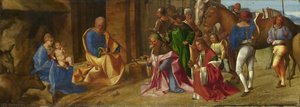
Giorgione’s “Three Philosophers,” painted around 1509, isn't merely a portrait; it’s an invitation to a silent conversation across centuries. The painting, shrouded in mystery and speculation, resides within a captivating web of historical accounts, artistic interpretations, and tantalizing symbolism. Originally conceived as a monumental work for the Venetian merchant Taddeo Contarini, its journey through time – from the opulent collections of Venice to the Brussels court – has subtly altered its appearance, notably with a significant reduction on the left side, diminishing the original expansive landscape but intensifying the focus on the figures themselves. This deliberate alteration speaks volumes about the artist’s intent and the evolving tastes of his patrons.

The scene unfolds within a carefully constructed space: three men, rendered in a palette dominated by earthy tones – ochre, umber, and subtle greens – stand before a rugged cliff face, its weathered rocks providing a dramatic backdrop. The figures are dressed in rich, crimson robes, a striking contrast to the muted landscape, drawing immediate attention to their presence. The youngest man, seated and holding compasses and a square—tools of a painter, perhaps?—suggests an engagement with artistic practice itself. His posture is contemplative, his gaze directed inward, while the central figure, clad in a dark robe, gestures towards the horizon, seemingly lost in thought. The eldest, identifiable by his flowing garments and the book he clutches, exudes an air of learned authority.

The Allure of *Sfumato* and Giorgione’s Unique Style

Giorgione's mastery lies not just in his subject matter but also in his revolutionary technique. He employed a masterful use of *sfumato*, a subtle blurring of lines and edges, creating an atmospheric haze that softens the forms and imbues the scene with a dreamlike quality. This is particularly evident in the rendering of the landscape – the rocks are not sharply defined but rather emerge from the mist, contributing to the painting’s overall sense of mystery. The figures themselves possess a remarkable softness, their features rendered with an almost ethereal grace. Giorgione's approach departed significantly from the more linear and precise styles prevalent at the time, prioritizing mood and atmosphere over strict anatomical accuracy.

The interplay of light and shadow is crucial to the painting’s impact. Giorgione expertly manipulates chiaroscuro – the dramatic contrast between light and dark – to sculpt the forms and create a sense of depth. The figures are bathed in a diffused, golden light that seems to emanate from an unseen source, casting long shadows across the landscape and highlighting their contemplative postures. This masterful use of light not only enhances the painting’s visual appeal but also contributes to its evocative atmosphere.

Decoding the Symbols: Who Are These Philosophers?

The enduring fascination with “Three Philosophers” stems from the persistent debate surrounding the identity of the figures depicted. While initially identified as "philosophers," a multitude of interpretations have been proposed over the centuries, each offering a compelling narrative. The most common theories suggest they represent the Three Kings, astronomers, or even representatives of three distinct religions. More recently, the Pythagorean school – Pythagoras, Thales, and Pherecydes—has gained traction, fueled by the presence of the painter’s tools and astronomical texts.

The compasses and square, undeniably significant, have been interpreted as symbols of artistic creation, but their placement also hints at a deeper intellectual engagement. The varied attire of the figures – suggesting origins from different lands—could represent diverse philosophical schools or cultural influences. The book held by the eldest figure further reinforces this notion of learned discourse and contemplation. Ultimately, Giorgione’s deliberate ambiguity invites viewers to project their own interpretations onto the scene, transforming it into a mirror reflecting the viewer's own intellectual curiosity.

A Timeless Masterpiece: Reproduction and Artistic Legacy

"Three Philosophers" remains a testament to Giorgione’s genius—a painting that transcends its historical context and continues to captivate audiences today. OriginalUniqueArt offers meticulously crafted, hand-painted reproductions of this iconic work, allowing you to experience the depth, nuance, and emotional resonance of Giorgione's masterpiece in your own space. Our reproductions faithfully capture the *sfumato* technique, the atmospheric lighting, and the subtle symbolism that define this enigmatic portrait. Whether for a grand salon or a personal study, a OriginalUniqueArt reproduction of “Three Philosophers” is an investment in art history, a celebration of Venetian artistry, and a window into a world of timeless contemplation.

Pytania i odpowiedzi

Kto jest autorem dzieła "Three Philosophers" i do jakiego nurtu ono należy?

Giorgione stworzył "Three Philosophers", reprezentujące nurt Venetian Renaissance.

Jaki jest ogólny nastrój dzieła „Three Philosophers” – Giorgione?

"Three Philosophers" ma Calm atmosferę.

Gdzie mogę kupić wydruk „Three Philosophers” – Giorgione?

Odbitkę dzieła „Three Philosophers” – Giorgione można zamówić bezpośrednio na stronie Wydruk artystyczny premium: szlachetna odbitka na płótnie bawełnianym lub archiwalnym papierze o strukturze płótna.

More about this painting

Podgląd w skali 1:1 Podgląd AR Przełącz na wydania drukowane Przejdź do wersji cyfrowej Wyślij jako kartkę
Szczegóły dzieła Przewodnik Dodaj do ulubionych Pobierz obraz Podobne obiekty RTG Pokaz slajdów Q&A Statystyki

In numbers

  • 1509the year it was painted
  • 29frames to choose from
  • standard sizes, in its own proportions
  • 5weeks to paint and deliver it
Giorgione

Giorgione

1477 - 1510, Włochy

Quick facts about Giorgione

  • Artistic Movement Or Style: High Renaissance, Venetian school
  • Artists Or Movements Influenced By This Artist: ['Titian']
  • Artists Who Influenced This Artist: ['Giovanni Bellini']
  • Date Of Birth: c. 1477/78
  • Date Of Death: before November 7, 1510
  • Full Name: Giorgio Barbarelli da Castelfranco Zorzi
  • Nationality: Italian
  • Notable Artworks:
    • The Tempest
    • Pastoral Concert
    • Sleeping Venus
  • Place Of Birth: Castelfranco Veneto, Italy

Biografia artysty

Wenecki Enigma: Życie i Dziedzictwo Giorgiona

Giorgio Barbarelli da Castelfranco, znany całemu światu jako Giorgione, pozostaje jedną z najbardziej nieuchwytnych i fascynujących postaci sztuki renesansu. Urodzony w małym miasteczku Castelfranco Veneto niedaleko Wenecji około 1477 lub 1478 roku – dokładna data jest przedmiotem sporów – jego tragicznie krótkie życie, które zakończyło się około 1510 roku w wieku trzydziestu dwóch lub trzydziestu trzech lat, skrywa artystyczny wpływ, który rezonuje aż do dziś. W przeciwieństwie do wielu jego współczesnych, których życiorysy są dobrze udokumentowane, historia Giorgiona spowita jest tajemnicą, układaną z nielicznych zapisów historycznych oraz często romantyzowanych relacji Giorgio Vasariego. To, co wiemy, sugeruje człowieka głęboko zanurzonego w tętniącej życiem kulturze Wenecji – miasta, które sprzyjało zarówno innowacjom artystycznym, jak i zmysłowemu uwielbieniu piękna. Prawdopodobnie kształcił się pod okiem Giovanniego Belliniego, czołowego weneckiego malarza, chłonąc ugruntowane tradycje, zanim wytyczył własną, unikalną ścieżkę. Jego wczesne zlecenia obejmowały portrety dostojnych postaci, takich jak doża Agostino Barbarigo, co dowodziło natychmiastowego talentu do oddawania podobieństwa i statusu. Jednak to właśnie odejście od konwencjonalnej tematyki i rewolucyjne podejście do malarstwa sprawiły, że Giorgione naprawdę się wyróżnił.

Poetyckie Wizje: Styl i Innowacja

Styl artystyczny Giorgiona stanowił znaczące zerwanie z dominującym we Florencji naciskiem na perspektywę linearną i precyzyjny rysunek. Stał się on rzecznikiem koloru, atmosfery i ewokatywnej nastrojowości, która stała się znakiem rozpoznawczym szkoły weneckiej. Jego technika polegała na zmiękczaniu konturów, stosowaniu subtelnych przejść tonalnych – *sfumato* – w celu stworzenia efektów atmosferycznych oraz przedkładaniu ogólnej harmonii nad drobiazgową szczegółowość. To podejście nie było jedynie wyborem technicznym; odzwierciedlało fundamentalnie inną wrażliłość artystyczną. Giorgione nie dążył do kopiowania rzeczywistości, lecz do uchwycenia jej esencji, ulotnych emocji i poetyckiego rezonansu. Jego obrazy często przedstawiają enigmatyczne tematy i wieloznaczne narracje, zapraszając widza do świata kontemplacji, zamiast oferować jasne opowieści. Burza, być może jego najsłynniejsze dzieło, idealnie to obrazuje. Scena ta – żołnierz i karmiąca matka pośród burzowego krajobrazu – od wieków wprawia historyków sztuki w konsternację, a jej znaczenie pozostaje kusząco nieuchwytne. Podobnie Koncert pastoralny (Fête champêtre) prezentuje sielankowe zgromadzenie muzyków w pasterskiej scenerii, celebrowane nie za konkretną opowieść, lecz za harmonijną kompozycję i liryczną jakość. Dzieła te nie miały być zagadkami do rozwiązania; miały wywoływać uczucia, nastroje i poczucie zachwytu.

Arcydzieła i Nieprzemijający Wpływ

Choć jego dorobek został ograniczony przez przedwczesną śmierć, Giorgione pozostawił po sobie niewielki, lecz niezwykle wpływowy zbiór dzieł. Śpiąca Wenus, prawdopodobnie ukończona przy pomocy Tycjana po śmierci artysty, jest ikonicznym przedstawieniem bogini, ukazującym jego mistrzostwu w operowaniu kolorem i formą. Leniwa poza i miękkie tony ciała ucieleśniają weneckie uwielbienie dla zmysłowości i piękna. Do innych znaczących dzieł należą Judyta, wczesny przykład rozwijającego się stylu, oraz portrety ujawniające niezwykłą zdolność do chwytania charakteru i istoty swoich modeli. Wpływ Giorgiona wykraczał daleko poza jego własne płótna. Był mentorem dla Tycjana, który stał się jednym z najsławniejszych artystów dojrzałego renesansu, kontynuując innowacje Giorgiona w zakresie koloru i malarstwa atmosferycznego. Nacisk na barwę i nastrój głęboko wpłynął na rozwój malarstwa weneckiego, odróżniając je od tradycji florenckiej i ustanawiając Wenecję jako główne centrum innowacji artystycznej.

Trwałe Dziedzictwo: Historyczne Znaczenie Giorgiona

Mimo krótkiej kariery, Giorgion zajmuje kluczowe miejsce w historii sztuki. Stał się pomostem między wcześniejszymi tradycjami weneckimi a innowacjami Tycjana i innych późniejszych mistrzów, fundamentalnie zmieniając bieg malarstwa włoskiego. Jego nacisk na poetycki nastrój, efekty atmosferyczne i wieloznaczne narracje utorował drogę nowym poszukiwaniom artystycznym i zainspirował pokolenia twórców. Sama tajemnica otaczająca jego życie i twórczość przyczyniła się do jego trwałego mistycyzmu i uroku. Pozostaje on symbolem wolności artystycznej, innowacji i potęgi sugestii – malarzem, który odważył się postawić uczucie ponad formę, atmosferę ponad dokładność i poezję ponad narrację.

Kluczowe Dzieła Giorgiona

  • Burza (ok. 1506-1508)
  • Koncert pastoralny (Fête champêtre) (ok. 1509)
  • Śpiąca Wenus (ok. 1510)
  • Judyta (1504)
  • Portret weneckiego dżentelmena

Najważniejsze informacje

  • Notable elements: Sfumato, landscape
  • Artistic style: Mysterious mood
  • Influences: Bellini
  • Movement: Venetian Renaissance
  • Subject or theme: Philosophical debate

Quiz o sztuce

Do każdego pytania dotyczy tylko jedna poprawna odpowiedź.

Pytanie 1:
According to Marcantonio Michiel’s inventory, what was a notable characteristic of the landscape depicted in ‘Three Philosophers’?
Pytanie 2:
What significant alteration was made to the painting in the late 16th century?
Pytanie 3:
The compasses and square held by one of the philosophers are often interpreted as symbols related to which profession?
Pytanie 4:
Giorgione’s use of ‘sfumato’ in ‘Three Philosophers’ is most evident in:
Pytanie 5:
What is one of the prevailing theories regarding the identities of the three philosophers?