Baroque Landscape
Landscape (Gillis Van Coninxloo)
Gillis Van Coninxloo (1544–1607) stworzył Landscape. Należy do nurtu Baroque Landscape. Wykonano w technice Oil On Copper. Przechowywane jest w Museo del Prado w Madryt, Hiszpania. Wymiary to 24 × 19 cm.
- Oil On Copper
- 24 × 19 cm
- Museo del Prado, Madryt

 Podgląd w skali 1:1

 Ręcznie malowany obraz olejny
 Wyślij jako kartkę
 Udostępnij
 Karta informacyjna


 Pobierz obraz
 Podobne obiekty
 RTG
 Pokaz slajdów
 Pytania i odpowiedzi

 Statystyki
Landscape w skrócie
- Tytuł
- Landscape
- Artysta
- Gillis Van Coninxloo (1544–1607)
- Miejsce urodzenia artysty
- Antwerpia, Belgia
- Technika wykonania
- Oil On Copper
- Wymiary
- 24 × 19 cm
- Gdzie można je zobaczyć
- Museo del Prado, Madryt, Hiszpania
- Temat
- landscape, flemish style, baroque art, forest scene, castle architecture, atmospheric perspective
Co przedstawia Landscape?
A Flemish Master’s Woodland Reverie: Gillis van Coninxloo's “Landscape”
Gillis van Coninxloo’s “Landscape,” a captivating oil on copper panel, transports the viewer to a realm of serene contemplation within a meticulously rendered Flemish forest. Painted around 1598, this work stands as a pivotal example of the artist’s mastery in capturing the atmospheric depth and intricate detail characteristic of the early 16th-century Golden Age. More than just a depiction of nature, it's an invitation to lose oneself within a carefully constructed world of light, shadow, and subtle symbolism – a testament to van Coninxloo’s profound understanding of both landscape painting and the human experience.
The scene unfolds before us with remarkable realism. A dense thicket of trees dominates the foreground, their leaves rendered with an almost obsessive attention to detail; each vein, each curl of bark, is painstakingly observed and faithfully reproduced. These trees aren’t merely static elements; they create a palpable sense of depth, drawing the eye into the heart of the forest. Beyond them, a modest collection of buildings – likely farmhouses or small dwellings – nestles amongst the foliage, suggesting a quiet rural existence. The architecture is understated yet solid, reflecting a pragmatic approach to building within this natural setting. In the distance, a formidable castle rises above the horizon, its imposing silhouette anchoring the composition and hinting at notions of power, protection, and perhaps even isolation.
The Alchemy of Light and Shadow: Technique and Style
Van Coninxloo’s technical skill is immediately apparent in his masterful use of oil on copper. This medium allowed for a remarkable level of detail and luminosity – the surface retains a subtle sheen that enhances the richness of the colors and creates an almost three-dimensional effect. The artist employs a technique known as “chiaroscuro,” skillfully manipulating light and shadow to sculpt the forms and create a dramatic sense of depth. Notice how the sunlight filters through the trees, dappling the ground in pools of brightness while simultaneously casting deep shadows beneath the foliage. This interplay of light and dark isn’t merely decorative; it imbues the scene with a palpable atmosphere – a feeling of both tranquility and mystery.
Stylistically, “Landscape” aligns itself with the Flemish tradition of landscape painting, yet van Coninxloo departs from some of the more rigid conventions of the time. While influenced by the Northern Mannerist style—characterized by its emphasis on detail and symbolic imagery—he introduces a greater sense of naturalism and emotional resonance. The composition is carefully balanced, creating a harmonious whole that invites contemplation. The muted color palette – dominated by greens, browns, and grays – contributes to the overall feeling of serenity and timelessness.
A Window into 16th-Century Life and Belief
To fully appreciate “Landscape,” it’s important to consider its historical context. Painted during a period of religious upheaval and political instability in the Netherlands, this work reflects both the anxieties and the enduring values of the era. The castle, for instance, can be interpreted as a symbol of authority – whether representing secular power or divine protection. The humble dwellings nestled within the forest suggest a connection to the land and a reverence for rural life. Furthermore, the dense woodland itself has long been associated with themes of solitude, introspection, and the spiritual realm.
Interestingly, this painting was originally housed in the Museo del Prado in Madrid, Spain, a testament to its enduring appeal across national boundaries. The artist’s biography reveals a fascinating journey – from Antwerp to Germany and eventually Amsterdam—reflecting the shifting political landscape of the time. His work served as a bridge between artistic styles, incorporating elements of Mannerism while embracing the burgeoning realism of the Dutch Golden Age.
A Timeless Masterpiece: Reproduction and Inspiration
Reproductions of “Landscape” capture only a fraction of its original impact. The subtle nuances of light, texture, and atmosphere are difficult to replicate fully, but OriginalUniqueArt’s hand-painted reproductions strive to honor the artist's vision with remarkable fidelity. This piece offers an exceptional opportunity for interior designers seeking to evoke a sense of tranquility and connection to nature – imagine it adorning a study or a living room, providing a focal point that invites contemplation. Collectors will find “Landscape” to be a valuable addition to any art collection, representing a significant moment in the history of Flemish landscape painting.
For further exploration, we encourage you to visit the linked resources:
W którym muzeum znajduje się Landscape?
Museo del Prado
Madryt, Hiszpania
Historia Museo del Prado Korzenie Museo del Prado są nierozerwalnie związane z Kolekcją Królewską Hiszpanii, sięgając swoimi początkami XVIII wieku. To, co narodziło się z wizji Gabinetu Historii Naturalnej za panowania Ferdynanda VII, z czasem przekształciło się w dedykowane sanktuarium malarstwa i rzeźby. Ta ewolucja zmieniła naukowe przedsięwzięcie w prawdziwy skarbiec najcenniejszych dóbr hiszpańskiej korony.


Zdjęcia w wysokiej rozdzielczości dzieła Landscape
Domena publiczna: artysta zmarł w 1607.
Gillis Van Coninxloo, Landscape, Museo del Prado. Domena publiczna
Odpowiedzi na pytania dotyczące Landscape
Gdzie można obecnie zobaczyć dzieło „Landscape” – Gillis Van Coninxloo?
Oryginał dzieła „Landscape” – Gillis Van Coninxloo znajduje się w Museo del Prado, Madryt, Hiszpania. Reprodukcja pozwala na eksponowanie pracy w domu.
W jakiej technice wykonano „Landscape” – Gillis Van Coninxloo?
Technika wykonania dzieła „Landscape” – Gillis Van Coninxloo to Oil On Copper. Reprodukcje mają na celu wierne oddanie wyglądu tej techniki.
Jakie są wymiary oryginału "Landscape"?
Wymiary dzieła „Landscape” – Gillis Van Coninxloo to 24 x 19 cm. Reprodukcje można zamówić w innych rozmiarach, zachowując te same proporcje.
Co przedstawia „Landscape” – Gillis Van Coninxloo?
„Landscape” – Gillis Van Coninxloo przedstawia: landscape, flemish style, baroque art, forest scene, castle architecture, atmospheric perspective, detailed rendering.
Czy dzieło "Landscape" znajduje się w domenie publicznej?
Status praw autorskich dla „Landscape” – Gillis Van Coninxloo: dzieło znajduje się w należy do domeny publicznej – autorskie prawa majątkowe wygasły. Określa to, czy reprodukcje obrazu mogą być sporządzane swobodnie.
Kto stworzył "Landscape"?
Autorstwo dzieła "Landscape" przypisuje się Gillis Van Coninxloo.
Do jakiego nurtu artystycznego należy „Landscape” – Gillis Van Coninxloo?
„Landscape” to dzieło należące do nurtu Baroque Landscape. Nurt ten określa tradycję artystyczną, w której osadzone jest dzieło.
Do którego okresu twórczości Gillis Van Coninxloo należy dzieło „Landscape”?
"Landscape" reprezentuje Late Baroque twórczości Gillis Van Coninxloo.
Czy dzieło „Landscape” autorstwa Gillis Van Coninxloo znajduje się w domenie publicznej i dlaczego?
Dzieło "Landscape" autorstwa Gillis Van Coninxloo znajduje się w należy do domeny publicznej – autorskie prawa majątkowe wygasły. Okres ochrony praw autorskich liczony jest od daty śmierci artysty, a Gillis Van Coninxloo zmarł(a) w 1607.
O artyście: Gillis Van Coninxloo
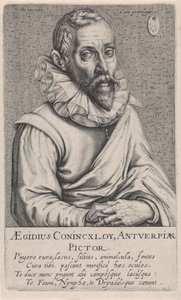
1544–1607, Belgia
Gillis Van Coninxloo
Mistrz Zielonego Królestwa Gillis Van Coninxloo jawi się jako kluczowa postać w ewolucji północnej sztuki pejzażowej, stanowiąc istotny pomost między misternymi tradycjami manieryzmu a rodzącą się głębią atmosferyczną wczesnego baroku. Urodzony w Antwerpii, w Belgii, żył w ścisłym związku z bogatym dziedzictwem artystycznym Niderlandów. Jako syn malarza, od najmłodszych lat był zanurzony w świecie, w którym rzemiosło i uważna obserwacja natury stanowiły fundament bytu. Wczesne szkolenie pod okiem mistrzów, takich jak Pieter Coecke van Aelst (młodszy) oraz Lenaert Kroes, zapewniło mu rygorystyczne podstawy, jednak to czas spędzony w warsztacie Gillisa Mostaerta pozwolił jego talentowi w pełni rozkwitnąć, umożliwiając mu współtworzenie profesjonalnych dzieł przy jednoczesnym szlifowaniu własnej, unikalnej wizji.
O Gillis Van Coninxloo Najważniejsze dzieła Gillis Van Coninxloo
Inne prace Gillis Van Coninxloo
 Jonah Preaching to the Ninevites1583
 Woodland with Saint Jerome1583
 Landscape with the judgment of Midas1598
 Landscape with the Judgement of Paris1610
Eseje o Landscape
 Masterpieces of Jan van Goyen: Top 25 Iconic Dutch LandscapesExplore 25 iconic Jan van Goyen landscapes from the Dutch Golden Age. Discover these tonal masterpieces on OriginalUniqueArt.com.
 Chiaroscuro & Shadows: The High-Impact Power of Moonlight in Masterpiece LandscapesMaster the drama of chiaroscuro and moonlight in classical landscapes. Explore the power of light and shadow now.
 Masterpieces of Nature: The Top 25 Artworks by Jacob van RuisdaelExplore 25 iconic Jacob van Ruisdael landscapes. Discover the soul of Dutch Golden Age art. Explore the full collection online at OriginalU…