

 Podgląd w skali 1:1
 Wyślij jako kartkę
 Udostępnij
 Szczegóły dzieła
 Przewodnik

 Pobierz obraz
 Podobne obiekty
 RTG
RTG Pokaz slajdów
 Statystyki
Mountain Landscape with a Windmill
 Oil On Canvas
- WallArt
- Post-Impressionism
 26.0 x 35.0 cm
 National Trust
 Rozwiń treść
Dzieło sztuki prezentowane na tej stronie podlega ochronie prawem autorskim, co oznacza, że nie mamy prawa do tworzenia ani sprzedaży jego identycznej reprodukcji. Ochrona ta jest egzekwowana na mocy umów międzynarodowych, takich jak Konwencja berneńska oraz przez przepisy prawa krajowego, w tym te określone w Prawo autorskie USA – Tytuł 17.
Metoda ta jest w pełni zgodna z przepisami prawa autorskiego, ponieważ nie polega na kopiowaniu ani powielaniu chronionego dzieła. Stanowi ona kreatywną reinterpretację – nowy obraz, który czerpie inspirację z oryginału, ale nie jest z nim tożsamy.
Giclée / Wydruk artystyczny
Wydruki giclée lub płótna o jakości muzealnej, szybka realizacja i szeroki wybór opcji wykończenia. ( Zamów ręcznie malowaną reprodukcję Przejdź do wersji cyfrowej)




P118B zł10

P118H zł10

P118W zł10

P438Z zł10

P508JH zł12

P508YH zł12

P805H zł10

P805Z zł10

P919BZ zł10

P919G zł10

P919XJ zł10

P959ZH zł10

P968JZ zł12

W106C zł8

W218G zł10

W218JH zł8

W218Y zł10

W307PJ zł10

W316G zł10

W316PJ zł8

W316Y zł10

W398PJ zł8

W4111J zł10

W500HY zł15

W500JH zł15

W692G zł12

W849H zł8

W940BG zł15

W953PJ zł8




Wybierz spośród naszych standardowych rozmiarów, które zachowują oryginalne proporcje dzieła sztuki.

Wpisz wymaganą szerokość i wysokość, aby dopasować grafikę do ramy lub ściany. Wydruk można jedynie przyciąć, nigdy nie powiększając go poza oryginalny obraz, dlatego format o innych proporcjach spowoduje utratę części kompozycji. Przed rozpoczęciem druku prześlemy Ci cyfrowy podgląd do zatwierdzenia. Obraz wyświetlany na tej stronie nie pokazuje rzeczywistego przycięcia — jedynie podgląd oddaje ten efekt.
Dostawa na cały świat () w ciągu 2 tygodni zamiast standardowych 4/5 tygodni. (28 Październik)

Bezpłatna ekspresowa wysyłka na cały świat

Wysokiej jakości płótno lniane

Pełne ubezpieczenie przesyłki

Gwarancja zwrotu należności celnych i podatków importowych

Gwarancja wiernego odwzorowania kolorów

100-dniowa polityka zwrotów (tylko w przypadku wad)

Gwarancja 100% zwrotu pieniędzy

Zniżka przy zakupie wielu sztuk
 Opcja ze szkłem jest dostępna wyłącznie w rozmiarach poniżej 110 cm

Mountain Landscape with a Windmill
Giclée / Wydruk artystyczny
Wymiary reprodukcji
-


Cena całkowita
zł 307
A Vision of the English Countryside: Gilbert Spencer’s ‘Mountain Landscape with a Windmill’
Gilbert Spencer's “Mountain Landscape with a Windmill” isn’t merely a depiction of a rural scene; it’s an immersion into the heart of late 19th-century England. Painted around 19XX, this artwork captures a quintessential moment in time – a quiet afternoon bathed in diffused light, dominated by the steadfast presence of a traditional windmill against a backdrop of rolling hills and verdant fields. Spencer, deeply rooted in his native Cookham, eschewed grand narratives or dramatic events, instead focusing on the subtle beauty of everyday life and the enduring connection between humanity and nature. The painting speaks to a sense of tranquility and timelessness, inviting the viewer into a world where the rhythms of rural existence are both comforting and profoundly evocative.
Fauvist Echoes and Post-Impressionist Sensibilities
Spencer’s artistic approach is immediately recognizable as a synthesis of Fauvist and Post-Impressionist influences. The bold, unblended brushstrokes—a hallmark of the Fauvist movement—create a vibrant energy within the landscape, injecting color with an almost impulsive quality. Yet, these energetic marks are tempered by the more considered techniques of Post-Impressionism, evident in the careful observation of light and form. The colors aren’t realistic representations of nature; instead, they're emotionally charged – deep greens, ochres, and blues conveying a sense of atmosphere and mood rather than precise detail. The simplified forms of the windmill and hills contribute to this stylized effect, prioritizing expressive power over strict adherence to photographic accuracy.
The Symbolism of Industry and Nature
The prominent windmill itself is more than just a picturesque element; it’s a potent symbol. In rural England, windmills represented both industry – the grinding of grain, the harnessing of natural energy – and a connection to the land. Spencer masterfully balances these dualities, presenting the windmill not as a machine imposing itself upon nature, but as an integral part of its landscape. The surrounding hills, bathed in soft light, suggest a harmonious relationship between human endeavor and the natural world. The composition invites contemplation on themes of tradition, progress, and the enduring spirit of rural life.
A Legacy of English Realism
Gilbert Spencer’s “Mountain Landscape with a Windmill” stands as a testament to his commitment to realism while embracing innovative artistic techniques. His work reflects a deep understanding of the English countryside—a landscape he loved and meticulously observed throughout his life. As a brother to the renowned Stanley Spencer, Gilbert forged his own distinct path, prioritizing clarity, directness, and an honest portrayal of everyday life. This painting exemplifies his ability to capture not just the visual appearance of a scene but also its emotional resonance, solidifying his place as a key figure in British art history. Reproductions offer a beautiful way to bring this evocative landscape into your home or office, allowing you to experience the tranquility and timeless beauty of rural England.
Pytania i odpowiedzi
Czy dzieło "Mountain Landscape with a Windmill" jest dostępne jako wysokiej jakości wydruk artystyczny?
Odbitkę dzieła „Mountain Landscape with a Windmill” – Gilbert Spencer można zamówić bezpośrednio na stronie Wydruk artystyczny premium: szlachetna odbitka na płótnie bawełnianym lub archiwalnym papierze o strukturze płótna.
Jakie emocje wywołują kolory w „Mountain Landscape with a Windmill” – Gilbert Spencer?
Paleta Neutrals dzieła „Mountain Landscape with a Windmill” – Gilbert Spencer współgra z jego Tranquil wydźwiękiem emocjonalnym. Kolor jest jednym ze sposobów, w jakie praca przekazuje emocje.
Pod jakimi innymi nazwiskami znany jest Gilbert Spencer?
Gilbert Spencer jest znany/a również pod pseudonimami: Stanley Spencer.
Biografia artysty
A Life Rooted in English Soil: The World of Gilbert Spencer
Gilbert Spencer, born August 4th, 1892, in the idyllic village of Cookham, United Kingdom, was a painter deeply attuned to the rhythms and nuances of English life. He lived until 1979, leaving behind a body of work that quietly yet powerfully captures the essence of his nation’s landscapes and people. Coming from a large family—the eighth of eleven children—and with a father who instilled a love for music through his role as an organist and teacher, Spencer's early life was one of modest means but rich in intellectual stimulation. This upbringing fostered a sensitivity that would profoundly shape his artistic vision. Perhaps the most significant familial connection was his younger brother, Sir Stanley Spencer, a renowned painter whose own distinctive style often drew comparisons, yet Gilbert forged his own path with unwavering dedication to realism and a uniquely personal interpretation of the world around him. Formal education was limited by financial constraints, but the lively conversations within his family circle provided an invaluable substitute, nurturing a curious mind eager to explore artistic expression.Formative Years and Artistic Awakening
Spencer’s formal artistic training began in 1911 at the Camberwell School of Arts and Crafts, followed by studies in wood carving at the Royal College of Art. However, it was his time at the Slade School of Fine Art in London (1913-1915) that proved truly pivotal. There, he came under the profound influence of Henry Tonks, a master draughtsman whose emphasis on observation and technical skill left an indelible mark on Spencer’s approach to painting. He excelled at the Slade, winning the life drawing prize in 1914 and achieving recognition for his ambitious mural project, “The Seven Ages of Man.” This early success hinted at a talent for large-scale compositions that would later manifest in his significant mural work. Beyond the formal curriculum, Spencer’s exposure to the Bloomsbury set through Lady Ottoline Morrell—a prominent patron of the arts and hostess at Garsington Manor—broadened his artistic horizons and introduced him to a vibrant intellectual circle. These early experiences laid the foundation for a career characterized by both technical mastery and a deep engagement with the cultural currents of his time.Evolving Styles and Enduring Themes
Spencer’s artistic development was marked by an exploration of various styles, yet he consistently returned to a core commitment to realism. His early landscapes, such as “Sashes Meadow, Cookham” (1914), reveal the influence of Impressionism in their delicate handling of light and color. Later works, like "Mountain Landscape with a Windmill," demonstrate an embrace of Fauvist and Post-Impressionist elements, characterized by bolder brushstrokes and simplified forms. However, Spencer never fully abandoned his dedication to accurately depicting the English countryside and its inhabitants. His subject matter consistently revolved around landscapes, portraits, genre scenes, and mural decorations—all reflecting a profound connection to rural England. He possessed an exceptional ability to capture the quiet dignity of everyday life, imbuing even seemingly mundane scenes with a sense of beauty and significance. This dedication to portraying English life with clarity and directness became a hallmark of his artistic identity.Achievements and Legacy
Throughout his career, Gilbert Spencer achieved significant recognition for his contributions to British art. His creation of murals at Holywell Manor (1934-1936), depicting the foundation legend of Balliol College, showcased his skill in large-scale narrative painting. During World War II, he served as an official war artist (1940–1943), documenting scenes of military training and life on the home front. This period provided a unique opportunity to observe and record the impact of conflict on the English landscape and its people. Spencer’s talent was further acknowledged through his election as an Associate Royal Academician in 1950, followed by full membership in 1959. He also enjoyed a distinguished teaching career, holding professorships at the Royal College of Art (1932-1948), Glasgow School of Art (1948–1950), and Camberwell School of Arts and Crafts (1950–1957). His published works, including his autobiography "Memoirs of a Painter" (1974) and a biography of his brother Stanley Spencer (1961), offer valuable insights into his artistic philosophy and the creative dynamics within his family. Notable works include “Troops in the Countryside,” which beautifully captures a peaceful coexistence between soldiers and rural life; "Summer Evening, Durdham Downs," a dramatic depiction of social gathering; and “Boy Holding a Rabbit” (1931), a tender portrayal of childhood innocence. Gilbert Spencer is remembered as a significant British painter who captured the essence of English life with clarity, directness, and a keen eye for detail. His work provides valuable insights into the social and rural landscapes of 20th-century England, and his legacy continues to inspire artists and art lovers alike. He also holds significance as Stanley Spencer's brother, contributing to understanding both artists’ careers within a familial context.
Gilbert Spencer
1892 - 1979 , Wielka Brytania
Krótka nota
- Artistic Movement Or Style: Realizm
- Artists Or Movements Influenced By This Artist: ['Stanley Spencer']
- Artists Who Influenced This Artist: ['Henry Tonks']
- Date Of Birth: 4 sierpnia 1892
- Date Of Death: 14 stycznia 1979
- Full Name: Gilbert Spencer
- Nationality: Brytyjski
- Notable Artworks:
- Sashes Meadow, Cookham
- Mountain Landscape with a Windmill
- Place Of Birth: Cookham, Berkshire
Powiązane artykuły
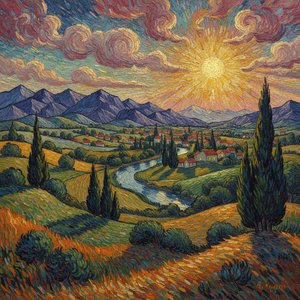
Beyond Impressionism: The Emotional Depth and Vibrant Evolution of Post-Impressionist Landscapes
Explore the profound evolution of Post-Impressionist landscapes. From Van Gogh's emotional brushwork to Cézanne's structural mastery, discover how these visionaries redefined art history through color and form in this expert guide for fine art enthusiasts.
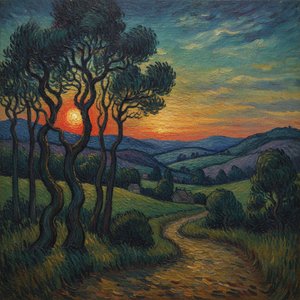
Beyond the Light: Capturing Raw Emotion and Subjective Vision in Post-Impressionist Landscapes
Explore the profound emotional depth of Post-Impressionist landscapes. Discover how masters like Van Gogh moved beyond light to capture raw human feeling through vibrant color and expressive texture in this expert art history retrospective.

Evocations of Place: A Historical Journey Through Landscape Art
Explore the rich history of landscape art with OriginalUniqueArt. Discover renowned artists, movements like Impressionism & Romanticism, and expert guidance for collecting timeless pieces. Find your perfect serene escape today!

Paul Cézanne: 25 Arcydzieł, które Zrewolucjonizowały Świat Sztuki | OriginalUniqueArt
Odkryj 25 arcydzieł Paula Cézanne'a – od impresjonizmu po postimpresjonizm. Poznaj historie, techniki i inspiracje malarza, który zrewolucjonizował sztukę. Reprodukcje obrazów najwyższej jakości na OriginalUniqueArt.com!
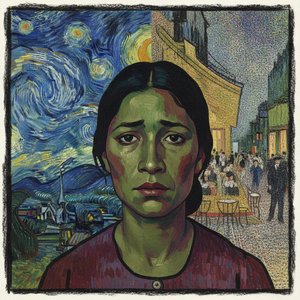
Beyond the Brush: How Post-Impressionism Recharged Modern Art with Bold Color and Raw Emotion
Dive into the high-energy revolution of Post-Impressionism. Discover how masters like Cézanne and Van Gogh traded fleeting light for bold colors and raw emotion, forever recharging modern art with the vibrant, structural intensity that defines today's most iconic visual aesthetics.
