Italian Glamour Style · 1991
Suknia (Gianni Versace, 1991)
Gianni Versace (1946–1997) stworzył Suknia. Dzieło pochodzi z 1991. Należy do nurtu Italian Glamour Style. Wykonano w technice Akryl na płótnie. Przechowywane jest w Röhsska Museum w Göteborg, Sweden.
- 1991
- Akryl na płótnie
- Röhsska Museum, Göteborg

 Podgląd w skali 1:1

 Ręcznie malowany obraz olejny
 Wyślij jako kartkę
 Udostępnij
 Karta informacyjna


 Pobierz obraz
 Podobne obiekty
 RTG
 Pokaz slajdów
 Pytania i odpowiedzi

 Statystyki
Suknia w skrócie
- Tytuł
- Suknia
- Artysta
- Gianni Versace (1946–1997)
- Miejsce urodzenia artysty
- Reggio Calabria, Włoski
- Data powstania
- 1991
- Technika wykonania
- Akryl na płótnie
- Gdzie można je zobaczyć
- Röhsska Museum, Göteborg, Sweden
- Temat
- fashion photography, luxury design, versace couture, black velvet dress, gold button detail, retro elegance
Co przedstawia Suknia?
A Snapshot of Versace's Visionary Aesthetic
Gianni Versace’s “Dress,” captured in a meticulously staged studio photograph from 1991, represents more than just a garment; it embodies the very essence of Versace’s distinctive artistic philosophy. The image—featuring a black velvet dress draped over a stark white mannequin against a solid black backdrop—immediately establishes a dialogue between simplicity and grandeur. Versace's approach was to distill fashion into its purest form, prioritizing sculptural silhouette and textural richness – elements powerfully conveyed in this iconic piece.- Composition: The central placement of the dress on the mannequin underscores its importance as the focal point, creating a balanced visual harmony that invites contemplation.
- Color Palette: Dominated by monochrome shades of black and white, punctuated by strategically positioned gold buttons, the palette speaks to Versace’s penchant for understated luxury and timeless sophistication.
Technique & Material Considerations
The photograph itself is a testament to Versace's commitment to precision. Professional lighting ensures that every nuance of the velvet fabric—its subtle sheen and delicate variations in tone—is faithfully reproduced, allowing viewers to appreciate the craftsmanship involved. The mannequin’s matte surface provides a contrasting textural element, highlighting the dress’s velvety texture and reinforcing its sculptural form. Furthermore, the gold buttons are meticulously crafted metal embellishments that contribute to the overall opulent aesthetic.- Fabric: Velvet—a material synonymous with royalty and indulgence—was chosen deliberately to convey a sense of luxurious comfort and visual drama.
- Lighting: Diffused lighting minimizes harsh shadows, maximizing visibility of the dress’s intricate details without sacrificing elegance.
Symbolism & Emotional Resonance
“Dress” transcends mere fashion; it embodies Versace's belief in clothing as a vehicle for expressing confidence and glamour. The heart-shaped neckline—a bold departure from conventional designs—symbolizes passion and desire, aligning with Versace’s provocative artistic vision. More broadly, the dress evokes feelings of elegance, refinement, and enduring beauty – qualities that continue to resonate with collectors and interior designers alike.- Shape: The heart neckline represents love and femininity, adding a layer of emotional depth to the visual composition.
- Overall Impression: Versace’s designs consistently communicate power and allure, mirroring the dress's assertive posture and captivating silhouette.
Historical Context & Artistic Influence
Presented during Milan Fashion Week in 1991, “Dress” solidified Versace’s position as a pioneer of flamboyant couture. Versace’s influence extended far beyond the runway, shaping trends in jewelry, accessories, and visual culture. This photograph serves as an enduring reminder of Versace's ability to transform fabric into art—a legacy that continues to inspire designers and captivate audiences worldwide.- Fashion Movement: Versace’s work aligns with the bold aesthetic of the 1990s, characterized by daring silhouettes and opulent embellishments.
- Legacy: Versace's enduring influence on fashion demonstrates his ability to create timeless pieces that transcend stylistic trends.
W którym muzeum znajduje się Suknia?
Röhsska Museum
Göteborg, Sweden
A Sanctuary of Form and Function In the heart of Gothenburg, where the industrial pulse of Sweden meets a profound reverence for aesthetic grace, stands the Röhsska Museum —a singular beacon for those who find beauty in the intersection of utility and art. To enter this institution is to step into a curated dialogue between the past and the future, a place where the tactile reality of objects tells the sweeping story of human ingenuity. Established through the visionary bequest of the merchant brothers Wilhelm and August Röhss, the museum has evolved from its early twentieth-century roots into a vital epicenter for design, fashion, and applied arts.

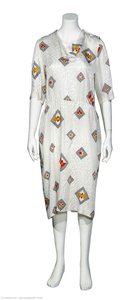

Zdjęcia w wysokiej rozdzielczości dzieła Suknia

Chronione prawem autorskim: pliki te służą wyłącznie do osobistego wglądu i nie stanowią licencji na ich powielanie.
Gianni Versace, Suknia (1991), Röhsska Museum.
Odpowiedzi na pytania dotyczące Suknia
W którym muzeum znajduje się oryginał "Suknia"?
„Suknia” – Gianni Versace znajduje się w zbiorach Röhsska Museum, Göteborg, Sweden. Informacja o muzeum dotyczy oryginału, a nie reprodukcji.
W którym roku powstało „Suknia” – Gianni Versace?
Powstanie „Suknia” – Gianni Versace datuje się na 1991.
W jakiej technice wykonano „Suknia” – Gianni Versace?
Technika wykonania dzieła „Suknia” – Gianni Versace to Akryl na płótnie. Reprodukcje mają na celu wierne oddanie wyglądu tej techniki.
Co przedstawia „Suknia” – Gianni Versace?
„Suknia” – Gianni Versace przedstawia: fashion photography, luxury design, versace couture, black velvet dress, gold button detail, retro elegance, fashion icon.
Czy obraz „Suknia” – Gianni Versace można swobodnie reprodukować?
„Suknia” – Gianni Versace znajduje się w domenie publicznej (nadal objęte ochroną prawa autorskiego). Status ten określa zasady reprodukcji obrazu tego dzieła.
Kto jest autorem dzieła "Suknia"?
Autorstwo dzieła "Suknia" przypisuje się Gianni Versace.
Do jakiego nurtu w sztuce należy „Suknia” – Gianni Versace?
Nurt związany z „Suknia” – Gianni Versace to Italian Glamour Style. Ta klasyfikacja sytuuje dzieło wśród pokrewnych artystów i dzieł sztuki.
Do którego okresu twórczości Gianni Versace należy dzieło „Suknia”?
"Suknia" reprezentuje Glamour Era twórczości Gianni Versace.
Ile lat miał(a) Gianni Versace, tworząc "Suknia" w 1991 roku?
Gdy w 1991 roku powstało dzieło „Suknia”, Gianni Versace – urodzony/a w 1946 – miał/a 45 lat.
O artyście: Gianni Versace

1946–1997, Włoski
Gianni Versace
Gianni Versace: A Visionary Designer Who Redefined Luxury Gianni Versace (1946-1997) stands as a monumental figure in the history of fashion, an artist who irrevocably altered perceptions of glamour and challenged conventional aesthetic boundaries. Born December 2nd, 1946, in Reggio Calabria, Italy—a city steeped in Calabrian tradition—Versace’s formative years instilled within him a profound appreciation for craftsmanship and artistic expression, shaping the trajectory of his extraordinary career. His mother's dressmaking business served as an incubator for creativity, exposing him to the transformative power of textiles and design from a young age – an experience that would prove invaluable in cultivating his innate talent. Early Influences: Versace’s artistic sensibilities were profoundly impacted by classical art forms, particularly Greek sculpture and Byzantine mosaics.
Inne prace Gianni Versace
 Printed white silk dress1994
 Wool and red cashmere coat1984
 Shirt1992
 Sukienka plisowana biała Gianni Versace1995
Eseje o Suknia
 Gianfranco Ferré: Deconstructing Haute Couture – A Legacy of Architectural FormExplore the revolutionary world of Gianfranco Ferré, 'the architect of fashion.' Discover his architectural approach to haute couture, icon…
 Erté & Art Deco: The Glamorous Line Work of a Fashion IconStep into the shimmering world of Erté and Art Deco. Discover how Romain de Tirtoff redefined luxury through geometric mastery and fashion …
 25 Vibrant Masterpieces by Ágatha Ruiz de la Prada: A Kaleidoscope of JoyImmerse yourself in the vibrant world of Ágatha Ruiz de la Prada. Explore 25 iconic artworks defined by bold colors and joyful pop art aest…