

 Podgląd w skali 1:1
 Wyślij jako kartkę
 Udostępnij
 Szczegóły dzieła
 Przewodnik

 Pobierz obraz
 Podobne obiekty
 RTG
RTG Pokaz slajdów
 Q&A
Q&A Statystyki
Apollo and Daphne


 Rozwiń treść
Giclée / Wydruk artystyczny
Wydruki giclée lub płótna o jakości muzealnej, szybka realizacja i szeroki wybór opcji wykończenia. ( Zamów ręcznie malowaną reprodukcję Przejdź do wersji cyfrowej)




P118B zł10

P118H zł10

P118W zł10

P438Z zł10

P508JH zł12

P508YH zł12

P805H zł10

P805Z zł10

P919BZ zł10

P919G zł10

P919XJ zł10

P959ZH zł10

P968JZ zł12

W106C zł8

W218G zł10

W218JH zł8

W218Y zł10

W307PJ zł10

W316G zł10

W316PJ zł8

W316Y zł10

W398PJ zł8

W4111J zł10

W500HY zł15

W500JH zł15

W692G zł12

W849H zł8

W940BG zł15

W953PJ zł8




Wybierz spośród naszych standardowych rozmiarów, które zachowują oryginalne proporcje dzieła sztuki.

Wpisz wymaganą szerokość i wysokość, aby dopasować grafikę do ramy lub ściany. Wydruk można jedynie przyciąć, nigdy nie powiększając go poza oryginalny obraz, dlatego format o innych proporcjach spowoduje utratę części kompozycji. Przed rozpoczęciem druku prześlemy Ci cyfrowy podgląd do zatwierdzenia. Obraz wyświetlany na tej stronie nie pokazuje rzeczywistego przycięcia — jedynie podgląd oddaje ten efekt.
Dostawa na cały świat () w ciągu 2 tygodni zamiast standardowych 4/5 tygodni. (30 Październik)

Bezpłatna ekspresowa wysyłka na cały świat

Wysokiej jakości płótno lniane

Pełne ubezpieczenie przesyłki

Gwarancja zwrotu należności celnych i podatków importowych

Gwarancja wiernego odwzorowania kolorów

100-dniowa polityka zwrotów (tylko w przypadku wad)

Gwarancja 100% zwrotu pieniędzy

Zniżka przy zakupie wielu sztuk
 Opcja ze szkłem jest dostępna wyłącznie w rozmiarach poniżej 110 cm

Apollo and Daphne
Giclée / Wydruk artystyczny
Wymiary reprodukcji
-


Cena całkowita
zł 311
The Myth Made Manifest: Gian Lorenzo Bernini’s “Apollo and Daphne”
Gian Lorenzo Bernini's "Apollo and Daphne," housed within the opulent Galleria Borghese in Rome, isn’t merely a sculpture; it’s a visceral embodiment of Ovid’s timeless tale. Completed between 1622 and 1625, this monumental work transcends its marble materiality to capture a fleeting, dramatic moment – the precipice of transformation where the god Apollo, consumed by desire, attempts to seize the nymph Daphne, who desperately flees into becoming a laurel tree. Bernini’s genius lies not just in his technical mastery but in his ability to infuse stone with an astonishing sense of movement and emotional intensity, creating a scene that feels perpetually caught in the throes of action.

Baroque Drama: Sculpture as Living Motion
Bernini, a pivotal figure in the transition from Renaissance to Baroque art, rejected the static formality of earlier sculpture. Instead, he embraced dynamism, capturing figures in mid-gesture, imbued with palpable emotion. “Apollo and Daphne” exemplifies this approach perfectly. The sculptor masterfully manipulates marble to convey an astonishing sense of movement – Apollo’s outstretched hand, poised to grasp Daphne; her fleeing form, limbs transforming into branches; the billowing drapery that seems to ripple around them both. The sculpture isn't a depiction of a static event but rather a frozen moment of intense pursuit and desperate escape. The use of *contrapposto*, where Apollo’s weight shifts slightly to one leg, adds further to the illusion of movement.
Bernini’s technique is breathtakingly sophisticated. He employed a complex system of scaffolding and supports within the marble itself, allowing him to create an outward appearance of lightness and fluidity. The surface of the stone is polished to a luminous sheen, reflecting light and enhancing the sense of volume and depth. The details are exquisite – the delicate texture of Daphne’s hair transforming into leaves, the intricate folds of her drapery, the subtle expression of panic on her face.
Mythic Symbolism: Love, Flight, and Transformation
The story of Apollo and Daphne is rich in symbolic meaning. Apollo, representing divine power and beauty, embodies relentless pursuit and unyielding desire. Daphne, a symbol of innocence and resistance, represents the preservation of virtue and the rejection of worldly temptations. Her transformation into a laurel tree – a plant closely associated with Apollo himself – signifies her ultimate victory over his advances, becoming a symbol of both beauty and resilience. The myth itself explores themes of love, loss, and the conflict between desire and freedom.
The sculpture’s placement within the Borghese Gallery is also significant. Originally intended to be viewed from a specific angle, it highlights the dramatic interplay between Apollo's forceful pursuit and Daphne's desperate flight. The surrounding architecture of the gallery further enhances this effect, creating an immersive experience for the viewer.
A Legacy of Emotion: Bernini’s Enduring Impact
“Apollo and Daphne” stands as a testament to Bernini’s unparalleled skill and his profound understanding of human emotion. It is not simply a representation of a classical myth but a powerful exploration of the human condition – the struggle between desire and resistance, the triumph of virtue over temptation, and the enduring power of transformation. Bernini's work continues to captivate audiences centuries later, demonstrating the timeless appeal of this dramatic narrative and solidifying his place as one of art history’s greatest masters. Reproductions of this masterpiece offer a remarkable opportunity to bring this extraordinary sculpture into any space, evoking the drama and emotion of Bernini’s original vision.
Pytania i odpowiedzi
Do którego etapu kariery Gian Lorenzo Bernini należy dzieło „Apollo and Daphne” (1622)?
Biorąc pod uwagę datę powstania (1622), dzieło „Apollo and Daphne” wpisuje się w Early Baroque twórczości Gian Lorenzo Bernini.
W jaki sposób styl dzieła "Apollo and Daphne" odnosi się do epoki jego twórcy?
W „Apollo and Daphne” – Gian Lorenzo Bernini nurt Baroque Sculpture łączy się z epoką – Wczesna nowożytność.
Gdzie najlepiej powiesić reprodukcję „Apollo and Daphne” – Gian Lorenzo Bernini?
Format (Tall) oraz rekomendowana przestrzeń (Living Room) to dwa parametry dotyczące rozmieszczenia dzieła „Apollo and Daphne” – Gian Lorenzo Bernini.
Biografia artysty
A Roman Genius: The Life and Legacy of Gian Lorenzo Bernini
Gian Lorenzo Bernini, a name synonymous with the Baroque era, was more than just a sculptor; he was an architect, painter, playwright, and a true *uomo universale* – a universal man. Born in Naples in 1598, his journey to becoming Rome’s most celebrated artist began within a family steeped in artistic tradition. His father, Pietro Bernini, a respected sculptor himself, provided the initial foundation for young Gian Lorenzo's burgeoning talent, nurturing it within their workshop and exposing him to the classical heritage of Italy. This early immersion wasn’t merely about technical training; it was a profound absorption of form, proportion, and the spirit of antiquity – elements that would profoundly shape Bernini’s revolutionary approach to art.Sculpting Emotion: The Birth of Baroque Drama
Bernini didn't simply carve stone; he breathed life into marble, capturing moments of intense psychological depth and dramatic narrative with an unprecedented skill. He shattered the conventions of the Renaissance, moving beyond the idealized forms and static beauty that had defined the era. Instead, Bernini embraced movement, theatricality, and the raw power of human emotion – hallmarks that would become inextricably linked to the burgeoning Baroque style. His works weren’t mere representations; they were visceral experiences designed to evoke a profound response in the viewer. Consider *The Ecstasy of Saint Teresa*, housed within the Cornaro Chapel at Santa Maria della Vittoria. This isn't simply a depiction of a religious vision; it’s a swirling vortex of marble, bronze, and light that plunges the observer into the heart of Teresa’s mystical experience. The dramatic use of diagonals, the dynamic pose of the saint, and the palpable sense of movement create an overwhelming emotional intensity – a testament to Bernini's mastery of Baroque principles. Similarly, *Apollo and Daphne* showcases his ability to capture fleeting moments of transformation, while *David*, far removed from the stoic composure of earlier Renaissance depictions, embodies a state of poised tension, brimming with potential energy.Beyond Sculpture: Architecture and Urban Visions
Bernini’s genius wasn't confined to the realm of sculpture; he was a remarkably versatile artist who significantly contributed to architecture and urban planning, fundamentally reshaping the landscape of Rome. His architectural designs were never conceived in isolation; they were always intricately interwoven with his sculptural work, creating unified artistic experiences that blurred the lines between disciplines. The monumental Baldacchino above the high altar of St. Peter’s Basilica stands as a prime example – a soaring bronze canopy that dominates the space and draws the eye upwards in awe, embodying both architectural grandeur and dramatic theatricality. He also played a pivotal role in redesigning several Roman piazzas, transforming them into vibrant public spaces filled with life and movement. The Fountain of the Four Rivers in Piazza Navona is a particularly striking example – a dynamic composition of allegorical figures representing major rivers from different continents, creating an engaging and visually stunning urban environment. His work on St. Peter’s Basilica, including the expansive colonnade that embraces visitors as they approach, dramatically altered the basilica's appearance and created a grand ceremonial space befitting the heart of Christendom.A Lasting Influence: Bernini’s Historical Significance
Gian Lorenzo Bernini exerted an unparalleled influence on the course of Western art. His innovative approach to sculpture established the Baroque style as a dominant force in European art for over a century, inspiring generations of artists with his dramatic compositions and technical virtuosity. He didn't merely imitate classical forms; he synthesized them with a new sense of dynamism and emotional intensity, forging an entirely original artistic language. His seamless integration of sculpture, architecture, and painting into unified artistic experiences set a new standard for artistic expression, demonstrating the power of art to engage all the senses and evoke profound emotions. As Howard Hibbard eloquently stated, Bernini’s impact was so significant that he stands as “the greatest sculptor of the 17th century.” His works continue to inspire awe and admiration, solidifying his place as one of history's most important artists – a true *uomo universale* whose legacy continues to resonate powerfully today.Family & Further Achievements
- Pietro Bernini: Gian Lorenzo’s father, a sculptor who provided early training and guidance.
- Cardinal Scipione Borghese: An influential patron whose commissions allowed Bernini to develop his signature style.
- Pope Urban VIII: Bernini's most significant patron, providing extensive opportunities for architectural and sculptural projects in Rome.
- Architectural Projects: Beyond St. Peter’s Basilica, Bernini designed churches like Sant’Andrea al Quirinale and contributed to the design of Palazzo Barberini.
- Theatrical Designs: He was also a playwright and stage designer, creating elaborate sets and machinery for theatrical productions.

Gian Lorenzo Bernini
1598 - 1680 , Włochy
Krótka nota
- Artistic Movement Or Style: Barok
- Artists Or Movements Influenced By This Artist:
- Barok włoski
- Sztuka europejska
- Artists Who Influenced This Artist:
- Pietro Bernini
- Michał Anioł
- Date Of Birth: 7 grudnia 1598
- Date Of Death: 28 listopada 1680
- Full Name: Gian Lorenzo Bernini
- Nationality: Włoski
- Notable Artworks:
- Ecstasia św. Teresy
- Apollo i Dafne
- David
- Fontanna Czterech Rzek
- Place Of Birth: Neapol, Włochy
Powiązane artykuły
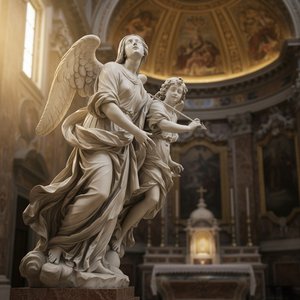
Gian Lorenzo Bernini: Sculpting Baroque Emotion & the Roman Imagination
Explore the life & revolutionary art of Gian Lorenzo Bernini, the master sculptor of the Baroque era. Discover his iconic works like David and Ecstasy of Saint Teresa – a journey into Roman artistic genius.

Urok marmuru w historii sztuki: od klasycznej rzeźby do nowoczesnej abstrakcji
Odkryj fascynującą historię rzeźby marmurowej – od klasycznych arcydzieł po nowoczesną abstrakcję. Poznaj techniki, artystów i wartość kolekcjonerską tego wyjątkowego medium. Ekspercka analiza dla miłośników sztuki.

Trwałe Formy: Ewolucja Technik i Tematów w Rzeźbie Przez Wieki – Od Antyku do Renesansu
Poznaj fascynującą historię rzeźby od antyku do renesansu! Odkryj techniki, wybitnych artystów i wpływ na współczesną sztukę. Ekspercka analiza dla kolekcjonerów i miłośników.

Trwała Forma: Rzeźba w Historii – Technika i Rezonans Emocjonalny
Poznaj historię rzeźby od antyku do współczesności! Ekspercka analiza technik, stylów i emocjonalnego wpływu arcydzieł. Inspiracje dla kolekcjonerów i miłośników sztuki.

10 Legendarnych Brązów Rzeźbiarskich, Które Zmieniły Sztukę | OriginalUniqueArt
Odkryj 10 legendarnych rzeźb brązowych od Rodina, Degasa i innych mistrzów! Poznaj historię powstania arcydzieł sztuki i inspiruj się do dekoracji wnętrz. Reprodukcje najwyższej jakości na OriginalUniqueArt.com – zobacz kolekcję!
