

 Zobacz w skali 1:1
 Wyślij
 Udostępnij
 Szczegóły
 Przewodnik

 Pobierz plik obrazu
 Podobne obiekty
 RTG
RTG Pokaz slajdów
 Statystyki
Betender Einsiedler
 Oil
Oil- WallArt
- Dutch Golden Age Painting
 1670
1670- Early Modern
 25.0 x 19.0 cm
 Galeria Obrazów Sanssouci
 Czytaj więcej
Giclée / Wydruk artystyczny
Wydruki giclée lub płótna o jakości muzealnej, szybka realizacja i szeroki wybór opcji wykończenia. ( Kup ręcznie malowany obraz Przełącz na wersję cyfrową)




P118B zł10

P118H zł10

P118W zł10

P438Z zł10

P508JH zł12

P508YH zł12

P805H zł10

P805Z zł10

P919BZ zł10

P919G zł10

P919XJ zł10

P959ZH zł10

P968JZ zł12

W106C zł8

W218G zł10

W218JH zł8

W218Y zł10

W307PJ zł10

W316G zł10

W316PJ zł8

W316Y zł10

W398PJ zł8

W4111J zł10

W500HY zł15

W500JH zł15

W692G zł12

W849H zł8

W940BG zł15

W953PJ zł8




Wybierz spośród naszych standardowych rozmiarów, które zachowują oryginalne proporcje dzieła sztuki.

Wpisz wymaganą szerokość i wysokość, aby dopasować grafikę do ramy lub ściany. Wydruk można jedynie przyciąć, nigdy nie powiększając go poza oryginalny obraz, dlatego format o innym proporcji spowoduje utratę części kompozycji. Przed rozpoczęciem druku prześlemy Ci cyfrowy podgląd do zatwierdzenia. Obraz wyświetlany na tej stronie nie pokazuje rzeczywistego przycięcia — jedynie podgląd oddaje ten efekt.
Dostawa na cały świat () w ciągu 2 tygodni zamiast standardowych 4/5 tygodni. (21 Październik)

Bezpłatna ekspresowa wysyłka na cały świat

Wysokiej jakości płótno lniane

Pełne ubezpieczenie transportowe

Gwarancja zwrotu należności celnych i podatków importowych

Gwarancja idealnego odwzorowania barw

100-dniowy okres na zwrot dzieła w przypadku wykrycia wad produkcyjnych

Gwarancja 100% zwrotu pieniędzy

Oferta przy zakupie wielu sztuk
 Opcja ze szkłem jest dostępna wyłącznie w rozmiarach poniżej 110 cm

Betender Einsiedler
Giclée / Wydruk artystyczny
Rozmiar reprodukcji
-


Suma do zapłaty
zł 304
A Quiet Devotion: The Luminous World of Gerrit Dou
In the hushed atmosphere of a seventeenth-century interior, a single figure emerges from the shadows, caught in a profound moment of spiritual introspection. Betender Einsiedler, or the Praying Hermit, is not merely a painting but an invitation into a private sanctuary of thought. Executed around 1670 by the master of the Leiden School, Gerrit Dou, this diminutive masterpiece commands attention through its sheer psychological weight. The subject—an elderly man with a weathered face and a flowing white beard—is deeply immersed in his devotion, his eyes cast downward toward a book held firmly in his hands. Through Dou’s unparalleled ability to capture the essence of human vulnerability, the viewer is drawn into a silent dialogue with the hermit, feeling the weight of his solitude and the sanctity of his prayer.
The brilliance of this work lies in its technical execution, specifically Dou's legendary command of chiaroscuro. Rather than relying on broad strokes or bright, distracting colors, the artist employs a sophisticated interplay of light and shadow to sculpt the hermit’s form. The subtle gradations of tone create a palpable sense of three-dimensionality; one can almost feel the coarse texture of his heavy robes and the delicate, papery quality of his aged skin. This meticulous approach, characteristic of the fijnschilder or "fine painter" tradition, allows light to behave as if it were emanating from a soft, unseen source, perhaps a flickering candle just out of view. Such precision transforms the small canvas into a window of immense depth, where every fold of fabric and every strand of hair serves to heighten the illusion of reality.
Historical Resonance and Symbolic Depth
Beyond its technical splendor, Betender Einsiedler is a profound artifact of the Dutch Golden Age and the burgeoning spirit of the Enlightenment. During this era, there was an increasing fascination with the intersection of empirical observation and inner psychological truth. Dou, a student of Rembrandt, took the dramatic lighting of his master and refined it into something much more intimate and controlled. The painting’s history is equally captivating; it was famously acquired by Friedrich II for the Staatliche Bildergalerie in Berlin, reflecting the era's aristocratic passion for Northern European realism. This connection to royal patronage underscores the work's status as a treasure of cultural significance, representing a period when art sought to document the human condition with unprecedented accuracy.
Symbolically, the painting serves as a meditation on time and the eternal. The presence of a clock visible in the background acts as a memento mori, a gentle reminder of the fleeting nature of earthly existence compared to the enduring nature of faith. This tension between the ticking seconds of the physical world and the timelessness of the hermit's prayer creates a poignant emotional resonance. For the modern collector or interior designer, a high-quality reproduction of this piece offers more than just aesthetic beauty; it brings a sense of contemplative stillness and intellectual sophistication to any space. It is an ideal centerpiece for those seeking to evoke a mood of quiet elegance, scholarly depth, and a timeless connection to the masters of the Dutch Golden Age.
Pytania i odpowiedzi
Czy mogę zobaczyć „Betender Einsiedler” autorstwa Gerrit Dou w różnym oświetleniu?
Widok rentgenowski dzieła „Betender Einsiedler” autorstwa Gerrit Dou znajduje się na stronie Prześwietlenie utworu: to interaktywna analiza obrazu poprzez jedenaście warstw optycznych.
Jakie są wymiary oryginału "Betender Einsiedler"?
Oryginalny utwór „Betender Einsiedler” autorstwa Gerrit Dou ma wymiary 25 x 19 cm.
Jaka jest kolorystyka dzieła „Betender Einsiedler” autorstwa Gerrit Dou?
„Betender Einsiedler” charakteryzuje się paletą Earthy, w której dominuje Phthalo Green (#2c2521).
Biografia artysty
Gerrit Dou (1613 - 1675)
Gerrit Dou was one of the most celebrated painters of the Dutch Golden Age, whose meticulous *fijnschilder* style—characterized by minute detail and polished realism—established him as a cornerstone of Leiden’s artistic tradition. Born in Leiden on April 7, 1613, the son of Marytje Jansdr van Rosenburg and the glazier Douwe Jansz de Vries van Arentsvelt, his early life was marked by exposure to the craft of stained glass, an occupation passed down through his father’s lineage. This formative experience would profoundly shape his artistic sensibilities.Early Training and Rembrandt's Influence
Gerrit Dou received his initial instruction in drawing under Bartholomeus Dolendo, a respected Leiden artist who instilled in him a foundational understanding of artistic principles. However, it was his apprenticeship with Rembrandt van Rijn—a pivotal moment that cemented his artistic trajectory—that truly propelled him toward mastery. From 1628 to 1631, Dou honed his skills alongside Rembrandt’s protégé Isaac de Jouderville, absorbing the master's innovative techniques and stylistic vision. Rembrandt’s influence is palpable in several of Dou’s early works, notably a self-portrait executed at the age of twenty-two around 1635–1638—a piece that exemplifies Rembrandt’s masterful use of chiaroscuro and psychological depth.The Leiden Fijnschilders and Distinctive Style
Dou quickly distinguished himself from Rembrandt's peers, cultivating a singular artistic style that would become synonymous with the Leiden *fijnschilders*. Unlike Rembrandt’s broader stylistic explorations, Dou focused on achieving unparalleled precision and subtlety—a pursuit reflected in his painstaking rendering of textures and surfaces. He famously spent five days perfecting a single hand, demonstrating an unwavering commitment to meticulous craftsmanship. This dedication extended beyond mere technical skill; Dou possessed an innate ability to capture the essence of human emotion within seemingly simple compositions.Notable Works and Patronage
Gerrit Dou’s oeuvre comprises over two hundred paintings—primarily genre scenes depicting everyday life—many of which are renowned for their dramatic lighting effects and illusionistic techniques. Among his most celebrated works is *The Astronomer by Candlelight*, a masterpiece that showcases Dou's unparalleled command of chiaroscuro, creating an atmosphere of contemplative solemnity. Furthermore, Dou’s paintings graced the collections of prominent patrons, including Pieter Spiering—the Swedish ambassador to the Dutch Republic—who recognized Dou’s exceptional talent and commissioned several portraits reflecting his refined taste. His legacy continues to inspire artists today, securing his place as one of the most influential figures in Dutch Baroque painting.Legacy and Influence
Gerrit Dou's artistic innovations profoundly impacted subsequent generations of painters, notably Frans van Mieris the Elder and Gabriel Metsu—who regarded Dou as their mentor and exemplar. His meticulous style served as a model for aspiring artists seeking to emulate Rembrandt’s brilliance while forging their own distinctive voices. Dou’s work was exhibited extensively throughout Europe during his lifetime, establishing him as a celebrated artist within the intellectual circles of his era. Today, Gerrit Dou's paintings reside in museums across the continent—a testament to his enduring artistic significance and the lasting impact of his groundbreaking contributions to Dutch art history.
Gerrit Dou
1613 - 1675 , Holandia
Najważniejsze informacje
- Artistic Movement Or Style: Fijnschilder (Fine Painting)
- Artists Or Movements Influenced By This Artist: ['Holenderska szkoła fijnschilder']
- Artists Who Influenced This Artist: ['Rembrandt van Rijn']
- Date Of Birth: 7 kwietnia 1613
- Date Of Death: 9 lutego 1675
- Full Name: Gerrit Dou
- Nationality: Holender
- Notable Artworks:
- Astronomer przez świecę
- Portret kobiety
- Place Of Birth: Lejdź, Holandia
Zobacz także powiązane artykuły
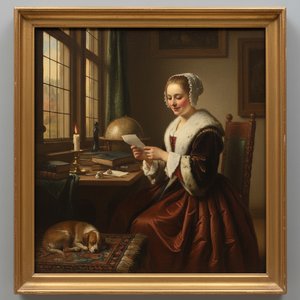
Gerrit Dou: Intimacy & Light in the Dutch Golden Age
Explore the exquisite world of Gerrit Dou, a master of Dutch Golden Age painting. Discover his intimate genre scenes, signature use of light, and lasting legacy. Learn about collecting Dou's works & their value.

Złoty Wiek Niderlandów: Światło, Realizm i Kulturowe Innowacje w Malarstwie Barokowym
Odkryj fascynujący świat malarstwa holenderskiego Złotego Wieku! Poznaj arcydzieła Rembrandta, Vermeera i innych mistrzów. Analiza technik, gatunków i wpływu na sztukę europejską.
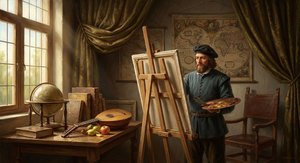
Iluminacja Realizmu: Holenderski Złoty Wiek Malarstwa – Studium Światła i Cienia (1600-1700)
Odkryj fascynujący świat holenderskiego Złotego Wieku malarstwa (1600-1700). Analiza dzieł Rembrandta, Vermeera i techniki chiaroscuro. Ekspercka wiedza o Rijksmuseum i gatunkach artystycznych.

Golden Light & Dutch Skies: The Timeless Magic of Dutch Golden Age Landscapes
Discover the breathtaking beauty of Dutch Golden Age landscapes. Explore the mastery of light, chiaroscuro, and 17th-century realism through an expert art history lens, celebrating the enduring legacy of the Dutch Masters for discerning collectors and art lovers.

Złoty Wiek Holandii: 10 arcydzieł, które zmieniły historię sztuki | OriginalUniqueArt.com
Odkryj 10 arcydzieł Złotego Wieku Holandii! Poznaj historię Rembrandta, Vermeera i innych mistrzów. Reprodukcje obrazów najwyższej jakości do Twojego wnętrza – OriginalUniqueArt.com.


