

 Zobacz w skali 1:1
 Wyślij
 Udostępnij
 Szczegóły
 Przewodnik

 Pobierz plik obrazu
 Podobne obiekty
 RTG
RTG Pokaz slajdów
 Statystyki
An Evening School
 Oil On Panel
- Dutch Golden Age
 1655
1655 25.0 x 23.0 cm
 Metropolitan Museum of Art
 Czytaj więcej
Giclée / Wydruk artystyczny
Wydruki giclée lub płótna o jakości muzealnej, szybka realizacja i szeroki wybór opcji wykończenia. ( Kup ręcznie malowany obraz Przełącz na wersję cyfrową)




P118B zł10

P118H zł10

P118W zł10

P438Z zł10

P508JH zł12

P508YH zł12

P805H zł10

P805Z zł10

P919BZ zł10

P919G zł10

P919XJ zł10

P959ZH zł10

P968JZ zł12

W106C zł8

W218G zł10

W218JH zł8

W218Y zł10

W307PJ zł10

W316G zł10

W316PJ zł8

W316Y zł10

W398PJ zł8

W4111J zł10

W500HY zł15

W500JH zł15

W692G zł12

W849H zł8

W940BG zł15

W953PJ zł8




Wybierz spośród naszych standardowych rozmiarów, które zachowują oryginalne proporcje dzieła sztuki.

Wpisz wymaganą szerokość i wysokość, aby dopasować grafikę do ramy lub ściany. Wydruk można jedynie przyciąć, nigdy nie powiększając go poza oryginalny obraz, dlatego format o innym proporcji spowoduje utratę części kompozycji. Przed rozpoczęciem druku prześlemy Ci cyfrowy podgląd do zatwierdzenia. Obraz wyświetlany na tej stronie nie pokazuje rzeczywistego przycięcia — jedynie podgląd oddaje ten efekt.
Dostawa na cały świat () w ciągu 2 tygodni zamiast standardowych 4/5 tygodni. (20 Październik)

Bezpłatna ekspresowa wysyłka na cały świat

Wysokiej jakości płótno lniane

Pełne ubezpieczenie transportowe

Gwarancja zwrotu należności celnych i podatków importowych

Gwarancja idealnego odwzorowania barw

100-dniowy okres na zwrot dzieła w przypadku wykrycia wad produkcyjnych

Gwarancja 100% zwrotu pieniędzy

Oferta przy zakupie wielu sztuk
 Opcja ze szkłem jest dostępna wyłącznie w rozmiarach poniżej 110 cm

An Evening School
Giclée / Wydruk artystyczny
Rozmiar reprodukcji
-


Suma do zapłaty
zł 303
A Moment of Quiet Instruction: Gerrit Dou’s “An Evening School”
Gerrit Dou's "An Evening School," painted around 1655-57, isn’t merely a depiction of a classroom; it’s a carefully constructed tableau of learning, contemplation, and the quiet dignity of shared knowledge. Emerging from the Dutch Golden Age, this small masterpiece exemplifies the ‘fijnschilder’ style – a hallmark of Dou's oeuvre characterized by meticulous detail, subtle gradations of tone, and an almost photographic realism achieved through painstaking layering of paint. The painting immediately draws the viewer in with its dramatic chiaroscuro, a masterful manipulation of light and shadow that creates a sense of intimacy and mystery within the dimly lit interior.
At the heart of the composition sits a man, presumably a teacher, seated at a table surrounded by three eager young students. The arrangement is deliberately triangular, anchoring the scene with the central figure while subtly guiding the eye through the carefully rendered details – the open books, the sharpened quill pen, and the flickering candlelight that casts long shadows across the room. Dou’s skill lies not just in capturing individual likenesses but in conveying a palpable sense of atmosphere; you can almost feel the warmth of the fire and hear the rustle of pages.
The Language of Light and Symbol
Dou's use of light is profoundly symbolic, acting as both illumination and metaphor. The single candle, positioned centrally within the scene, isn’t simply a source of visibility; it represents knowledge itself – a beacon guiding the students towards enlightenment. The carefully controlled shadows suggest introspection and the quiet contemplation that often accompanies learning. Notice how Dou renders the flame itself—not as a simple shape but as a dynamic, almost tangible presence, imbued with warmth and luminosity. This attention to detail extends throughout the painting, from the rough texture of the clothing to the subtle variations in tone within the wooden table.
The students’ expressions are particularly noteworthy. They aren't posed stiffly; instead, they exhibit a genuine curiosity and attentiveness, their faces illuminated by the candlelight and reflecting a desire to absorb the knowledge being imparted. This portrayal of engaged learners speaks to Dou’s humanist sensibilities – a belief in the importance of education and its transformative power.
Technique and Historical Context
“An Evening School” is a testament to Gerrit Dou's mastery of oil painting technique, particularly his innovative glazing method. He applied incredibly thin layers of paint, building up color and texture gradually over time – a process that allowed him to achieve the luminous effects and subtle gradations of tone so characteristic of his work. This meticulous approach demanded immense patience and skill, contributing to the painting’s remarkable realism and depth.
Painted during the Dutch Golden Age (roughly 1600-1700), this piece reflects a period of unprecedented artistic flourishing in the Netherlands. The rise of the merchant class fueled a demand for art that celebrated domestic life, education, and moral values. Dou’s work aligns with this trend, offering a glimpse into the everyday world of a Dutch community while simultaneously exploring themes of knowledge, virtue, and family.
A Timeless Image of Learning
“An Evening School” transcends its historical context to offer a timeless meditation on learning, mentorship, and the pursuit of wisdom. The painting’s quiet intimacy, combined with Dou's masterful technique and evocative symbolism, creates an experience that is both visually stunning and emotionally resonant. It’s a reminder of the enduring value of education and the importance of passing knowledge from one generation to the next – a message as relevant today as it was nearly 400 years ago.
Pytania i odpowiedzi
Jaka jest technika i wymiary dzieła „An Evening School” autorstwa Gerrit Dou?
"An Evening School" powstało przy użyciu Oil On Panel i w swojej oryginalnej formie ma wymiary 25 x 23 cm.
O czym jest "An Evening School" i jaką ma atmosferę?
„An Evening School” autorstwa Gerrit Dou przedstawia night school, dutch painting, candlelight, education, children, chiaroscuro, domestic scene, wprowadzając Calm nastrój. Tematyka i atmosfera wspólnie definiują to dzieło.
Jakie zastosowanie i przestrzeń są zalecane dla „An Evening School” autorstwa Gerrit Dou?
Zastosowanie (Reflective) oraz przestrzeń (Living Room) to dwie rekomendacje wskazane dla „An Evening School” autorstwa Gerrit Dou.
Biografia artysty
Gerrit Dou (1613 - 1675)
Gerrit Dou was one of the most celebrated painters of the Dutch Golden Age, whose meticulous *fijnschilder* style—characterized by minute detail and polished realism—established him as a cornerstone of Leiden’s artistic tradition. Born in Leiden on April 7, 1613, the son of Marytje Jansdr van Rosenburg and the glazier Douwe Jansz de Vries van Arentsvelt, his early life was marked by exposure to the craft of stained glass, an occupation passed down through his father’s lineage. This formative experience would profoundly shape his artistic sensibilities.Early Training and Rembrandt's Influence
Gerrit Dou received his initial instruction in drawing under Bartholomeus Dolendo, a respected Leiden artist who instilled in him a foundational understanding of artistic principles. However, it was his apprenticeship with Rembrandt van Rijn—a pivotal moment that cemented his artistic trajectory—that truly propelled him toward mastery. From 1628 to 1631, Dou honed his skills alongside Rembrandt’s protégé Isaac de Jouderville, absorbing the master's innovative techniques and stylistic vision. Rembrandt’s influence is palpable in several of Dou’s early works, notably a self-portrait executed at the age of twenty-two around 1635–1638—a piece that exemplifies Rembrandt’s masterful use of chiaroscuro and psychological depth.The Leiden Fijnschilders and Distinctive Style
Dou quickly distinguished himself from Rembrandt's peers, cultivating a singular artistic style that would become synonymous with the Leiden *fijnschilders*. Unlike Rembrandt’s broader stylistic explorations, Dou focused on achieving unparalleled precision and subtlety—a pursuit reflected in his painstaking rendering of textures and surfaces. He famously spent five days perfecting a single hand, demonstrating an unwavering commitment to meticulous craftsmanship. This dedication extended beyond mere technical skill; Dou possessed an innate ability to capture the essence of human emotion within seemingly simple compositions.Notable Works and Patronage
Gerrit Dou’s oeuvre comprises over two hundred paintings—primarily genre scenes depicting everyday life—many of which are renowned for their dramatic lighting effects and illusionistic techniques. Among his most celebrated works is *The Astronomer by Candlelight*, a masterpiece that showcases Dou's unparalleled command of chiaroscuro, creating an atmosphere of contemplative solemnity. Furthermore, Dou’s paintings graced the collections of prominent patrons, including Pieter Spiering—the Swedish ambassador to the Dutch Republic—who recognized Dou’s exceptional talent and commissioned several portraits reflecting his refined taste. His legacy continues to inspire artists today, securing his place as one of the most influential figures in Dutch Baroque painting.Legacy and Influence
Gerrit Dou's artistic innovations profoundly impacted subsequent generations of painters, notably Frans van Mieris the Elder and Gabriel Metsu—who regarded Dou as their mentor and exemplar. His meticulous style served as a model for aspiring artists seeking to emulate Rembrandt’s brilliance while forging their own distinctive voices. Dou’s work was exhibited extensively throughout Europe during his lifetime, establishing him as a celebrated artist within the intellectual circles of his era. Today, Gerrit Dou's paintings reside in museums across the continent—a testament to his enduring artistic significance and the lasting impact of his groundbreaking contributions to Dutch art history.
Gerrit Dou
1613 - 1675 , Holandia
Najważniejsze informacje
- Artistic Movement Or Style: Fijnschilder (Fine Painting)
- Artists Or Movements Influenced By This Artist: ['Holenderska szkoła fijnschilder']
- Artists Who Influenced This Artist: ['Rembrandt van Rijn']
- Date Of Birth: 7 kwietnia 1613
- Date Of Death: 9 lutego 1675
- Full Name: Gerrit Dou
- Nationality: Holender
- Notable Artworks:
- Astronomer przez świecę
- Portret kobiety
- Place Of Birth: Lejdź, Holandia
Zobacz także powiązane artykuły
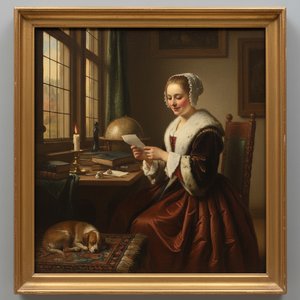
Gerrit Dou: Intimacy & Light in the Dutch Golden Age
Explore the exquisite world of Gerrit Dou, a master of Dutch Golden Age painting. Discover his intimate genre scenes, signature use of light, and lasting legacy. Learn about collecting Dou's works & their value.

Golden Light & Dutch Skies: The Timeless Magic of Dutch Golden Age Landscapes
Discover the breathtaking beauty of Dutch Golden Age landscapes. Explore the mastery of light, chiaroscuro, and 17th-century realism through an expert art history lens, celebrating the enduring legacy of the Dutch Masters for discerning collectors and art lovers.
Iluminacja Realizmu: Holenderski Złoty Wiek Malarstwa – Studium Światła i Cienia (1600-1700)
Odkryj fascynujący świat holenderskiego Złotego Wieku malarstwa (1600-1700). Analiza dzieł Rembrandta, Vermeera i techniki chiaroscuro. Ekspercka wiedza o Rijksmuseum i gatunkach artystycznych.

Złoty Wiek Holandii: 10 arcydzieł, które zmieniły historię sztuki | OriginalUniqueArt.com
Odkryj 10 arcydzieł Złotego Wieku Holandii! Poznaj historię Rembrandta, Vermeera i innych mistrzów. Reprodukcje obrazów najwyższej jakości do Twojego wnętrza – OriginalUniqueArt.com.

Złoty Wiek Niderlandów: Światło, Realizm i Kulturowe Innowacje w Malarstwie Barokowym
Odkryj fascynujący świat malarstwa holenderskiego Złotego Wieku! Poznaj arcydzieła Rembrandta, Vermeera i innych mistrzów. Analiza technik, gatunków i wpływu na sztukę europejską.


