

 Zamów wydruk Kup cyfrowy obraz
 Udostępnij
 Udostępnij
 Szczegóły dzieła
 Dodaj do ulubionych

 Pobierz
 Podobne obiekty
 RTG
RTG
 Pokaz slajdów
Korn


 Rozwiń treść
Ręcznie malowana reprodukcja olejowa
Ręcznie malowany olej na płótnie w Twoim wymiarze i ramie, tworzony na zamówienie przez naszych artystów.




P118B $10

P118H $10

P118W $10

P438Z $10

P508JH $12

P508YH $12

P805H $10

P805Z $10

P919BZ $10

P919G $10

P919XJ $10

P959ZH $10

P968JZ $12

W106C $8

W218G $10

W218JH $8

W218Y $10

W307PJ $10

W316G $10

W316PJ $8

W316Y $10

W398PJ $8

W4111J $10

W500HY $15

W500JH $15

W692G $12

W849H $8

W940BG $15

W953PJ $8




Wybierz spośród naszych predefiniowanych rozmiarów, które zachowują oryginalne proporcje dzieła sztuki.

Możesz wprowadzić własne wymiary, aby dopasować obraz do konkretnej ramy lub przestrzeni. Jeśli wybrany rozmiar nie będzie odpowiadał proporcjom oryginału, przytniecie dzieło sztuki lub rozszerzymy je o dodatkowe elementy, ręcznie domalowane przez artystę. Przed rozpoczęciem produkcji wyślemy projekt cyfrowy do Twojej akceptacji.
Należy pamiętać, że podgląd na ekranie nie odzwierciedla rzeczywistego przycinania ani rozszerzania obrazu. Tylko projekt dokładnie pokaże ostateczną kompozycję.
Choć oferujemy możliwość zamówienia niestandardowych rozmiarów, zalecamy wybór wymiaru z gotowej listy, aby zachować oryginalne proporcje dzieła.
Po złożeniu zamówienia zespół OriginalUniqueArt.com skontaktuje się z klientem drogą mailową w celu uzyskania instrukcji i prześle wizualizację projektu
Dostawa na całym świecie () w ciągu 3/4 tygodni zamiast standardowych 5 tygodni. (22 Lipiec). Bez kompromisów w kwestii jakości.

Bezpłatna ekspresowa wysyłka na cały świat

Wysokiej jakości płótno lniane

Pełne ubezpieczenie przesyłki

Gwarancja zwrotu należności celnych

Gwarancja pełnego zgodności kolorystycznej

Polityka 60-dniowego zwrotu (tylko w przypadku wad)

Gwarancja 100% zwrotu pieniędzy

Zniżka przy większych zamówieniach
 Opcja szkła jest dostępna wyłącznie w rozmiarach poniżej 110 cm

Korn
Technika reprodukcji
Wymiary reprodukcji
-


Cena całkowita
-
Opis dzieła
Gerhard Richter’s ‘Korn’: A Burst of Abstract Energy
Created in 1982, ‘Korn’ (Grain) is a compelling example of Gerhard Richter's mastery of abstract expressionism. This dynamic painting showcases his signature gestural style and profound exploration of color, texture, and the very act of painting itself.Decoding the Abstract Form
‘Korn’ eschews traditional representation, offering instead a vibrant field of layered colors and energetic brushstrokes. There is no discernible subject matter in the conventional sense; rather, Richter invites viewers to engage directly with the *physicality* of the paint and the emotional resonance of its application. The composition feels deliberately unbalanced, creating a visual tension that draws the eye across the canvas. Fragmented shapes and loose lines intersect and overlap, fostering a sense of constant movement and spontaneity.Technique & Materials: Impasto and Layering
Richter’s technique in ‘Korn’ is characterized by a generous use of oil paint applied with both brush and squeegee – a hallmark of his abstract work. The *impasto*—thickly layered paint—creates a rich, tactile surface that begs to be experienced beyond the visual. This layering isn't merely about building up texture; it’s also about obscuring and revealing, creating depth and complexity within the seemingly chaotic arrangement. The diffuse lighting suggests an indoor studio environment, emphasizing the intimate connection between artist and canvas.Historical Context: Post-War German Art
Gerhard Richter emerged as a significant figure in post-war German art, grappling with questions of history, memory, and representation. Born in Dresden in 1932, he experienced firsthand the devastation of World War II and the subsequent division of Germany. His artistic journey began under the constraints of Socialist Realism in East Germany before he defected to West Germany in 1961. ‘Korn’, created during a period of established international recognition, reflects Richter’s ongoing exploration of abstraction as a means of both liberation *and* questioning artistic conventions. He deliberately avoided clear narratives or political statements, instead focusing on the inherent qualities of painting itself.Symbolism & Emotional Impact
While ‘Korn’ resists definitive interpretation, its energetic composition and vibrant palette evoke powerful emotions. The swirling colors and dynamic brushwork can be seen as representing internal turmoil, a burst of creative energy, or even the chaotic nature of modern life. The title itself, “Korn” (Grain), is intriguing. It could allude to organic forms, the building blocks of life, or perhaps the granular texture of the paint itself – a subtle reminder of the material reality underlying the abstract image. Ultimately, the painting’s symbolism remains open-ended, allowing viewers to project their own experiences and interpretations onto its surface.Collecting & Interior Design
‘Korn’ is held in prestigious collections, including the Daros Collection in Zurich and the Kunstsammlung Nordrhein-Westfalen in Düsseldorf. Its bold colors and dynamic composition make it a striking focal point for any space.- For collectors: ‘Korn’ represents a pivotal moment in Richter's career and exemplifies his innovative approach to abstract painting.
- For interior designers: The painting’s vibrant energy can inject life into modern interiors, while its complex texture adds depth and sophistication. It pairs well with minimalist furnishings or serves as a counterpoint to more traditional décor.
Biografia artysty
A Life Shaped by Division: The Early Years and Artistic Formation of Gerhard Richter
Gerhard Richter’s story is inextricably linked to the fractured history of 20th-century Germany. Born in Dresden in 1932, his childhood unfolded under the shadow of a rising National Socialist regime. This formative period, marked by displacement – his family moved several times during the war years – instilled within him a profound sense of uncertainty and a questioning spirit that would permeate his artistic practice for decades to come. The idyllic landscapes of his early upbringing in Reichenau and Waltersdorf were soon disrupted by conflict, leaving an indelible mark on his psyche. His father, though not a fervent supporter of the Nazi party, navigated the complexities of life under authoritarian rule as a schoolteacher, while his mother fostered a love for literature and music within the family. This duality – a pragmatic acceptance of circumstance alongside a yearning for cultural expression – became a defining characteristic of Richter’s own artistic approach. He began formal training at the Dresden Academy of Fine Arts in 1951, initially immersed in the tradition of socialist realism demanded by the East German state. However, even within this constrained environment, a desire for artistic freedom simmered beneath the surface, fueled by a growing dissatisfaction with ideological constraints and a longing to explore more expansive creative possibilities.Escaping Constraints: Düsseldorf and the Exploration of Style
The year 1961 proved pivotal. Richter, along with his wife Marianne Eufinger, made the daring decision to flee East Germany, seeking refuge in the burgeoning art scene of Düsseldorf. This move marked a radical shift in his artistic trajectory. The West German landscape offered a liberating environment where experimentation and innovation were not only permitted but actively encouraged. In Düsseldorf, he encountered a vibrant community of artists grappling with questions of identity, representation, and the legacy of history. He quickly began to dismantle the rigid stylistic conventions of socialist realism, embarking on a period of intense exploration that would define his early mature work. This era saw him oscillate between seemingly disparate approaches – from photorealism, meticulously recreating photographic images with astonishing precision, to abstract compositions characterized by bold colors and dynamic brushstrokes. His collaboration with Sigmar Polke led to the coining of the term ‘Capitalist Realism,’ a deliberately ambiguous label that reflected their shared skepticism towards established artistic norms and their appropriation of imagery from advertising and mass media. This period wasn’t about finding *a* style, but rather questioning the very notion of stylistic coherence, embracing contradiction as a fundamental principle.Blurring Boundaries: Photorealism, Abstraction, and the Power of Chance
Richter's photorealistic paintings, often based on family photographs or newspaper images, are not merely copies of reality but rather investigations into the nature of perception and representation. By meticulously rendering these images with an almost clinical detachment, he forces viewers to confront the inherent ambiguity of photographic truth. Simultaneously, Richter delved deeper into abstraction, creating canvases layered with vibrant colors and gestural marks. These abstract works are often created using a unique technique involving squeegees – tools typically used for cleaning windows – which he drags across the surface of the canvas, manipulating the paint in unpredictable ways. This embrace of chance and spontaneity is central to his artistic philosophy, allowing him to relinquish control and invite unexpected outcomes. His ‘Color Charts,’ systematic arrangements of colored squares, further challenge traditional notions of artistic expression, questioning the very definition of painting itself. These works are not about individual aesthetic preferences but rather about exploring the inherent properties of color and its organizational possibilities. The influence of artists like Jackson Pollock and Lucio Fontana during his time in Düsseldorf profoundly shaped Richter’s approach to abstraction, pushing him beyond representational concerns and towards a more process-oriented mode of creation.The Weight of History: From Socialist Realism to Capitalist Realism
Richter's artistic development was inextricably linked to the political and social upheavals of post-war Germany. His early training in socialist realism, while providing him with technical skills, ultimately left him disillusioned by its ideological constraints. The experience of living under a repressive regime fostered a deep sense of skepticism and a critical awareness of the power of propaganda. This disillusionment manifested itself in his adoption of ‘Capitalist Realism’ – a term he coined with Sigmar Polke – which sought to expose the artificiality of mass media and consumer culture. Richter's paintings during this period often depicted seemingly banal subjects – landscapes, still lifes, portraits – but rendered with an unsettling detachment that undermined their conventional meaning. He wasn’t interested in simply replicating reality; he was interested in questioning its representation and exposing the underlying mechanisms of power. The trauma of his childhood, marked by displacement and loss, continued to inform his work, creating a sense of unease and ambiguity that permeated his paintings.Legacy and Influence: A Master of Contemporary Art
Gerhard Richter’s impact on contemporary art is undeniable. His willingness to challenge conventions, his relentless experimentation with technique, and his profound engagement with historical and political themes have established him as one of the most important artists of our time. He has consistently resisted easy categorization, defying attempts to pigeonhole his work into a single stylistic framework. This refusal to be defined, coupled with his technical virtuosity and intellectual rigor, has earned him widespread critical acclaim and commercial success – his paintings regularly fetch record prices at auction. Beyond the market value, however, lies a deeper significance. Richter’s art speaks to the complexities of modern existence, grappling with issues of memory, identity, and the search for meaning in a fragmented world. He doesn't offer answers but rather poses questions, prompting viewers to confront their own preconceptions and engage in critical dialogue. His influence can be seen in the work of countless artists who have followed in his footsteps, drawn to his innovative techniques and his unwavering commitment to artistic exploration. Richter’s legacy is not simply about creating beautiful objects; it's about expanding the possibilities of painting itself. He remains a vital force in contemporary art, continuing to inspire and provoke audiences with his challenging and deeply resonant work.
Gerhard Richter
1932 - , Niemcy
Kluczowe informacje
- Artistic Movement Or Style:
- Fotorealizm
- Abstrakcja
- Realizm kapitalistyczny
- Artists Or Movements Influenced By This Artist: ['Nowoczesni artyści']
- Artists Who Influenced This Artist:
- Pablo Picasso
- Sigmar Polke
- Date Of Birth: 9 lutego 1932
- Full Name: Gerhard Richter
- Nationality: Niemiec
- Notable Artworks:
- Obrazy nazwanych od daty powstania
- Gilbert
- S. z dzieckiem
- Krajobraz
- Place Of Birth: Drezno, Niemcy
Powiązane artykuły

Morris Louis: Pioneering Color Field Painting & Abstract Expressionism's Legacy
Explore the groundbreaking abstract expressionism of Morris Louis, a pioneer of Color Field painting. Discover his innovative techniques, influential series & lasting legacy in post-war American art. Learn more at OriginalUniqueArt.
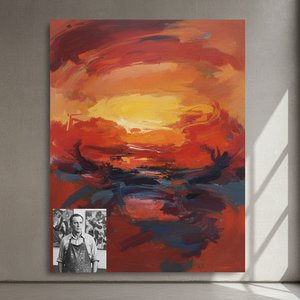
Jacob Kainen: A Pioneer of American Color Field Painting & Abstract Expressionism
Explore the life & work of Jacob Kainen, a pivotal figure in American Abstract Expressionism and Color Field painting. Discover his journey from Social Realism to vibrant abstraction and lasting influence on 20th-century art.

Carl Newman: Exploring Abstraction's Spiritual Resonance Through Color Field Painting
Explore the profound spiritual resonance of Color Field Painting with insights into Rothko, Newman & Still. Discover the techniques & legacy of this influential abstract art movement.

Gene Davis: Chromatic Explorations of Color Field Painting & the Washington Color School
Explore the vibrant world of Gene Davis and the Washington Color School. Discover his iconic stripe paintings, innovative techniques, and lasting impact on American abstract art. A deep dive for collectors & enthusiasts.
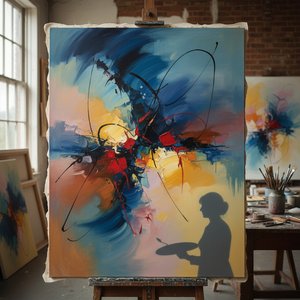
Beatrice Parsons: A Study in Abstract Expressionism & the Poetics of Color Field Painting
Explore the captivating world of Beatrice Parsons, a pioneering British abstract expressionist. Discover her journey from garden watercolors to evocative color field paintings and learn about her place within art history.



