

 Zobacz w skali 1:1
 Wyślij
 Udostępnij
 Szczegóły
 Przewodnik

 Pobierz plik obrazu
 Podobne obiekty
 RTG
RTG Pokaz slajdów
 Statystyki
Abstraktna Malba 805-4


 Czytaj więcej
Dzieło sztuki prezentowane na tej stronie podlega ochronie prawem autorskim, co oznacza, że nie mamy prawa do tworzenia ani sprzedaży jego identycznej reprodukcji. Ochrona ta jest egzekwowana na mocy umów międzynarodowych, takich jak Konwencja berneńska oraz przez przepisy prawa krajowego, w tym te określone w Prawo autorskie USA – Tytuł 17.
Metoda ta jest w pełni zgodna z przepisami prawa autorskiego, ponieważ nie polega na kopiowaniu ani powielaniu chronionego dzieła. Stanowi ona kreatywną reinterpretację – nowy obraz, który czerpie inspirację z oryginału, ale nie jest z nim tożsamy.
Giclée / Wydruk artystyczny
Wydruki giclée lub płótna o jakości muzealnej, szybka realizacja i szeroki wybór opcji wykończenia. ( Kup ręcznie malowany obraz Przełącz na wersję cyfrową)




P118B zł10

P118H zł10

P118W zł10

P438Z zł10

P508JH zł12

P508YH zł12

P805H zł10

P805Z zł10

P919BZ zł10

P919G zł10

P919XJ zł10

P959ZH zł10

P968JZ zł12

W106C zł8

W218G zł10

W218JH zł8

W218Y zł10

W307PJ zł10

W316G zł10

W316PJ zł8

W316Y zł10

W398PJ zł8

W4111J zł10

W500HY zł15

W500JH zł15

W692G zł12

W849H zł8

W940BG zł15

W953PJ zł8




Wybierz spośród naszych standardowych rozmiarów, które zachowują oryginalne proporcje dzieła sztuki.

Type the width and the height you need, to fit your frame or your wall. A print can only be cut, never made bigger than the picture, so a size with a different shape loses a part of the image. We send you a digital mockup to approve before we print anything. The picture shown on this page does not show the real cut — only the mockup does.
Dostawa na cały świat () w ciągu 2 tygodni zamiast standardowych 4/5 tygodni. (14 Październik)

Bezpłatna ekspresowa wysyłka na cały świat

Wysokiej jakości płótno lniane

Pełne ubezpieczenie transportowe

Gwarancja zwrotu należności celnych i podatków importowych

Gwarancja idealnego odwzorowania barw

100-dniowy okres na zwrot dzieła w przypadku wykrycia wad produkcyjnych

Gwarancja 100% zwrotu pieniędzy

Oferta przy zakupie wielu sztuk
 Opcja ze szkłem jest dostępna wyłącznie w rozmiarach poniżej 110 cm

Abstraktna Malba 805-4
Giclée / Wydruk artystyczny
Rozmiar reprodukcji
-


Suma do zapłaty
zł 301
Zachwycająca eksploracja koloru i tekstury
Zanurz się w tętniącym życiem świecie „Abstract Painting 805-4”, hipnotyzującego dzieła, które ucieleśnia samą istotę ekspresjonizmu abstrakcyjnego. Ta dynamiczna praca stanowi świadectwo potęgi koloru, tekstury i ruchu, zapraszając widzów do zatracenia się w jej urzekającej kompozycji.Wibrująca paleta i odważna kompozycja
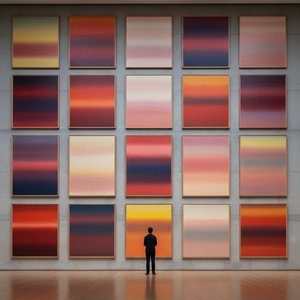
W malarstwie dominuje ciepła paleta czerwieni, pomarańczy i brązów, tworząca intensywną i pełną energii atmosferę. Subtelne akcenty błękitu, zieleni i bieli wprowadzają kontrast oraz wizualne zainteresowanie, potęgując ogólną witalność dzieła. Luźna, organiczna kompozycja pozbawiona jest wyraźnego punktu centralnego, co pozwala oku widza swobodnie błądzić po płótnie.Technika i tekstura
Mistrzostwo Gerharda Richtera w operowaniu teksturą jest w tym dziele aż nadto widoczne. Grube, odważne pociągnięcia pędzla oraz delikatne linie tworzą poczucie ruchu i głębi, podczas gdy warstwy farby dodają obrazowi wymiaru i złożoności. Zastosowanie niekonwencjonalnych narzędzi i technik skutkuje taktylną powierzchnią, która wydaje się niemal trójwymiarowa.Oddziaływanie emocjonalne i symbolika
„Abstract Painting 805-4” pozostawia pole do interpretacji, przywołując emocje takie jak pasja, energia i intensywność. Brak wyraźnego tematu pozwala odbiorcom rzutować własne znaczenia na dzieło, czyniąc kontakt z nim głęboko osobistym i angażującym przeżyciem.Kontekst historyczny i wpływ
Gerhard Richter to czołowa postać sztuki współczesnej, znana ze swojego innowacyjnego podejścia do malarstwa abstrakcyjnego i fotorealistycznego. Jego twórczość wywarła głęboki wpływ na świat sztuki, budując most między tradycyjnymi a nowoczesnymi praktykami artystycznymi. „Abstract Painting 805-4” stanowi doskonały przykład zdolności Richtera do przesuwania granic i eksplorowania nowych możliwości w kręgu ekspresjonizmu abstrakcyjnego.Dlaczego warto wybrać to dzieło?
Niezależnie od tego, czy jesteś miłośnikiem sztuki, kolekcjonerem, czy projektantem wnętrz, „Abstract Painting 805-4” jest oszałamiającym dodatkiem do każdej przestrzeni. Jego odważne kolory i dynamiczna kompozycja sprawiają, że staje się on centralnym punktem każdego pomieszczenia, podczas gdy emocjonalna głębia i znaczenie historyczne dodają wartości Twojej kolekcji.Wprowadź to arcydzieło do swojej przestrzeni
Doświadcz potęgi ekspresjonizmu abstrakcyjnego dzięki wysokiej jakości reprodukcji „Abstract Painting 805-4”. Podnieś poziom swojego wystroju wnętrz dzięki temu urzekającemu dziełu i pozwól mu inspirować oraz odmieniać Twoje otoczenie.Pytania i odpowiedzi
Dla kogo „Abstraktna Malba 805-4” autorstwa Gerhard Richter będzie dobrym prezentem?
„Abstraktna Malba 805-4” autorstwa Gerhard Richter jest polecane jako prezent dla Rocznica, szczególnie na Manifestacja artystyczna. Reprodukcję dzieła można podarować jako upominek.
Gdzie i w jakim celu zaleca się użycie "Abstraktna Malba 805-4"?
„Abstraktna Malba 805-4” jest polecane do Manifestacja artystyczna, a rekomendowanym pomieszczeniem jest Salon lub strefa dzienna.
Jakie umiejscowienie najlepiej pasuje do formatu dzieła „Abstraktna Malba 805-4” autorstwa Gerhard Richter?
Format (Format kwadratowy) oraz rekomendowana przestrzeń (Salon lub strefa dzienna) to dwa parametry dotyczące rozmieszczenia dzieła „Abstraktna Malba 805-4” autorstwa Gerhard Richter.
Biografia artysty
A Life Shaped by Division: The Early Years and Artistic Formation of Gerhard Richter
Gerhard Richter’s story is inextricably linked to the fractured history of 20th-century Germany. Born in Dresden in 1932, his childhood unfolded under the shadow of a rising National Socialist regime. This formative period, marked by displacement – his family moved several times during the war years – instilled within him a profound sense of uncertainty and a questioning spirit that would permeate his artistic practice for decades to come. The idyllic landscapes of his early upbringing in Reichenau and Waltersdorf were soon disrupted by conflict, leaving an indelible mark on his psyche. His father, though not a fervent supporter of the Nazi party, navigated the complexities of life under authoritarian rule as a schoolteacher, while his mother fostered a love for literature and music within the family. This duality – a pragmatic acceptance of circumstance alongside a yearning for cultural expression – became a defining characteristic of Richter’s own artistic approach. He began formal training at the Dresden Academy of Fine Arts in 1951, initially immersed in the tradition of socialist realism demanded by the East German state. However, even within this constrained environment, a desire for artistic freedom simmered beneath the surface, fueled by a growing dissatisfaction with ideological constraints and a longing to explore more expansive creative possibilities.Escaping Constraints: Düsseldorf and the Exploration of Style
The year 1961 proved pivotal. Richter, along with his wife Marianne Eufinger, made the daring decision to flee East Germany, seeking refuge in the burgeoning art scene of Düsseldorf. This move marked a radical shift in his artistic trajectory. The West German landscape offered a liberating environment where experimentation and innovation were not only permitted but actively encouraged. In Düsseldorf, he encountered a vibrant community of artists grappling with questions of identity, representation, and the legacy of history. He quickly began to dismantle the rigid stylistic conventions of socialist realism, embarking on a period of intense exploration that would define his early mature work. This era saw him oscillate between seemingly disparate approaches – from photorealism, meticulously recreating photographic images with astonishing precision, to abstract compositions characterized by bold colors and dynamic brushstrokes. His collaboration with Sigmar Polke led to the coining of the term ‘Capitalist Realism,’ a deliberately ambiguous label that reflected their shared skepticism towards established artistic norms and their appropriation of imagery from advertising and mass media. This period wasn’t about finding *a* style, but rather questioning the very notion of stylistic coherence, embracing contradiction as a fundamental principle.Blurring Boundaries: Photorealism, Abstraction, and the Power of Chance
Richter's photorealistic paintings, often based on family photographs or newspaper images, are not merely copies of reality but rather investigations into the nature of perception and representation. By meticulously rendering these images with an almost clinical detachment, he forces viewers to confront the inherent ambiguity of photographic truth. Simultaneously, Richter delved deeper into abstraction, creating canvases layered with vibrant colors and gestural marks. These abstract works are often created using a unique technique involving squeegees – tools typically used for cleaning windows – which he drags across the surface of the canvas, manipulating the paint in unpredictable ways. This embrace of chance and spontaneity is central to his artistic philosophy, allowing him to relinquish control and invite unexpected outcomes. His ‘Color Charts,’ systematic arrangements of colored squares, further challenge traditional notions of artistic expression, questioning the very definition of painting itself. These works are not about individual aesthetic preferences but rather about exploring the inherent properties of color and its organizational possibilities. The influence of artists like Jackson Pollock and Lucio Fontana during his time in Düsseldorf profoundly shaped Richter’s approach to abstraction, pushing him beyond representational concerns and towards a more process-oriented mode of creation.The Weight of History: From Socialist Realism to Capitalist Realism
Richter's artistic development was inextricably linked to the political and social upheavals of post-war Germany. His early training in socialist realism, while providing him with technical skills, ultimately left him disillusioned by its ideological constraints. The experience of living under a repressive regime fostered a deep sense of skepticism and a critical awareness of the power of propaganda. This disillusionment manifested itself in his adoption of ‘Capitalist Realism’ – a term he coined with Sigmar Polke – which sought to expose the artificiality of mass media and consumer culture. Richter's paintings during this period often depicted seemingly banal subjects – landscapes, still lifes, portraits – but rendered with an unsettling detachment that undermined their conventional meaning. He wasn’t interested in simply replicating reality; he was interested in questioning its representation and exposing the underlying mechanisms of power. The trauma of his childhood, marked by displacement and loss, continued to inform his work, creating a sense of unease and ambiguity that permeated his paintings.Legacy and Influence: A Master of Contemporary Art
Gerhard Richter’s impact on contemporary art is undeniable. His willingness to challenge conventions, his relentless experimentation with technique, and his profound engagement with historical and political themes have established him as one of the most important artists of our time. He has consistently resisted easy categorization, defying attempts to pigeonhole his work into a single stylistic framework. This refusal to be defined, coupled with his technical virtuosity and intellectual rigor, has earned him widespread critical acclaim and commercial success – his paintings regularly fetch record prices at auction. Beyond the market value, however, lies a deeper significance. Richter’s art speaks to the complexities of modern existence, grappling with issues of memory, identity, and the search for meaning in a fragmented world. He doesn't offer answers but rather poses questions, prompting viewers to confront their own preconceptions and engage in critical dialogue. His influence can be seen in the work of countless artists who have followed in his footsteps, drawn to his innovative techniques and his unwavering commitment to artistic exploration. Richter’s legacy is not simply about creating beautiful objects; it's about expanding the possibilities of painting itself. He remains a vital force in contemporary art, continuing to inspire and provoke audiences with his challenging and deeply resonant work.
Gerhard Richter
1932 - , Niemcy
Najważniejsze informacje
- Artistic Movement Or Style:
- Fotorealizm
- Abstrakcja
- Realizm kapitalistyczny
- Artists Or Movements Influenced By This Artist: ['Nowoczesni artyści']
- Artists Who Influenced This Artist:
- Pablo Picasso
- Sigmar Polke
- Date Of Birth: 9 lutego 1932
- Full Name: Gerhard Richter
- Nationality: Niemiec
- Notable Artworks:
- Obrazy nazwanych od daty powstania
- Gilbert
- S. z dzieckiem
- Krajobraz
- Place Of Birth: Drezno, Niemcy
Zobacz także powiązane artykuły

Top 10 arcydzieł ekspresjonizmu abstrakcyjnego – inspiracje dla Twojego wnętrza | OriginalUniqueArt.com
Odkryj 10 arcydzieł ekspresjonizmu abstrakcyjnego – Pollock, Rothko, de Kooning i inni. Poznaj historie artystów, techniki i inspiracje dla Twojego wnętrza. Reprodukcje najwyższej jakości na OriginalUniqueArt.com!

Geometria Sztuki: 10 Arcydzieł Abstrakcji Geometrycznej | OriginalUniqueArt.com
Odkryj 10 arcydzieł abstrakcji geometrycznej! Poznaj historię Mondriana, Kandinskiego i Maleвича. Inspiracje wnętrzarskie z malarstwem abstrakcyjnym – reprodukcje najwyższej jakości na OriginalUniqueArt.com. Eksploruj kolekcję online!

Gerhard Richter: A Retrospective on Abstraction, Memory & the Photographic Source
Explore the profound world of Gerhard Richter's abstract paintings. Discover his techniques, influences, and lasting impact on contemporary art – a guide for discerning collectors.
Mark Rothko: 25 Arcydzieł Koloru i Emocji | Reprodukcje Obrazów | OriginalUniqueArt.com
Odkryj 25 arcydzieł Marka Rothko – mistrza abstrakcji i koloru. Poznaj historie, techniki i emocje kryjące się za jego płótnami. Reprodukcje obrazów najwyższej jakości na OriginalUniqueArt.com. Eksploruj kolekcję online!

25 Arcydzieł Kandinskiego: Kolor, Duchowość i Abstrakcja w Twoim Domu | OriginalUniqueArt.com
Odkryj 25 arcydzieł Wassily Kandinskiego – pioniera abstrakcji i ekspresjonizmu! Poznaj historie, techniki i emocje kryjące się za jego kolorowymi kompozycjami. Reprodukcje obrazów najwyższej jakości na OriginalUniqueArt.com. Eksploruj pełną kolekcję online!


