

 Zobacz w skali 1:1
 Wyślij
 Udostępnij
 Szczegóły
 Przewodnik

 Pobierz plik obrazu
 Podobne obiekty
 RTG
RTG Pokaz slajdów
 Statystyki
Susanna and the Elders


 Czytaj więcej
Giclée / Wydruk artystyczny
Wydruki giclée lub płótna o jakości muzealnej, szybka realizacja i szeroki wybór opcji wykończenia. ( Kup ręcznie malowany obraz Przełącz na wersję cyfrową)




P118B zł10

P118H zł10

P118W zł10

P438Z zł10

P508JH zł12

P508YH zł12

P805H zł10

P805Z zł10

P919BZ zł10

P919G zł10

P919XJ zł10

P959ZH zł10

P968JZ zł12

W106C zł8

W218G zł10

W218JH zł8

W218Y zł10

W307PJ zł10

W316G zł10

W316PJ zł8

W316Y zł10

W398PJ zł8

W4111J zł10

W500HY zł15

W500JH zł15

W692G zł12

W849H zł8

W940BG zł15

W953PJ zł8




Wybierz spośród naszych standardowych rozmiarów, które zachowują oryginalne proporcje dzieła sztuki.

Wpisz wymaganą szerokość i wysokość, aby dopasować grafikę do ramy lub ściany. Wydruk można jedynie przyciąć, nigdy nie powiększając go poza oryginalny obraz, dlatego format o innym proporcji spowoduje utratę części kompozycji. Przed rozpoczęciem druku prześlemy Ci cyfrowy podgląd do zatwierdzenia. Obraz wyświetlany na tej stronie nie pokazuje rzeczywistego przycięcia — jedynie podgląd oddaje ten efekt.
Dostawa na cały świat () w ciągu 2 tygodni zamiast standardowych 4/5 tygodni. (24 Październik)

Bezpłatna ekspresowa wysyłka na cały świat

Wysokiej jakości płótno lniane

Pełne ubezpieczenie transportowe

Gwarancja zwrotu należności celnych i podatków importowych

Gwarancja idealnego odwzorowania barw

100-dniowy okres na zwrot dzieła w przypadku wykrycia wad produkcyjnych

Gwarancja 100% zwrotu pieniędzy

Oferta przy zakupie wielu sztuk
 Opcja ze szkłem jest dostępna wyłącznie w rozmiarach poniżej 110 cm

Susanna and the Elders
Giclée / Wydruk artystyczny
Rozmiar reprodukcji
-


Suma do zapłaty
zł 307
A Symphony of Darkness and Light
In the grand theater of the Baroque era, few masters could command the shadows as commandingly as Gerard van Honthorst. His masterpiece, Susanna and the Elders, completed in 1655, serves as a breathtaking testament to the power of chiaroscuro—the dramatic interplay between profound darkness and piercing light. This work is not merely a painting; it is an immersive psychological experience that captures a moment of harrowing vulnerability. As one gazes upon the canvas, the viewer is immediately thrust into a scene of intense tension, where the soft glow of light struggles against an encroaching, heavy gloom, mirroring the moral struggle depicted within the frame.
The narrative, drawn from the biblical Book of Daniel, finds Susanna caught in a predatory moment. Honthorst utilizes his signature technique, often referred to as tenebrism, to focus our attention on the central figures. The composition is masterfully orchestrated with diagonal lines that guide the eye through the chaos of the encounter. We see Susanna, her form illuminated against the darkness, her expression a poignant mask of terror and silent plea. Surrounding her, the two elders, draped in opulent, heavy crimson robes, loom like shadows of moral decay. The contrast between her pale, vulnerable skin and the rich, dark textures of the men's attire creates a visual friction that is both unsettling and deeply captivating.
The Legacy of the Caravaggisti
To understand the soul of this painting, one must look back to the streets of Rome, where a young Honthorst encountered the revolutionary spirit of Caravaggio. This encounter earned him the evocative moniker Gherardo delle Nott—Gerard of the Nights—a title that perfectly encapsulates his ability to breathe life into nocturnal scenes. While he inherited Caravaggio's penchant for dramatic realism and stark lighting, Honthorst brought a refined Dutch sensibility to the composition. He balanced the raw, visceral impact of the Italian style with a meticulous attention to texture and compositional harmony, making the scene feel less like a sudden snapshot and more like a carefully staged, theatrical tragedy.
The technical prowess on display in this work is nothing short of extraordinary. The artist employs visible yet controlled brushstrokes to render the heavy weight of the velvet drapery, the subtle musculature of the figures, and the atmospheric quality of the dim background. This mastery of oil on canvas allows for a rich, warm palette dominated by deep ochres, burnt umbers, and striking reds. For the discerning collector or interior designer, such a piece offers more than just aesthetic beauty; it provides a focal point of profound historical weight and artistic sophistication that can anchor a room with its commanding presence.
Symbolism and Emotional Resonance
Beyond the technical brilliance lies a deep well of symbolism. The painting explores the timeless themes of desire, the violation of innocence, and the heavy burden of moral transgression. The light in the painting does not merely illuminate; it acts as a witness to the unfolding drama, exposing the predatory intent of the elders while highlighting the sanctity of Susanna's plight. The use of exotic elements, such as the turbans worn by the men, adds a layer of theatricality and "otherness," heightening the sense of an intrusion into a private, sacred space.
For those seeking to bring a piece of the Dutch Golden Age into a contemporary setting, Susanna and the Elders offers an unparalleled emotional depth. It is a work that invites contemplation, sparking conversations about justice, vulnerability, and the human condition. Whether displayed in a curated gallery or as a centerpiece in a luxurious study, this reproduction serves as a window into a period of unparalleled artistic innovation, offering a timeless elegance that transcends the centuries.
Pytania i odpowiedzi
Czy „Susanna and the Elders” autorstwa Gerard van Honthorst to obraz, rysunek czy grafika?
„Susanna and the Elders” autorstwa Gerard van Honthorst jest klasyfikowane jako WallArt. Kategoria ta określa rodzaj dzieła, jakim jest oryginał.
Gdzie mogę zobaczyć podgląd dzieła "Susanna and the Elders"?
Podgląd dzieła „Susanna and the Elders” autorstwa Gerard van Honthorst jest dostępny na stronie Podgląd danego utworu.
Czy „Susanna and the Elders” autorstwa Gerard van Honthorst to portret, pejzaż czy kompozycja kwadratowa?
Dzieło „Susanna and the Elders” autorstwa Gerard van Honthorst ma format Landscape. Format ten określa proporcje kompozycji.
Biografia artysty
A Master of Light and Shadow: The Life and Art of Gerard van Honthorst
Gerard van Honthorst emerged from Utrecht in 1592, a pivotal figure poised to illuminate the Dutch Golden Age with his dramatic artistry. Initially guided by his father, a decorative painter, young Gerard’s talent blossomed under the tutelage of Abraham Bloemaert, establishing a solid foundation in draftsmanship and composition. However, it was a transformative journey to Rome that irrevocably altered the course of his artistic development. There, amidst the fervent energy of the Italian Baroque, he encountered the groundbreaking work of Caravaggio – an encounter that would define his signature style and earn him the evocative nickname “Gherardo delle Notti,” or Gerard of the Nights. The dramatic use of *tenebrism*, a technique employing stark contrasts between light and dark, became Honthorst’s hallmark, imbuing his canvases with a palpable sense of drama and emotional intensity. He wasn't merely imitating Caravaggio; he was translating the Italian master’s innovations into a distinctly Dutch sensibility, focusing on intimate scenes illuminated by artificial light sources – candles, lamps, and fires – creating an atmosphere both realistic and deeply theatrical. This mastery over light wasn’t simply technical skill; it was a means of revealing character, of drawing the viewer into the emotional core of each scene. Honthorst's early works in Rome showcased this talent brilliantly, establishing him as a rising star within the Italian art world.From Roman Acclaim to Dutch Mastery
Honthorst’s time in Rome was marked by considerable success and patronage. He found favor amongst the city’s elite, including Vincenzo Giustiniani, for whom he created the powerful “Christ Before the High Priest,” a work that exemplifies his masterful command of light and shadow. This painting, now residing in London’s National Gallery, showcases not only his technical skill but also his ability to convey profound psychological depth within his figures. The scene depicts Christ calmly awaiting judgment before the High Priest Caiaphas, bathed in a dramatic spotlight while the surrounding figures are shrouded in darkness – a masterful use of *tenebrism* that heightens the drama and emphasizes Christ’s serenity amidst impending doom. He further solidified his reputation by working for Cosimo II de' Medici, Grand Duke of Tuscany, demonstrating an adaptability and versatility that would serve him well throughout his career. Honthorst’s ability to capture not just physical likeness but also the character and social standing of his sitters made him highly sought after by wealthy merchants, nobles, and even royalty. This period saw a flourishing of commissions, allowing Honthorst to refine his style and establish a distinctive voice within Dutch painting. His portraits were particularly admired for their realism and psychological insight, capturing the nuances of personality with remarkable skill.The Utrecht Caravaggisti: A Distinctly Dutch Interpretation
Upon returning to Utrecht around 1620, Honthorst quickly established himself as a leading portrait painter in the Dutch Republic. He was a key figure in the *Utrecht Caravaggisti* movement – a group of Dutch painters who embraced Caravaggio’s dramatic realism and *tenebrism*. Alongside artists like Hendrick ter Brugghen and Dirck van Baburen, he helped to establish a distinctly Dutch interpretation of Italian Baroque style. The Utrecht Caravaggisti didn't simply copy Caravaggio; they adapted his techniques to the Dutch context, often incorporating elements of genre scenes and everyday life into their works. Honthorst’s emphasis on genre scenes illuminated by artificial light – candlelight, lamps, or fireplaces – became a hallmark of his style. These scenes weren’t merely decorative; they were imbued with emotional intensity and psychological depth, reflecting the complexities of human experience. His willingness to experiment with unusual lighting effects and dramatic compositions set him apart from other artists of his time.Courtly Artist: Commissions and Collaborations
The reach of Honthorst’s talent extended beyond the Netherlands. His work attracted the attention of Sir Dudley Carleton, who enthusiastically recommended him to prominent English aristocrats like the Earl of Arundel and Lord Dorchester. This led to commissions from Queen Elizabeth of Bohemia, sister of Charles I, who employed him as both a painter and drawing master for her children. These royal connections culminated in significant works such as the allegorical depiction of Charles and Henrietta Maria as Diana and Apollo, now housed at Hampton Court Palace – a grand composition that showcases Honthorst’s mastery of perspective and his ability to create visually stunning scenes. Honthorst’s willingness to collaborate with other artists also speaks to his open-mindedness and artistic generosity. He famously hosted Peter Paul Rubens during a visit to Utrecht, even painting him in a playful scene depicting Diogenes searching for an honest man – a testament to the mutual respect between these two Baroque giants. These collaborations weren't simply about sharing workload; they were intellectual exchanges that enriched the artistic landscape.Legacy and the Enduring Power of Light
Gerard van Honthorst’s influence resonated far beyond his lifetime. He was a key figure in the *Utrecht Caravaggisti* movement – a group of Dutch painters who embraced Caravaggio’s dramatic realism and *tenebrism*. His emphasis on genre scenes illuminated by artificial light, his masterful portraits, and his ability to convey emotional depth through skillful use of chiaroscuro left an indelible mark on the development of Dutch Golden Age painting. Even his brother, Willem van Honthorst, followed in his footsteps, though often with works initially misattributed to Gerard due to stylistic similarities. Van Honthorst died in Utrecht in 1656, leaving behind a body of work that continues to captivate audiences today and remind us of the enduring power of light and shadow to reveal the human condition. His paintings are celebrated for their dramatic beauty, psychological insight, and masterful use of *tenebrism*, solidifying his place as a pivotal figure in art history.
Gerard van Honthorst
1590 - 1656 , Holandia
Najważniejsze informacje
- Artistic Movement Or Style: Barok, Caravaggismo
- Artists Or Movements Influenced By This Artist: ['Utrecht Caravaggisti']
- Artists Who Influenced This Artist: ['Caravaggio']
- Date Of Birth: 1590
- Date Of Death: 1656
- Full Name: Gerard van Honthorst
- Nationality: Holender
- Notable Artworks:
- Chrystus przed Kajfaszem
- Sąd Midasa
- Place Of Birth: Utrecht, Holandia
Zobacz także powiązane artykuły
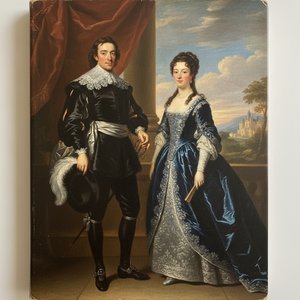
Sir Anthony van Dyck: Courtly Portraiture & the Shaping of Baroque Identity
Explore the life & legacy of Sir Anthony van Dyck, the leading court painter of his era. Discover his innovative portraiture, Baroque masterpieces, and investment potential for discerning collectors. Learn more at OriginalUniqueArt.
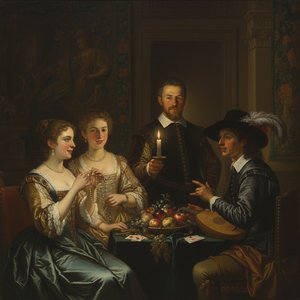
Gerard van Honthorst: Illuminating the Dutch Golden Age with Caravaggism & Courtly Grace
Explore the captivating world of Gerard van Honthorst, a Dutch Golden Age master renowned for his dramatic chiaroscuro & courtly portraits. Discover his life, art, and lasting influence on Baroque painting.

Holenderski Barok: 10 Arcydzieł, Które Zdefiniowały Epokę | OriginalUniqueArt
Poznaj 10 arcydzieł holenderskiego baroku! Odkryj historie Rembrandta, Vermeera i innych mistrzów XVII wieku. Reprodukcje obrazów najwyższej jakości – idealne do Twojego wnętrza. OriginalUniqueArt.com

Rembrandt van Rijn: 25 Najwybitniejszych Dzieł Sztuki – Reprodukcje i Inspiracje do Wnętrz
Poznaj 25 arcydzieł Rembrandta van Rijn! Odkryj fascynujące historie, techniki i wpływ holenderskiego mistrza baroku na świat sztuki. Reprodukcje obrazów najwyższej jakości – inspiracje do wnętrz na OriginalUniqueArt.com
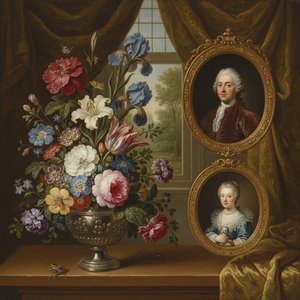
Jan van Kessel the Elder: A Baroque Master of Floral Still Life & Miniature Portraiture
Discover the exquisite detail of Jan van Kessel the Elder's Baroque floral still lifes & captivating miniatures. Explore his artistic legacy, scientific precision, and lasting influence on 17th-century Flemish painting.

