Pop Art
Paper plates (Gerald Laing)
Gerald Laing (1936–2011) stworzył Paper plates. Należy do nurtu Pop Art.

 Podgląd w skali 1:1

 Ręcznie malowany obraz olejny
 Wyślij jako kartkę
 Udostępnij
 Karta informacyjna


 Pobierz obraz
 Podobne obiekty
 RTG
 Pokaz slajdów
 Pytania i odpowiedzi

 Statystyki
Paper plates w skrócie
- Tytuł
- Paper plates
- Artysta
- Gerald Laing (1936–2011)
- Miejsce urodzenia artysty
- Newcastle upon Tyne, United Kingdom
- Ruch
- Pop Art
Zdjęcia w wysokiej rozdzielczości dzieła Paper plates
Protected by copyright: these files are for personal reference, not a licence to republish.
Gerald Laing, Paper plates.
Odpowiedzi na pytania dotyczące Paper plates
Czy „Paper plates” – Gerald Laing znajduje się w domenie publicznej?
Status praw autorskich dla „Paper plates” – Gerald Laing: dzieło znajduje się w nadal objęte ochroną prawa autorskiego. Określa to, czy reprodukcje obrazu mogą być sporządzane swobodnie.
Kto jest autorem dzieła "Paper plates"?
Autorstwo dzieła "Paper plates" przypisuje się Gerald Laing.
Do jakiego nurtu artystycznego należy „Paper plates” – Gerald Laing?
„Paper plates” – Gerald Laing należy do nurtu Pop Art. Nurt ten stanowi stylistyczny kontekst dzieła.
Czy dzieło „Paper plates” autorstwa Gerald Laing znajduje się w domenie publicznej i dlaczego?
„Paper plates” – Gerald Laing jest nadal objęte ochroną prawa autorskiego. Okres ochrony praw autorskich liczony jest od śmierci artysty, która nastąpiła w 2011.
O artyście: Gerald Laing
1936–2011, United Kingdom
Gerald Laing
Gerald Ogilvie-Laing (1936–2011): Pioneer of British Surrealism Gerald Laing, born February 11th, 1936, remains a singular figure in the landscape of British art history. Though initially trained at the Royal Military Academy Sandhurst and Saint Martin’s School of Art, Laing swiftly rejected academic conventions, forging his own path toward a distinctive artistic style characterized by unsettling juxtapositions and vibrant color palettes—a hallmark of what would become known as Surrealist Pop Art. Early Influences: Laing's formative years were marked by exposure to Dadaism and Surrealism, particularly the work of René Magritte and Max Ernst. These artists instilled in him a fascination with dreamlike imagery and challenging perceptions of reality.
Inne prace Gerald Laing
 Gold spin (pile)
 Francine
 Thus far and no further
 Starlet (2)
Eseje o Paper plates
 From Soup Cans to Street Art: How Pop Icons Turned Commerce into Cultural GoldExplore how Warhol and Lichtenstein turned mass culture into high art. Dive into the bold evolution of Pop Art now.
 Pop Art: Wyzwolenie z Konwencji i Trwałe Dziedzictwo Sztuki MasowejOdkryj fascynujący świat Pop Artu! Analiza dzieł Warhola i Lichtensteina, historia ruchu, techniki artystyczne oraz poradnik dla kolekcjone…
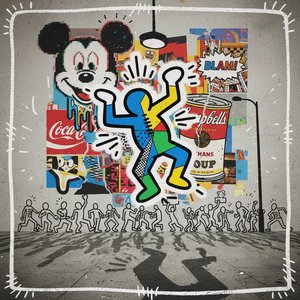 Keith Haring: Subverting Pop Culture – An Examination of Social Commentary & Artistic InnovationExplore the revolutionary art of Keith Haring – a powerful blend of pop aesthetics & social activism. Discover his iconic works, influences…