
 Podgląd w skali 1:1
 Wyślij jako kartkę
 Udostępnij
 Szczegóły dzieła
 Przewodnik

 Pobierz obraz
 Podobne obiekty
 RTG
RTG Pokaz slajdów
 Pytania i odpowiedzi
 Statystyki
Misti Again - A Memory


 Rozwiń treść
Dzieło sztuki prezentowane na tej stronie podlega ochronie prawem autorskim, co oznacza, że nie mamy prawa do tworzenia ani sprzedaży jego identycznej reprodukcji. Ochrona ta jest egzekwowana na mocy umów międzynarodowych, takich jak Konwencja berneńska oraz przez przepisy prawa krajowego, w tym te określone w Prawo autorskie USA – Tytuł 17.
Metoda ta jest w pełni zgodna z przepisami prawa autorskiego, ponieważ nie polega na kopiowaniu ani powielaniu chronionego dzieła. Stanowi ona kreatywną reinterpretację – nowy obraz, który czerpie inspirację z oryginału, ale nie jest z nim tożsamy.
Giclée / Wydruk artystyczny
Wydruki giclée lub płótna o jakości muzealnej, szybka realizacja i szeroki wybór opcji wykończenia. ( Zamów ręcznie malowaną reprodukcję Przejdź do wersji cyfrowej)




P118B zł10

P118H zł10

P118W zł10

P438Z zł10

P508JH zł12

P508YH zł12

P805H zł10

P805Z zł10

P919BZ zł10

P919G zł10

P919XJ zł10

P959ZH zł10

P968JZ zł12

W106C zł8

W218G zł10

W218JH zł8

W218Y zł10

W307PJ zł10

W316G zł10

W316PJ zł8

W316Y zł10

W398PJ zł8

W4111J zł10

W500HY zł15

W500JH zł15

W692G zł12

W849H zł8

W940BG zł15

W953PJ zł8




Wybierz spośród naszych standardowych rozmiarów, które zachowują oryginalne proporcje dzieła sztuki.

Wpisz wymaganą szerokość i wysokość, aby dopasować grafikę do ramy lub ściany. Wydruk można jedynie przyciąć, nigdy nie powiększając go poza oryginalny obraz, dlatego format o innych proporcjach spowoduje utratę części kompozycji. Przed rozpoczęciem druku prześlemy Ci cyfrowy podgląd do zatwierdzenia. Obraz wyświetlany na tej stronie nie pokazuje rzeczywistego przycięcia — jedynie podgląd oddaje ten efekt.
Dostawa na cały świat () w ciągu 2 tygodni zamiast standardowych 4/5 tygodni. (6 Listopad)

Bezpłatna ekspresowa wysyłka na cały świat

Wysokiej jakości płótno lniane

Pełne ubezpieczenie przesyłki

Gwarancja zwrotu należności celnych i podatków importowych

Gwarancja wiernego odwzorowania kolorów

100-dniowa polityka zwrotów (tylko w przypadku wad)

Gwarancja 100% zwrotu pieniędzy

Zniżka przy zakupie wielu sztuk
 Opcja ze szkłem jest dostępna wyłącznie w rozmiarach poniżej 110 cm

Misti Again - A Memory
Giclée / Wydruk artystyczny
Wymiary reprodukcji
-


Cena całkowita
zł 317
Misti Again – A Memory: An Exploration of Landscape and Emotion
The painting “Misti Again – A Memory,” created in 1957 by Georgia O’Keeffe, stands as a quintessential embodiment of the artist's signature style—a masterful blend of abstraction and observation that captures not just visual beauty but also profound emotional resonance. This monumental canvas depicts a solitary mountain range bathed in hazy pastel hues beneath an expansive sky dominated by delicate clouds, offering viewers a glimpse into O’Keeffe’s deeply personal vision of the American Southwest.Composition and Technique: Simplifying Nature's Complexity
O’Keeffe’s approach to portraying the landscape was revolutionary for its time. Rather than striving for photographic realism—a trend prevalent in many artistic circles—she deliberately reduced the mountain range to simplified geometric forms, emphasizing essential contours and tonal variations. The artist utilized a technique known as alla prima, applying paint directly onto the canvas without any underpainting or blending, resulting in textured surfaces that convey palpable energy and immediacy. This bold decision allowed her to distill the grandeur of nature into its purest essence, prioritizing feeling over meticulous detail. Careful consideration was given to color palettes—primarily muted pinks, blues, and greys—creating a harmonious visual experience that reflects the subtle shifts of light and atmosphere characteristic of desert landscapes.Historical Context: Modernism's Embrace of Subjectivity
“Misti Again – A Memory” emerged during O’Keeffe’s prolific period in New Mexico, where she established her studio and cultivated an enduring fascination with the region’s geological formations and flora. This era coincided with the ascendance of modernist art movements—such as Abstract Expressionism—which championed spontaneity and emotional expression as antidotes to the formalism of earlier artistic traditions. Influenced by artists like Willem de Kooning and Jackson Pollock, O’Keeffe deliberately rejected representational conventions, opting instead for a visual language that prioritized inner experience. The painting reflects the broader intellectual currents of its time, signaling a shift away from objective observation toward subjective interpretation—a pivotal moment in art history.Symbolism: Mountains as Vessels of Memory and Resilience
Mountains have long held symbolic significance across cultures, representing stability, permanence, and spiritual aspiration. In O’Keeffe's oeuvre, they frequently serve as metaphors for inner strength and resilience—themes that resonate powerfully within “Misti Again – A Memory.” The pale pink hue of the mountain base evokes a sense of tranquility and contemplation, while the towering peaks symbolize unwavering determination against adversity. Furthermore, the pervasive cloud cover symbolizes the passage of time and the ephemeral nature of experience, reminding viewers to appreciate the beauty of each moment. O’Keeffe's masterful use of color and form contributes to this layered symbolism, inviting viewers to contemplate profound questions about existence and perception.Emotional Impact: Capturing a Momentary Sublime
Ultimately, “Misti Again – A Memory” succeeds in conveying an overwhelming sense of awe—a feeling known as the sublime—that arises from confronting the immensity and grandeur of nature. The painting’s muted colors and textured surfaces evoke a contemplative mood, encouraging viewers to immerse themselves in the scene's serene beauty. It is precisely this ability to elicit emotion that distinguishes O’Keeffe’s work from more purely decorative styles, establishing it as an enduring testament to the transformative power of art. Viewing this piece inspires reflection on our relationship with the natural world and the importance of preserving its majesty for future generations.Pytania i odpowiedzi
Co przedstawia "Misti Again - A Memory" i jaką ma atmosferę?
"Misti Again - A Memory" przedstawia landscape, mountains, clouds, pink hue, color palette, abstraction, american art, a jego nastrojowy charakter można określić jako Serene.
Jakie emocje wywołują kolory w „Misti Again - A Memory” – Georgia O'Keeffe?
Paleta Monochrome dzieła „Misti Again - A Memory” – Georgia O'Keeffe współgra z jego Tranquil wydźwiękiem emocjonalnym. Kolor jest jednym ze sposobów, w jakie praca przekazuje emocje.
Czy "Misti Again - A Memory" charakteryzuje się silnym kontrastem światłocienia?
„Misti Again - A Memory” – Georgia O'Keeffe prezentuje Serene kontrast między jasnymi a ciemnymi partiami dzieła.
Biografia artysty
Early Life and Artistic Foundations
Georgia Totto O’Keeffe, a name synonymous with American modernism, emerged from the unassuming landscape of Sun Prairie, Wisconsin, in 1887. Born into a family of Irish and Hungarian descent engaged in dairy farming, young Georgia displayed an artistic inclination early on, deciding by age ten that she would dedicate her life to art. This determination was nurtured through lessons with local watercolorist Sara Mann, followed by formal studies at the School of the Art Institute of Chicago from 1905 to 1906 and later at the University of Virginia. However, it was her encounter with Arthur Wesley Dow’s principles – emphasizing personal expression and a harmonious balance of color and line – that truly ignited her artistic path. Dow's teachings steered O’Keeffe away from strict realism toward a more subjective and emotionally resonant approach to art, an approach that would define her career. These formative years weren’t without their challenges; periods of illness and dissatisfaction led her to temporarily abandon painting, but the creative impulse always drew her back, evolving with each new experience and influence.New York and the Stieglitz Circle
A pivotal moment arrived in 1916 when O’Keeffe’s abstract charcoal drawings were discovered by Alfred Stieglitz, a renowned photographer and art dealer. He exhibited her work without her prior knowledge, sparking a dialogue that would profoundly shape both their lives and the course of American art. Stieglitz recognized an exceptional talent in O'Keeffe, one that resonated with his own modernist sensibilities. He invited her to New York City in 1918, providing not only professional support but also fostering a deep personal connection. Their relationship blossomed into marriage in 1924, creating a dynamic artistic partnership and intellectual exchange. Stieglitz championed O’Keeffe’s work, showcasing it at his gallery “291” and promoting her as a leading figure in the American avant-garde. During this period, she began to develop her signature style – bold, simplified forms and intensely saturated colors – initially expressed through depictions of New York skyscrapers and, most famously, magnified flower paintings. These floral works, often interpreted (though consistently denied by O’Keeffe herself) as veiled representations of female anatomy, challenged conventional notions of beauty and sexuality in art.The Allure of the Southwest
While New York provided a crucial platform for her early success, it was the landscapes of the American Southwest that truly captured O’Keeffe’s imagination and profoundly influenced her artistic vision. Her first visit to New Mexico in 1929 marked the beginning of a lifelong love affair with the region's stark beauty, vibrant colors, and unique cultural heritage. The vastness of the desert, the dramatic rock formations, and the ancient Pueblo architecture resonated deeply within her, inspiring a new series of paintings that reflected the spirit of the land. Works like *Cow’s Skull: Red, White, and Blue* (1931) and *Summer Days* (1936) are powerful testaments to this influence, transforming seemingly mundane objects into iconic symbols of the American West. She eventually settled permanently in New Mexico in 1949 following Stieglitz’s death, establishing a home and studio in Abiquiu that became integral to her artistic process and identity.Technique and Style
O'Keeffe’s distinctive style evolved over decades, yet certain elements remained constant throughout her career. She favored bold, simplified forms and intense colors—often employing complementary hues to create striking visual effects. Her use of scale was particularly notable, with many of her paintings featuring oversized flowers or landscapes that dwarfed the viewer, creating a sense of awe and immersion. She often worked directly on large canvases, applying paint in thick layers using a palette knife, resulting in a textured surface that added depth and physicality to her images. While initially influenced by Arthur Wesley Dow’s emphasis on abstraction, O'Keeffe developed a unique approach—one that balanced formal elements with emotional expression. Her work is characterized by an almost meditative quality, inviting viewers to contemplate the beauty and mystery of the natural world.Legacy and Enduring Influence
Georgia O'Keeffe continued to paint prolifically throughout her life, experimenting with new subjects and pushing the boundaries of abstraction. Her later works included aerial views of clouds and skies, reflecting a fascination with the vastness and ethereal quality of the natural world. She remained fiercely independent and uncompromising in her artistic vision, refusing to be categorized or defined by prevailing art movements. O’Keeffe’s impact on American art is immeasurable. She paved the way for future generations of female artists, challenging societal norms and asserting her own unique voice in a male-dominated field. Her paintings continue to captivate audiences with their bold simplicity, emotional depth, and evocative power. The establishment of the Georgia O'Keeffe Museum in Santa Fe in 1997 further solidified her legacy, preserving her art and providing a space for ongoing scholarship and appreciation. In 2014, *Jimson Weed/White Flower No. 1* sold for $44.4 million, setting a record price for a work by a female artist – a testament to the enduring value and significance of her artistic contribution. O’Keeffe's influence extends beyond painting; she became an icon of American individualism and self-reliance, inspiring countless artists and admirers with her unwavering commitment to her craft and her unique perspective on the world. Her work remains a powerful reminder of the transformative power of art and the enduring beauty of the natural world.Key Works & Museum Presence
- Red Canna: Exemplifies her early exploration of floral abstraction.
- Cow’s Skull: Red, White, and Blue (1931): A powerful symbol of the American Southwest and a meditation on mortality.
- Summer Days (1936): Captures the essence of the New Mexico landscape with its vibrant colors and simplified forms.
- Jimson Weed/White Flower No. 1: A monumental floral painting that showcases her mastery of scale and composition.
- Georgia O'Keeffe Museum (Santa Fe)
- Museum of Modern Art (New York)
- Art Institute of Chicago
- National Gallery of Art (Washington, D.C.)

Georgia O'Keeffe
1887 - 1986 , Stany Zjednoczone
Krótka nota
- Artistic Movement Or Style: Modernizm, Pradawstwo
- Artists Or Movements Influenced By This Artist: ['Pradawstwo']
- Artists Who Influenced This Artist:
- Arthur Dow
- Alfred Stieglitz
- Date Of Birth: 15 listopada 1887
- Date Of Death: 6 marca 1986
- Full Name: Georgia Totto O’Keeffe
- Nationality: Amerykańska
- Notable Artworks:
- Czerwona Kanna
- Koło byka
- Szerokie Dni
- Place Of Birth: Sun Prairie, USA
Powiązane artykuły

Evocations of Place: A Historical Journey Through Landscape Art
Explore the rich history of landscape art with OriginalUniqueArt. Discover renowned artists, movements like Impressionism & Romanticism, and expert guidance for collecting timeless pieces. Find your perfect serene escape today!

Katsushika Hokusai: 25 Arcydzieł Sztuki Japońskiej dla Kolekcjonerów i Miłośników Dekoracji
Odkryj 25 arcydzieł Katsushika Hokusai, mistrza ukiyo-e! Poznaj historię Wielkiej Fali i innych ikonicznych drzeworytów. Inspiracje wnętrzarskie i reprodukcje obrazów najwyższej jakości na OriginalUniqueArt.com – sztuka japońska dla Twojego domu.
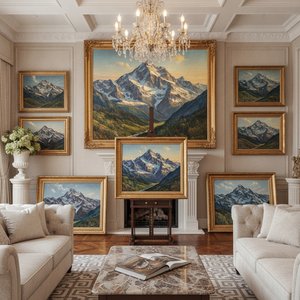
Majestic Peaks: Curating Exquisite Mountain Oil Paintings & Masterpiece Reproductions for Luxury Interiors
Elevate luxury interiors with exquisite mountain oil painting reproductions. From Romanticism to the Hudson River School, OriginalUniqueArt offers bespoke, hand-painted masterpieces and large-scale murals tailored for hotel designers and elite collectors worldwide.

Romantyczny Krajobraz w Malarstwie: 10 Arcydzieł, Które Zdefiniowały Epokę | OriginalUniqueArt.com
Odkryj 10 arcydzieł romantyzmu w malarstwie! Poznaj historie Caspara Davida Friedricha, Turnera i innych mistrzów. Inspiracje wnętrzarskie & reprodukcje obrazów najwyższej jakości na OriginalUniqueArt.com. Eksploruj kolekcję online!

Georgia O'Keeffe: Redefining Modernism Through Symbolism & the American Landscape
Explore the captivating world of Georgia O'Keeffe! Discover her groundbreaking flower paintings, New Mexico landscapes & lasting impact on American Modernism. Expert analysis and insights.


