

 Zobacz w skali 1:1
 Wyślij
 Udostępnij
 Szczegóły
 Przewodnik

 Pobierz plik obrazu
 Podobne obiekty
 RTG
RTG Pokaz slajdów
 Statystyki
Horse


 Czytaj więcej
Dzieło sztuki prezentowane na tej stronie podlega ochronie prawem autorskim, co oznacza, że nie mamy prawa do tworzenia ani sprzedaży jego identycznej reprodukcji. Ochrona ta jest egzekwowana na mocy umów międzynarodowych, takich jak Konwencja berneńska oraz przez przepisy prawa krajowego, w tym te określone w Prawo autorskie USA – Tytuł 17.
Jako pełną szacunku i legalną alternatywę oferujemy personalizowane, malowane ręcznie dzieła sztuki inspirowane oryginałem. Nasi wykwalifikowani i profesjonalni artyści starannie analizują styl, nastrój oraz artystyczną esencję pierwowzoru, aby stworzyć nowe, unikalne dzieło, które przywołuje te same emocje – pozostając jednocześnie w pełni oryginalną kreacją.
Metoda ta jest w pełni zgodna z przepisami prawa autorskiego, ponieważ nie polega na kopiowaniu ani powielaniu chronionego dzieła. Stanowi ona kreatywną reinterpretację – nowy obraz, który czerpie inspirację z oryginału, ale nie jest z nim tożsamy.
Ręcznie malowana reprodukcja olejowa
Ręcznie malowany obraz olejny na płótnie, wykonany na zamówienie przez naszych artystów w wybranym przez Ciebie wymiarze i oprawie. ( Przełącz na wersję drukowaną Przełącz na wersję cyfrową)




P118B zł10

P118H zł10

P118W zł10

P438Z zł10

P508JH zł12

P508YH zł12

P805H zł10

P805Z zł10

P919BZ zł10

P919G zł10

P919XJ zł10

P959ZH zł10

P968JZ zł12

W106C zł8

W218G zł10

W218JH zł8

W218Y zł10

W307PJ zł10

W316G zł10

W316PJ zł8

W316Y zł10

W398PJ zł8

W4111J zł10

W500HY zł15

W500JH zł15

W692G zł12

W849H zł8

W940BG zł15

W953PJ zł8




Wybierz spośród naszych standardowych rozmiarów, które zachowują oryginalne proporcje dzieła sztuki.

Wpisz wymaganą szerokość i wysokość, aby obraz pasował do Twojej ramy lub ściany. Ponieważ jest to dzieło malowane ręcznie, w przypadku rozmiaru o innym proporcji artysta może domalować nieco więcej wokół obrazu lub przyciąć fragmenty — wybór należy do Ciebie. Przed rozpoczęciem pracy prześlemy Ci cyfrową wizualizację do zatwierdzenia. Obraz widoczny na tej stronie nie przedstawia rzeczywistego efektu — jedynie wizualizacja oddaje realny rezultat.
Po złożeniu zamówienia zespół OriginalUniqueArt.com skontaktuje się z klientem drogą mailową w celu uzyskania instrukcji i prześle wizualizację projektu
Dostawa na całym świecie () w ciągu 3–4 tygodni zamiast standardowych 5 tygodni. (23 Październik). Bez kompromisów w kwestii jakości.

Bezpłatna ekspresowa wysyłka na cały świat

Wysokiej jakości płótno lniane

Pełne ubezpieczenie transportowe

Gwarancja zwrotu należności celnych i podatków importowych

Gwarancja idealnego odwzorowania barw

100-dniowy okres na zwrot dzieła w przypadku wykrycia wad produkcyjnych

Gwarancja 100% zwrotu pieniędzy

Oferta przy zakupie wielu sztuk
 Opcja ze szkłem jest dostępna wyłącznie w rozmiarach poniżej 110 cm

Horse
Technika wykonania
Rozmiar reprodukcji
-


Suma do zapłaty
zł 1155
A Poignant Dialogue Between Decay and Bloom
In the quiet, shadowed realm of Georgia O’Keeffe’s 1931 masterpiece, Still Life with Rose and Skull, we encounter a profound meditation on the cyclical nature of existence. The painting presents a striking visual paradox: the stark, skeletal remains of a horse skull intertwined with the delicate, ephemeral grace of a single gray rose. This composition is not merely a study of form, but a deeply emotive exploration of memento mori—a reminder of mortality—interwoven with the persistent beauty of life. Against an abyssal black background, the bone and petal emerge with a haunting luminosity, inviting the viewer into a space of silent contemplation where the boundaries between death and regeneration begin to blur.
The artist’s technical mastery is evident in the way she manipulates oil on canvas to achieve a breathtakingly tactile experience. O’Keeffe employs a sophisticated layering of pigments to create a sensory contrast that defines the work's impact. One can almost feel the weathered, porous texture of the bone, rendered with precise, detailed lines that trace the hollow eye sockets and the structural ridges of the cranium. In beautiful opposition, the rose petals are executed with soft, blurred edges and a velvety smoothness, suggesting a delicate brushstroke that captures the fleeting softness of organic life. This interplay of light and shadow—a subtle use of chiaroscuro—accentuates the three-dimensionality of the subject, pulling the skull forward from the darkness and imbuing it with a ghostly presence.
Modernist Vision and Symbolic Depth
Rooted in the principles of American Modernism, this work reflects the transformative influence of Arthur Wesley Dow, whose teachings encouraged O’Keeffe to move beyond conventional realism toward a more subjective, expressive language. The color palette is intentionally restrained, dominated by a sophisticated spectrum of grays, whites, and muted beiges. This monochromatic approach strips away the distractions of vibrant color, forcing the observer to focus on the essential shapes and the profound symbolic weight of the subject matter. The trailing white tendrils that weave through the composition act as visual threads, binding the skeletal structure to the floral element, much like the inescapable connection between the end of one life cycle and the beginning of another.
For the discerning collector or interior designer, this painting offers more than just aesthetic elegance; it provides a focal point of intellectual and emotional depth. The artwork possesses a quiet, commanding strength that can anchor a room, offering a sophisticated atmosphere of mystery and grace. Whether placed in a contemporary gallery setting or a curated residential space, Still Life with Rose and Skull serves as a timeless conversation piece. It is a work that rewards repeated viewing, revealing new layers of meaning in its interplay of light, texture, and the eternal dance between the transient and the permanent.
Pytania i odpowiedzi
Jaki ładunek emocjonalny niesie ze sobą „Horse” autorstwa Georgia O'Keeffe?
„Horse” autorstwa Georgia O'Keeffe przekazuje Reflective wydźwięk emocjonalny.
Z jakich materiałów wykonano "Horse" i w jakim stylu?
"Horse" powstało przy użyciu Oil On Canvas, w stylu Contemporary Realism.
Gdzie mogę znaleźć przewodnik do "Horse"?
Strona Przewodnik dzieła „Horse” autorstwa Georgia O'Keeffe oferuje dwustronicową kartę informacyjną w formacie do druku: samo dzieło wraz z tabelą identyfikacyjną, oś czasu umieszczającą je w latach życia artysty, inne prace tego twórcy, zmierzoną paletę kolorystyczną oraz gotowe do skopiowania cytaty w czterech stylach.
Biografia artysty
Early Life and Artistic Foundations
Georgia Totto O’Keeffe, a name synonymous with American modernism, emerged from the unassuming landscape of Sun Prairie, Wisconsin, in 1887. Born into a family of Irish and Hungarian descent engaged in dairy farming, young Georgia displayed an artistic inclination early on, deciding by age ten that she would dedicate her life to art. This determination was nurtured through lessons with local watercolorist Sara Mann, followed by formal studies at the School of the Art Institute of Chicago from 1905 to 1906 and later at the University of Virginia. However, it was her encounter with Arthur Wesley Dow’s principles – emphasizing personal expression and a harmonious balance of color and line – that truly ignited her artistic path. Dow's teachings steered O’Keeffe away from strict realism toward a more subjective and emotionally resonant approach to art, an approach that would define her career. These formative years weren’t without their challenges; periods of illness and dissatisfaction led her to temporarily abandon painting, but the creative impulse always drew her back, evolving with each new experience and influence.New York and the Stieglitz Circle
A pivotal moment arrived in 1916 when O’Keeffe’s abstract charcoal drawings were discovered by Alfred Stieglitz, a renowned photographer and art dealer. He exhibited her work without her prior knowledge, sparking a dialogue that would profoundly shape both their lives and the course of American art. Stieglitz recognized an exceptional talent in O'Keeffe, one that resonated with his own modernist sensibilities. He invited her to New York City in 1918, providing not only professional support but also fostering a deep personal connection. Their relationship blossomed into marriage in 1924, creating a dynamic artistic partnership and intellectual exchange. Stieglitz championed O’Keeffe’s work, showcasing it at his gallery “291” and promoting her as a leading figure in the American avant-garde. During this period, she began to develop her signature style – bold, simplified forms and intensely saturated colors – initially expressed through depictions of New York skyscrapers and, most famously, magnified flower paintings. These floral works, often interpreted (though consistently denied by O’Keeffe herself) as veiled representations of female anatomy, challenged conventional notions of beauty and sexuality in art.The Allure of the Southwest
While New York provided a crucial platform for her early success, it was the landscapes of the American Southwest that truly captured O’Keeffe’s imagination and profoundly influenced her artistic vision. Her first visit to New Mexico in 1929 marked the beginning of a lifelong love affair with the region's stark beauty, vibrant colors, and unique cultural heritage. The vastness of the desert, the dramatic rock formations, and the ancient Pueblo architecture resonated deeply within her, inspiring a new series of paintings that reflected the spirit of the land. Works like *Cow’s Skull: Red, White, and Blue* (1931) and *Summer Days* (1936) are powerful testaments to this influence, transforming seemingly mundane objects into iconic symbols of the American West. She eventually settled permanently in New Mexico in 1949 following Stieglitz’s death, establishing a home and studio in Abiquiu that became integral to her artistic process and identity.Technique and Style
O'Keeffe’s distinctive style evolved over decades, yet certain elements remained constant throughout her career. She favored bold, simplified forms and intense colors—often employing complementary hues to create striking visual effects. Her use of scale was particularly notable, with many of her paintings featuring oversized flowers or landscapes that dwarfed the viewer, creating a sense of awe and immersion. She often worked directly on large canvases, applying paint in thick layers using a palette knife, resulting in a textured surface that added depth and physicality to her images. While initially influenced by Arthur Wesley Dow’s emphasis on abstraction, O'Keeffe developed a unique approach—one that balanced formal elements with emotional expression. Her work is characterized by an almost meditative quality, inviting viewers to contemplate the beauty and mystery of the natural world.Legacy and Enduring Influence
Georgia O'Keeffe continued to paint prolifically throughout her life, experimenting with new subjects and pushing the boundaries of abstraction. Her later works included aerial views of clouds and skies, reflecting a fascination with the vastness and ethereal quality of the natural world. She remained fiercely independent and uncompromising in her artistic vision, refusing to be categorized or defined by prevailing art movements. O’Keeffe’s impact on American art is immeasurable. She paved the way for future generations of female artists, challenging societal norms and asserting her own unique voice in a male-dominated field. Her paintings continue to captivate audiences with their bold simplicity, emotional depth, and evocative power. The establishment of the Georgia O'Keeffe Museum in Santa Fe in 1997 further solidified her legacy, preserving her art and providing a space for ongoing scholarship and appreciation. In 2014, *Jimson Weed/White Flower No. 1* sold for $44.4 million, setting a record price for a work by a female artist – a testament to the enduring value and significance of her artistic contribution. O’Keeffe's influence extends beyond painting; she became an icon of American individualism and self-reliance, inspiring countless artists and admirers with her unwavering commitment to her craft and her unique perspective on the world. Her work remains a powerful reminder of the transformative power of art and the enduring beauty of the natural world.Key Works & Museum Presence
- Red Canna: Exemplifies her early exploration of floral abstraction.
- Cow’s Skull: Red, White, and Blue (1931): A powerful symbol of the American Southwest and a meditation on mortality.
- Summer Days (1936): Captures the essence of the New Mexico landscape with its vibrant colors and simplified forms.
- Jimson Weed/White Flower No. 1: A monumental floral painting that showcases her mastery of scale and composition.
- Georgia O'Keeffe Museum (Santa Fe)
- Museum of Modern Art (New York)
- Art Institute of Chicago
- National Gallery of Art (Washington, D.C.)

Georgia O'Keeffe
1887 - 1986 , Stany Zjednoczone
Najważniejsze informacje
- Artistic Movement Or Style: Modernizm, Pradawstwo
- Artists Or Movements Influenced By This Artist: ['Pradawstwo']
- Artists Who Influenced This Artist:
- Arthur Dow
- Alfred Stieglitz
- Date Of Birth: 15 listopada 1887
- Date Of Death: 6 marca 1986
- Full Name: Georgia Totto O’Keeffe
- Nationality: Amerykańska
- Notable Artworks:
- Czerwona Kanna
- Koło byka
- Szerokie Dni
- Place Of Birth: Sun Prairie, USA
Zobacz także powiązane artykuły

Czarne arcydzieła: Top 10 słynnych obrazów pełnych mroku i ekspresji | OriginalUniqueArt.com
Odkryj 10 słynnych obrazów, w których czerń króluje! Poznaj historie artystów, ekspresjonizm i mroczną paletę barw. Reprodukcje dzieł sztuki najwyższej jakości na OriginalUniqueArt.com – inspiracje do wnętrz i kolekcjonerstwo.
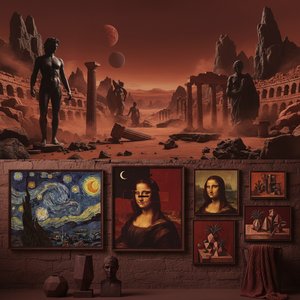
Czarne arcydzieła: 10 słynnych obrazów w odcieniach mroku | OriginalUniqueArt.pl
Odkryj 10 słynnych obrazów, w których dominuje głęboka czerń – od Rembrandta po Picassa. Poznaj historie artystów i techniki tworzenia mrocznych arcydzieł. Reprodukcje najwyższej jakości na OriginalUniqueArt.com! Eksploruj kolekcję online.

The Noble Steed on Canvas: A Historical & Artistic Exploration of Horse Painting Across Cultures
Explore the rich history of horse painting! Discover masterpieces from Stubbs to Munnings & learn about symbolism, techniques & artists. Find museum-quality reproductions at OriginalUniqueArt.

Georgia O'Keeffe: Redefining Modernism Through Symbolism & the American Landscape
Explore the captivating world of Georgia O'Keeffe! Discover her groundbreaking flower paintings, New Mexico landscapes & lasting impact on American Modernism. Expert analysis and insights.

Konie jako Muzy w Sztuce: Historyczna i Artystyczna Eksploracja Końskiego Wizerunku
Odkryj fascynującą historię koni w sztuce! Eksploracja końskiego wizerunku od mitologii po współczesność. Analiza symboliki, gatunków i wpływowych dzieł malarskich. Poznaj bogactwo artystycznej interpretacji konia.


