Cubism · 1913
Guitar ''Program statue d'epouvante'' (Georges Braque, 1913)
Georges Braque (1882–1963) stworzył Guitar ''Program statue d'epouvante''. Dzieło pochodzi z 1913. Należy do nurtu Cubism. Wykonano w technice Acrylic On Canvas. Wymiary to 73 × 100 cm.
- 1913
- Acrylic On Canvas
- 73 × 100 cm

 Podgląd w skali 1:1

 Ręcznie malowany obraz olejny
 Wyślij jako kartkę
 Udostępnij
 Karta informacyjna


 Pobierz obraz
 Podobne obiekty
 RTG
 Pokaz slajdów
 Pytania i odpowiedzi

 Statystyki
Guitar ''Program statue d'epouvante'' w skrócie
- Tytuł
- Guitar ''Program statue d'epouvante''
- Artysta
- Georges Braque (1882–1963)
- Miejsce urodzenia artysty
- Argenteuil, Francja
- Data powstania
- 1913
- Technika wykonania
- Acrylic On Canvas
- Wymiary
- 73 × 100 cm
- Ruch
- Cubism
- Epoka
- Modern
- Temat
- cubist still life, geometric forms, musical instruments, art & intellectuals, fragmented composition, muted color palette
Co przedstawia Guitar ''Program statue d'epouvante''?
A Cubist Still Life: Deconstructing Form in Braque’s ‘Guitar ''Program statue d'epouvante''’
Georges Braque’s *Guitar ''Program statue d'epouvante''* (1913) is a pivotal example of Analytical Cubism, showcasing the artist’s revolutionary approach to representation. Measuring 73 x 100 cm, this work isn’t merely a depiction of objects; it’s an intellectual exploration of form and perception, inviting viewers into a fragmented world where reality is dissected and reassembled.Subject & Composition: A Dialogue Between Art Forms
The artwork presents a still life featuring an acoustic guitar alongside a stack of books. However, Braque doesn't offer a traditional rendering. Instead, both objects are broken down into geometric shapes – rectangles, triangles, and overlapping planes – creating a dynamic composition within a circular frame. The arrangement isn’t accidental; it suggests a deliberate interplay between musicality (the guitar) and intellectual pursuit (the books), hinting at the interconnectedness of artistic disciplines. The title itself, translating to “Program statue of fright,” adds an intriguing layer, suggesting a conceptual framework or perhaps even a playful subversion of traditional still life conventions.Style & Technique: The Essence of Analytical Cubism
*Guitar ''Program statue d'epouvante''* exemplifies the core tenets of Analytical Cubism. Braque, alongside Pablo Picasso, pioneered this style by rejecting traditional perspective and embracing multiple viewpoints simultaneously. The color palette is deliberately restrained – muted browns, grays, and off-whites dominate – emphasizing form over coloristic expression. The technique relies heavily on layering pencil or charcoal strokes to build up tones and textures, creating a sense of solidity despite the fragmented forms. Lines are sharply defined, further contributing to the geometric abstraction. This isn’t about replicating what the eye sees but rather conveying an object's essential structure through intellectual analysis.Historical Context: A Revolution in Visual Language
Created during a period of intense artistic experimentation, this work reflects the radical shifts occurring in early 20th-century art. Braque and Picasso were challenging centuries-old conventions of representation, influenced by Paul Cézanne’s emphasis on geometric forms and their own shared explorations. The emergence of Cubism marked a turning point in art history, paving the way for abstract art movements that would follow. 1913 was a crucial year; it saw the full development of Analytical Cubism before Braque began to incorporate collage elements into his work.Symbolism & Emotional Impact: Beyond Representation
While seemingly abstract, *Guitar ''Program statue d'epouvante''* carries symbolic weight. The guitar, a symbol of artistic expression and harmony, is deconstructed alongside the books, representing knowledge and intellect. This juxtaposition suggests a contemplation on the nature of creativity itself – how ideas are formed, broken down, and reassembled. The overall effect isn’t necessarily emotional in a traditional sense; rather, it evokes a feeling of intellectual curiosity and invites viewers to actively participate in deciphering the artwork's meaning. The flattened perspective and lack of strong shadows contribute to a sense of ambiguity and spatial disorientation, challenging our perceptions of reality.For Collectors & Designers
This piece, or a high-quality reproduction, would be a striking addition to any collection focused on modern art. Its muted palette and geometric forms lend themselves well to contemporary interiors, adding a sophisticated touch without overwhelming the space.- Ideal for: Modern living rooms, studies, or galleries.
- Complements: Minimalist furniture, neutral color schemes, and other abstract artworks.
- Considerations: The artwork’s intellectual nature makes it a conversation starter and a focal point for contemplation.
Zdjęcia w wysokiej rozdzielczości dzieła Guitar ''Program statue d'epouvante''
Chronione prawem autorskim: pliki te służą wyłącznie do osobistego wglądu i nie stanowią licencji na ich powielanie.
Georges Braque, Guitar ''Program statue d'epouvante'' (1913).
Odpowiedzi na pytania dotyczące Guitar ''Program statue d'epouvante''
W którym roku powstało dzieło "Guitar ''Program statue d'epouvante''"?
Powstanie „Guitar ''Program statue d'epouvante''” – Georges Braque datuje się na 1913.
W jakiej technice wykonano „Guitar ''Program statue d'epouvante''” – Georges Braque?
Georges Braque wykorzystał/a technikę Acrylic On Canvas w pracy „Guitar ''Program statue d'epouvante''”. Technika ta definiuje materię oryginalnego dzieła.
Jakie są rzeczywiste wymiary dzieła „Guitar ''Program statue d'epouvante''” – Georges Braque?
Oryginalne wymiary dzieła „Guitar ''Program statue d'epouvante''” to 73 x 100 cm. Znajomość pierwotnej skali może być pomocna przy wyborze odpowiedniego rozmiaru reprodukcji.
Co przedstawia "Guitar ''Program statue d'epouvante''"?
„Guitar ''Program statue d'epouvante''” – Georges Braque przedstawia: cubist still life, geometric forms, musical instruments, art & intellectuals, fragmented composition, muted color palette, spatial ambiguity.
Czy dzieło "Guitar ''Program statue d'epouvante''" znajduje się w domenie publicznej?
Status praw autorskich dla „Guitar ''Program statue d'epouvante''” – Georges Braque: dzieło znajduje się w nadal objęte ochroną prawa autorskiego. Określa to, czy reprodukcje obrazu mogą być sporządzane swobodnie.
Kto jest autorem dzieła "Guitar ''Program statue d'epouvante''"?
Autorstwo dzieła "Guitar ''Program statue d'epouvante''" przypisuje się Georges Braque.
Do jakiego nurtu w sztuce należy „Guitar ''Program statue d'epouvante''” – Georges Braque?
„Guitar ''Program statue d'epouvante''” – Georges Braque należy do nurtu Cubism. Nurt ten stanowi stylistyczny kontekst dzieła.
Do którego okresu twórczości Georges Braque należy dzieło „Guitar ''Program statue d'epouvante''”?
W dorobku artystycznym Georges Braque dzieło „Guitar ''Program statue d'epouvante''” przypada na Early Cubism. Ten etap pozwala zestawić je z innymi pracami twórcy.
W jakim wieku Georges Braque stworzył(a) "Guitar ''Program statue d'epouvante''"?
Georges Braque stworzył/a "Guitar ''Program statue d'epouvante''" w wieku 31 lat. Artysta urodził/a się w 1882, a datowanie dzieła to 1913.
O artyście: Georges Braque
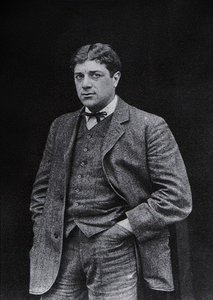
1882–1963, Francja
Georges Braque
Wczesne lata, rodzina i wykształcenie Georges Braque urodził się w 1882 roku w Argenteuil we Francji. Jego wczesne lata upłynęły w Le Havre, w domu, którego codzienność definiowały praktyczne aspekty dekoracji i koloru. Dorastając w rodzinie malarzy i dekoratorów domów, od najmłodszych lat był zanurzony w namacalnej rzeczywistości swojego rzemiosła. To wychowanie zapewniło mu fundament technicznego warsztatu, który w późniejszych latach nadał głębi jego podejściu do płótna.
Inne prace Georges Braque
 Mandolina1910
 Mężczyzna z gitarą1914
 Domki Przy Estace
 Harbor w Normandii1909
Eseje o Guitar ''Program statue d'epouvante''
 Mastering Cubism: The Top 25 Essential Georges Braque ArtworksJourney through the revolutionary world of Georges Braque. Explore 25 iconic Cubist masterpieces, from geometric abstractions to Fauvist co…
 Georges Braque: The Architect of Form and the Soul of Cubist RevolutionExplore the profound legacy of Georges Braque, a master of Cubism. Discover how his technical craftsmanship and collaboration with Picasso …
 Poza Reprezentacją: Dekodowanie Emocji i Znaczeń w Sztuce Abstrakcyjnej XX WiekuOdkryj fascynujący świat sztuki abstrakcyjnej XX wieku! Analiza kluczowych nurtów, artystów i technik. Poradniki interpretacji oraz inspira…