

 Zobacz w skali 1:1
 Wyślij
 Udostępnij
 Szczegóły
 Przewodnik

 Pobierz plik obrazu
 Podobne obiekty
 RTG
RTG Pokaz slajdów
 Statystyki
Sir John Clerk Brodie
 Akryl na płótnie
- Sztuka ścienna
- Romantic Landscape Painting
 280.0 x 145.0 cm
 The Signet Library
 Czytaj więcej
Giclée / Wydruk artystyczny
Wydruki giclée lub płótna o jakości muzealnej, szybka realizacja i szeroki wybór opcji wykończenia. ( Kup ręcznie malowany obraz Przełącz na wersję cyfrową)




P118B $10

P118H $10

P118W $10

P438Z $10

P508JH $12

P508YH $12

P805H $10

P805Z $10

P919BZ $10

P919G $10

P919XJ $10

P959ZH $10

P968JZ $12

W106C $8

W218G $10

W218JH $8

W218Y $10

W307PJ $10

W316G $10

W316PJ $8

W316Y $10

W398PJ $8

W4111J $10

W500HY $15

W500JH $15

W692G $12

W849H $8

W940BG $15

W953PJ $8




Wybierz spośród naszych standardowych rozmiarów, które zachowują oryginalne proporcje dzieła sztuki.

Możesz wprowadzić własne wymiary, aby dopasować dzieło do konkretnej ramy lub przestrzeni. Jeśli wybrany rozmiar nie będzie odpowiadał proporcjom oryginalnego obrazu, przytniecie dzieło lub rozszerzymy obraz za pomocą odbicia lustrzanego lub jednolitego wypełnienia krawędzi. Przed rozpoczęciem produkcji prześlemy cyfrową wizualizację do Twojej akceptacji.
Prosimy pamiętać, że podgląd na ekranie nie odzwierciedla faktycznego przycinania ani rozszerzania. Tylko wizualizacja dokładnie pokaże końcową kompozycję.
Mimo dostępności niestandardowych rozmiarów, zalecamy wybór wymiaru z listy zdefiniowanej, aby zachować oryginalne proporcje.
Dostawa na cały świat () w ciągu 2 tygodni zamiast standardowych 4/5 tygodni. (26 Wrzesień)

Bezpłatna ekspresowa wysyłka na cały świat

Wysokiej jakości płótno lniane

Pełne ubezpieczenie transportowe

Gwarancja zwrotu należności celnych i podatków importowych

Gwarancja idealnego odwzorowania barw

100-dniowy okres na zwrot dzieła w przypadku wykrycia wad produkcyjnych

Gwarancja 100% zwrotu pieniędzy

Oferta przy zakupie wielu sztuk
 Opcja ze szkłem jest dostępna wyłącznie w rozmiarach poniżej 110 cm

Sir John Clerk Brodie
Giclée / Wydruk artystyczny
Rozmiar reprodukcji
-


Suma do zapłaty
$ 80
Sir John Clerk Brodie - George Reid’s Vision of Tranquility
George Reid (1841–1913), born in Wingham, Ontario, Canada West, stands as a pivotal figure in Canadian art history. His early life, marked by formative years spent on a farm—a setting he would revisit with remarkable sensitivity and emotional resonance throughout his oeuvre—laid the groundwork for an artistic trajectory defined by profound observation and masterful execution.
- Subject Matter: Reid’s paintings frequently depict serene landscapes imbued with Scottish grandeur, capturing vistas of heather moorlands and rugged coastlines. Notably, “Sir John Clerk Brodie” showcases a contemplative portrait alongside a chair—a deliberate compositional choice reflecting the sitter's inner stillness and intellectual pursuits.
- Style & Technique: Reid championed a distinctive style characterized by meticulous realism blended with expressive brushwork. He skillfully employed glazing techniques to achieve luminous tonal gradations, conveying atmospheric depth and capturing subtle nuances of light and color. His approach aligns closely with Dutch Romanticism, prioritizing emotional truthfulness over slavish imitation.
- Historical Context: Reid’s artistic output flourished during a period of significant cultural transformation in Canada West. The Society of Writers to Her Majesty's Signet commissioned “Sir John Clerk Brodie,” reflecting the burgeoning interest in portraiture and commemorating distinguished individuals within Scottish society. This commission underscores Reid’s engagement with contemporary intellectual currents and his desire to honor tradition while embracing innovation.
- Symbolism: The inclusion of a chair symbolizes contemplation, deliberation, and inner harmony—values central to Reid's artistic philosophy. Furthermore, the expansive landscape serves as a metaphor for freedom, resilience, and connection to nature—themes recurrent throughout Reid’s artistic explorations.
- Emotional Impact: “Sir John Clerk Brodie” evokes feelings of tranquility, introspection, and admiration for intellectual prowess. Reid’s masterful rendering captures not merely visual beauty but also the psychological depth inherent in human experience—a testament to his ability to translate emotion into enduring artistic form.
The artwork's dimensions are 280 x 145 cm, and it was created around 1913. Reid’s meticulous attention to detail and emotive brushwork solidify its place as a cornerstone of Canadian landscape painting.
George Reid: A Pioneer of Luminosity
Reid's artistic vision stemmed from his formative years spent on the farm, fostering an acute awareness of natural beauty and informing his stylistic choices. He honed his skills at Philadelphia’s Pennsylvania Academy of Fine Arts, absorbing the influence of Thomas Eakins—a champion of realism and anatomical precision—and recognizing the importance of mastering foundational techniques.
- Glazing Techniques: Reid perfected glazing techniques—applying thin layers of translucent pigment over underlying colors—to achieve remarkable tonal gradations and atmospheric depth. This method allowed him to capture subtle variations in light and color, conveying a sense of realism unattainable through conventional methods.
- Dutch Romanticism Influence: Reid’s artistic sensibilities were profoundly shaped by Dutch Romanticism, prioritizing emotional truthfulness and expressive brushwork over mere visual representation. He sought to convey the psychological impact of landscapes—capturing not just their appearance but also their inherent mood and atmosphere.
Reid's legacy extends beyond individual artworks; he established the Society of Writers to Her Majesty’s Signet, fostering a vibrant artistic community and championing excellence in Canadian art.
The Portrait Within Landscape
Reid’s compositional choices—such as the inclusion of a chair alongside the portrait—were deliberate expressions of his artistic philosophy. He believed that art should strive to capture not only visual beauty but also the psychological depth inherent in human experience—a conviction reflected in his masterful rendering of “Sir John Clerk Brodie.”
- Symbolic Representation: The chair symbolizes contemplation and inner harmony—values central to Reid’s artistic worldview. It serves as a focal point for visual attention, inviting viewers to consider the sitter's internal state alongside the external landscape.
“Sir John Clerk Brodie” exemplifies Reid’s ability to synthesize realism with expressive brushwork—resulting in an artwork that transcends mere depiction and achieves enduring emotional resonance.
Further Exploration: Connections to Scottish Tradition
Reid's artistic explorations were deeply rooted in Scottish tradition, mirroring the Society of Writers to Her Majesty's Signet’s commitment to honoring heritage while embracing innovation. His landscapes evoke the grandeur of Scotland’s moorlands and coastlines—capturing vistas that resonate with centuries of cultural history.
- Influence of Landscape Painting: Reid drew inspiration from Dutch landscape painters—particularly Rembrandt and Jacob van Ruysdael—who prioritized tonal gradations and atmospheric depth. This stylistic influence underscores Reid’s dedication to mastering foundational techniques and conveying the psychological impact of natural environments.
The enduring beauty and emotional power of “Sir John Clerk Brodie” stand as testament to George Reid's artistic genius—a figure whose contribution continues to inspire admiration for Canadian art history.
Biografia artysty
Early Life and Artistic Foundations
George Agnew Reid emerged from the fertile landscapes of rural Canada West, born in 1860 in Wingham, Ontario, a place that would indelibly shape his artistic vision. His beginnings were steeped not in formal training but in the rhythms of farm life—a setting he’d later revisit with poignant detail and emotional depth in his paintings. Though initially hesitant about his son's aspirations, Reid’s father eventually recognized and supported his burgeoning talent, allowing him to pursue studies at the Central Ontario School of Art in Toronto in 1879 under the tutelage of Robert Harris. This foundational period instilled a respect for established techniques and representational art, yet it also ignited within Reid a desire to explore beyond imitation. He sought further refinement at Philadelphia’s Pennsylvania Academy of the Fine Arts from 1882 to 1885, where he fell under the powerful influence of Thomas Eakins—a master of realism and anatomical accuracy whose dedication to truthful representation would remain a guiding principle throughout Reid's career. Equally significant during this time was his meeting and subsequent marriage to Mary Hiester Reid, herself a gifted artist; their union forged a lifelong artistic partnership built on mutual respect and creative exchange. Reid’s artistic journey continued across the Atlantic, immersing himself in the vibrant art scenes of Paris at the Académies Julian and Colarossi, and undertaking focused study at the Prado Museum in Madrid between 1888-1889, broadening his understanding of European masters and enriching his stylistic vocabulary.A Blossoming Style: Genre Painting and Narrative Depth
Upon returning to Canada, Reid’s artistic focus shifted from portraiture towards genre painting—a style that allowed him to explore the narratives embedded within everyday life. This wasn't merely a change in subject matter; it represented a deepening of his artistic intent. The Foreclosure of the Mortgage (1893) stands as a landmark achievement, garnering significant recognition and establishing Reid’s reputation as a storyteller through paint. The painting is a deeply moving depiction of rural hardship, capturing a moment of profound emotional weight with remarkable sensitivity. Reid masterfully blended the precision he had absorbed during his Parisian academic training with subtle Impressionistic touches—a delicate interplay of light and atmosphere that imbued his canvases with realism and emotional resonance. He wasn’t simply recording scenes; he was interpreting them, imbuing them with a psychological depth that resonated deeply with viewers. His paintings became windows into the lives of ordinary Canadians, particularly those in rural Ontario, offering glimpses into their joys, struggles, and enduring spirit. He possessed an exceptional ability to observe and capture the nuances of human emotion, translating these observations onto canvas with remarkable skill. This period saw him create works that weren’t just aesthetically pleasing but also socially conscious, reflecting a growing awareness of the challenges faced by rural communities.Career Highlights and Educational Leadership
Reid's artistic achievements were paralleled by a distinguished career in art education and administration. His election to the Royal Canadian Academy of Arts in 1889 solidified his position within the burgeoning Canadian art community, recognizing his contributions and influence. However, perhaps his most significant contribution lay in his role as Principal of the Central Ontario School of Art and Design (later OCAD University) from 1912 to 1918. During this period, he spearheaded crucial reforms, shaping the institution into a leading center for artistic training in Canada. He passionately believed in the power of art education to nurture creativity and foster a vibrant cultural landscape. Beyond his administrative duties, Reid continued to produce significant works, including murals and commissioned pieces for public buildings—most notably contributing to the decoration of Toronto’s third City Hall. In 1922, upon the passing of Mary Hiester Reid, he entered into another important artistic partnership with Mary E. Wrinch, further enriching his creative life and expanding his artistic horizons. His interests extended beyond painting, encompassing architectural projects influenced by the Arts and Crafts movement—a testament to his holistic approach to art and design. He envisioned a world where beauty and functionality were seamlessly integrated, influencing not only his artwork but also his educational philosophy.Notable Works
- Spynie Castle and Loch, Moray (1866): A captivating Scottish landscape painting showcasing dramatic light and detail.
- Mrs Alexander Hay Moncur (1887): A stunning Victorian portrait exhibiting rich detail and luxurious elegance.
- John Ritchie Findlay of Aberlour (1899): An academic realist portrait capturing wisdom and experience.
- The Foreclosure of the Mortgage (1893): A poignant depiction of rural hardship, considered a landmark achievement in Canadian art.
Legacy and Lasting Influence
George Agnew Reid’s legacy extends far beyond his individual paintings; he was a catalyst for change within the Canadian art world, fostering a distinctly national artistic identity while simultaneously embracing international influences. His mentor, Thomas Eakins, instilled in him a commitment to realism and anatomical accuracy, while his time in Paris exposed him to the innovative techniques of Impressionism—elements that he skillfully integrated into his own unique style. He played a crucial role in establishing a visual language that reflected the Canadian experience, depicting Ontario landscapes and rural life with both sensitivity and authenticity. As an educator and administrator, Reid nurtured generations of Canadian artists, shaping the future of art education within the country. His artworks continue to be held in esteemed public and private collections across Canada, including the Art Gallery of Ontario and the National Gallery of Canada—a testament to their enduring artistic merit and historical significance. He died in 1947, leaving behind a body of work that continues to captivate and inspire, solidifying his place as one of Canada’s most important and influential artists. His ability to combine academic rigor with emotional depth created works that resonate with viewers on a profound level, reflecting the social realities of his time and offering enduring insights into the human condition.
george reid
1860 - 1947 , Kanada
Najważniejsze informacje
- Artistic Movement Or Style: Realizm, Genra
- Artists Or Movements Influenced By This Artist: ['Kanadyjscy']
- Artists Who Influenced This Artist: ['Eakins']
- Date Of Birth: 25 lip 1860
- Date Of Death: 23 aug 1947
- Full Name: George Agnew Reid
- Nationality: Kanadyjski
- Notable Artworks:
- Mortgaza
- Spynie
- Moncur
- Place Of Birth: Wingham, Kanada
Zobacz także powiązane artykuły

John Singer Sargent: 25 Arcydzieł Pełnych Elegancji i Światła | OriginalUniqueArt.com
Odkryj 25 arcydzieł Johna Singera Sargenta – mistrza portretu i impresjonizmu. Poznaj historie, techniki i inspiracje za jego najsłynniejszymi obrazami. Reprodukcje najwyższej jakości na OriginalUniqueArt.com. Eksploruj pełną kolekcję online!

Georges Seurat: 25 Arcydzieł Punktalizmu dla Twojego Domu | OriginalUniqueArt.com
Odkryj 25 arcydzieł Georges'a Seurata! Poznaj historię punktalizmu, impresjonistyczne pejzaże i fascynującą technikę malarską. Reprodukcje obrazów najwyższej jakości na OriginalUniqueArt.com – inspiracje do Twojego wnętrza. Eksploruj pełną kolekcję online!
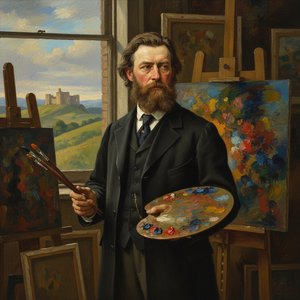
George Paul Chalmers: Rediscovering the Angus Rembrandt & Scottish Colourist Roots
Explore the captivating world of George Paul Chalmers (1833-1878), a pivotal Scottish painter. Discover his landscapes, portraits & connection to the Aesthetic Movement and Colourists. Learn about this 'Angus Rembrandt's' legacy with OriginalUniqueArt.

Georges Braque: 25 Arcydzieł Kubizmu i Nowoczesnej Sztuki | OriginalUniqueArt.com
Odkryj 25 arcydzieł Georges'a Braque – pioniera kubizmu i malarstwa nowoczesnego. Poznaj historię, techniki i inspiracje za jego najsłynniejszymi obrazami. Reprodukcje najwyższej jakości na OriginalUniqueArt.com! Eksploruj pełną kolekcję online.

John Constable: 25 Najlepszych Obrazów Mistrza Angielskiego Krajobrazu | OriginalUniqueArt
Odkryj 25 arcydzieł Johna Constable'a – mistrza angielskiego krajobrazu! Poznaj romantyczne pejzaże, technikę malarską i inspiracje z Dedham Vale. Reprodukcje obrazów najwyższej jakości na OriginalUniqueArt.com. Eksploruj pełną kolekcję online!


