Przełącz na wydania drukowane
 Rozwiń treść







































 W przypadku dzieł sztuki lub reprodukcji, których którykolwiek z boków przekracza 105 cm (około 41 cali), rama zostanie wysłana w formie zestawu do samodzielnego montażu. Metoda ta zapewnia bezpieczną dostawę i zapobiega uszkodzeniom podczas transportu.


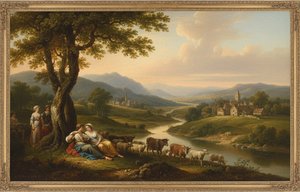
A Moment Frozen in Time: Before a Thunderstorm by George Morland
George Morland’s “Before a Thunderstorm,” painted in 1791 and currently residing within the esteemed collection of the Hermitage Museum in St. Petersburg, Russia, is more than just a pastoral scene; it's a masterful distillation of late 18th-century English landscape painting imbued with an undercurrent of dramatic anticipation. The canvas captures a fleeting moment – a quiet tableau on the cusp of a powerful storm – rendered with a remarkable sensitivity to light, texture, and the subtle nuances of rural life. Morland’s genius lies not in grand spectacle but in his ability to evoke atmosphere through meticulous detail and a loose, expressive brushstroke that breathes life into every element of the composition.
The painting immediately draws the eye to the foreground: two horses, one grazing placidly, the other standing stock-still with its head bowed as if anticipating the impending weather. A man in a brown coat, seated comfortably on one of the animals, appears lost in contemplation, his gaze directed towards the viewer – an invitation for us to share in this shared moment of observation. A simple white cottage, partially obscured by the burgeoning trees and the dramatic sky, provides a grounding element, suggesting a sense of domesticity amidst the natural world. The inclusion of a dog, attentively watching the scene unfold, adds another layer of quiet intimacy.
The Language of Light and Earth Tones
Morland’s masterful use of color is central to the painting's evocative power. He employs a palette dominated by earthy tones – ochres, browns, greens, and muted blues – creating a sense of warmth, tranquility, and rustic authenticity. These colors aren’t merely descriptive; they actively shape the mood, suggesting the fertile soil of the countryside and the comforting familiarity of rural life. The artist skillfully contrasts these warm hues with the increasingly dramatic shades of grey and purple that dominate the sky, building tension and foreshadowing the approaching storm. Notice how the light catches on the horses' coats, highlighting their texture and movement, while simultaneously casting long shadows across the field – a testament to Morland’s keen eye for capturing the subtleties of natural illumination.
A Brushstroke That Speaks Volumes
The painting’s distinctive character is largely defined by Morland’s unique brushwork. He eschews smooth, polished surfaces in favor of a deliberately loose and expressive technique. The strokes are visible, almost tactile, conveying a sense of movement and immediacy. This approach isn't simply stylistic; it reflects the artist’s intention to capture not just the appearance of the scene but also its feeling – the anticipation, the stillness, the subtle shift in atmosphere. The swirling patterns in the clouds, the swaying branches of the trees, and even the texture of the horses’ coats are all rendered with a dynamic energy that brings the painting vividly to life. This technique was particularly suited for reproduction, as it allowed publishers to create detailed prints from his paintings.
Symbolism and the Poetics of Rural Life
“Before a Thunderstorm” is more than just a depiction of a rural scene; it’s a meditation on the relationship between humanity and nature. The impending storm can be interpreted as a metaphor for change, uncertainty, or even the fragility of life. The man in the brown coat, seemingly detached from the immediate threat, embodies a sense of human resilience and acceptance – a quiet contemplation amidst the forces of nature. Morland’s work aligns with the broader artistic trends of the late 18th century, which celebrated the beauty and simplicity of rural life while also acknowledging its inherent vulnerability. The painting speaks to a deep appreciation for the natural world and a recognition of our place within it.
A Legacy in Reproduction
Originally intended for reproduction in prints – a lucrative venture for Morland – “Before a Thunderstorm” remains a captivating example of his skill and artistry. Today, OriginalUniqueArt offers meticulously crafted hand-painted reproductions that faithfully capture the painting’s original beauty and atmosphere. Owning a reproduction allows you to bring this timeless masterpiece into your home or office, celebrating both the legacy of George Morland and the enduring power of art to evoke emotion and inspire contemplation.
Pytania i odpowiedzi
Jakie miejsce zajmuje „Before a Thunderstorm” wśród powracających motywów w twórczości George Morland?
Wśród motywów charakterystycznych dla twórczości George Morland – takich jak dutch golden age, rural scenes, morland style, pastoral tranquility, early works – dzieło „Before a Thunderstorm” wprowadza własne skupienie na rural life, horses, storm clouds, cottage, pastoral scene, morland, landscape, tranquility.
Kto jest autorem i z jakiego roku pochodzi "Before a Thunderstorm"?
George Morland, "Before a Thunderstorm", 1791 rok
Do jakiego nurtu i epoki zalicza się „Before a Thunderstorm” – George Morland?
"Before a Thunderstorm" należy do nurtu Late 18th Century Pastoralism, a jego twórca tworzył w epoce – Wczesna nowożytność.
 Podgląd w skali 1:1
 Wyślij jako kartkę
 Udostępnij
 Szczegóły dzieła
 Przewodnik

 Pobierz obraz
 Podobne obiekty
 RTG
RTG Pokaz slajdów
 Pytania i odpowiedzi
 Statystyki