
 Zobacz w skali 1:1
 Wyślij
 Udostępnij
 Szczegóły
 Przewodnik

 Pobierz plik obrazu
 Podobne obiekty
 RTG
RTG Pokaz slajdów
 Statystyki
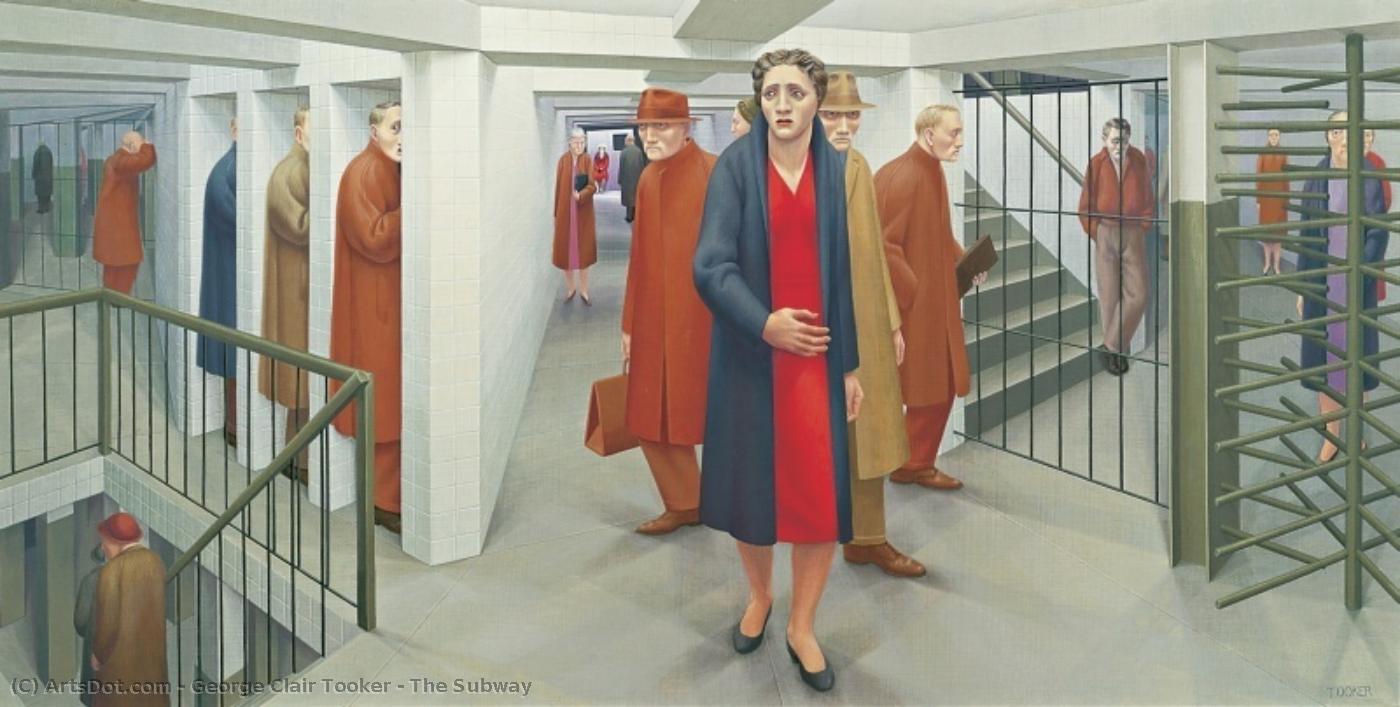
The Subway
 Acrylic On Canvas
- WallArt
- Magic Realism
 1950
1950 47.0 x 93.0 cm
 Whitney Museum of American Art
 Czytaj więcej
Dzieło sztuki prezentowane na tej stronie podlega ochronie prawem autorskim, co oznacza, że nie mamy prawa do tworzenia ani sprzedaży jego identycznej reprodukcji. Ochrona ta jest egzekwowana na mocy umów międzynarodowych, takich jak Konwencja berneńska oraz przez przepisy prawa krajowego, w tym te określone w Prawo autorskie USA – Tytuł 17.
Jako pełną szacunku i legalną alternatywę oferujemy personalizowane, malowane ręcznie dzieła sztuki inspirowane oryginałem. Nasi wykwalifikowani i profesjonalni artyści starannie analizują styl, nastrój oraz artystyczną esencję pierwowzoru, aby stworzyć nowe, unikalne dzieło, które przywołuje te same emocje – pozostając jednocześnie w pełni oryginalną kreacją.
Metoda ta jest w pełni zgodna z przepisami prawa autorskiego, ponieważ nie polega na kopiowaniu ani powielaniu chronionego dzieła. Stanowi ona kreatywną reinterpretację – nowy obraz, który czerpie inspirację z oryginału, ale nie jest z nim tożsamy.
Ręcznie malowana reprodukcja olejowa
Ręcznie malowany obraz olejny na płótnie, wykonany na zamówienie przez naszych artystów w wybranym przez Ciebie wymiarze i oprawie. ( Przełącz na wersję drukowaną Przełącz na wersję cyfrową)




P118B zł10

P118H zł10

P118W zł10

P438Z zł10

P508JH zł12

P508YH zł12

P805H zł10

P805Z zł10

P919BZ zł10

P919G zł10

P919XJ zł10

P959ZH zł10

P968JZ zł12

W106C zł8

W218G zł10

W218JH zł8

W218Y zł10

W307PJ zł10

W316G zł10

W316PJ zł8

W316Y zł10

W398PJ zł8

W4111J zł10

W500HY zł15

W500JH zł15

W692G zł12

W849H zł8

W940BG zł15

W953PJ zł8




Wybierz spośród naszych standardowych rozmiarów, które zachowują oryginalne proporcje dzieła sztuki.

Wpisz wymaganą szerokość i wysokość, aby obraz pasował do Twojej ramy lub ściany. Ponieważ jest to dzieło malowane ręcznie, w przypadku rozmiaru o innym proporcji artysta może domalować nieco więcej wokół obrazu lub przyciąć fragmenty — wybór należy do Ciebie. Przed rozpoczęciem pracy prześlemy Ci cyfrową wizualizację do zatwierdzenia. Obraz widoczny na tej stronie nie przedstawia rzeczywistego efektu — jedynie wizualizacja oddaje realny rezultat.
Po złożeniu zamówienia zespół OriginalUniqueArt.com skontaktuje się z klientem drogą mailową w celu uzyskania instrukcji i prześle wizualizację projektu
Dostawa na całym świecie () w ciągu 3–4 tygodni zamiast standardowych 5 tygodni. (24 Październik). Bez kompromisów w kwestii jakości.

Bezpłatna ekspresowa wysyłka na cały świat

Wysokiej jakości płótno lniane

Pełne ubezpieczenie transportowe

Gwarancja zwrotu należności celnych i podatków importowych

Gwarancja idealnego odwzorowania barw

100-dniowy okres na zwrot dzieła w przypadku wykrycia wad produkcyjnych

Gwarancja 100% zwrotu pieniędzy

Oferta przy zakupie wielu sztuk
 Opcja ze szkłem jest dostępna wyłącznie w rozmiarach poniżej 110 cm

The Subway
Technika wykonania
Rozmiar reprodukcji
-


Suma do zapłaty
zł 1829
Biografia artysty
A Life Immersed in the Real and the Dreamlike
George Clair Tooker Jr., a name perhaps less instantly recognizable than some of his contemporaries, nevertheless occupies a vital space within 20th-century American figurative painting. Born in Brooklyn in 1920, and passing away in 2011, Tooker’s artistic journey was one of meticulous observation, profound introspection, and a relentless pursuit of capturing the anxieties and alienation inherent in modern life. His upbringing during the Great Depression, initially in Brooklyn and then in Bellport, New York, instilled within him an awareness of social realities that would later permeate his work. Though raised with a religious background—his mother was Episcopalian—Tooker’s path wasn't one of overt religious expression but rather a subtle exploration of spiritual themes through the human form and symbolic landscapes. His early exposure to art came through lessons and frequent visits to the Fogg Art Museum, nurturing an appreciation for artistic tradition that would become foundational to his unique style.Formative Years and Artistic Development
Tooker’s academic path was initially directed towards English literature; he graduated from Harvard University in 1942. However, the call of visual art proved too strong to ignore. His service interrupted by medical discharge from the Marine Corps Officer Candidates School, he dedicated himself to formal artistic training at the Art Students League of New York between 1943 and 1945. It was here that he came under the tutelage of Reginald Marsh, a chronicler of urban life, and later, more significantly, Kenneth Hayes Miller. Miller’s emphasis on form over emotional expression proved crucial in shaping Tooker's approach—a deliberate restraint that allowed his imagery to resonate with unsettling power. The influence of Harry Sternberg, known for his challenging questioning, further honed Tooker’s critical thinking about art and its purpose. A pivotal moment came with the discovery of Daniel V. Thompson’s “The Practice of Tempera Painting,” which led him to embrace the traditional Renaissance technique of egg tempera. This painstaking method—requiring layer upon layer of delicate application—became synonymous with his artistic process, mirroring the meticulousness with which he observed and rendered the world around him.Influences and a Distinctive Vision
Tooker’s artistic vision wasn't born in isolation; it was forged through extensive self-directed study of art history. He immersed himself in the works of classical sculpture, Flemish masters like Jan van Eyck, Italian Renaissance painters such as Piero della Francesca and Paolo Uccello, Dutch Golden Age artists, 17th-century French painting, and even the Neue Sachlichkeit movement. Mexican art from the 1920s and 30s also left its mark. These diverse influences coalesced into a style that defied easy categorization. While often associated with Magic Realism, Surrealism, Photorealism, and Social Realism, Tooker resisted these labels, preferring to describe his work as an attempt to depict “reality impressed on the mind so hard that it returns as a dream.” His paintings are characterized by photographic precision combined with unsettling juxtapositions and ambiguous perspectives. Figures are rendered with meticulous detail but placed within dreamlike or imagined scenarios, creating a sense of unease and alienation. Early comparisons to artists like Andrew Wyeth, Edward Hopper, Jared French, and Paul Cadmus acknowledged his technical skill and narrative sensibility, yet failed to fully capture the unique psychological depth of his work.Themes of Isolation and Modernity
Tooker’s *oeuvre* can be broadly divided into “public” or political works and more “private” images focused on the human form. The "public" paintings, such as The Subway (1950), Government Bureau (1955-1956), The Waiting Room (1956-1957), and Terminal (1986) are stark depictions of urban isolation, anonymity, and the dehumanizing aspects of modern life. These scenes often feature faceless figures trapped within bureaucratic structures or crowded public spaces, conveying a sense of powerlessness and existential dread. His “private” works, including *The Windows Series* (1955-1987) and Toilette (1962), explore themes of beauty and ugliness, youth and age, often featuring studies of the female body. Recurring motifs like paper lanterns introduce a sense of warmth and intimacy into these compositions, offering fleeting moments of solace amidst the prevailing melancholy. A striking characteristic of Tooker’s figures is their almost skeletal quality—a deliberate choice that emphasizes their vulnerability and fragility. He frequently employed variations of the same face across different works, suggesting shared characteristics and commonalities among individuals, hinting at a universal human condition.Recognition and Lasting Legacy
Throughout his career, George Tooker received significant recognition for his contributions to American art. He was elected to the National Academy of Design in 1968 and became a member of the American Academy of Arts and Letters. In 2007, he was awarded the prestigious National Medal of Arts, acknowledging his profound impact on the artistic landscape. Tooker’s work continues to resonate with contemporary audiences because it addresses timeless themes of alienation, identity, and the search for meaning in a rapidly changing world. His unflinching portrayal of modern anxieties, combined with his masterful technique and evocative imagery, ensures his place as a significant figure in American figurative painting—an artist who dared to look beneath the surface of everyday life and reveal the unsettling truths that lie within.- Born: August 5, 1920, Brooklyn, New York
- Died: 2011

George Clair Tooker
1920 - 2011 , Stany Zjednoczone
Najważniejsze informacje
- Artistic Movement Or Style: Realizm magiczny, Surrealizm
- Artists Who Influenced This Artist:
- Daniel V. Thompson
- Paolo Uccello
- Date Of Birth: 5 sierpnia 1920
- Full Name: George Clair Jr. Tooker
- Nationality: Amerykanin
- Notable Artworks:
- Metro
- Urząd
- Czekalnia
- Place Of Birth: Brooklyn, USA
Zobacz także powiązane artykuły

Georges Braque: 25 Arcydzieł Kubizmu i Nowoczesnej Sztuki | OriginalUniqueArt.com
Odkryj 25 arcydzieł Georges'a Braque – pioniera kubizmu i malarstwa nowoczesnego. Poznaj historię, techniki i inspiracje za jego najsłynniejszymi obrazami. Reprodukcje najwyższej jakości na OriginalUniqueArt.com! Eksploruj pełną kolekcję online.

Concrete Visions: Exploring the Urban Landscape in Painting – From Realism to Contemporary Art
Explore the evolution of cityscape painting from Realism to contemporary art with OriginalUniqueArt. Discover key artists & invest in timeless urban visions. Expert guidance, museum-quality reproductions.
Betonowe Wizje: Studium Reprezentacji Życia Miejskiego w Sztuce Nowoczesnej i Współczesnej
Analiza reprezentacji życia miejskiego w sztuce nowoczesnej i współczesnej – od realizmu socjalistycznego po awangardę. Eksperckie spojrzenie na ideologię, urbanizm i krytykę społeczną w malarstwie i fotografii miejskiej.

Romantic Realism's Finest: 10 Masterpieces for Your Home | OriginalUniqueArt
Explore 10 defining masterpieces of Romantic Realism! Discover Courbet, Millet & Daumier's powerful paintings—capturing emotion and social realities. Find museum-quality reproductions for your home at OriginalUniqueArt.com.

Georges Seurat: 25 Arcydzieł Punktalizmu dla Twojego Domu | OriginalUniqueArt.com
Odkryj 25 arcydzieł Georges'a Seurata! Poznaj historię punktalizmu, impresjonistyczne pejzaże i fascynującą technikę malarską. Reprodukcje obrazów najwyższej jakości na OriginalUniqueArt.com – inspiracje do Twojego wnętrza. Eksploruj pełną kolekcję online!