 Podgląd w skali
 Wyślij jako kartkę
 Udostępnij
 Szczegóły dzieła

 Pobierz
 Podobne obiekty
 RTG
RTG Pokaz slajdów
Young Couple at Breakfast


 Rozwiń treść
Ręcznie malowana reprodukcja olejowa
Ręcznie malowany obraz olejny na płótnie, wykonany na zamówienie przez naszych artystów w wybranym przez Ciebie wymiarze i oprawie. ( Zamów wydruk Kup obraz wysokiej rozdzielczości)




P118B $10

P118H $10

P118W $10

P438Z $10

P508JH $12

P508YH $12

P805H $10

P805Z $10

P919BZ $10

P919G $10

P919XJ $10

P959ZH $10

P968JZ $12

W106C $8

W218G $10

W218JH $8

W218Y $10

W307PJ $10

W316G $10

W316PJ $8

W316Y $10

W398PJ $8

W4111J $10

W500HY $15

W500JH $15

W692G $12

W849H $8

W940BG $15

W953PJ $8




Wybierz spośród naszych standardowych rozmiarów, które zachowują oryginalne proporcje dzieła sztuki.

Możesz wprowadzić własne wymiary, aby dopasować obraz do konkretnej ramy lub przestrzeni. Jeśli wybrany rozmiar nie będzie odpowiadał proporcjom oryginału, przytniecie dzieło sztuki lub rozszerzymy je o dodatkowe elementy, ręcznie domalowane przez artystę. Przed rozpoczęciem produkcji wyślemy projekt cyfrowy do Twojej akceptacji.
Należy pamiętać, że podgląd na ekranie nie odzwierciedla rzeczywistego przycinania ani rozszerzania obrazu. Tylko projekt dokładnie pokaże ostateczną kompozycję.
Choć oferujemy możliwość zamówienia niestandardowych rozmiarów, zalecamy wybór wymiaru z gotowej listy, aby zachować oryginalne proporcje dzieła.
Po złożeniu zamówienia zespół OriginalUniqueArt.com skontaktuje się z klientem drogą mailową w celu uzyskania instrukcji i prześle wizualizację projektu
Dostawa na całym świecie () w ciągu 3–4 tygodni zamiast standardowych 5 tygodni. (18 Sierpień). Bez kompromisów w kwestii jakości.

Bezpłatna ekspresowa wysyłka na cały świat

Wysokiej jakości płótno lniane

Pełne ubezpieczenie przesyłki

Gwarancja zwrotu należności celnych i podatków importowych

Gwarancja wiernego odwzorowania kolorów

Polityka 60-dniowego zwrotu (tylko w przypadku wad)

Gwarancja 100% zwrotu kosztów

Zniżka przy zamówieniu wielu produktów
 Opcja ze szkłem jest dostępna wyłącznie w rozmiarach poniżej 110 cm

Young Couple at Breakfast
Technika reprodukcji
Wymiary reprodukcji
-


Cena całkowita
$ 325
Opis dzieła
Young Couple at Breakfast – A Window Into Domestic Tranquility
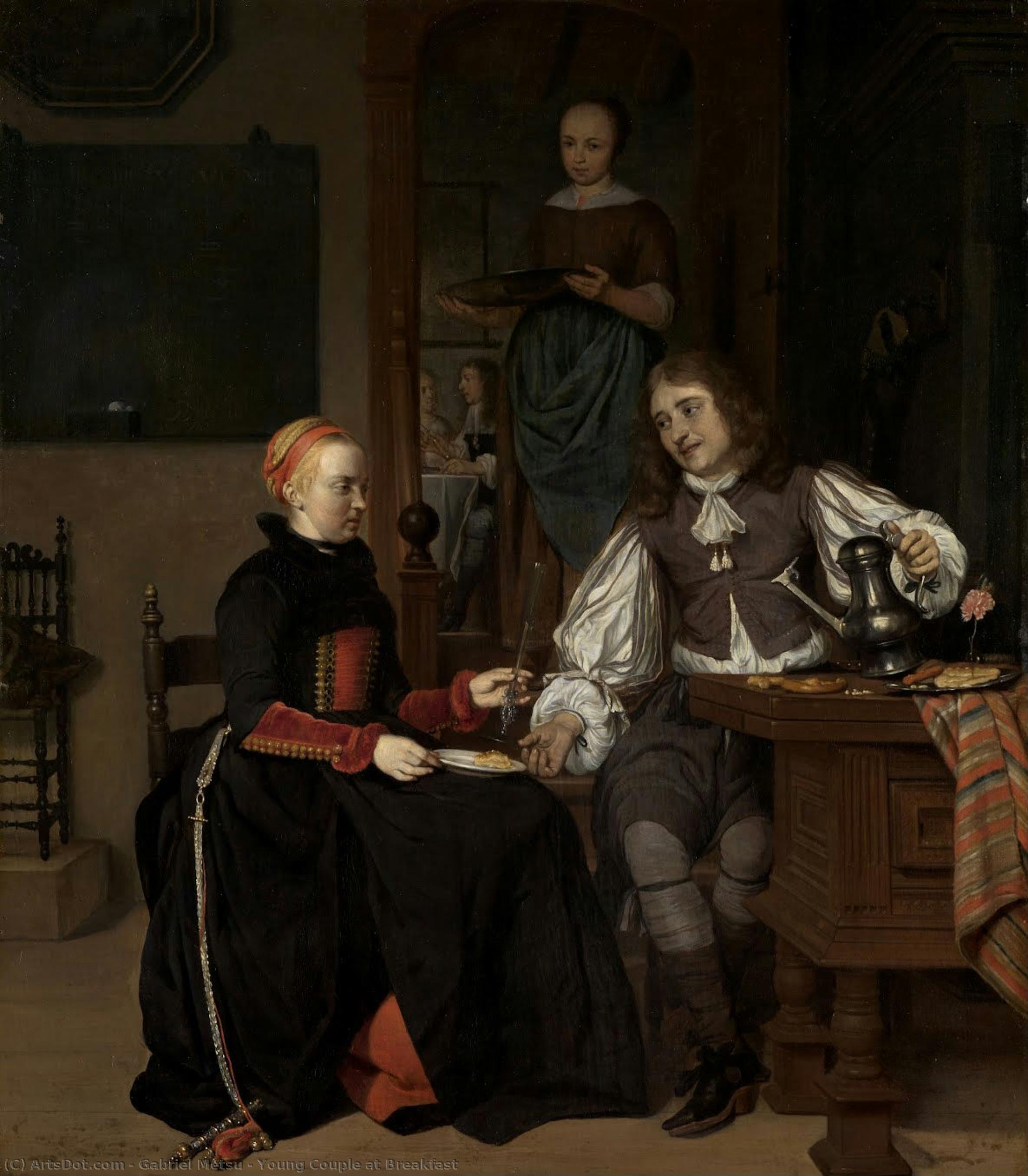
Gabriel Metsu’s “Young Couple at Breakfast” (1667) stands as an emblem of Dutch Golden Age realism, capturing a fleeting moment of intimacy within the confines of a modestly sized room. More than just a portrait, it's a carefully constructed tableau designed to convey profound symbolic meaning—a testament to Metsu’s masterful understanding of both visual artistry and humanist concerns. Commissioned by Margravine Caroline Louise of Baden, who championed delicate paintings reflecting domestic life, this artwork exemplifies the stylistic preferences of its era: eschewing the grandeur of Baroque excess for the quiet observation characteristic of Vermeer and Rembrandt.- Subject Matter & Context: The scene depicts a young woman presenting a plate laden with food to a seated man—a commonplace gesture elevated by Metsu’s meticulous attention to detail. Breakfast, or similar meals, served as symbols of hospitality, affection, and social status during the seventeenth century. It speaks to the burgeoning interest in portraying everyday life with psychological depth, mirroring broader cultural shifts away from courtly formality towards a more nuanced understanding of human experience.
- Style & Technique: Metsu’s approach is undeniably realistic—characterized by painstaking rendering of textures (fabric, skin, metal) and subtle gradations of light and shadow. He employs layering thin glazes of oil paint to build up color and luminosity, a technique perfected during the Golden Age that allows for exceptional tonal control and visual richness. The flattened perspective typical of Dutch portraiture contributes to an illusion of space, subtly enhancing the scene’s atmosphere.
- Composition & Perspective: Balanced symmetry dominates the canvas—the central figures framed by a partially visible mirror and a young girl in the distance. This arrangement directs the viewer's gaze and reinforces the sense of orderliness inherent in the domestic setting. The mirror serves as a visual device, reflecting not only the room’s interior but also hinting at deeper psychological complexities.
- Color Palette & Lighting: Dominantly composed of dark browns and blacks—a hallmark of Dutch painting—the palette is punctuated by warmer tones like red, gold, and cream, strategically used to highlight key elements such as the food and clothing. Dramatic lighting casts strong shadows across faces and objects, creating a palpable sense of depth and enhancing the emotional impact of the artwork.
- Symbolism & Emotion: The act of presenting food carries significant symbolic weight—representing generosity, affection, and the nurturing role of women within the family. Metsu’s masterful depiction captures not merely an image but also an emotion—a quiet dignity and restrained formality that speaks to the enduring fascination with domestic interiors as spaces of contemplation and connection.
Gabriel Metsu: A Pioneer of Domestic Genre Painting
Gabriel Metsu (1629–1667) emerged from Leiden’s artistic milieu—a city renowned for its humanist spirit and burgeoning patronage—as a painter who defied stylistic conventions. Influenced by Rembrandt's chiaroscuro technique and Vermeer’s luminous realism, Metsu nevertheless forged his own distinctive path, prioritizing genre scenes and portraits that captured the subtleties of human emotion and everyday life. His unwavering commitment to meticulous observation and nuanced rendering solidified his reputation as one of the most accomplished artists of his time—a true innovator who elevated domestic interiors into canvases of profound psychological insight.Exploring Metsu’s Legacy: Reproductions & Artistic Inspiration
Today, Gabriel Metsu's “Young Couple at Breakfast” continues to inspire artists and collectors alike. High-quality reproductions offer a captivating glimpse into the artist’s unparalleled skill—allowing viewers to appreciate the intricate details of his technique and immerse themselves in the serene beauty of his vision. Consider incorporating elements of Metsu’s style—particularly his masterful use of light and color—into your own interior design projects, creating spaces that evoke a similar sense of tranquility and understated elegance.O artyście
Gabriel Metsu – A Life of Artistic Exploration
Gabriel Metsu (1629–1667) stands as a singular figure within the Dutch Golden Age, celebrated for his masterful depictions of domestic interiors and genre scenes imbued with subtle symbolism. Unlike many of his contemporaries who adhered to established artistic conventions, Metsu pursued an eclectic path, blending influences from Rembrandt van Rijn and Johannes Vermeer into a distinctive visual language that continues to fascinate scholars and collectors alike. This biography delves into the life and oeuvre of this enigmatic artist, illuminating the formative years, groundbreaking techniques, and enduring legacy that cemented his place in art history.Early Life and Influences
Born in Leiden around 1629, Gabriel Metsu’s artistic journey began within a family steeped in artistic tradition. His father, Jacques Metsu, was a tapestry worker and painter originally hailing from Hainault—a heritage that instilled in Gabriel an appreciation for diverse visual mediums beyond mere portraiture. The Metsu household moved to Leiden shortly after his birth, exposing him to the vibrant cultural landscape of the burgeoning Republic. Crucially, Jacques’s artistic training under Gerard Dou profoundly shaped Metsu's early sensibilities, fostering a meticulous attention to detail and mastering the art of capturing natural light—skills that would become hallmarks of his mature style. The influence of Rembrandt van Rijn is palpable in Metsu’s formative works, particularly his use of chiaroscuro – dramatic contrasts between light and dark – mirroring Rembrandt’s groundbreaking approach to illumination.Artistic Career: Embracing Eclecticism
Metsu's artistic career defied categorization, earning him the moniker “a highly eclectic artist.” He skillfully navigated various genres—history paintings, still lifes, portraits, and genre scenes—demonstrating an unparalleled versatility that distinguishes him from many of his peers. Remarkably, only fourteen of Metsu’s approximately 133 extant paintings bear dates, leaving considerable room for speculation regarding the chronology of his creative process and highlighting the challenges inherent in reconstructing his artistic development. This deliberate avoidance of stylistic uniformity underscores Metsu's conviction that artistic expression should transcend rigid boundaries, prioritizing emotional resonance and visual impact above adherence to prevailing trends. His decision to establish a studio in Amsterdam around 1655 marked a pivotal moment, propelling him into contact with the epicenter of Dutch artistic innovation and fostering collaborations with fellow masters like Johannes Vermeer and Pieter de Hooch—artists who similarly championed the depiction of everyday life with remarkable realism and psychological depth.Notable Works and Legacy
Metsu’s paintings frequently centered on scenes of domestic tranquility – young women engaged in quiet pursuits, market interiors brimming with activity, and elderly figures reflecting upon life's passage. These subjects resonated deeply with the sensibilities of his time, mirroring the humanist ideals that underpinned the Dutch Golden Age. Among Metsu’s most celebrated achievements is *The Poultry Seller*, a masterpiece that exemplifies his masterful use of symbolism—a technique honed by Dou and Vermeer—to convey complex narratives within seemingly simple compositions. The painting's meticulous depiction of light and texture further underscores Metsu’s dedication to capturing the nuances of visual perception, solidifying his reputation as one of the era’s foremost innovators. Furthermore, *Portrait of the Hinlopen Family* exemplifies Metsu’s ability to blend genre conventions with portraiture, creating images that transcend mere likeness—capturing not only physical appearance but also psychological character and familial bonds. His influence extended beyond his immediate contemporaries, shaping the artistic sensibilities of subsequent generations and ensuring that Metsu's distinctive visual language continues to inspire artists today.Museum Collections and Recognition
Gabriel Metsu’s enduring legacy is reflected in the prominent presence of his artworks within major museums across Europe—most notably the Rijksmuseum in Amsterdam, where visitors can immerse themselves in the splendor of Dutch Baroque art. Ongoing research into Metsu's life and oeuvre continues to unveil new insights into his artistic process and contextualize his achievements within the broader framework of seventeenth-century European culture. His contribution to the visual arts remains unparalleled—a testament to Gabriel Metsu’s unwavering commitment to artistic exploration and innovation.
Gabriel Metsu
1629 - 1667 , Holandia
Krótka nota
- Artistic Movement Or Style: Dutch Golden Age painting
- Artists Or Movements Influenced By This Artist: ['Michiel van Musscher']
- Artists Who Influenced This Artist:
- Rembrandt van Rijn
- Johannes Vermeer
- Date Of Birth: 1629
- Date Of Death: 1667
- Full Name: Gabriel Metsu
- Nationality: Dutch
- Notable Artworks:
- The Sick Child
- Poultry Seller
- Portrait of the Hinlopen Family
- Place Of Birth: Leiden, Netherlands
Powiązane artykuły

Golden Light & Dutch Skies: The Timeless Magic of Dutch Golden Age Landscapes
Discover the breathtaking beauty of Dutch Golden Age landscapes. Explore the mastery of light, chiaroscuro, and 17th-century realism through an expert art history lens, celebrating the enduring legacy of the Dutch Masters for discerning collectors and art lovers.

Złoty Wiek Holandii: 10 arcydzieł, które zmieniły historię sztuki | OriginalUniqueArt.com
Odkryj 10 arcydzieł Złotego Wieku Holandii! Poznaj historię Rembrandta, Vermeera i innych mistrzów. Reprodukcje obrazów najwyższej jakości do Twojego wnętrza – OriginalUniqueArt.com.

Blask Złotej Ery Niderlandów: Studium Innowacji w Malarstwie XVII Wieku
Odkryj fascynujący świat malarstwa holenderskiego Złotej Ery! Analiza innowacyjnych technik Rembrandta, Vermeera i innych mistrzów. Poznaj historię, gatunki i wpływ tego wyjątkowego okresu na sztukę.

Dante Gabriel Rossetti: 25 Arcydzieł Pełnych Pasji i Symboliki | OriginalUniqueArt
Odkryj 25 najpiękniejszych obrazów Dante Gabriela Rossettiego! Poznaj historię, symbolikę i techniki prerafaelitów. Reprodukcje najwyższej jakości do Twojego wnętrza – OriginalUniqueArt.

Gabriel Metsu: Illuminating Dutch Daily Life with Exquisite Detail
Explore the captivating world of Gabriel Metsu, a leading Dutch Golden Age painter. Discover his exquisite genre scenes, masterful realism, and insightful social commentary. Learn about key works & his lasting legacy.