Surrealist Leanings
Bodegón (Frida Kahlo)
Frida Kahlo (1907–1954) stworzył Bodegón. Należy do nurtu Surrealist Leanings. Wykonano w technice Akryl na płótnie.
- Akryl na płótnie

 Podgląd w skali 1:1

 Ręcznie malowany obraz olejny
 Wyślij jako kartkę
 Udostępnij
 Karta informacyjna


 Pobierz obraz
 Podobne obiekty
 RTG
 Pokaz slajdów
 Pytania i odpowiedzi

 Statystyki
Bodegón w skrócie
- Tytuł
- Bodegón
- Artysta
- Frida Kahlo (1907–1954)
- Miejsce urodzenia artysty
- Coyoacán, Meksyk
- Technika wykonania
- Akryl na płótnie
- Epoka
- Modernizm
- Temat
- mexican art, fruit symbolism, kahlo imagery, pumpkin motif, circular composition, symbolic arrangement
Co przedstawia Bodegón?
Bodegón: A Stillness Charged with Life
Frida Kahlo, an artist synonymous with unflinching self-portraiture and the vibrant tapestry of Mexican identity, surprises many with her ventures into still life painting. *Bodegón*, a work often overshadowed by her more famous biographical pieces, reveals a different facet of Kahlo’s artistic sensibility – one deeply rooted in tradition yet subtly infused with her signature surrealist leanings. The composition centers around a robust pumpkin, dominating the visual field and acting as an anchor for the surrounding arrangement of fruits: apples, oranges, and bananas are carefully positioned, creating a circular flow that draws the eye inward. A vase graces the upper left corner, adding a delicate counterpoint to the earthy weight of the produce. This isn’t merely a depiction of objects; it's a meticulously constructed world brimming with symbolic potential.The Language of Objects: Symbolism in Kahlo’s Still Life
To understand *Bodegón*, one must consider the cultural context and Kahlo’s personal iconography. While seemingly straightforward, the choice of fruits and vegetables is far from arbitrary. The pumpkin itself, a pre-Columbian symbol of fertility and abundance, takes on added resonance when viewed through the lens of Kahlo's own struggles with physical pain and her inability to carry a child to term. Its presence speaks volumes about resilience and perseverance—themes central to Kahlo’s artistic vision. The oranges and apples, often associated with temptation and knowledge in Western art history, are juxtaposed against the bananas – a fruit less traditionally laden with symbolism but perhaps representing exoticism or fleeting pleasure. This deliberate contrast underscores Kahlo's exploration of duality and complexity. The vase, a vessel for life-giving water, hints at themes of nourishment and sustenance—a quiet reminder of vitality amidst stillness.Style and Technique: Kahlo’s Naive Folk Art Approach
Kahlo’s technique distinguishes *Bodegón* from many other still lifes of her time. Rejecting academic precision, she embraced a style reminiscent of Mexican folk art – *naif peinture*, characterized by bold outlines, flattened perspective, and vibrant color palettes. This stylistic choice wasn't accidental; it reflected Kahlo’s desire to connect with indigenous traditions and express emotion directly without resorting to illusionistic representation. The meticulous attention to detail—the subtle variations in shade on the pumpkin skin, the careful placement of each fruit—contrasts beautifully with the overall simplicity of the composition. This juxtaposition reinforces Kahlo's ability to convey profound meaning through seemingly uncomplicated visual elements.Historical Context: Mexican Identity and Surrealist Influences
Painted in 1951, *Bodegón* emerged during a period of significant artistic experimentation in Mexico—the Mexicayotl movement sought to define a distinctly Mexican aesthetic, rejecting European influences and celebrating the country’s heritage. Kahlo's work simultaneously embodies this nationalist impulse and incorporates elements of Surrealism, reflecting her fascination with dreams, subconscious imagery, and irrational juxtapositions. The unsettling quality of the scene—the slightly off-kilter arrangement of objects—hints at Kahlo’s exploration of psychological landscapes and her willingness to confront uncomfortable truths about human experience.Emotional Impact: A Reflection of Inner Turmoil
Ultimately, *Bodegón* transcends its formal qualities as a still life; it serves as a powerful conduit for Kahlo's emotional state. The painting captures a sense of quiet contemplation mingled with underlying tension—a visual manifestation of her inner struggles and vulnerabilities. It invites viewers to engage in a dialogue about pain, loss, and the enduring power of beauty amidst adversity. Like all of Kahlo’s art, *Bodegón* compels us to confront difficult emotions while simultaneously offering solace in its serene composition.Zdjęcia w wysokiej rozdzielczości dzieła Bodegón
Domena publiczna: artysta zmarł w 1954.
Frida Kahlo, Bodegón.
Frida Kahlo (1907–1954), Bodegón, akryl na płótnie. Domena publiczna Źródło obrazu: OriginalUniqueArt.com.
Odpowiedzi na pytania dotyczące Bodegón
Z jakiej techniki wykorzystano "Bodegón"?
Frida Kahlo wykorzystał/a technikę Akryl na płótnie w pracy „Bodegón”. Technika ta definiuje materię oryginalnego dzieła.
Co przedstawia „Bodegón” – Frida Kahlo?
Tematyka obecna w „Bodegón” – Frida Kahlo obejmuje mexican art, fruit symbolism, kahlo imagery, pumpkin motif, circular composition, symbolic arrangement, surrealist style, floral elements. Razem stanowią one podsumowanie tematyki dzieła.
Czy obraz „Bodegón” – Frida Kahlo można swobodnie reprodukować?
Status praw autorskich dla „Bodegón” – Frida Kahlo: dzieło znajduje się w należy do domeny publicznej – autorskie prawa majątkowe wygasły. Określa to, czy reprodukcje obrazu mogą być sporządzane swobodnie.
Któremu artyście przypisuje się "Bodegón"?
„Bodegón” zostało stworzone przez Frida Kahlo. Informacje na tej stronie dotyczą oryginalnego dzieła autorstwa Frida Kahlo.
Do jakiego nurtu w sztuce należy „Bodegón” – Frida Kahlo?
Nurt związany z „Bodegón” – Frida Kahlo to Surrealist Leanings. Ta klasyfikacja sytuuje dzieło wśród pokrewnych artystów i dzieł sztuki.
Do którego etapu twórczości Frida Kahlo należy dzieło „Bodegón”?
„Bodegón” pochodzi z okresu Mature Period w twórczości Frida Kahlo. Klasyfikacja ta wiąże dzieło z rozwojem artysty.
Czy dzieło „Bodegón” autorstwa Frida Kahlo znajduje się w domenie publicznej i dlaczego?
Dzieło "Bodegón" autorstwa Frida Kahlo znajduje się w należy do domeny publicznej – autorskie prawa majątkowe wygasły. Okres ochrony praw autorskich liczony jest od daty śmierci artysty, a Frida Kahlo zmarł(a) w 1954.
W jaki sposób "Bodegón" wpisuje się w tematykę i styl twórczości Frida Kahlo?
W dorobku Frida Kahlo, "Bodegón" wpisuje się w styl Surrealist Leanings, nawiązując do tematów takich jak mexican folk art tradition, pain, resilience & identity, symbolic representation & emotion, exploring female experience, kahlo’s autobiographical vision.
Czy "Bodegón" wpisuje się w typową tematykę twórczości Frida Kahlo?
Wśród motywów charakterystycznych dla twórczości Frida Kahlo – takich jak mexican folk art tradition, pain, resilience & identity, symbolic representation & emotion, exploring female experience, kahlo’s autobiographical vision – dzieło „Bodegón” wprowadza własne skupienie na mexican art, fruit symbolism, kahlo imagery, pumpkin motif, circular composition, symbolic arrangement, surrealist style, floral elements.
O artyście: Frida Kahlo
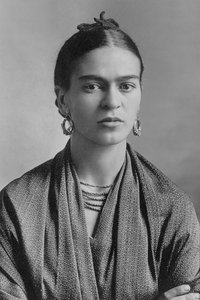
1907–1954, Meksyk
Frida Kahlo
Wczesne lata i korzenie rodzinne Coyoacán w Mieście Meksyk staje się tłem dla narodzin Magdaleny Carmen Friedy Kahlo y Calderón, które miały miejsce 6 lipca 1907 roku. Jej dom rodzinny to fascynujące zderzenie różnych linii krwi. Jej ojciec, Guillermo Kahlo, był fotografem o niemiecko-meksykańskich korzeniach, natomiast matka, Matilde, niosła w sobie dziedzictwo zarówno rdzennych mieszkańców Ameryki, jak i Hiszpanów. Ten wielokulturowy krajobraz domowy ukształtował wczesne lata Frida Kahlo – dziecka, którego fizyczna rzeczywistość zaczęła nieodwracalnie zmieniać się pod ciężarem choroby.
Inne prace Frida Kahlo
 Dwie Fridy1939
 Autoportret z naszyjnikiem z kolców i kolibrem
 Kolumna Złamana1944
 Zraniony Jeleń1946
Eseje o Bodegón
 Mexican contemporary realist paintersGraciela Iturbide and Octavio Medellín define this era. Examine 10 artists, including works from 1938 and the life of Jorge Chávez Carrillo.
 Pain and Passion: The 25 Most Iconic Masterpieces by Frida Kahlo1939 saw the creation of The Two Fridas during her divorce from Diego Rivera. Compare the symbolism in this work against her 1944 self-port…
 The Bountiful Still Life: Symbolism & Artistic Representation of Fruit Across Art HistoryExplore the rich history of still life painting & the symbolism of fruit across art movements. Discover masterpieces from Caravaggio to Céz…