

 Podgląd w skali 1:1
 Wyślij jako kartkę
 Udostępnij
 Szczegóły dzieła
 Przewodnik

 Pobierz obraz
 Podobne obiekty
 RTG
RTG Pokaz slajdów
 Q&A
Q&A Statystyki
Dreamers
 Painting
- Symbolism
 1886
1886- 19th Century
 20.0 x 14.0 cm
 Smithsonian American Art Museum
 Rozwiń treść
Otrzymaj plik gotowy do druku, którego jakość znacznie przewyższa podgląd internetowy. Każdy sprzedawany przez nas obraz cyfrowy pochodzi z wysokorozdzielczego pliku wzorcowego w naszej bazie — zazwyczaj o szerokości od 5 000 do 15 000 pikseli — dzięki czemu możesz drukować w dużym formacie, mocno kadrować lub z pełnym przekonaniem odwzorowywać najdrobniejsze detale.
Żaden plik nie opuszcza naszego studia bez odpowiedniej obróbki. Ekspert ds. cyfrowej edycji sprawdza zgodność kolorów z oryginałem i w razie potrzeby je koryguje, a następnie za pomocą profesjonalnych narzędzi do retuszu poprawia ostrość oraz szczegółowość — zawsze zachowując wierność pociągnięciom pędzla i stylowi artysty. Rezultatem jest obraz, który wygląda jak prawdziwe dzieło, a nie jak przefiltrowany skan.
Zatwierdzasz przed finalizacją zamówienia: nasz ekspert prześle obraz drogą mailową w ciągu 72 godzin do Twojego wglądu. Nie jesteś zadowolony? Poproś o poprawki lub korektę, bądź o zwrot kosztów, jeśli jakość nie spełnia oczekiwań.
To jakość, na której polegają wydawcy, studia projektowe, galerie oraz drukarnie.
Obraz cyfrowy
Pobierz plik o wysokiej rozdzielczości do osobistego użytku, druku oraz projektów kreatywnych. ( Przełącz na wydania drukowane Zamów ręcznie malowaną reprodukcję)
W każdym zamówieniu na obraz cyfrowy znajduje się
Profesjonalna dostawa cyfrowa z gwarancją
Wybierając OriginalUniqueArt.com, nie otrzymujesz jedynie obrazu – otrzymujesz profesjonalnie udoskonalone cyfrowe dzieło sztuki, stworzone z najwyższą precyzją i objęte gwarancją satysfakcji. Oto wszystko, co automatycznie dołączane jest do Twojego zamówienia:

Błyskawiczna wysyłka e-mailowa
Plik z obrazem cyfrowym w wysokiej rozdzielczości zostanie przesłany na Twój adres e-mail w ciągu 72 godzin od złożenia zamówienia – gotowy do natychmiastowego użycia.

Plik cyfrowy wzbogacony przez AI
Twoja grafika została profesjonalnie zoptymalizowana przy użyciu zaawansowanych narzędzi AI oraz ręcznej edycji, co zapewnia maksymalną szczegółowość, klarowność i wierność kolorów.

Darmowe ponowne przesyłki dożywotnio
Przypadkowo usunąłeś lub zgubiłeś swój plik? Bez obaw – prześlemy go Tobie ponownie w dowolnym momencie, bez żadnych opłat.

Bez opłat importowych – zawsze
Ciesz się swoją sztuką natychmiast, bez żadnych opłat celnych, należności ani kosztów dostawy – pliki cyfrowe są zawsze wolne od podatku.

Gwarancja wierności kolorów
Dzięki zastosowaniu profesjonalnych narzędzi i procesów zarządzania barwą zapewniamy, że Twoje cyfrowe zdjęcie odzwierciedla oryginalne kolory tak wiernie, jak to tylko możliwe.

Gwarancja satysfakcji przez 100 dni
Jeśli nie będziesz zadowolony ze swojego cyfrowego obrazu, dokonamy jego poprawki lub zwrócimy 100% kosztów w ciągu 100 dni – bez zbędnych pytań.

100% Gwarancja zwrotu pieniędzy
Nie jesteś zadowolony? Otrzymaj pełny zwrot kosztów w ciągu 100 dni od otrzymania pliku cyfrowego – bez zbędnych pytań.

Rabaty przy zamówieniach hurtowych
Kup 3 obrazy, oszczędź 10% - Kup 5, oszczędź 15% - Kup 10+, oszczędź 20%. Idealne do projektów kreatywnych, galerii i agencji.
A Visionary Encounter: The Ethereal World of Frederick Stuart Church
In the delicate interplay of light and shadow found within Dreamers, we encounter the profound mastery of Frederick Stuart Church, an artist who possessed the rare ability to bridge the gap between the tangible world and the realm of symbolic allegory. Painted in 1886, this captivating work invites the viewer into a quiet, pastoral sanctuary where the boundaries between humanity and nature begin to dissolve. The scene centers on a woman seated gracefully upon the earth, her gaze fixed with an intimate, almost spiritual intensity upon a bird perched before her. This is not merely a depiction of a moment in time; it is an invitation to contemplate the deep, unspoken connections that bind all living creatures within the tapestry of existence.
Church’s technique, refined through his rigorous training at the Academy of Design in Chicago, allows for a breathtakingly soft rendering of texture and atmosphere. The grassy expanse surrounding the central figures feels alive, breathing with the quiet energy of an afternoon spent in reverie. As the eye wanders across the canvas, it discovers other avian companions—one resting near the right periphery and another drifting into the background—creating a sense of depth and a layered narrative of companionship. The presence of other figures in the distance adds a layer of social complexity to the scene, yet they remain secondary to the profound, silent dialogue occurring between the woman and her feathered interlocutor.
Symbolism and the Romantic Spirit
To understand Dreamers is to understand the late 19th-century fascination with Symbolism and the Romantic movement. Church was far more than a mere illustrator; he was a storyteller who used animals as vessels for moral and emotional truths. In this piece, the birds serve as much more than decorative elements; they act as messengers of the subconscious, representing the fleeting nature of thoughts and the purity of the soul. The woman’s contemplative posture suggests a state of "dreaming" while awake—a hallmark of the era's fascination with the inner life and the spiritual dimensions of the natural world.
For the discerning collector or interior designer, this painting offers an unparalleled emotional resonance. Its palette, characterized by the soft, organic tones of the late Victorian era, provides a sense of tranquility and timelessness that can anchor any sophisticated space. Whether placed in a sunlit study or a quiet library, a high-quality reproduction of Dreamers serves as a window into a more contemplative age. It is a piece that does not merely decorate a wall but enriches the atmosphere of a room, prompting guests to pause, reflect, and perhaps, like the figures within the painting, lose themselves in a moment of beautiful, silent dreaming.
Pytania i odpowiedzi
W jakiej technice wykonano "Dreamers" i jakie są jego wymiary?
"Dreamers" powstało przy użyciu Painting i w swojej oryginalnej formie ma wymiary 20 x 14 cm.
Do którego etapu twórczości Frederick Stuart Church należy dzieło „Dreamers”?
"Dreamers" reprezentuje Mature Period twórczości Frederick Stuart Church.
Jaki jest zalecany rozmiar wydruku dla „Dreamers” – Frederick Stuart Church?
Dla dzieła „Dreamers” – Frederick Stuart Church sugerowana jest reprodukcja w formacie Small. Rozmiar można dostosować, zachowując proporcje.
Biografia artysty
The Visionary Soul of an American Master
In the vibrant tapestry of late nineteenth-century American art, few threads are as intricately woven or as whimsically colored as those spun by Frederick Stuart Church. Born in Grand Rapids, Michigan, on December 1, 1842, Church was a man whose life trajectory defied the conventional paths laid out by his prominent lineage. The son of a distinguished lawyer and politician, his early years were marked by a departure from the structured world of commerce. At just thirteen, he abandoned formal schooling to join the American Express Company in Chicago—a move intended by his parents to steer him toward a stable business career. Yet, the call of destiny was far more profound than the lure of ledger books. The onset of the Civil War provided a transformative crucible; serving in the Union Army, Church experienced a depth of human experience that would later infuse his work with a unique sense of empathy and moral weight.
A Symphony of Allegory and Animal Grace
Church’s artistic legacy is most profoundly felt in his mastery of the allegorical depiction. He possessed a rare, almost supernatural ability to imbue the animal kingdom with human emotion and moral complexity. His illustrations, which graced the pages of prestigious publications such as Harper's and Century Magazine, were never merely decorative; they were narratives of the soul. Through his delicate use of line and color, a tiger was rarely just a predator, and a bird was never just a creature of flight. Instead, they became vessels for exploring themes of innocence, power, and the delicate balance of nature. In works like Maiden with Flamingos or his evocative etchings such as A Symphony, one finds a serene yet tension-filled world where every tilt of a head or outstretched paw tells a story of profound significance.
His technique often danced between the realms of Impressionism and fine line illustration, creating a dreamlike atmosphere that captivated the Gilded Age audience. His fascination with certain motifs—such as the majestic tiger or the delicate songbird—allowed him to explore the duality of existence: the predator and the prey, the powerful and the vulnerable. This era of his work reflected the broader cultural shifts of the time, capturing a sense of lightness and whimsy while simultaneously touching upon deeper, often more somber, social allegories. To look upon a Church original is to enter a realm where the boundaries between the natural world and the human psyche dissolve into a beautiful, symbolic haze.
Legacy of an American Illustrator
The historical significance of Frederick Stuart Church lies in his ability to bridge the gap between commercial illustration and fine art. He elevated the medium of the periodical illustration to a level of high symbolism, proving that even within the constraints of mass media, an artist could achieve profound depth. His life, spanning from the mid-nineteenth century through the dawn of the twentieth, mirrored the evolution of the American identity itself—moving from the ruggedness of the Civil War era to the sophisticated, ornamental elegance of the Gilded Age.
Today, his work remains a testament to the power of empathy in art. His ability to find the "human" within the animal and the "divine" within the mundane continues to resonate with collectors and historians alike. As we revisit his catalog, we see more than just beautiful images; we encounter the enduring spirit of an artist who believed that through the lens of nature, we might most clearly see ourselves.
- Key Artistic Milestones:
- Enrolled at the National Academy of Design under Lemuel Wilmarth.
- Became a prominent contributor to Harper's Weekly and Century Magazine.
- Developed a signature style blending Romanticism with animal allegory.
- Championed an independent, American-centric approach to artistic training.
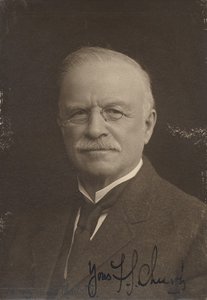
Frederick Stuart Church
1842 - 1924
Krótka nota
- Full Name: Frederick Stuart Church
- Nationality: American
- Date Of Birth: 1842
- Date Of Death: 1924
- Place Of Birth: Grand Rapids, Michigan
- Notable Artworks:
- Supremacy
- Dreamers
- Two Birds
- Artistic Movement Or Style: Illustrator; Victorian Animal Art
- Artists Who Influenced This Artist: Walter Shirlaw
- Artists Or Movements Influenced By This Artist: Aesops Fables