

 Zobacz w skali 1:1
 Wyślij
 Udostępnij
 Szczegóły
 Przewodnik

 Pobierz plik obrazu
 Podobne obiekty
 RTG
RTG Pokaz slajdów
 Statystyki
The Old Stone Crusher (also known as The Quarry)


 Czytaj więcej
Giclée / Wydruk artystyczny
Wydruki giclée lub płótna o jakości muzealnej, szybka realizacja i szeroki wybór opcji wykończenia. ( Kup ręcznie malowany obraz Przełącz na wersję cyfrową)




P118B $10

P118H $10

P118W $10

P438Z $10

P508JH $12

P508YH $12

P805H $10

P805Z $10

P919BZ $10

P919G $10

P919XJ $10

P959ZH $10

P968JZ $12

W106C $8

W218G $10

W218JH $8

W218Y $10

W307PJ $10

W316G $10

W316PJ $8

W316Y $10

W398PJ $8

W4111J $10

W500HY $15

W500JH $15

W692G $12

W849H $8

W940BG $15

W953PJ $8




Wybierz spośród naszych standardowych rozmiarów, które zachowują oryginalne proporcje dzieła sztuki.

Możesz wprowadzić własne wymiary, aby dopasować dzieło do konkretnej ramy lub przestrzeni. Jeśli wybrany rozmiar nie będzie odpowiadał proporcjom oryginalnego obrazu, przytniecie dzieło lub rozszerzymy obraz za pomocą odbicia lustrzanego lub jednolitego wypełnienia krawędzi. Przed rozpoczęciem produkcji prześlemy cyfrową wizualizację do Twojej akceptacji.
Prosimy pamiętać, że podgląd na ekranie nie odzwierciedla faktycznego przycinania ani rozszerzania. Tylko wizualizacja dokładnie pokaże końcową kompozycję.
Mimo dostępności niestandardowych rozmiarów, zalecamy wybór wymiaru z listy zdefiniowanej, aby zachować oryginalne proporcje.
Dostawa na cały świat () w ciągu 2 tygodni zamiast standardowych 4/5 tygodni. (27 Wrzesień)

Bezpłatna ekspresowa wysyłka na cały świat

Wysokiej jakości płótno lniane

Pełne ubezpieczenie transportowe

Gwarancja zwrotu należności celnych i podatków importowych

Gwarancja idealnego odwzorowania barw

100-dniowy okres na zwrot dzieła w przypadku wykrycia wad produkcyjnych

Gwarancja 100% zwrotu pieniędzy

Oferta przy zakupie wielu sztuk
 Opcja ze szkłem jest dostępna wyłącznie w rozmiarach poniżej 110 cm

The Old Stone Crusher (also known as The Quarry)
Giclée / Wydruk artystyczny
Rozmiar reprodukcji
-


Suma do zapłaty
$ 80
The Old Stone Crusher (also known as The Quarry) – A Portrait of Rural Labor and Australian Identity
Frederick McCubbin’s “The Old Stone Crusher,” painted in 1911, stands as a quintessential example of the Heidelberg School’s artistic vision—a movement that championed realism alongside lyrical Impressionism to capture the spirit of Australia’s burgeoning landscape. Currently residing at the Art Gallery of South Australia in Adelaide, this oil on canvas masterpiece transcends mere depiction; it embodies a profound meditation on rural life and its role in shaping the nation's cultural consciousness.
Subject Matter and Setting: The painting transports viewers to Burnley Quarry, Victoria—a site vital for supplying basalt stone used extensively in Melbourne’s construction projects. McCubbin meticulously portrays a scene of industrious labor: men hauling heavy loads from a stone crusher atop a hill, accompanied by horses diligently transporting materials. This juxtaposition isn't accidental; it speaks directly to the realities of Australian settlement and the importance of manual labor in building a prosperous nation.
Style and Technique – Heidelberg School Aesthetics: McCubbin’s stylistic approach aligns perfectly with the Heidelberg School’s ethos—characterized by diffused light, muted color palettes, and an unwavering commitment to capturing the essence of the Australian bush. He employs a technique rooted in observation and meticulous layering. Initial sketches established a warm tonal base using pigments like sienna and white, followed by gradual application of color through knife painting – a method favored by McCubbin himself—resulting in translucent glazes that reveal underlying hues. This painstaking process ensured maximum fidelity to the natural world while simultaneously conveying an atmosphere of quiet contemplation.
Symbolism and Emotional Resonance: Beyond its visual representation, “The Old Stone Crusher” carries symbolic weight. The crushed stone symbolizes both physical toil and the transformative power of industry—a force shaping the Australian landscape. Simultaneously, the horses embody a connection to the pastoral past, representing Australia’s agricultural heritage alongside the burgeoning urban center. McCubbin's masterful use of light and shadow contributes significantly to the painting's emotional impact, fostering a sense of melancholy beauty that lingers long after viewing.
Comparisons with Other Artists: While influenced by artists like Hans Heysen who focused on geological formations, McCubbin’s work distinguishes itself through its portrayal of human activity within the landscape. His son Louis McCubbin noted that McCubbin's technique involved “scumbles” – applying pigment thinly to create a luminous effect—a method mirroring those employed by Impressionist painters like Claude Monet. The painting’s acquisition by the Art Gallery of South Australia in 1943 underscores its enduring significance as a cornerstone of Australian art history.
Further Exploration: For deeper insights into Frederick McCubbin and his artistic legacy, visit OriginalUniqueArt.com to discover more about his oeuvre and explore reproductions of his celebrated works.
Biografia artysty
Frederick McCubbin – A Life Rooted in the Australian Landscape
Frederick McCubbin, born February 25th, 1855, in Melbourne, Australia, stands as a cornerstone of Australian art—a figure inextricably linked to the nation’s evolving identity and its distinctive visual language. His journey from humble beginnings—the son of bakers who instilled in him a profound work ethic—to becoming a pivotal voice within the Heidelberg School is testament to his unwavering dedication and artistic vision. McCubbin's formative years were marked by diverse experiences, beginning with his early education at William Willmett’s West Melbourne Common School and St Paul’s School, Swanston Street, where he absorbed foundational knowledge of Victorian society. He subsequently honed his skills as a solicitor’s clerk and assisted in the family bakery business—activities that instilled within him an understanding of everyday Australian life, a theme which would permeate throughout his oeuvre. Recognizing his innate talent for drawing, McCubbin enrolled at the National Gallery of Victoria Art School under the tutelage of Eugene von Guerard and George Folingsby, absorbing the prevailing artistic currents of the time while mastering traditional landscape painting techniques.Early Influences and Artistic Training
A crucial turning point arrived with his enduring friendship with Tom Roberts—a bond that would profoundly shape the trajectory of Australian art history. Roberts’s return from a four-year expedition to Europe in 1885 ignited McCubbin's artistic imagination, introducing him to Impressionist principles and inspiring him to embrace plein air painting—a technique championed by artists like Jules Bastien-Lepage and Millet. Together, they established the Box Hill Artists’ Camp that summer, attracting fellow luminaries Arthur Streeton and Charles Conder—artists who would collectively define what became known as the Heidelberg School movement. Rejecting the rigid formalism of European academic art, this group ventured into the Australian bushland, seeking to capture its raw beauty and confronting its harsh realities with unprecedented immediacy and authenticity. McCubbin’s contribution during this formative period was instrumental in establishing a distinctly Australian aesthetic—one characterized by luminous color palettes and expressive brushstrokes that conveyed emotion rather than mere representation. His early works, such as *View near Fisherman's Bend* (1884), exemplify this stylistic approach, demonstrating his mastery of capturing atmospheric conditions and conveying the mood of the landscape.The Heidelberg School: Defining a National Vision
The Box Hill Artists’ Camp solidified McCubbin’s commitment to portraying Australian life—a mission that would propel him toward monumental achievements in later years. He served as Drawing Master at the National Gallery School from 1886, nurturing the talents of aspiring artists and fostering a dialogue about artistic innovation within Victoria. Simultaneously, he engaged in prolific sketching activity, documenting scenes of Melbourne’s urban sprawl and capturing glimpses of rural life—activities that informed his artistic vision and deepened his understanding of the Australian psyche. McCubbin's collaborative efforts with Roberts culminated in *On the Wallaby Track* (1896)—a painting that embodies the Heidelberg School’s ethos: a bold exploration of Australian identity expressed through evocative imagery and masterful technique. The monumental scale of this work—alongside *The Pioneer* (1904) – reflects McCubbin's ambition to engage with grand narratives about settlement and pioneering spirit, aligning him with the broader artistic movement that sought to forge a national mythology.Later Years and Artistic Evolution
McCubbin’s artistic sensibilities underwent further refinement during his trip to Europe in 1907—a journey that exposed him to the groundbreaking innovations of Impressionist painters like Turner and Monet. This encounter spurred him toward experimenting with looser brushwork, brighter colors, and a more subjective interpretation of light and atmosphere—characteristics evident in paintings produced shortly before his death in 1917. Notably, *Landscape* (c. 1914) exemplifies this stylistic shift—a testament to McCubbin’s ability to synthesize influences from both European tradition and Australian landscape painting. His legacy extends beyond individual artworks; he established a foundational aesthetic for Australian art—one that continues to inspire artists today. Frederick McCubbin remains celebrated as one of Australia's most influential painters, whose enduring vision captures the essence of the nation's spirit and its relationship with the natural world.
Frederick McCubbin
1855 - 1917 , Australia
Najważniejsze informacje
- Artistic Movement Or Style: Heidelberg School
- Artists Who Influenced This Artist:
- Eugene von Guerard
- George Folingsby
- Date Of Birth: 25 lutego 1855
- Date Of Death: 20 grudnia 1917
- Full Name: Frederick McCubbin
- Nationality: Australijski
- Notable Artworks:
- On the Wallaby Track
- Down on His Luck
- The Pioneer
- Place Of Birth: Melbourne, Australia
Zobacz także powiązane artykuły

Wiejskie Krajobrazy w Sztuce: Studium Ikonografii, Emocji i Społecznego Kontekstu
Odkryj fascynujący świat wiejskich krajobrazów w sztuce! Studium ikonografii, emocji i społecznego kontekstu malarstwa. Ekspercka analiza, inspiracje i możliwość zakupu reprodukcji na OriginalUniqueArt.

Evoking Nature's Sublime: A Comprehensive Exploration of 19th-Century Landscape Painting
Explore the captivating world of 19th-century landscape painting! Discover renowned artists like Friedrich & Monet, key movements, and find the perfect artwork to bring nature's serenity into your home. Expert insights at OriginalUniqueArt.
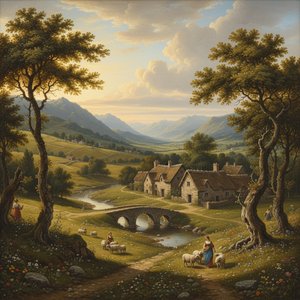
Evoking Arcadia: A Historical & Aesthetic Exploration of Rural Landscape Art
Explore the rich history of pastoral landscape art, from classical Arcadia to Impressionism & beyond. Discover key artists, movements, and how to collect serene rural scenes for your home. Expert insights at OriginalUniqueArt.

John Constable: 25 Najlepszych Obrazów Mistrza Angielskiego Krajobrazu | OriginalUniqueArt
Odkryj 25 arcydzieł Johna Constable'a – mistrza angielskiego krajobrazu! Poznaj romantyczne pejzaże, technikę malarską i inspiracje z Dedham Vale. Reprodukcje obrazów najwyższej jakości na OriginalUniqueArt.com. Eksploruj pełną kolekcję online!

Romantyczny Krajobraz w Malarstwie: 10 Arcydzieł, Które Zdefiniowały Epokę | OriginalUniqueArt.com
Odkryj 10 arcydzieł romantyzmu w malarstwie! Poznaj historie Caspara Davida Friedricha, Turnera i innych mistrzów. Inspiracje wnętrzarskie & reprodukcje obrazów najwyższej jakości na OriginalUniqueArt.com. Eksploruj kolekcję online!
