() ·

A painting made for you, by hand

Silhouette

Ręcznie malowana reprodukcja olejowa

Ręcznie malowany obraz olejny na płótnie, wykonany na zamówienie przez naszych artystów w wybranym przez Ciebie wymiarze i oprawie. ( Przełącz na wydania drukowane Przejdź do wersji cyfrowej)

Opis obiektu

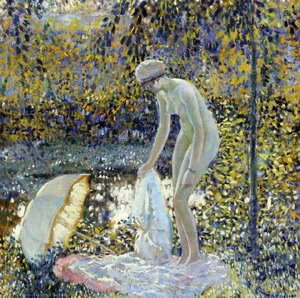
Admire 'Silhouette' by Frederick Carl Frieseke, a luminous Impressionist masterpiece capturing a woman lost in thought amidst serene garden hues. Explore its beauty & order handmade reproductions at OriginalUniqueArt.

Biografia artysty

"meta_description": "Frederick Carl Frieseke (1874-1939) – amerykański malarz impresjonista znany z 'dekoracyjnego impresjonizmu', plenerów w Giverny i uroczych portretów kobiet. Odkryj jego świat jasnych, idyllicznych obrazów!"

from ·

Chapter 1

How large should it be?

Slide to change the size; the picture on the left shows the frame at its real width. The proportions of the original are kept.

Standardowy format
personalizowane
CM
INCH

Wybierz spośród naszych standardowych rozmiarów, które zachowują oryginalne proporcje dzieła sztuki.

szerokość
wysokość

Wpisz wymaganą szerokość i wysokość, aby obraz pasował do Twojej ramy lub ściany. Ponieważ jest to dzieło malowane ręcznie, w przypadku rozmiaru o innych proporcjach artysta może domalować nieco więcej wokół obrazu lub przyciąć jego fragmenty — wybór należy do Ciebie. Przed rozpoczęciem pracy prześlemy Ci cyfrową wizualizację do zatwierdzenia. Obraz widoczny na tej stronie nie przedstawia rzeczywistego efektu — jedynie wizualizacja oddaje realny rezultat.

Chapter 2

How should it arrive?

Choose the edges of the stretched canvas

Choose your frame

Corner sample of the WhiteWrap canvas edge finish, stretched on lite drewno bars
White zł1
Corner sample of the BlurSideWrap canvas edge finish, stretched on lite drewno bars
Blurside zł1
Corner sample of the ExtendedWrap canvas edge finish, stretched on lite drewno bars
Extended zł1
Corner sample of the P118B picture frame: polistyren formowany, 5 cm wide and 3 cm thick
P118B zł10
Corner sample of the P118H picture frame: polistyren formowany, 5 cm wide and 3 cm thick
P118H zł10
Corner sample of the P118W picture frame: polistyren formowany, 5 cm wide and 3 cm thick
P118W zł10
Corner sample of the P438Z picture frame: polistyren formowany, 5.5 cm wide and 3.5 cm thick
P438Z zł10
Corner sample of the P508JH picture frame: polistyren formowany, 7 cm wide and 3.5 cm thick
P508JH zł12
Corner sample of the P508YH picture frame: polistyren formowany, 7 cm wide and 3.5 cm thick
P508YH zł12
Corner sample of the P805H picture frame: polistyren formowany, 5 cm wide and 3.5 cm thick
P805H zł10
Corner sample of the P805Z picture frame: polistyren formowany, 5 cm wide and 3.5 cm thick
P805Z zł10
Corner sample of the P919BZ picture frame: polistyren formowany, 7 cm wide and 3.5 cm thick
P919BZ zł10
Corner sample of the P919G picture frame: polistyren formowany, 7 cm wide and 3.5 cm thick
P919G zł10
Corner sample of the P919XJ picture frame: polistyren formowany, 7 cm wide and 3.5 cm thick
P919XJ zł10
Corner sample of the P959ZH picture frame: polistyren formowany, 5 cm wide and 3 cm thick
P959ZH zł10
Corner sample of the P968JZ picture frame: polistyren formowany, 6 cm wide and 4 cm thick
P968JZ zł12
Corner sample of the W106C picture frame: lite drewno, 5 cm wide and 3 cm thick
W106C zł8
Corner sample of the W218G picture frame: lite drewno, 5 cm wide and 3 cm thick
W218G zł10
Corner sample of the W218JH picture frame: lite drewno, 5 cm wide and 3 cm thick
W218JH zł8
Corner sample of the W218Y picture frame: lite drewno, 5 cm wide and 3 cm thick
W218Y zł10
Corner sample of the W307PJ picture frame: lite drewno, 6 cm wide and 3 cm thick
W307PJ zł10
Corner sample of the W316G picture frame: lite drewno, 6 cm wide and 3 cm thick
W316G zł10
Corner sample of the W316PJ picture frame: lite drewno, 6 cm wide and 3 cm thick
W316PJ zł8
Corner sample of the W316Y picture frame: lite drewno, 6 cm wide and 3 cm thick
W316Y zł10
Corner sample of the W398PJ picture frame: lite drewno, 5 cm wide and 3 cm thick
W398PJ zł8
Corner sample of the W4111J picture frame: lite drewno, 6.5 cm wide and 3.5 cm thick
W4111J zł10
Corner sample of the W500HY picture frame: lite drewno, 7 cm wide and 5 cm thick
W500HY zł15
Corner sample of the W500JH picture frame: lite drewno, 7 cm wide and 5 cm thick
W500JH zł15
Corner sample of the W692G picture frame: lite drewno, 8 cm wide and 4 cm thick
W692G zł12
Corner sample of the W849H picture frame: lite drewno, 5 cm wide and 3 cm thick
W849H zł8
Corner sample of the W940BG picture frame: lite drewno, 7.5 cm wide and 4.5 cm thick
W940BG zł15
Corner sample of the W953PJ picture frame: lite drewno, 6 cm wide and 3.5 cm thick
W953PJ zł8
Corner sample of the H24-GOLD picture frame: rzeźbione drewno pokryte gipsem, 10 cm wide and 6 cm thick
H24-GOLD zł30
Corner sample of the H24-SILVER picture frame: rzeźbione drewno pokryte gipsem, 10 cm wide and 6 cm thick
H24-SILVER zł30
Corner sample of the H36-GOLD picture frame: rzeźbione drewno pokryte gipsem, 15 cm wide and 6.5 cm thick
H36-GOLD zł45
Corner sample of the H36-SILVER picture frame: rzeźbione drewno pokryte gipsem, 15 cm wide and 6.5 cm thick
H36-SILVER zł45

Moulding: . Overall size with the frame: .

Chapter 3

Who paints it, and should anything change?

Examples of what can be changed: Replace face with customer photo; Add pet (e.g., replace cat with dog); Include hidden message in background; Change background landscape or elements.
After order, OriginalUniqueArt.com team will email client for instructions and provide a mockup preview

Dostawa na całym świecie () w ciągu 3–4 tygodni zamiast standardowych 5 tygodni. (31 Październik). Bez kompromisów w kwestii jakości.

Chapter 4

The finishing touches

A nameplate, as in a museum?

Szczegóły grawerowanej brązowej tabliczki

This elegant plaque features the artist's name and the title of the artwork, finely engraved for a timeless presentation.

It is made from bronze with a refined, elegant finish. The text is precisely laser-engraved for a sharp and permanent result. Measuring 9x2 cm, the plaque is compact yet easy to read. It's built to be durable and scratch-resistant, offering a professional, museum-quality look. Mounting is simple thanks to the included adhesive backing.

Szczegóły przezroczystej tabliczki akrylowej

The plaque includes essential engraved details such as the artist's name, the title of the artwork, the date it was created, the type of media used-like oil on canvas or watercolor-a brief description of the piece, and a QR code that links to the complete artwork information.

It is crafted from clear acrylic, offering a sleek, modern appearance. The text is UV-engraved in black to ensure strong visual contrast. With a size of 10x15 cm, it ensures optimal readability. It comes equipped with two metal hooks for secure wall mounting. The plaque is designed to be weather-resistant, making it suitable for various environments, and it includes interactive features that work seamlessly with smartphone scanning.

Szczegóły czarnej tabliczki akrylowej

This elegant plaque includes engraved information such as the artist's name, the title of the artwork, the date it was created, the type of media used (like oil on canvas or watercolor), a short description of the artwork, and a QR code for quick access to more information.

The plaque itself is made from refined black acrylic with a premium finish. The text is laser-engraved in white for high contrast and readability. Its size is 10x15 cm, designed to be easy to read. It comes with two metal hooks for professional mounting. The design is sleek and fits any interior style. It is also weather-resistant and durable, with built-in digital integration for mobile compatibility.

A protective varnish?

When do you need it?

Chapter 5

Your painting, as you ordered it

Silhouette

Technika reprodukcji

Wymiary reprodukcji

-

Wybitny mistrz artystyczny

Większa szczegółowość, finezja i dodatkowy czas na realizację

-

Opcje oprawy reprodukcji

-

-

W przypadku dzieł sztuki lub reprodukcji, których którykolwiek z boków przekracza 105 cm (około 41 cali), rama zostanie wysłana w formie zestawu do samodzielnego montażu. Metoda ta zapewnia bezpieczną dostawę i zapobiega uszkodzeniom podczas transportu.

Wymagany profesjonalny montaż – nie jest to produkt typu DIY.
Zestaw musi zostać złożony, a płótno naciągnięte przez doświadczonego profesjonalnego ramiarza, przy użyciu kleju do drewna (brak w zestawie), kleszczy do naciągania płótna oraz ścisków, które utrzymają krosna w równej pozycji podczas schnięcia kleju. Nieprawidłowy montaż lub nierównomierne napięcie płótna może trwale uszkodzić dzieło sztuki i nie podlega naszej gwarancji.

  • W zestawie znajdują się wszystkie listwy z litego drewna, precyzyjnie docięte do wymiarów.

  • Montaż odbywa się przy użyciu dołączonych wkrętów oraz kleju do drewna do łączenia narożników, którego zestaw nie zawiera i który musi zostać dostarczony przez ramiarza.

  • Wymagane są profesjonalne narzędzia, których nie ma w zestawie: kleszcze do naciągania płótna (napinacz) oraz zaciski, które pozwolą utrzymać listwy w równej pozycji podczas schnięcia kleju.

Ważne:
Do połączenia narożników niezbędny jest klej do drewna, listwy należy unieruchomić za pomocą ścisków do momentu całkowitego wyschnięcia kleju, a naciągnięcie płótna na złożoną ramę wymaga użycia kleszczy do naciągania płótna. Żaden z tych elementów nie jest dołączony do zestawu. Przed zamówieniem tego rozmiaru zalecamy konsultację z doświadczonym ramiarzem.

Etykieta obiektu

-

-

Lakier ochronny

Lakier z połyskiem (pogłębia kolory, chroni przed światłem i wilgocią)

-

Personalizacja dzieła

Przykłady możliwości personalizacji: zastąp twarz zdjęciem klienta; dodaj zwierzę domowe (np. zamień kota na psa); umieść ukrytą wiadomość w tle; zmień krajobraz lub elementy tła.

-

Ekspresowa

Dostawa na cały świat () w ciągu 3–4 tygodni zamiast standardowych 5 tygodni. (31 Październik). Bez kompromisów w kwestii jakości.

-

Przesyłka ekspresowa

Dostawa na cały świat () w ciągu 5 tygodni. (7 Listopad).

W cenie

Cena całkowita

zł 1167

Suma całkowita zł 1167

Opcja ze szkłem jest dostępna wyłącznie w rozmiarach poniżej 110 cm

Included with every order

  • Bezpłatna ekspresowa wysyłka na cały świat
  • Wysokiej jakości płótno lniane
  • Pełne ubezpieczenie przesyłki
  • Gwarancja zwrotu należności celnych i podatków importowych
  • Gwarancja wiernego odwzorowania kolorów
  • 100-dniowa polityka zwrotów (tylko w przypadku wad)
  • Gwarancja 100% zwrotu pieniędzy
  • Zniżka przy zakupie wielu sztuk

Silhouette by Frederick Carl Frieseke: A Study in Quiet Contemplation

Frederick Carl Frieseke’s “Silhouette” is more than just a portrait; it's an invitation. Painted in 1933, this oil on canvas captures a moment of profound stillness – a woman lost in thought, gazing out from a window, her presence radiating a serene and almost melancholic beauty. The painting immediately draws the viewer into its quiet world, a testament to Frieseke’s mastery of Impressionist technique and his ability to evoke emotion through subtle details.

  • Subject Matter: The central figure is a woman seated in a chair, her profile turned towards the viewer. This deliberate pose – head tilted, eyes fixed on an unseen vista – immediately establishes a sense of introspection and vulnerability.
  • Composition: Frieseke’s composition is deceptively simple. The woman's silhouette dominates the canvas, contrasted against a softly blurred background that emphasizes her isolation and contemplation. Two chairs provide context, hinting at a private moment within a domestic setting.
  • Color Palette: The painting utilizes a muted color palette – soft blues, greens, and browns – creating an atmosphere of tranquility and warmth. These gentle hues contribute significantly to the overall sense of peace and serenity.

The Impressionist Vision

Frieseke was a key figure in American Impressionism, deeply influenced by the French masters like Monet and Renoir. His work is characterized by loose brushstrokes, an emphasis on capturing fleeting moments of light and atmosphere, and a focus on depicting everyday scenes with remarkable sensitivity. “Silhouette” exemplifies these qualities perfectly. The artist’s technique – delicate, almost translucent layers of paint – creates a luminous effect, as if the scene is bathed in soft, diffused sunlight. This approach wasn't merely about replicating what was seen; it was about conveying an *impression* of light and emotion.

Historical Context & Artistic Influences

Created in 1933, “Silhouette” reflects a period of significant artistic change. Frieseke’s relocation to Paris in 1898 proved pivotal, immersing him in the heart of the Impressionist movement. The painting's quiet contemplation also resonates with the broader cultural trends of the early 20th century – a growing interest in introspection and the beauty of the natural world. His earlier training at the Art Institute of Chicago provided a solid foundation, while his time in Paris allowed him to refine his style and develop a unique artistic voice.

Symbolism & Emotional Impact

The title itself, “Silhouette,” immediately suggests mystery and shadow – hinting at the unseen world that occupies the woman’s thoughts. The act of gazing out the window is a universal symbol of longing, reflection, and perhaps even a touch of melancholy. Frieseke masterfully captures this emotional resonance, inviting viewers to project their own feelings and interpretations onto the scene. “Silhouette” isn't just a beautiful painting; it’s an evocative meditation on solitude, beauty, and the human condition.

Pytania i odpowiedzi

Jak kolory w dziele "Silhouette" współgrają ze sobą?

„Silhouette” – Frederick Carl Frieseke prezentuje Strong Color Unity harmonię kolorystyczną.

Kto jest autorem dzieła "Silhouette"?

„Silhouette” zostało stworzone przez Frederick Carl Frieseke. Informacje na tej stronie dotyczą oryginalnego dzieła autorstwa Frederick Carl Frieseke.

Jakie zastosowanie i przestrzeń są zalecane dla „Silhouette” – Frederick Carl Frieseke?

Zalecane zastosowanie (Accent) oraz przestrzeń (Living Room) to dwie rekomendacje dla dzieła „Silhouette” – Frederick Carl Frieseke.

More about this painting

Podgląd w skali 1:1 Podgląd AR Przełącz na wydania drukowane Przejdź do wersji cyfrowej Wyślij jako kartkę
Szczegóły dzieła Przewodnik Dodaj do ulubionych Pobierz obraz Podobne obiekty RTG Pokaz slajdów Q&A Statystyki

In numbers

  • 1933the year it was painted
  • 29frames to choose from
  • standard sizes, in its own proportions
  • 5weeks to paint and deliver it
Frederick Carl Frieseke

Frederick Carl Frieseke

1874 - 1939, Stany Zjednoczone

Quick facts about Frederick Carl Frieseke

  • Artistic Movement Or Style: Impresjonizm amerykański
  • Artists Or Movements Influenced By This Artist:
    • Impresjonizm
    • Postimpresjonizm
  • Artists Who Influenced This Artist:
    • Renoir
    • Whistler
    • Gauguin
  • Date Of Birth: 7 kwietnia 1874
  • Date Of Death: 24 sierpnia 1939
  • Full Name: Frederick Carl Frieseke
  • Nationality: Amerykański
  • Notable Artworks:
    • Kwiaty w koszyku
    • Kobieta w ogrodzie
    • Przed szklanym lusterkiem
  • Place Of Birth: Owosso, USA

Biografia artysty

A Life Bathed in Sunlight: The Artistic Journey of Frederick Carl Frieseke

Born in the small Michigan town of Owosso on April 7, 1874, Frederick Carl Frieseke embarked on a path that would lead him to become a pivotal figure in American Impressionism. His early life, marked by a move to Florida following his mother’s passing and nurtured by an artistically inclined aunt, instilled within him a sensitivity to light and form that would define his oeuvre. Though initially involved in his family's brick manufacturing business, Frieseke’s true calling resonated with the artistic spirit of the age. A formative visit to the 1893 World’s Columbian Exposition ignited a passion that propelled him towards formal training at the Art Institute of Chicago and, crucially, a relocation to Paris in 1898 – a decision that irrevocably shaped his artistic destiny. It was in France that Frieseke truly found his voice, immersing himself in the vibrant art scene and absorbing the influences that would blossom into his signature style.

The Allure of Giverny and the Development of “Decorative Impressionism”

Paris proved to be more than just a place of study; it became Frieseke’s adopted home, a sanctuary where he could refine his technique and explore his artistic vision. Early influences included James Abbott McNeill Whistler, whose tonal harmonies left an indelible mark on Frieseke's work. However, it was the allure of Giverny – Claude Monet’s idyllic haven – that truly unlocked his potential. In 1906, Frieseke rented a house adjacent to Monet’s, becoming part of a thriving artistic community and immersing himself in the very essence of Impressionism. This proximity fostered a unique style often described as “decorative impressionism.” Unlike the more spontaneous brushwork of some Impressionists, Frieseke's paintings exhibit a refined elegance, characterized by luminous colors, dappled sunlight filtering through foliage, and an emphasis on graceful female figures. He wasn’t merely capturing a fleeting moment; he was crafting scenes of serene beauty, imbued with a sense of intimate tranquility. His work began to showcase sensual, rounded forms reminiscent of Pierre-Auguste Renoir, blended with the bolder color palettes inspired by Post-Impressionists like Paul Gauguin and Pierre Bonnard. Frieseke’s paintings often depicted women in idyllic settings – sunlit gardens, elegant interiors – creating a sense of timeless beauty and quiet contemplation.

Themes and Techniques: Capturing Light and Femininity

Frieseke’s artistic focus consistently revolved around two central themes: the captivating effects of light and the portrayal of women. He was fascinated by how sunlight transformed ordinary scenes into moments of ethereal beauty, and he masterfully captured this interplay in his paintings. His female subjects, often depicted in gardens or interiors, are not merely portraits but embodiments of grace, sensuality, and quiet contemplation. Hélène, painted in 1901, exemplifies this approach – a captivating portrait showcasing Impressionistic beauty and intimate detail. Similarly, works like The Garden at Giverny demonstrate his ability to blend Impressionist techniques with Post-Impressionist color sensibilities. Frieseke’s technique involved layering delicate brushstrokes to create a shimmering effect, evoking the sensation of sunlight dancing on skin and foliage. He often incorporated geometric elements – parasols, patterned fabrics – to provide contrast and enhance the visual harmony of his compositions. His dedication to capturing these nuances earned him recognition; Before the Glass (1904) was purchased by the French Government and displayed at the Luxembourg Gallery, a testament to his growing reputation.

Notable Works

  • Portrait of a Girl (also known as Pensive Model): A stunning blend of realism and beauty capturing quiet contemplation.
  • Hélène: Showcasing Impressionistic beauty and intimate detail, painted in 1901.
  • Self-Portrait: Reveals the artist’s contemplative nature amidst his studio, showcasing masterful technique.
  • The Garden at Giverny: A prime example of his blend of Impressionist and Post-Impressionist styles.
  • Woman in a Garden: A quintessential representation of his decorative impressionism.
  • Before the Glass (1904): Purchased by the French Government, displayed at the Luxembourg Gallery.
  • Torn Lingerie (1920): Awarded two gold medals and the popular prize at the Chicago Art Institute.

Recognition and Legacy: A Lasting Impression on American Art

Throughout his career, Frieseke garnered numerous accolades, including silver medals at the St. Louis Exposition in 1904, the Temple Gold Medal from the Pennsylvania Academy of Fine Arts in 1913, and the Grand Prize at the Panama-Pacific International Exposition in 1915. His painting Torn Lingerie (1920) achieved particular acclaim, winning two gold medals and the popular prize at the Chicago Art Institute. Despite his success, Frieseke remained a committed expatriate, preferring the artistic freedom he found in France. He passed away on August 24, 1939, leaving behind a legacy of luminous paintings that continue to captivate audiences today. His contribution to American Impressionism is significant not only for his technical skill but also for his ability to create scenes of enduring beauty and tranquility. Frieseke’s work serves as a reminder of the power of art to transport us to idyllic realms, bathed in sunlight and filled with grace.

Najważniejsze informacje

  • Notable elements: Soft colors, brushstrokes
  • Movement: Impressionism
  • Subject or theme: Contemplative scene
  • Artistic style: Captivating portraits
  • Influences:
    • France
    • Paris