American Regionalism” · 1905
Ridden Down (Frederic Sackrider Remington, 1905)
Frederic Sackrider Remington (1861–1909) stworzył Ridden Down. Dzieło pochodzi z 1905. Należy do nurtu American Regionalism”. Wykonano w technice Oil On Canvas. Przechowywane jest w Amon Carter Museum of American Art w Fort Worth, Stany Zjednoczone Ameryki.
- 1905
- Oil On Canvas
- Amon Carter Museum of American Art, Fort Worth

 Podgląd w skali 1:1

 Ręcznie malowany obraz olejny
 Wyślij jako kartkę
 Udostępnij
 Przewodnik


 Pobierz obraz
 Podobne obiekty
 RTG
 Pokaz slajdów
 Pytania i odpowiedzi

 Statystyki
Ridden Down: najważniejsze informacje
- Tytuł
- Ridden Down
- Artysta
- Frederic Sackrider Remington (1861–1909)
- Miejsce urodzenia artysty
- Canton (wieś), Stany Zjednoczone
- Data powstania
- 1905
- Technika wykonania
- Oil On Canvas
- Gdzie można je zobaczyć
- Amon Carter Museum of American Art, Fort Worth, Stany Zjednoczone Ameryki
- Temat
- american west, native american, horseback riding, desert landscape, remington art, western theme
Co przedstawia Ridden Down?
A Lone Figure Against the Vastness: Frederic Remington’s “Ridden Down”
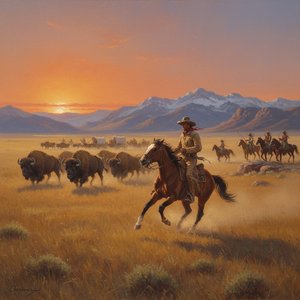
Frederic Remington's "Ridden Down," painted in 1905, isn’t merely a depiction of cowboys and horses; it’s a profound meditation on solitude, resilience, and the enduring spirit of the American West. This oil-on-canvas masterpiece, currently residing within the Amon Carter Museum of American Art in Fort Worth, Texas, captures a pivotal moment – a lone Native American rider silhouetted against an expansive, undulating sand dune landscape under a brilliant, cloudless sky. Remington, a master of portraying the frontier, expertly blends realism with an impressionistic sensibility, creating an image that simultaneously feels immediate and deeply symbolic.
The painting’s composition immediately draws the eye to the central figures: a man, clad in a simple green shirt, riding a powerful mustang. The horse is positioned behind him, its head lowered as if acknowledging the immensity of the terrain. Remington skillfully employs horizontal lines created by the towering sand dunes, which dominate the scene and establish a sense of overwhelming scale. These sweeping forms contrast sharply with the verticality of the rider and horse, emphasizing their vulnerability against the backdrop of nature’s grandeur. Two birds soar high above, adding a touch of fleeting beauty to this otherwise stark landscape – perhaps representing freedom or a distant hope.
The Brushstroke and Palette: A Window into Remington's Technique
Remington’s technique is immediately recognizable—bold, expressive brushstrokes that convey both the physicality of the scene and an underlying sense of movement. He doesn’t shy away from visible texture; the sand dunes are rendered with a rough, grainy quality, while the horse’s coat appears almost sculpted by the artist's hand. The color palette is dominated by warm yellows and ochres, reflecting the sun-baked earth and creating a feeling of intense heat. Cool blues in the sky provide a striking contrast, highlighting the vastness of the space and adding depth to the composition. Remington masterfully uses light and shadow to sculpt the forms, lending them a remarkable three-dimensionality.
The painting’s dynamic energy is further enhanced by his use of color—a vibrant, almost feverish application that captures the intensity of the desert environment. Notice how he subtly shifts tones within the sand dunes, suggesting variations in texture and depth. This attention to detail, combined with his confident brushwork, elevates “Ridden Down” beyond a simple landscape painting; it becomes a visceral experience for the viewer.
Symbolism and Context: A Portrait of the West
"Ridden Down" is more than just a visual record of the American West; it’s imbued with layers of symbolic meaning. The lone rider, often interpreted as a Native American figure, embodies themes of survival, adaptation, and resilience in the face of an increasingly encroaching civilization. The posture of the horse—lowered head, steady gait—suggests both respect for the land and a quiet determination to endure. Considering Remington’s own career, which coincided with a period of significant change and displacement for Native American communities, the painting can be viewed as a poignant commentary on this historical context.
Painted in 1905, “Ridden Down” reflects the waning days of the frontier era. Remington’s work often depicted scenes of cowboys, Indians, and the wild west—a romanticized vision that captured the imagination of a nation eager to define its identity. However, it's important to note that Remington’s portrayal was not without its complexities; he sometimes perpetuated stereotypes while simultaneously capturing the raw beauty and inherent drama of the West. The painting stands as a testament to his skill as an artist and a valuable window into a transformative period in American history.
A Legacy of Western Art: Exploring “Ridden Down” Further
To delve deeper into Frederic Remington’s artistic legacy, consider examining "The Wounded Buffalo," another iconic work showcasing his mastery of capturing the spirit of the West. You can explore more of his paintings and writings at OriginalUniqueArt.com, where you'll find a curated selection of his most celebrated works. For further insights into Remington’s life and career, visit the Amon Carter Museum of American Art (here) or explore his biography on Wikipedia (here). And for a visual journey through the world of Frederic Remington, be sure to visit this page.
W którym muzeum znajduje się Ridden Down?
Amon Carter Museum of American Art
Fort Worth, Stany Zjednoczone Ameryki
Dziedzictwo Wizji i Krajobrazu Położone w samym sercu tętniącej życiem Dzielnicy Kultury w Fort Worth, Amon Carter Museum of American Art stanowi głębokie świadectwo trwałego ducha amerykańskiego Zachodu oraz transformującej mocy twórczego spojrzenia. Instytucja ta zrodziła się z głębokiej, osobistej pasji do surowego piękna i historycznych opowieści pogranicza, początkowo służąc jako dedykowane repozytorium dzieł celebrujących dziedzictwo Teksasu. Dzięki dziesięcioleciom starannej kurateli, muzeum rozkwitło, stając się uznaną w całym kraju latarnią amerykańskiej kreatywności – sanktuarium, w którym pył preri spotyka się z wyrafinowaną elegancją nowoczesnej ekspresji artystycznej.


Ridden Down w wysokiej rozdzielczości

Domena publiczna: artysta zmarł w 1909.
Więcej rozmiarów, kadrowania i cytowań →Frederic Sackrider Remington, Ridden Down (1905), Amon Carter Museum of American Art. Domena publiczna
Ekspert ds. cyfrowych weryfikuje kolory względem oryginału i retuszuje plik, zachowując wierność pociągnięciom pędzla artysty.
Kup obraz w wysokiej rozdzielczościPytania o Ridden Down
Gdzie można zobaczyć oryginał „Ridden Down” – Frederic Sackrider Remington?
„Ridden Down” – Frederic Sackrider Remington znajduje się w zbiorach Amon Carter Museum of American Art, Fort Worth, Stany Zjednoczone Ameryki. Informacja o muzeum dotyczy oryginału, a nie reprodukcji.
W którym roku powstało dzieło „Ridden Down” – Frederic Sackrider Remington?
"Ridden Down" powstało w 1905 roku. Data ta pozwala umiejscowić dzieło w kontekście twórczości Frederic Sackrider Remington oraz epoki, w której powstało.
W jakiej technice wykonano „Ridden Down” – Frederic Sackrider Remington?
Frederic Sackrider Remington wykorzystał/a technikę Oil On Canvas w pracy „Ridden Down”. Technika ta definiuje materię oryginalnego dzieła.
Co przedstawia „Ridden Down” – Frederic Sackrider Remington?
Tematyka obecna w „Ridden Down” – Frederic Sackrider Remington obejmuje american west, native american, horseback riding, desert landscape, remington art, western theme, lone figure, dynamic scene”. Razem stanowią one podsumowanie tematyki dzieła.
Czy dzieło "Ridden Down" znajduje się w domenie publicznej?
„Ridden Down” – Frederic Sackrider Remington znajduje się w domenie publicznej (należy do domeny publicznej – autorskie prawa majątkowe wygasły). Status ten określa zasady reprodukcji obrazu tego dzieła.
Kto stworzył "Ridden Down"?
Autorem dzieła „Ridden Down” jest Frederic Sackrider Remington. Praca ta figuruje w katalogu pod nazwiskiem Frederic Sackrider Remington.
Do jakiego nurtu należy "Ridden Down"?
„Ridden Down” – Frederic Sackrider Remington należy do nurtu American Regionalism”. Nurt ten stanowi stylistyczny kontekst dzieła.
Do którego okresu twórczości Frederic Sackrider Remington należy dzieło „Ridden Down”?
W dorobku artystycznym Frederic Sackrider Remington dzieło „Ridden Down” przypada na Mature Period”. Ten etap pozwala zestawić je z innymi pracami twórcy.
Ile lat miał(a) Frederic Sackrider Remington, tworząc "Ridden Down" w 1905 roku?
Frederic Sackrider Remington miał 44 lat w momencie powstania „Ridden Down” w 1905. Wiek ten obliczono na podstawie roku urodzenia artysty, 1861.
O artyście: Frederic Sackrider Remington

1861–1909, Stany Zjednoczone
Frederic Sackrider Remington
A Chronicler of the Vanishing West: The Life and Art of Frederic Remington Frederic Sackrider Remington, urodzony w Cantonie, Nowy Jork, 4 października 1861 roku, nie był produktem Zachodu, który tak żywo przedstawiał; raczej był Wschodziarzem, który wykształcił swoją artystyczną tożsamość dzięki fascynacji i poświęconemu studiowaniu. Jego pochodzenie wskazywało na życie z dala od kurzu szlaków i kawalerii – dziedzictwo francuskiego Basków połączone ze stanowczymi korzeniami republikańskimi Nowego Anglii, ojciec był pułkownikiem i redaktorem gazety wojennej, a powiązania z rodową firmą Remington Arms poprzez odległych krewnych. Mimo to, wczesne narażenie na tematy wojskowe, połączone ze sprytem, dążeniem do opowiadania historii, doprowadziło go do drogi stającą się prawdopodobnie najbardziej rozpoznawalnym artystą Zachodu. Jego dzieciństwo przeniosło się do Bloomington, Illinois, następnie z powrotem do Cantonu i wreszcie Ogdensburga, Nowy Jork, ale jego wyobraźnia pozostała urzeczona opowieściami o życiu na pograniczu.
O Frederic Sackrider Remington Najważniejsze dzieła Frederic Sackrider Remington
Inne prace Frederic Sackrider Remington
 The Old Stage-Coach of the Plains1901
 Coming Through the Rye1902
 The Broncho Buster1895
 The Trooper1891
Eseje o Ridden Down
 Spirit of the Blue Rider: The 25 Most Iconic Masterpieces by Franz MarcImmerse yourself in the vibrant world of German Expressionism with our curated guide to the 25 greatest Franz Marc masterpieces. Explore th…
 Timeless Elegance: Capturing the Romance of Horse-Drawn Carriages in Fine ArtDiscover the romantic allure of horse-drawn carriages through fine art. Explore exquisite oil reproductions and custom equestrian portraits…
 Charles Marion Russell: Capturing the American West Through a Romantic LensExplore the captivating world of Charles Marion Russell, 'the cowboy artist.' Discover his life, iconic paintings, advocacy for Native Amer…