
() ·
Obraz stworzony dla Ciebie, własnoręcznie
Ręcznie malowana reprodukcja olejowa
Ręcznie malowany obraz olejny na płótnie, wykonany na zamówienie przez naszych artystów w wybranym przez Ciebie wymiarze i oprawie. ( Przełącz na wydania drukowane Przejdź do wersji cyfrowej)
Opis obiektu
Explore Frederic Stephens’ ‘Morte d’Arthur,’ a dramatic Pre-Raphaelite painting of knights in an earthy scene. Discover its composition, symbolism & Victorian art history.
Biografia artysty
Explore Frederic George Stephens (1827-1907), a British art critic & Pre-Raphaelite Brotherhood member. Discover his artistic works, writings on art history, and influence on Victorian art patronage. #PreRaphaelites #ArtCritic #BritishArt
 Rozwiń treść
od ·
Rozdział 1
Jak duży powinien być ten format?
Przesuń suwak, aby zmienić rozmiar; obraz po lewej stronie przedstawia ramę w jej rzeczywistej szerokości. Zachowano proporcje oryginału.
Wybierz spośród naszych standardowych rozmiarów, które zachowują oryginalne proporcje dzieła sztuki.

Wpisz wymaganą szerokość i wysokość, aby obraz pasował do Twojej ramy lub ściany. Ponieważ jest to dzieło malowane ręcznie, w przypadku rozmiaru o innych proporcjach artysta może domalować nieco więcej wokół obrazu lub przyciąć jego fragmenty — wybór należy do Ciebie. Przed rozpoczęciem pracy prześlemy Ci cyfrową wizualizację do zatwierdzenia. Obraz widoczny na tej stronie nie przedstawia rzeczywistego efektu — jedynie wizualizacja oddaje realny rezultat.
Rozdział 2
W jaki sposób ma zostać dostarczone?
Wybierz krawędzie płótna naciągniętego na ramę
Wybierz ramę

Białe krawędzie zł1

rozmyte krawędzie zł1

Przedłużony zł1

P118B zł10

P118H zł10

P118W zł10

P438Z zł10

P508JH zł12

P508YH zł12

P805H zł10

P805Z zł10

P919BZ zł10

P919G zł10

P919XJ zł10

P959ZH zł10

P968JZ zł12

W106C zł8

W218G zł10

W218JH zł8

W218Y zł10

W307PJ zł10

W316G zł10

W316PJ zł8

W316Y zł10

W398PJ zł8

W4111J zł10

W500HY zł15

W500JH zł15

W692G zł12

W849H zł8

W940BG zł15

W953PJ zł8

H24-GOLD zł30

H24-SILVER zł30

H36-GOLD zł45

H36-SILVER zł45
W oprawie
Profil: . Wymiar całkowity w ramie: .
Rozdział 3
Kto go maluje i czy coś powinno ulec zmianie?
Po złożeniu zamówienia zespół OriginalUniqueArt.com skontaktuje się z klientem drogą mailową w celu uzyskania instrukcji i prześle podgląd projektu
Dostawa na całym świecie () w ciągu 3–4 tygodni zamiast standardowych 5 tygodni. (13 Listopad). Bez kompromisów w kwestii jakości.
Rozdział 4
Ostatnie szlify
Tabliczka informacyjna, jak w muzeum?
Szczegóły grawerowanej brązowej tabliczki
This elegant plaque features the artist's name and the title of the artwork, finely engraved for a timeless presentation.
It is made from bronze with a refined, elegant finish. The text is precisely laser-engraved for a sharp and permanent result. Measuring 9x2 cm, the plaque is compact yet easy to read. It's built to be durable and scratch-resistant, offering a professional, museum-quality look. Mounting is simple thanks to the included adhesive backing.
Szczegóły przezroczystej tabliczki akrylowej
The plaque includes essential engraved details such as the artist's name, the title of the artwork, the date it was created, the type of media used-like oil on canvas or watercolor-a brief description of the piece, and a QR code that links to the complete artwork information.
It is crafted from clear acrylic, offering a sleek, modern appearance. The text is UV-engraved in black to ensure strong visual contrast. With a size of 10x15 cm, it ensures optimal readability. It comes equipped with two metal hooks for secure wall mounting. The plaque is designed to be weather-resistant, making it suitable for various environments, and it includes interactive features that work seamlessly with smartphone scanning.
Szczegóły czarnej tabliczki akrylowej
This elegant plaque includes engraved information such as the artist's name, the title of the artwork, the date it was created, the type of media used (like oil on canvas or watercolor), a short description of the artwork, and a QR code for quick access to more information.
The plaque itself is made from refined black acrylic with a premium finish. The text is laser-engraved in white for high contrast and readability. Its size is 10x15 cm, designed to be easy to read. It comes with two metal hooks for professional mounting. The design is sleek and fits any interior style. It is also weather-resistant and durable, with built-in digital integration for mobile compatibility.
Werniks ochronny?
Kiedy potrzebujesz dostawy?
Rozdział 5
Twoje dzieło, dokładnie tak, jak zamówiłeś

Morte d'Arthur
Technika reprodukcji
Wymiary reprodukcji
-

Wybitny mistrz artystyczny
Większa szczegółowość, finezja i dodatkowy czas na realizację
-

Opcje oprawy reprodukcji
-
-
W przypadku dzieł sztuki lub reprodukcji, których którykolwiek z boków przekracza 105 cm (około 41 cali), rama zostanie wysłana w formie zestawu do samodzielnego montażu. Metoda ta zapewnia bezpieczną dostawę i zapobiega uszkodzeniom podczas transportu.
Wymagany profesjonalny montaż – nie jest to produkt typu DIY.
Zestaw musi zostać złożony, a płótno naciągnięte przez doświadczonego profesjonalnego ramiarza, przy użyciu kleju do drewna (brak w zestawie), kleszczy do naciągania płótna oraz ścisków, które utrzymają krosna w równej pozycji podczas schnięcia kleju. Nieprawidłowy montaż lub nierównomierne napięcie płótna może trwale uszkodzić dzieło sztuki i nie podlega naszej gwarancji.
 W przypadku dzieł sztuki lub reprodukcji, których którykolwiek z boków przekracza 105 cm (około 41 cali), rama zostanie wysłana w formie zestawu do samodzielnego montażu. Metoda ta zapewnia bezpieczną dostawę i zapobiega uszkodzeniom podczas transportu.
W zestawie znajdują się wszystkie listwy z litego drewna, precyzyjnie docięte do wymiarów.
Montaż odbywa się przy użyciu dołączonych wkrętów oraz kleju do drewna do łączenia narożników, którego zestaw nie zawiera i który musi zostać dostarczony przez ramiarza.
Wymagane są profesjonalne narzędzia, których nie ma w zestawie: kleszcze do naciągania płótna (napinacz) oraz zaciski, które pozwolą utrzymać listwy w równej pozycji podczas schnięcia kleju.
Ważne:
Do połączenia narożników niezbędny jest klej do drewna, listwy należy unieruchomić za pomocą ścisków do momentu całkowitego wyschnięcia kleju, a naciągnięcie płótna na złożoną ramę wymaga użycia kleszczy do naciągania płótna. Żaden z tych elementów nie jest dołączony do zestawu. Przed zamówieniem tego rozmiaru zalecamy konsultację z doświadczonym ramiarzem.

Etykieta obiektu
-
-

Lakier ochronny
Lakier z połyskiem (pogłębia kolory, chroni przed światłem i wilgocią)
-

Personalizacja dzieła
Przykłady możliwości personalizacji: zastąp twarz zdjęciem klienta; dodaj zwierzę domowe (np. zamień kota na psa); umieść ukrytą wiadomość w tle; zmień krajobraz lub elementy tła.
-

Ekspresowa
Dostawa na cały świat () w ciągu 3–4 tygodni zamiast standardowych 5 tygodni. (13 Listopad). Bez kompromisów w kwestii jakości.
-
Przesyłka ekspresowa
Dostawa na cały świat () w ciągu 5 tygodni. (20 Listopad).
W cenie
Cena całkowita
zł 1266
Opcja ze szkłem jest dostępna wyłącznie w rozmiarach poniżej 110 cm
W każdym zamówieniu
- Bezpłatna ekspresowa wysyłka na cały świat
- Wysokiej jakości płótno lniane
- Pełne ubezpieczenie przesyłki
- Gwarancja zwrotu należności celnych i podatków importowych
- Gwarancja wiernego odwzorowania kolorów
- 100-dniowa polityka zwrotów (tylko w przypadku wad)
- Gwarancja 100% zwrotu pieniędzy
- Zniżka przy zakupie wielu sztuk


 Podgląd w skali 1:1
 Wyślij jako kartkę
 Udostępnij
 Szczegóły dzieła
 Przewodnik

 Pobierz obraz
 Podobne obiekty
 RTG
RTG Pokaz slajdów
 Pytania i odpowiedzi
 Statystyki
W liczbach
- 1855rok powstania dzieła
- 29dostępne ramy do wyboru
- standardowe formaty, w ich własnych proporcjach
- 5tygodni na namalowanie i dostarczenie dzieła
O oryginale


Frederic George Stephens
1827 - 1907, United Kingdom
Krótkie informacje o Frederic George Stephens
- Full Name: Frederic George Stephens
- Nationality: British
- Date Of Birth: 1827
- Date Of Death: 1907
- Place Of Birth: Walworth, London
- Notable Artworks:
- Morte d'Arthur
- Mother and Child
- The Proposal
- Artistic Movement Or Style: Pre-Raphaelite Brotherhood
Biografia artysty
A Life Dedicated to the Pre-Raphaelites: Frederic George Stephens
Frederic George Stephens, born in Walworth, London, in 1827, occupies a unique and often overlooked position within the history of British art. While not celebrated as a prolific painter himself, his significance lies in his unwavering dedication to the ideals of the Pre-Raphaelite Brotherhood – a movement he helped found and tirelessly championed throughout his life. Stephens’s story is one of intellectual passion overcoming physical limitation; an accident in 1837 left him disabled, leading to a private education that fostered a deep love for literature and art history, but curtailed any ambitions for a traditionally rigorous artistic training.
His path converged with those of John Everett Millais and William Holman Hunt at the Royal Academy Schools in 1844. It was here, amidst the academic constraints of the time, that the seeds of rebellion were sown. Stephens’s keen intellect and articulate nature proved invaluable as the trio began to formulate their rejection of conventional artistic practices, seeking instead inspiration from the art predating Raphael – a period they believed embodied greater sincerity and naturalism. In 1848, he formally joined the Brotherhood, becoming one of its seven founding members. He wasn’t merely a participant; Stephens was often the intellectual engine, articulating their shared vision in writings that would later shape public understanding of their aims.
From Painter to Prophet: The Evolution of an Art Critic
Stephens actively contributed paintings to the early Pre-Raphaelite output. Works like *Morte d’Arthur* (1849), *The Proposal (The Marquis and Griselda)* (1850–51) and *Mother and Child* (circa 1854–6) reveal a striving for detail and narrative clarity characteristic of the Brotherhood. However, acutely aware of his own limitations as a painter – he famously destroyed many of his works in later life – Stephens made a pivotal decision to dedicate himself to art criticism. This wasn’t an abandonment of artistic principles, but rather a shift in medium; he would become the voice of Pre-Raphaelitism, defending its aesthetic and philosophical underpinnings.
His disappointment with his own talent was profound, yet it fueled a remarkable career as a writer. He became art critic for *The Athenaeum* in 1860, a position he held for over four decades until 1901. Through meticulously researched articles and insightful commentary, Stephens introduced the public to the Brotherhood’s work, contextualizing their paintings within broader artistic traditions – particularly Flemish art history – and challenging prevailing academic tastes. He didn't simply praise; he engaged in a nuanced dialogue with contemporary critics, defending the Pre-Raphaelites against accusations of ugliness or lack of originality.
The Communicator of Ideals: Stephens’s Writings and Influence
Stephens’s influence extended beyond *The Athenaeum*. He contributed to numerous other periodicals, including *The Germ* – the short-lived but influential Pre-Raphaelite journal – and publications in both England and America. His writings were characterized by a deep understanding of art history, a commitment to intellectual rigor, and an unwavering belief in the power of truthfulness in art. He wasn’t merely describing paintings; he was articulating a worldview, advocating for a return to naturalism, sincerity, and moral purpose.
He also served as a vital link between the Pre-Raphaelites and their patrons, fostering relationships with collectors who supported their work. His book *William Holman Hunt and His Work* (1860), written to accompany an exhibition of Hunt’s *The Finding of the Saviour in the Temple*, was instrumental in establishing Hunt's reputation. Stephens also undertook extensive cataloging projects, including a four-volume catalogue of prints and drawings in the British Museum (1870–83). These endeavors demonstrate his commitment to making art accessible and understandable to a wider audience.
A Lasting Legacy: Reassessing Stephens’s Historical Significance
While often overshadowed by the more celebrated painters of the Brotherhood, Frederic George Stephens played an indispensable role in its success. He was the intellectual architect, the tireless advocate, and the eloquent defender of Pre-Raphaelite ideals. His writings not only shaped public perception of the movement but also provided a crucial historical context for understanding its artistic innovations.
In recent years, there has been a growing recognition of Stephens’s importance as an art historian and critic. Scholars are reassessing his paintings, recognizing their sincerity and narrative power, and acknowledging his vital contribution to Victorian art discourse. He stands as a testament to the power of intellectual passion, demonstrating that one does not need to be a master painter to profoundly impact the course of art history. His legacy lies not in the works he created, but in the ideals he championed and the words he used to illuminate them.
Powiązane artykuły

25 Masterpieces by Dante Gabriel Rossetti: The Soul of Pre-Raphaelite Art
Immerse yourself in the romantic beauty of Dante Gabriel Rossetti. Explore 25 iconic Pre-Raphaelite masterpieces, from soulful portraits to symbolic legends. Find museum-quality art reproductions and timeless decor inspiration. Discover all masterpieces on OriginalUniqueArt.com.

The Pre-Raphaelite Rebellion: Reclaiming Natural Truth in Victorian Painting
Explore the radical history of the Pre-Raphaelite revolt against Victorian tradition. Discover the truth behind this artistic rebellion now.
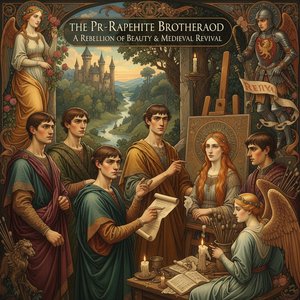
Braterstwo Prerafaelitów: Bunt przeciw akademizmowi i renesansowy powrót do piękna
Poznaj historię Bractwa Prerafaelitów – ruchu artystycznego, który zrewolucjonizował malarstwo angielskie. Analiza sprzeciwu wobec akademizmu, inspiracji renesansowych i kluczowych dzieł Millaisa, Rossettiego i Hunta.

Arthur Hughes: Pre-Raphaelite Visions of Beauty & Melancholy
Explore the captivating world of Arthur Hughes (1832-1915), a leading Pre-Raphaelite painter. Discover his dreamy landscapes, poetic narratives & iconic Victorian artworks. Learn about his life, style & collecting today.