

 Zobacz w skali 1:1
 Wyślij
 Udostępnij
 Szczegóły
 Przewodnik

 Pobierz plik obrazu
 Podobne obiekty
 RTG
RTG Pokaz slajdów
 Statystyki
Serce Andów
 Olej na płótnie
- Sztuka ścienna
- Hudson River School
 1859
1859- XIX wiek
 169.0 x 303.0 cm
 Metropolitan Museum of Art
 Czytaj więcej
Giclée / Wydruk artystyczny
Wydruki giclée lub płótna o jakości muzealnej, szybka realizacja i szeroki wybór opcji wykończenia. ( Kup ręcznie malowany obraz Przełącz na wersję cyfrową)




P118B zł10

P118H zł10

P118W zł10

P438Z zł10

P508JH zł12

P508YH zł12

P805H zł10

P805Z zł10

P919BZ zł10

P919G zł10

P919XJ zł10

P959ZH zł10

P968JZ zł12

W106C zł8

W218G zł10

W218JH zł8

W218Y zł10

W307PJ zł10

W316G zł10

W316PJ zł8

W316Y zł10

W398PJ zł8

W4111J zł10

W500HY zł15

W500JH zł15

W692G zł12

W849H zł8

W940BG zł15

W953PJ zł8




Wybierz spośród naszych standardowych rozmiarów, które zachowują oryginalne proporcje dzieła sztuki.

Wpisz wymaganą szerokość i wysokość, aby dopasować grafikę do ramy lub ściany. Wydruk można jedynie przyciąć, nigdy nie powiększając go poza oryginalny obraz, dlatego format o innym proporcji spowoduje utratę części kompozycji. Przed rozpoczęciem druku prześlemy Ci cyfrowy podgląd do zatwierdzenia. Obraz wyświetlany na tej stronie nie pokazuje rzeczywistego przycięcia — jedynie podgląd oddaje ten efekt.
Dostawa na cały świat () w ciągu 2 tygodni zamiast standardowych 4/5 tygodni. (22 Październik)

Bezpłatna ekspresowa wysyłka na cały świat

Wysokiej jakości płótno lniane

Pełne ubezpieczenie transportowe

Gwarancja zwrotu należności celnych i podatków importowych

Gwarancja idealnego odwzorowania barw

100-dniowy okres na zwrot dzieła w przypadku wykrycia wad produkcyjnych

Gwarancja 100% zwrotu pieniędzy

Oferta przy zakupie wielu sztuk
 Opcja ze szkłem jest dostępna wyłącznie w rozmiarach poniżej 110 cm

Serce Andów
Giclée / Wydruk artystyczny
Rozmiar reprodukcji
-


Suma do zapłaty
zł 307
Witajcie w Świecie „Serca Andów”
„Serce Andów” Frederic Eda Churcha, namalowany w 1859 roku, to więcej niż tylko krajobraz – to podróż do serca Ameryki Południowej, do majestatycznych szczytów Andów. To monumentalne dzieło, które od ponad wieku fascynuje swoją rozległością i głębokim oddaniem naturze. Church, jeden z czołówowych przedstawicieli Hudson River School, przeniósł się poza zwykłą reprezentację terenu, dążąc do uchwycenia tego, co nazywamy „sublimem” – poczucia oszałamiającej wielkości i duchowej więzi, jakie towarzyszą spotkaniu z dzikimi, nieokiełznanymi krajobrazami. To obraz, który wciąga nas w swoją przestrzeń, otulając poczuciem zadziwienia i szacunku dla siły natury.
(Obraz „Serce Andów” z kolekcji Metropolitan Museum of Art)
Hudson River School i Poszukiwanie Sublimu
„Serce Andów” to doskonały przykład stylu Hudson River School, nurtu artystycznego, który rozkwitł w XIX wieku w Stanach Zjednoczonych. Charakteryzuje się on skupieniem na emocjonalnym oddziaływaniu natury i wiernym odwzorowywaniu krajobrazów. Church, podobnie jak Thomas Cole – założyciel tego nurtu – nie ograniczał się do prostego przedstawienia terenu. Poszukiwał „sublimu” – uczucia, które towarzyszy nam w obliczu potęgi i piękna natury, wywołując poczucie pokory i duchowego połączenia. Skala obrazu (169 x 303 cm) jest kluczowa dla tego efektu; otula nas swoim rozległością, przenosząc w głąb Andów.
Mistrzostwo Techniki i Światło
Technika Churcha jest oszałamiająca. Obraz został wykonany olejem na płótnie, a jego mistrzostwo w opanowaniu światła i atmosfery jest niezaprzeczalne. Wykorzystał skomplikowane techniki warstwowania i mieszania kolorów, aby stworzyć subtelne gradacje tekstur i odcieni, wiernie oddając bujną roślinność, potężne góry i błyszczące wody. Zauważcie delikatną grę światła na śnieżnych szczytach i w zielonej dolinie – to właśnie ta atmosfera, która nadaje obrazowi spokoju i cudowności. Church doskonale oddaje wrażenie poranka lub zmierzchu, wzmacniając poczucie harmonii i zachwytu.
Historia i Inspiracje
„Serce Andów” powstał w oparciu o dwa wyprawy Churcha do Ameryki Południowej w 1853 i 1857 roku, sfinansowane przez magnata kolei żelaznych Cyrus West Field. Wydarzenia te miały na celu promocję inwestycji Fielda, ale głęboko wpłynęły na artystyczną wizję Churcha. Pod wpływem pism Alexandra von Humbolta – słynnego naturalisty – Church miał za zadanie nie tylko dokumentować krajobraz, ale również emocjonalnie go interpretować. „Serce Andów” to synteza obserwacji i interpretacji, odzwierciedlająca ducha epoki i fascynację nauką. Obraz jest świadectwem podróży Churcha do Ameryki Południowej, gdzie spotkał się z naturalnymi krajobrazami i ludźmi, które zainspirowały go do stworzenia tego monumentalnego dzieła.
Symbolika i Emocje
W „Serce Andów” Church ukazuje nie tylko piękno natury, ale także jej potęgę i trwałość. Wodospad symbolizuje życie i odrodzenie, a majestatyczne góry – siłę i niezmienność. Obraz emanuje spokojem, harmonią i szacunkiem dla świata przyrody. Jego monumentalna skala i bogata paleta barw wywołują silne emocje, przenosząc nas w serce Ameryki Południowej i pozwalając poczuć bliskość z dzikimi krajobrazami.
Pytania i odpowiedzi
Z czego wykonano "Serce Andów"?
„Serce Andów” wykonano w technice Olej na płótnie.
Jakie miejsce w historii sztuki zajmuje „Serce Andów” autorstwa Frederic Edwin Church?
Klasyfikacja historii sztuki dla dzieła „Serce Andów” autorstwa Frederic Edwin Church to Hudson River School, z okresu XIX wiek.
Jaką nasycenie i intensywność prezentuje „Serce Andów” autorstwa Frederic Edwin Church?
Dzieło „Serce Andów” autorstwa Frederic Edwin Church zostało utrwalone z nasyceniem na poziomie Subtelna kolorystyka oraz intensywnością Zrównoważony.
Biografia artysty
A Pioneer of American Landscape: The Life and Art of Frederic Edwin Church
Frederic Edwin Church, born in Hartford, Connecticut, on May 4th, 1826, emerged as a pivotal figure in the blossoming landscape tradition of 19th-century America. His lineage was steeped in New England history—a direct descendant of Puritan pioneers—and his family’s prosperity afforded him opportunities rare for aspiring artists of the time. This financial stability allowed Church to dedicate himself wholeheartedly to his artistic pursuits, a path that would ultimately lead him to become one of the most celebrated and influential painters of the Hudson River School. His early training began at the age of eighteen under the tutelage of Thomas Cole, the very founder of this distinctly American art movement. These formative years spent in Catskill, New York, were crucial, instilling in Church a deep reverence for nature and a commitment to capturing its grandeur on canvas. The apprenticeship wasn’t merely technical; it was an immersion into a philosophy that saw landscape not just as scenery, but as a reflection of the divine and a symbol of national identity.The Rise of a Master: Style and Influences
Church quickly distinguished himself from his contemporaries through a remarkable ability to blend meticulous realism with a romantic sensibility. His paintings are characterized by an astonishing level of detail, capturing the textures of foliage, the play of light on water, and the imposing scale of mountains with breathtaking accuracy. He meticulously studied geological formations, plant life, and atmospheric conditions, incorporating these observations into his compositions. However, this wasn’t simply photographic representation; Church infused his work with a dramatic flair, employing sweeping panoramic views, vibrant color palettes—often achieved through innovative techniques to capture the fleeting effects of light—and a masterful command of atmospheric perspective. He was deeply influenced by the scientific explorations of Alexander von Humboldt, whose writings on the interconnectedness of nature resonated profoundly with the artist. Church saw in Humboldt’s work a call to experience and depict the world directly, moving beyond purely theoretical knowledge. This influence is evident in his later expeditions to South America and his attempts to convey not just the visual beauty of these landscapes but also their underlying geological and botanical complexities. The Oxbow, completed in 1836, stands as an early testament to this synthesis of observation and imagination—a romantic vision of the American wilderness that would become a hallmark of his style. His technique involved “hidden” brushstrokes, creating smooth surfaces that enhanced the realism and luminosity of his paintings.Ventures into the Wild: Travels and Major Works
Church’s ambition extended beyond the familiar landscapes of New England and New York. Driven by a thirst for firsthand experience and inspired by Humboldt's writings, he embarked on daring expeditions to remote corners of the world. These journeys—to South America in 1853 and 1857, and later to the Arctic regions—provided him with an unparalleled wealth of visual material. The Heart of the Andes, completed in 1859, is perhaps his most ambitious undertaking, a monumental canvas that sought to encapsulate the entire ecosystem of the Andean mountains. The painting was exhibited in a specially constructed gallery, illuminated by skylights, creating an immersive experience for viewers and solidifying Church’s reputation as a master showman as well as an artist. He meticulously documented the flora, fauna, and geological features of these regions, incorporating them into his paintings with remarkable accuracy. His later works, such as *Niagara* (1857), showcased his ability to capture the dramatic power of nature—the cascading water, the swirling mist, and the ethereal light—with breathtaking effect. Church’s expeditions weren't merely about documenting landscapes; they were transformative experiences that shaped his artistic vision and deepened his appreciation for the interconnectedness of all things.A New Approach to Exhibition: The Power of Spectacle
Church revolutionized the way art was presented in America by pioneering immersive exhibition techniques. Recognizing that a painting could be more than just a static object, he sought to create an experience for viewers—a journey into the heart of the depicted landscape. For his monumental canvases like *The Heart of the Andes* and *Icebergs: The North*, Church constructed elaborate galleries with carefully controlled lighting, temperature, and sound effects. He often employed multiple paintings in a single exhibition, creating a panoramic effect that transported viewers to distant lands. These exhibitions were not simply displays of art; they were theatrical events designed to evoke emotion and inspire awe. His approach challenged the traditional notion of the gallery as a quiet space for contemplation and ushered in a new era of public engagement with art.Legacy and Impact on American Art
Frederic Edwin Church’s influence on American landscape painting is undeniable. He elevated the genre to new heights of artistic achievement and popular acclaim, inspiring generations of artists to explore the beauty and majesty of the natural world. His innovative exhibition practices—presenting single paintings in dramatic settings—set a precedent for future art displays and helped to cultivate a broader public appreciation for art. Beyond his painting, Church was also a dedicated conservationist, advocating for the preservation of Niagara Falls and playing a role in the establishment of national parks. He understood that art could be a powerful tool for raising awareness about environmental issues and inspiring action. His home, Olana, designed and built with his own hands overlooking the Hudson River, stands as a testament to his artistic vision and his deep connection to the landscape.- Church’s work bridged the gap between Romanticism and Realism.
- He pioneered immersive exhibition techniques that captivated audiences.
- His advocacy for conservation foreshadowed the modern environmental movement.

Frederic Edwin Church
1826 - 1900 , Stany Zjednoczone
Najważniejsze informacje
- Artistic Movement Or Style: Hudson River School
- Artists Or Movements Influenced By This Artist: ['Amerykańska sztuka krajobrazowa']
- Artists Who Influenced This Artist:
- Thomas Cole
- Alexander von Humboldt
- Date Of Birth: 4 maja 1826
- Date Of Death: 7 kwietnia 1900
- Full Name: Frederic Edwin Church
- Nationality: Amerykański
- Notable Artworks:
- Niagara
- Serce Andów
- Place Of Birth: Hartford, USA
Zobacz także powiązane artykuły
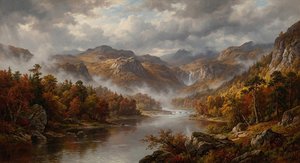
Szkoła Rzeki Hudson: 10 arcydzieł, które ukształtowały pejzaż amerykańskiej sztuki | OriginalUniqueArt
Odkryj 10 arcydzieł Szkoły Rzeki Hudson – malarstwo krajobrazowe Cole'a, Churcha i Bierstadta. Poznaj historię artystów i inspiracje romantyzmu amerykańskiego. Reprodukcje obrazów najwyższej jakości na OriginalUniqueArt.com! Eksploruj kolekcję online.
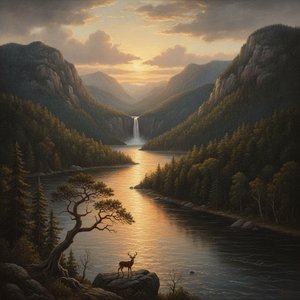
Epic Landscapes & Wild Nature: The Power of the Hudson River School's Sublime Artistry
Explore the breathtaking power of the Hudson River School. Journey through epic American landscapes, from Thomas Cole's sublime vistas to Luminist light, and discover how these timeless masterpieces continue to inspire modern collectors and art lovers worldwide.
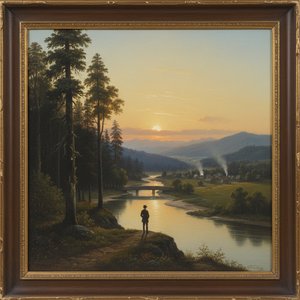
Robert Spencer: Luminism, Narrative & the American Landscape Tradition
Explore the captivating world of Luminism & the Hudson River School with our expert analysis. Discover the history, artists, and enduring beauty of 19th-century American landscape painting. Find museum-quality reproductions at OriginalUniqueArt.
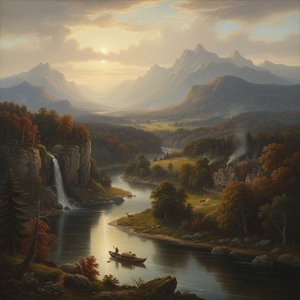
Capturing the American Spirit: A Journey Through Iconic Landscapes and the Legacy of the Hudson River School
Explore the profound beauty of American art history. From the Hudson River School to iconic landscapes, discover a curated journey through the masterpieces that defined a nation's spirit and the enduring legacy of American Romanticism.
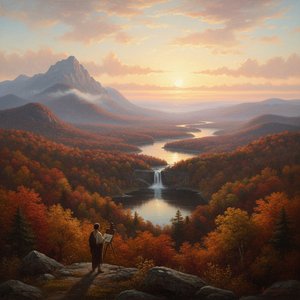
Sublime Krajobrazy: Narodziny Amerykańskiej Tożsamości Artystycznej i Rola Szkoły Hudson River
Odkryj fascynującą historię Szkoły Hudson River i narodziny amerykańskiej tożsamości artystycznej. Poznaj kluczowych artystów, techniki malarskie i inspiracje. Reprodukcje najwyższej jakości na OriginalUniqueArt.com!


